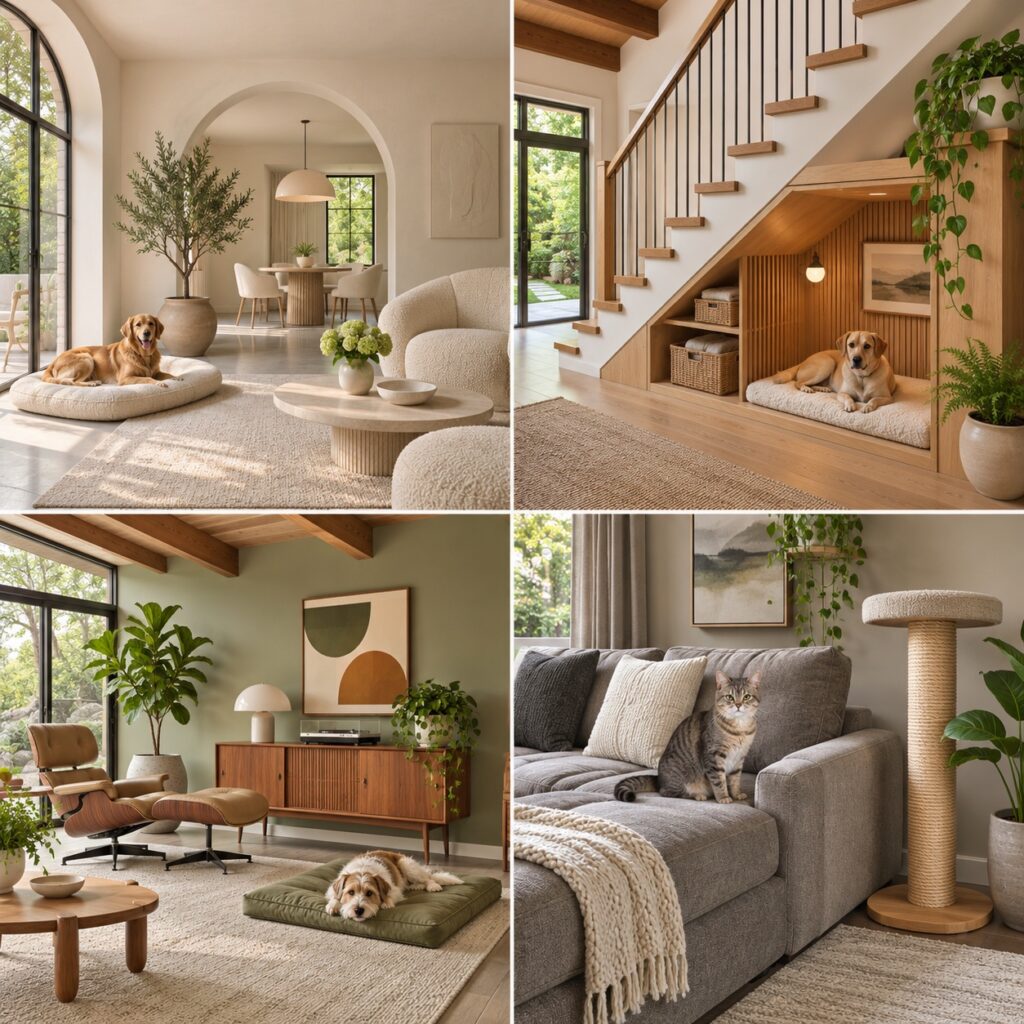
A pet-friendly living room starts with the way your household actually lives. Some dogs settle beside a chair, others share the sofa, and cats may prefer a perch with a view. Planning around those habits makes more sense than buying a collection of accessories and hoping they fit.
These 28 original design concepts combine comfortable seating, useful storage, and deliberate places for pets to rest. The images are AI-generated ideas created for DIY Ideas, not photographs of completed or safety-tested installations. Adapt each layout to your room, your pet’s size and behavior, and the care instructions for the materials you choose.
1. Pair Leather Seating with Removable Pet Pads
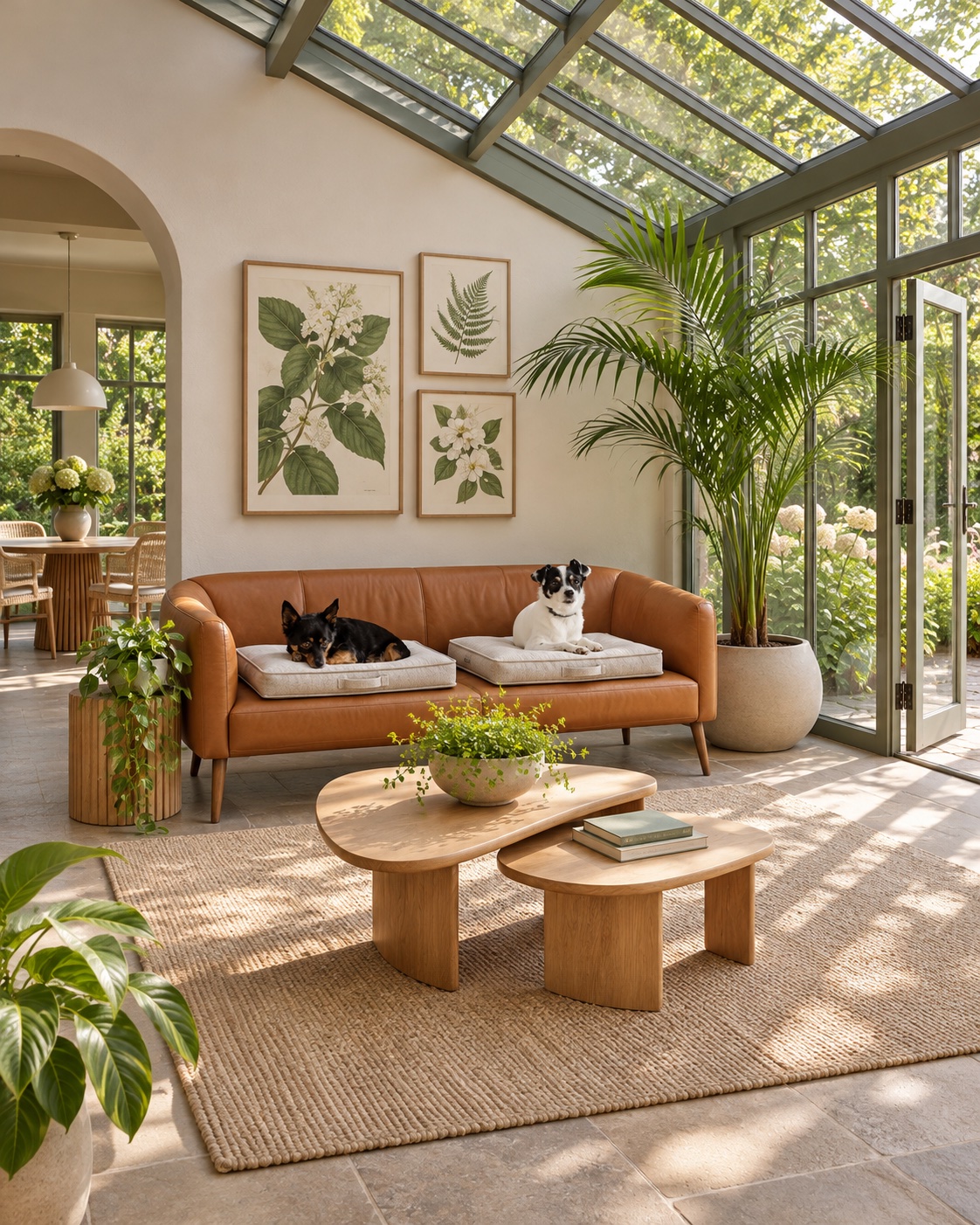
Leather creates a warm foundation, but its finish still needs protection from claws and repeated friction. A separate fitted pad on each favorite seat makes daily upkeep more manageable. Choose covers that can be removed without dismantling the cushions, and follow the sofa maker’s cleaning instructions. Botanical artwork can supply greenery where a live plant would be within chewing reach.
2. Leave a Comfortable Route Around the Seating
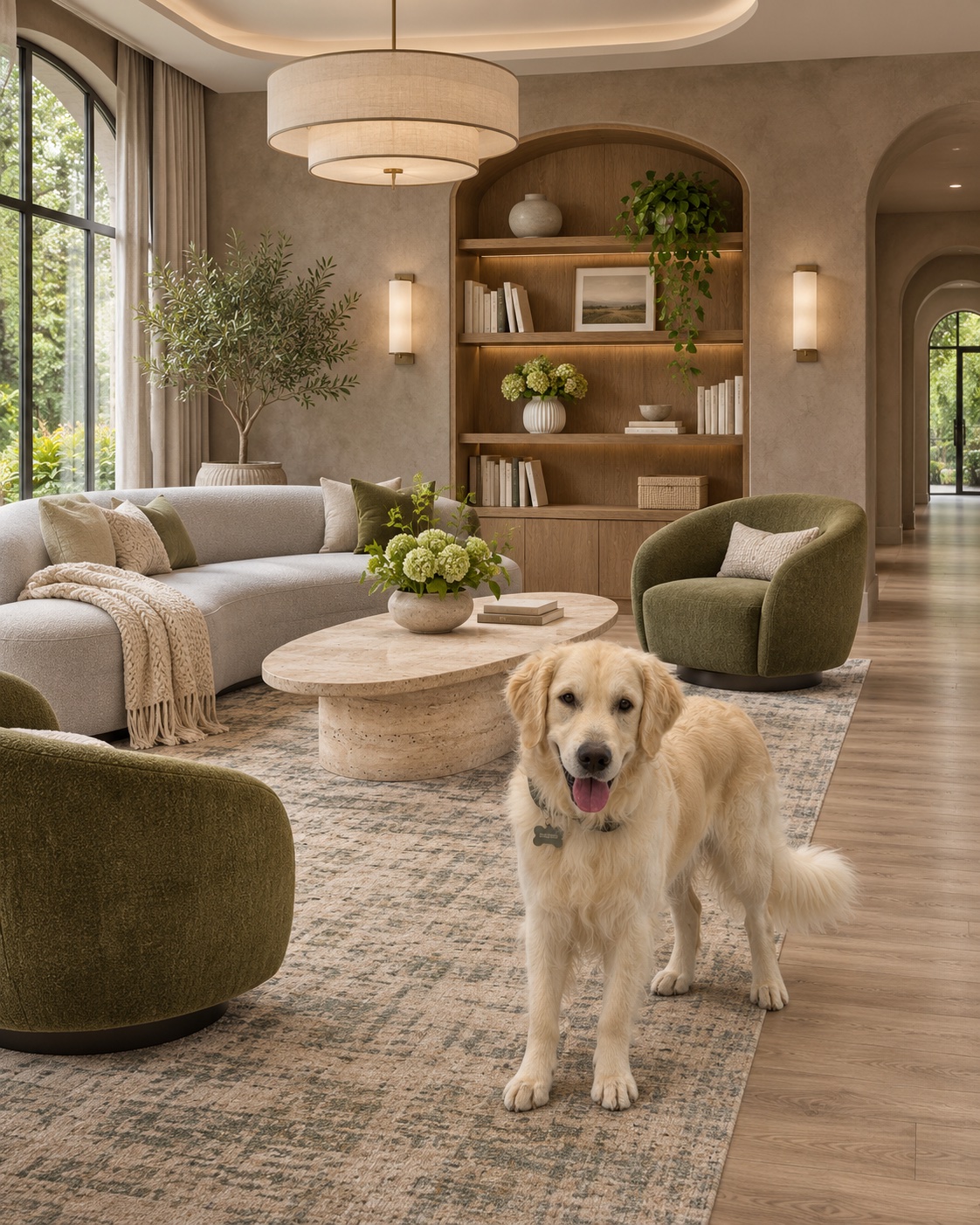
A polished room can still offer generous space for a larger dog to move. Pull the conversation group together, then preserve a continuous route around its edge. Rounded tables help reduce awkward corners, although stable construction matters just as much. Place a resting mat outside that route so a sleeping pet does not become an obstacle between the doorway and sofa.
3. Build Two Ground-Level Sleeping Niches
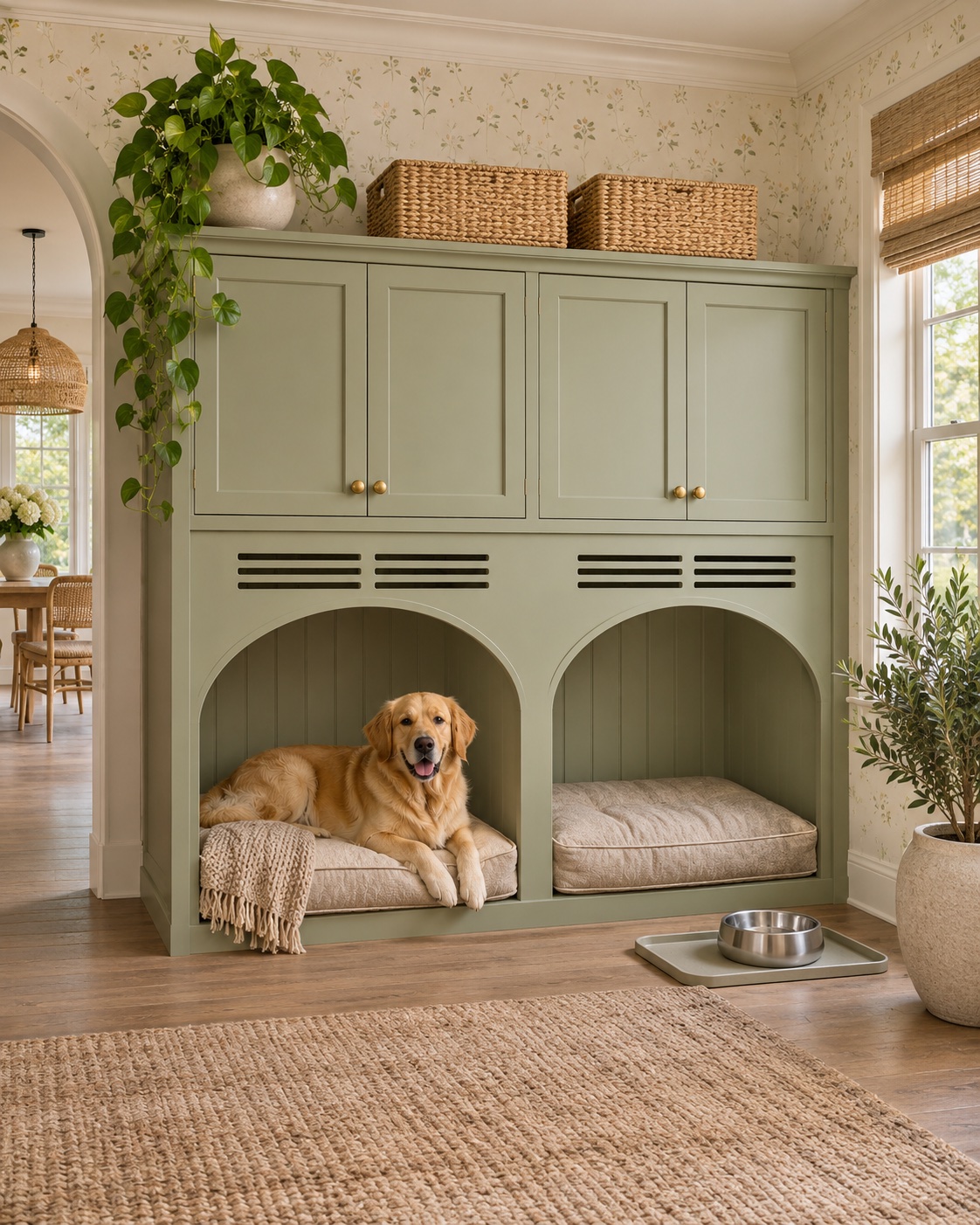
Side-by-side sleeping bays offer separate retreats without requiring dogs to climb to an upper bunk. Size each opening around the animal’s full body, allowing room to stand, turn, and stretch. Removable cushions and accessible interior surfaces simplify cleaning. Keep the entrance open and ventilation unobstructed; the cabinet should feel like an optional resting spot, with household supplies stored separately above.
4. Give an Open Loft a Defined Pet Zone
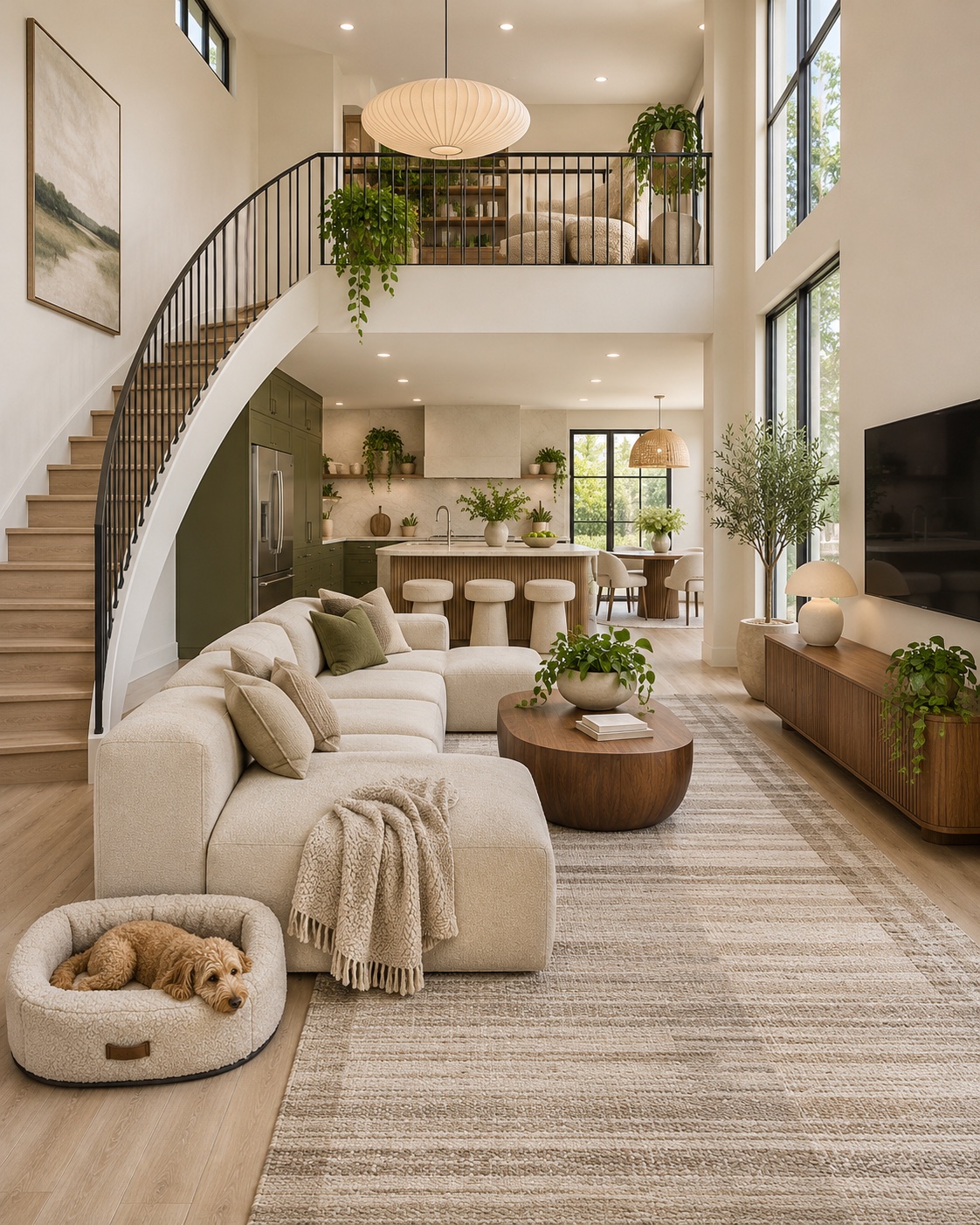
An open layout benefits from a clear place for bedding, rather than a cushion that migrates into the walkway. Here, the sofa establishes the living area and a small bed sits beside it. A runner adds traction along a regularly traveled route. Compare flooring samples for grip, scratch resistance, and cleaning requirements instead of relying on appearance or a broad material label.
5. Make Pale Upholstery Easier to Maintain
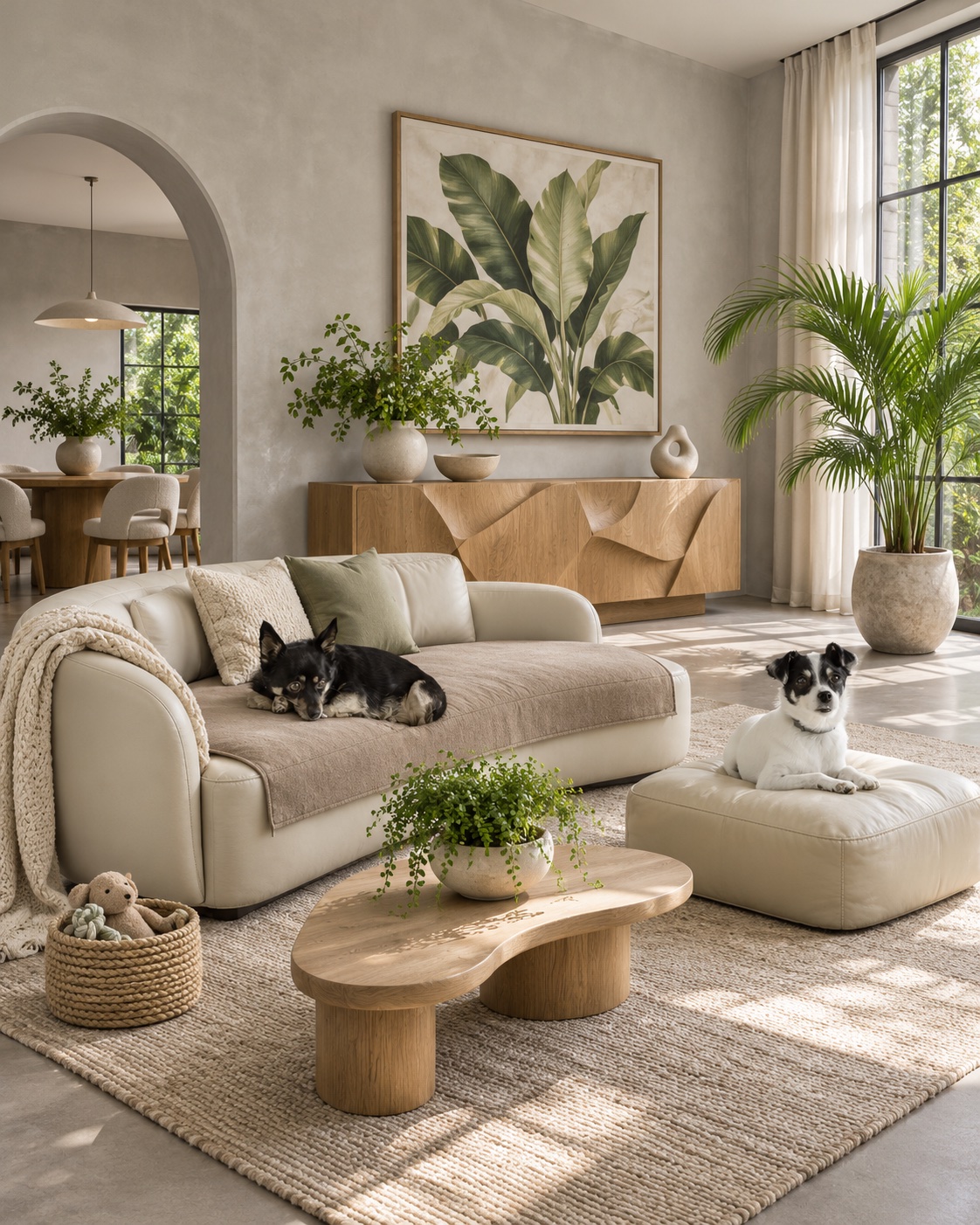
A light sofa becomes more practical when its most-used surfaces have removable protection. Use a neutral seat cover that looks intentional, and keep a spare ready while the first is being washed. An adjacent low ottoman offers another resting position. Check whether the upholstery can tolerate the cleaning method you expect to use; a pale finish alone says little about its durability.
6. Let a Rich Sofa Color Carry the Room
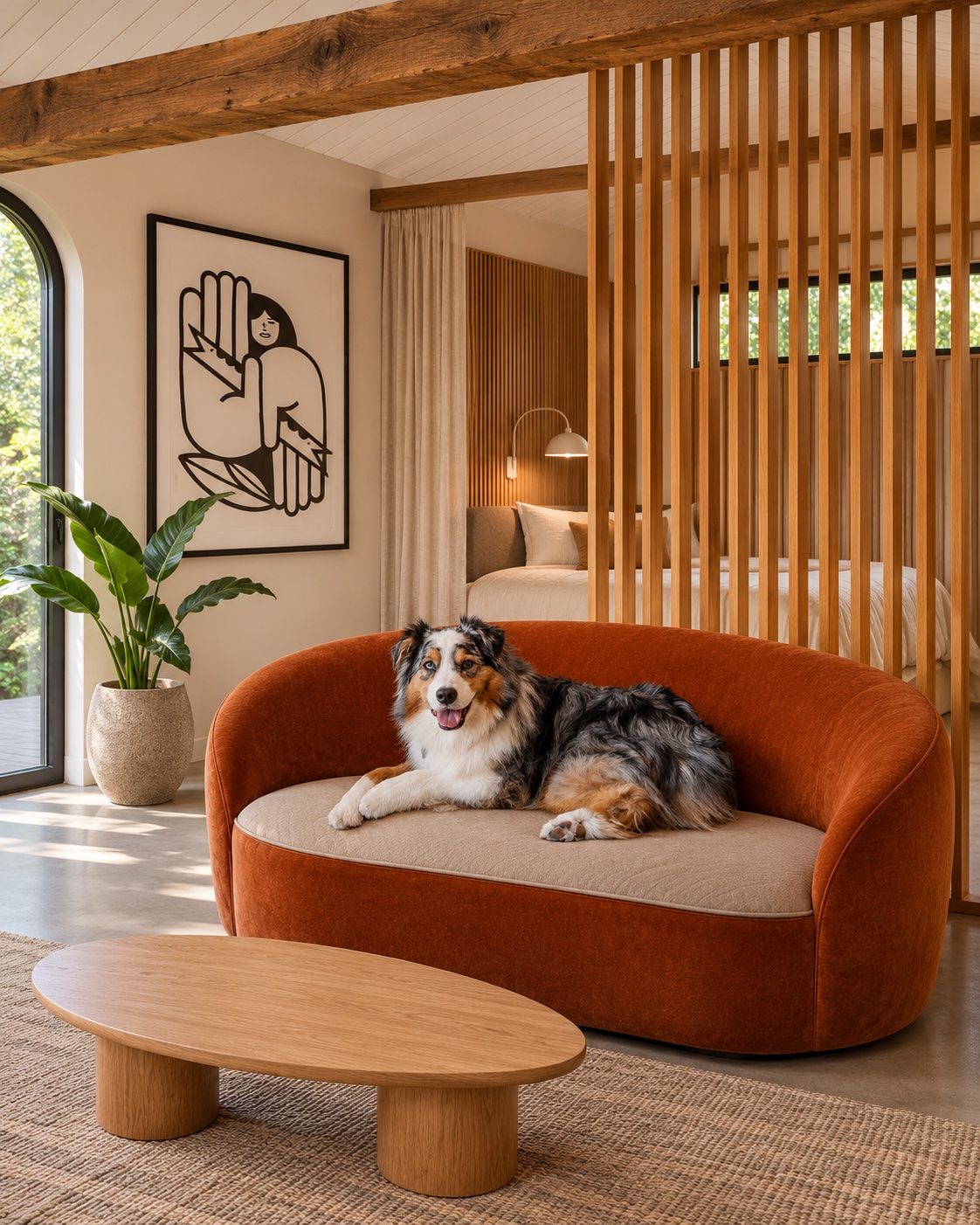
Rust upholstery provides a strong focal point, allowing the surrounding furniture to stay simple. A contrasting washable seat pad marks the dog’s preferred place without covering the entire sofa. Before choosing velvet or another short-pile fabric, test a sample for how easily your pet’s hair brushes away. Keep the practical cover large enough to protect the area the dog actually occupies.
7. Use Ceiling Color to Keep Floor-Level Styling Simple
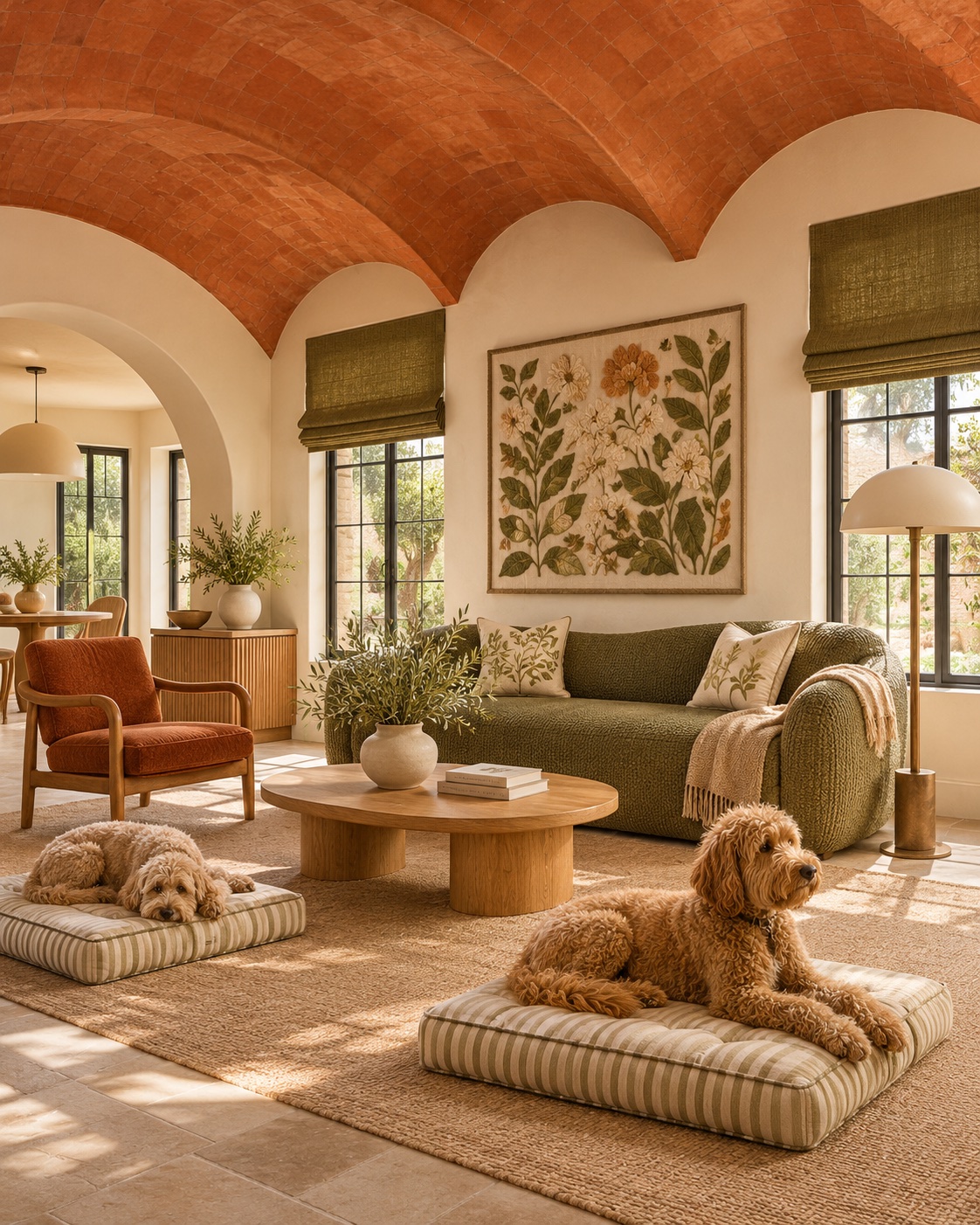
A terracotta ceiling adds personality without introducing more objects at tail height. Below it, a sofa and open-arm chair leave room for two separate resting pads. Matching stripes connect the pads to the room without requiring identical furniture. Let each dog choose a place to settle, and keep the pads clear of the door swing and regular walking routes.
8. Combine a Music Corner with Closed Pet Storage
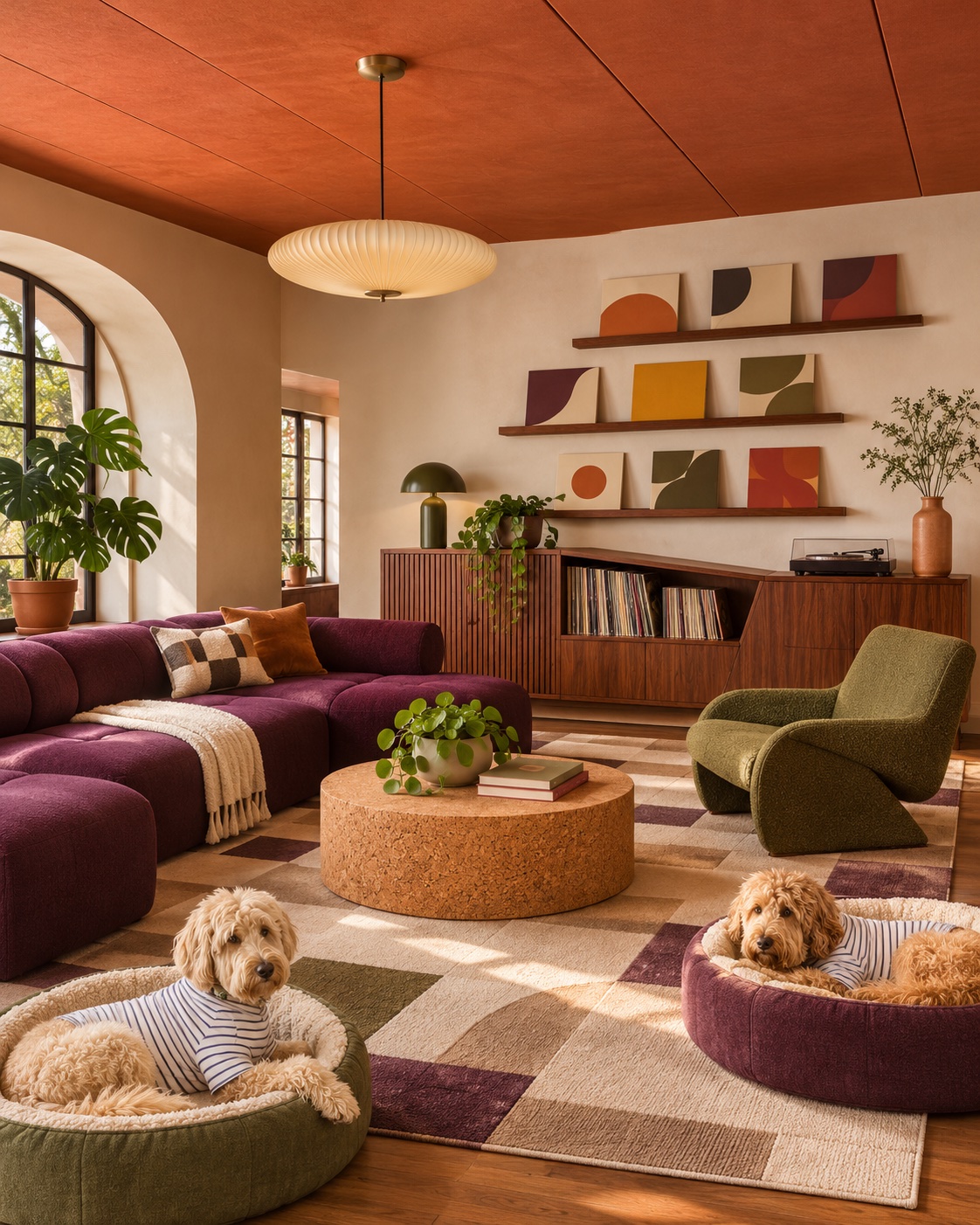
A record collection can provide the decorative focus while toys and spare covers stay behind cabinet doors. Keep sleeves and delicate equipment above the area pets brush against, with cables routed out of reach. A low round table leaves a useful open center. Choose beds in colors already present in the room so they feel like part of the arrangement.
9. Place the Pet Bed Beside the Chair, Away from the Hearth
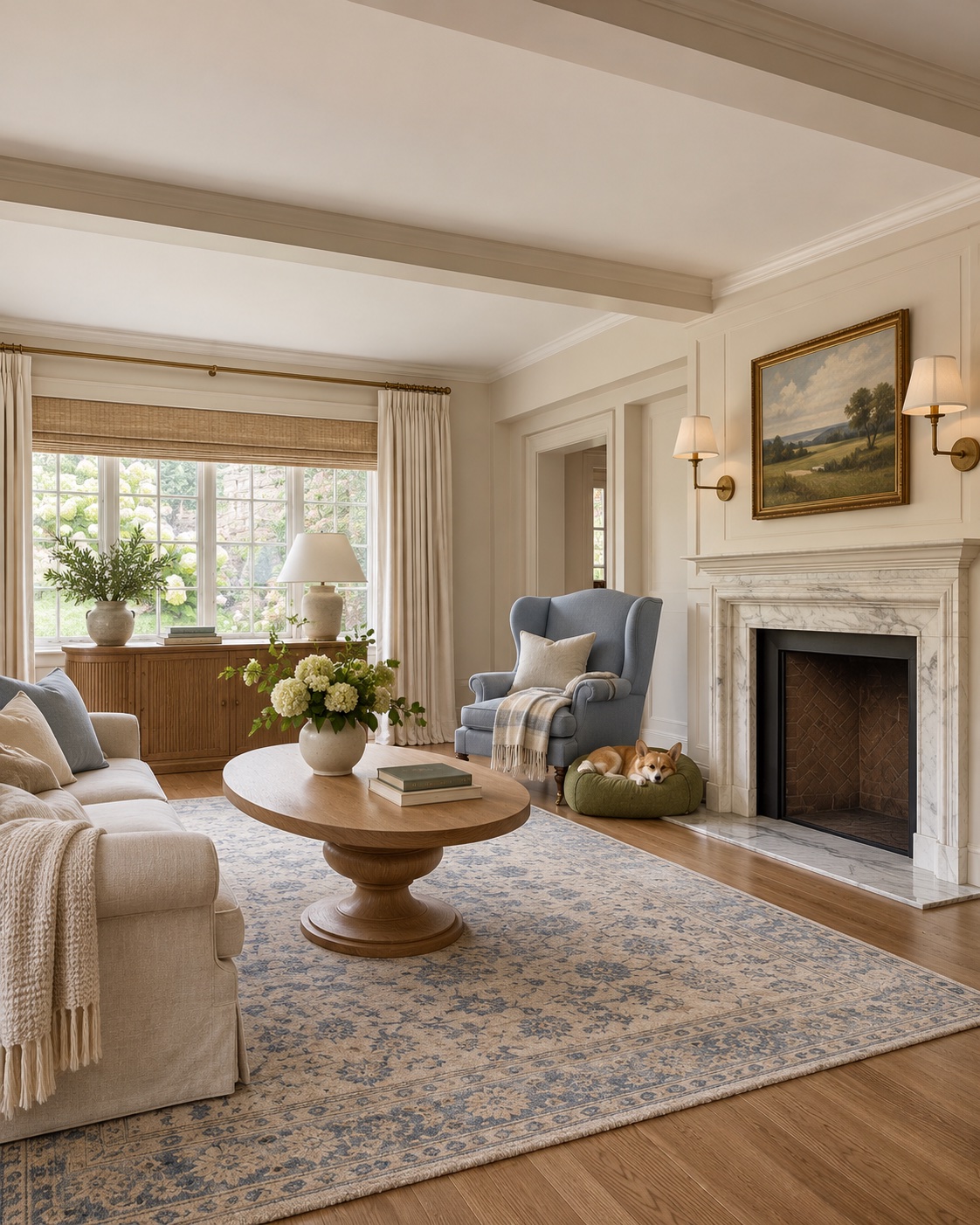
A classic room does not need to hide its dog bed. Repeat a cushion color or rug tone, and place the bed where the pet can stay near people without sitting directly in front of the fireplace. The illustrated hearth is unlit. When a fireplace is used, follow its clearance requirements and provide an appropriate barrier against access to hot surfaces.
10. Make a Paneled Nook Comfortable for Shared Downtime
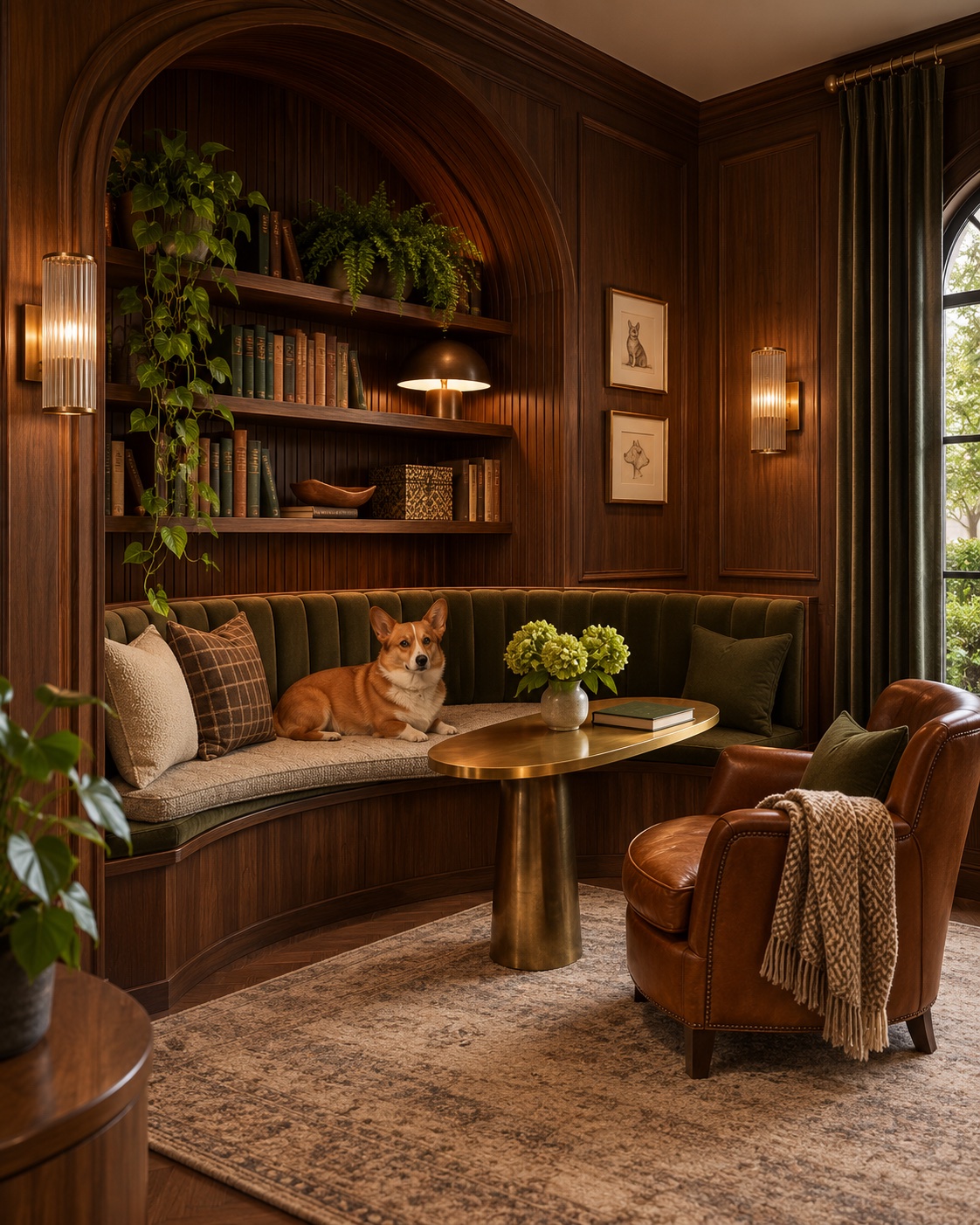
Dark wood and compact seating create a sheltered reading corner. A fitted pad protects the banquette while preserving its shape, and wall lights free the small table for everyday use. Give the pet an easy alternative at floor level if the seat is difficult to reach. Avoid crowding the nook with extra stools that would interrupt entry and exit.
11. Keep a Minimal Room Useful at Floor Level
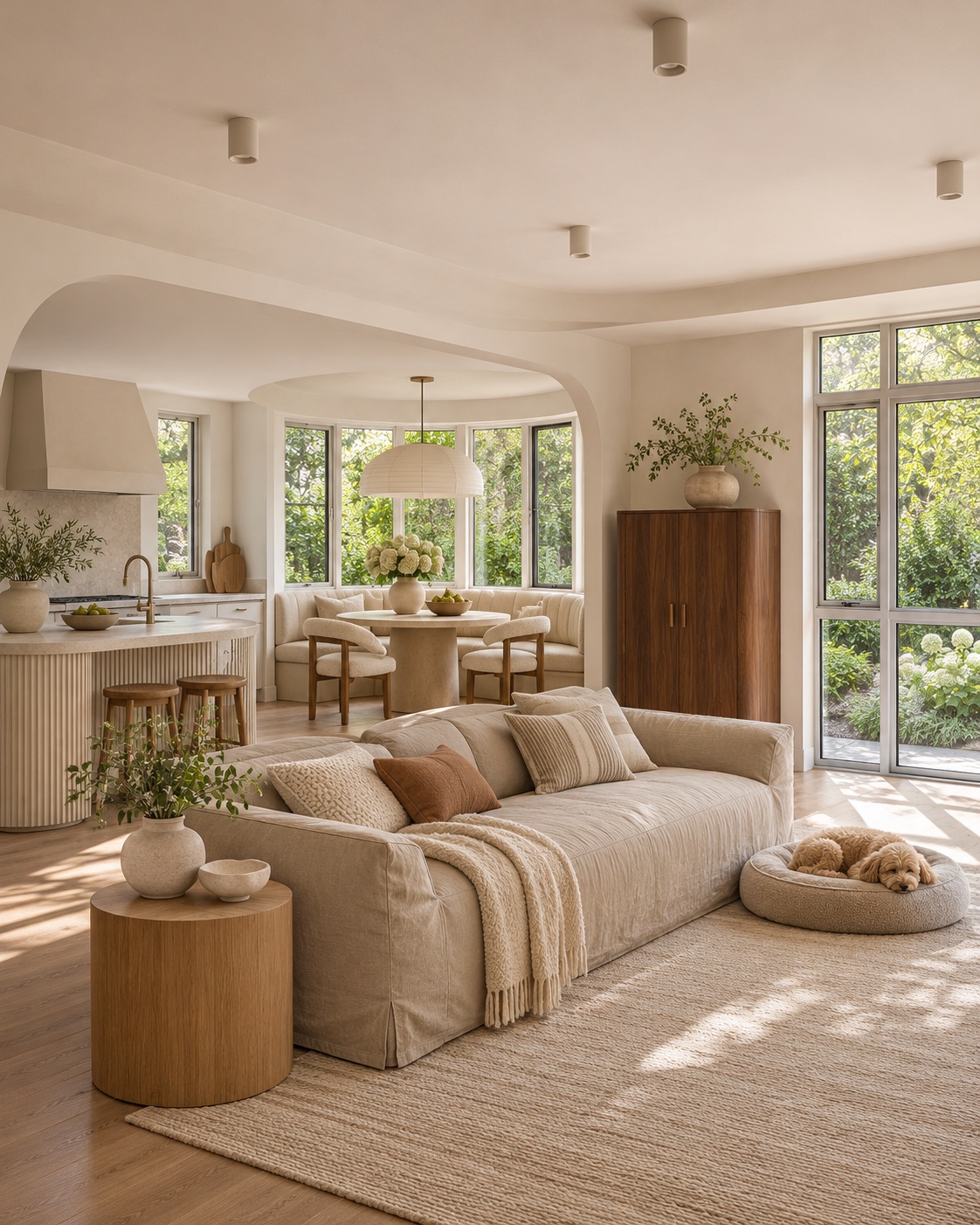
Minimal interiors work best when everyday items have deliberate locations. A low cushion beside the sofa gives a small dog a place to rest, while a closed cabinet can hold spare bedding and grooming supplies. Choose the rug for its care instructions as well as texture. Measure washable pieces against your machine’s capacity before assuming that cleaning them will be straightforward.
12. Replace Fragile Surfaces with a Rounded Solid Table
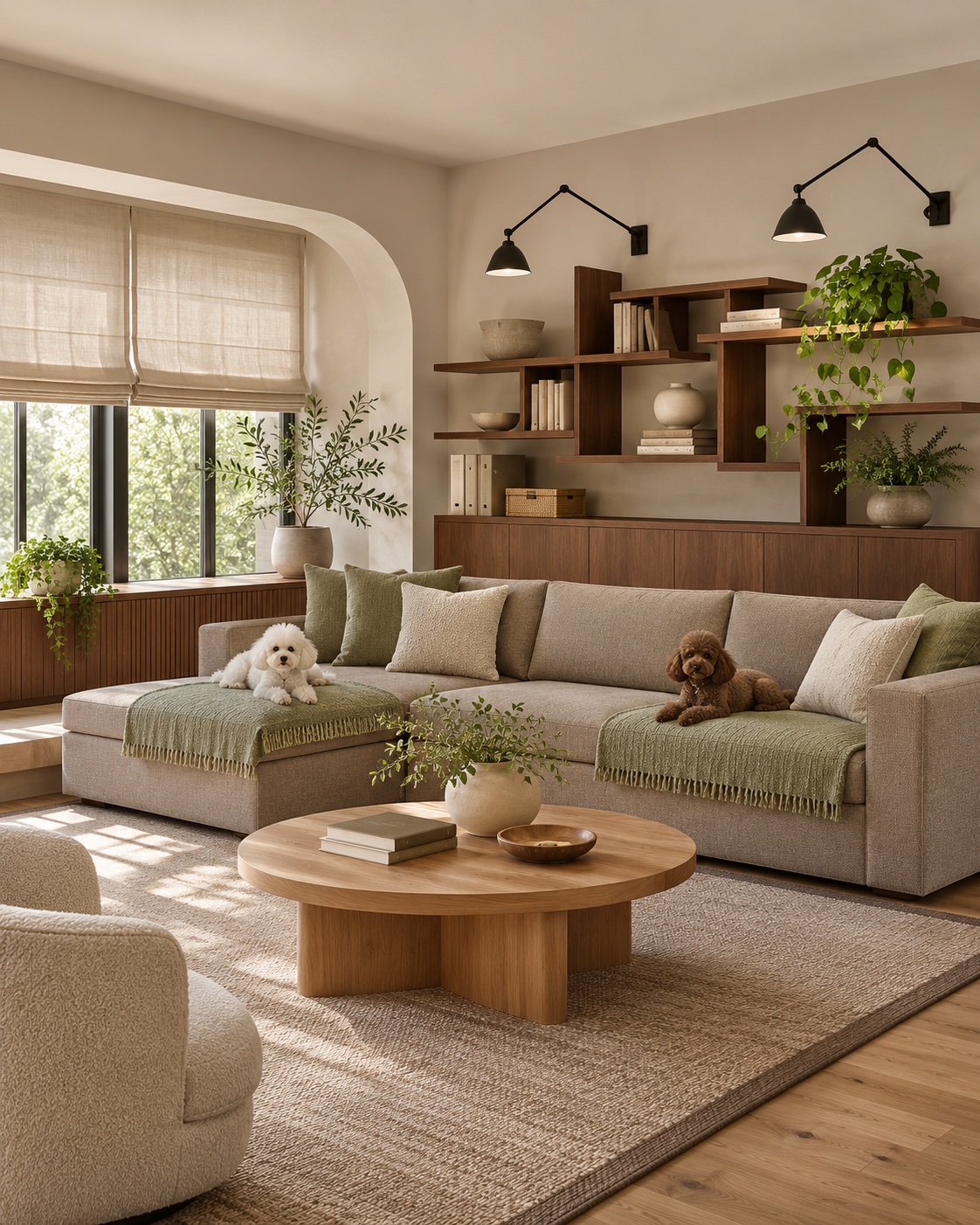
A solid table with softened edges can make a busy seating group feel less delicate. Keep it stable and leave sufficient space around the sofa for pets and people to pass. Closely woven upholstery and removable throws are worth comparing with more open, looped textures. Inspect samples for snagging and hair removal rather than treating any fabric category as universally pet-proof.
13. Turn Under-Stair Space into an Open Retreat
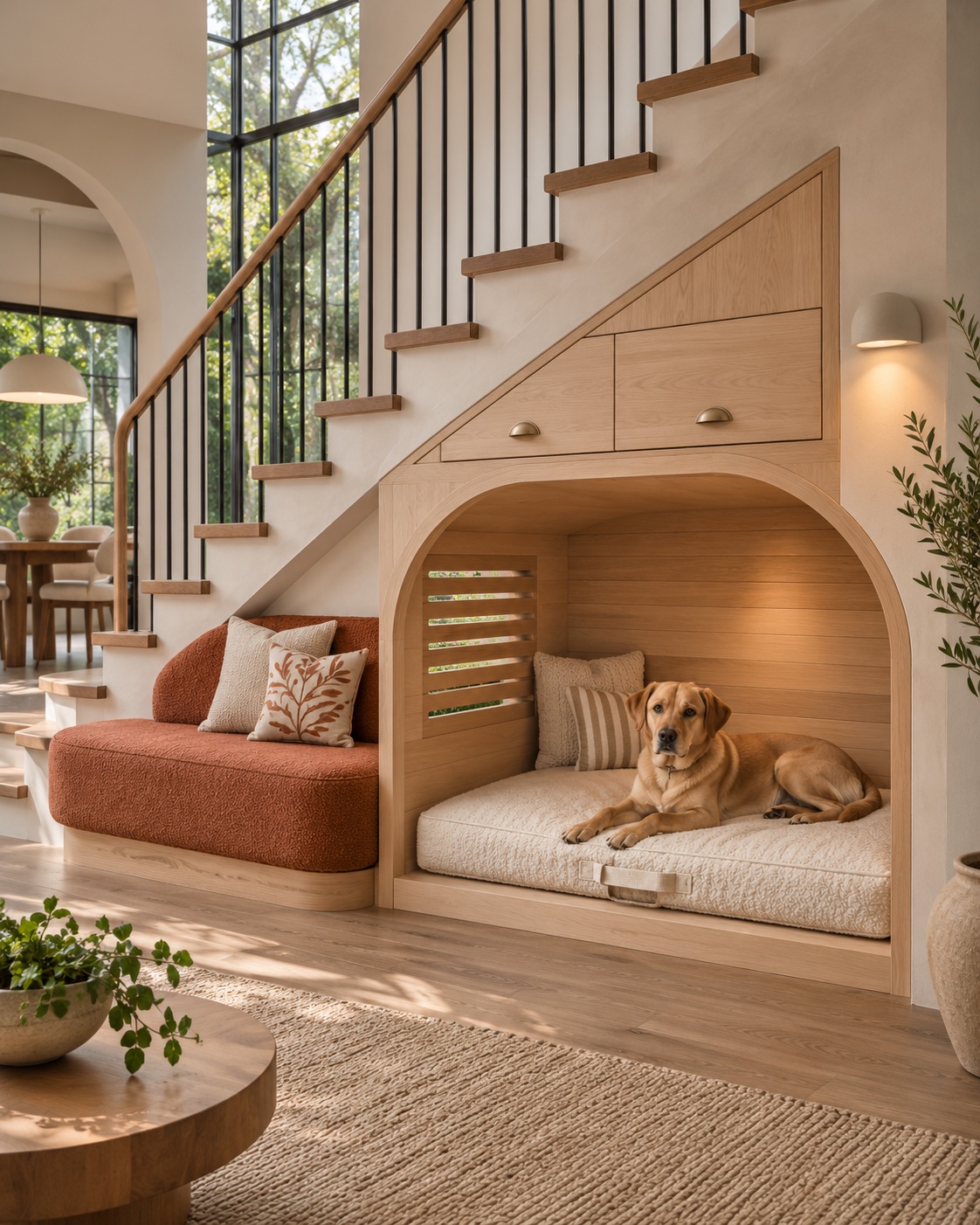
The area beneath a staircase can become a quiet resting spot when it is dry, ventilated, and easy to access. A broad opening is more inviting than a narrow decorative doorway. Keep lighting and wiring beyond chewing reach, and make the cushion removable. Confirm that the usable interior is large enough for the dog rather than judging the nook by its front opening.
14. Add a Pet Cushion to a Midcentury Arrangement
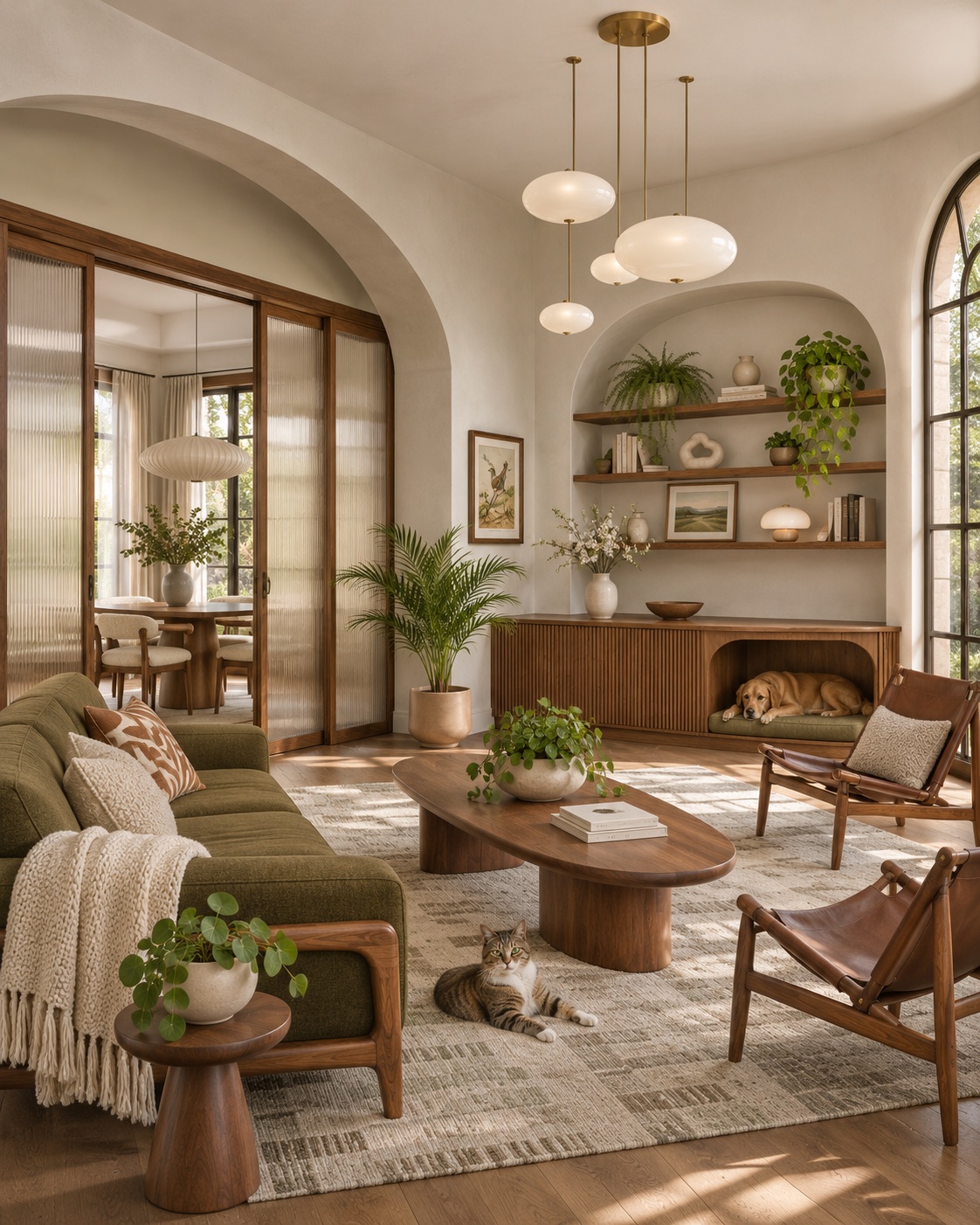
Open wooden frames and low storage give this room its midcentury character. A plain pet cushion beside the console adds a resting place without competing with the furniture. Leave enough space to vacuum around chair legs and under the table. Choose any live plants by their exact species and their suitability for the animals in the home, not by their decorative style.
15. Offer a Cat a Scratching Surface Near the Sofa
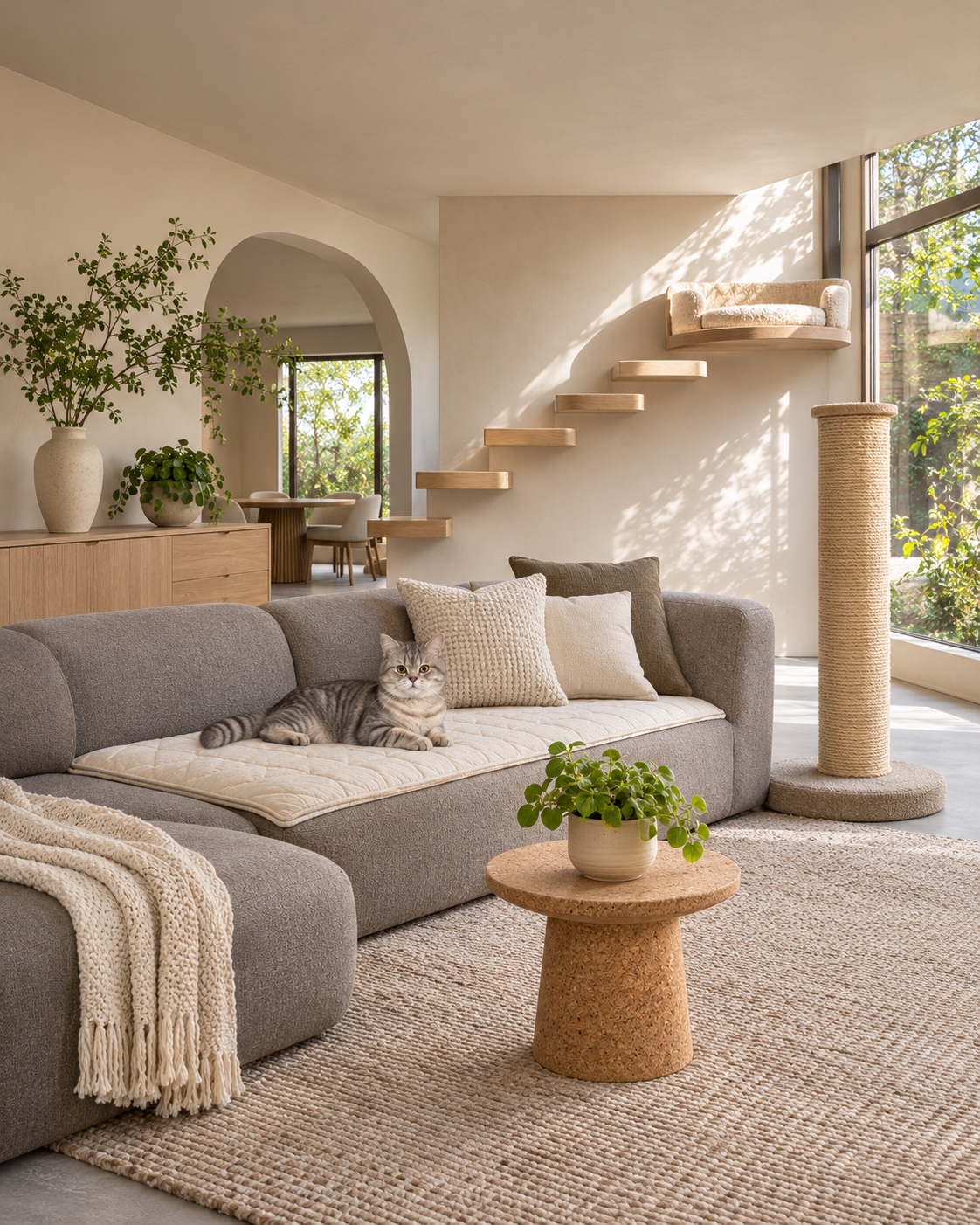
A sofa area can include a separate scratching post and a resting perch, giving the cat more than one place to spend time. Choose a stable post suited to the cat’s preferred scratching orientation and size. Washable seat protection simplifies upkeep. Any wall perch needs secure installation and a route the cat can comfortably use, with fragile ornaments kept away from that route.
16. Use an Ottoman Thoughtfully as a Shared Surface
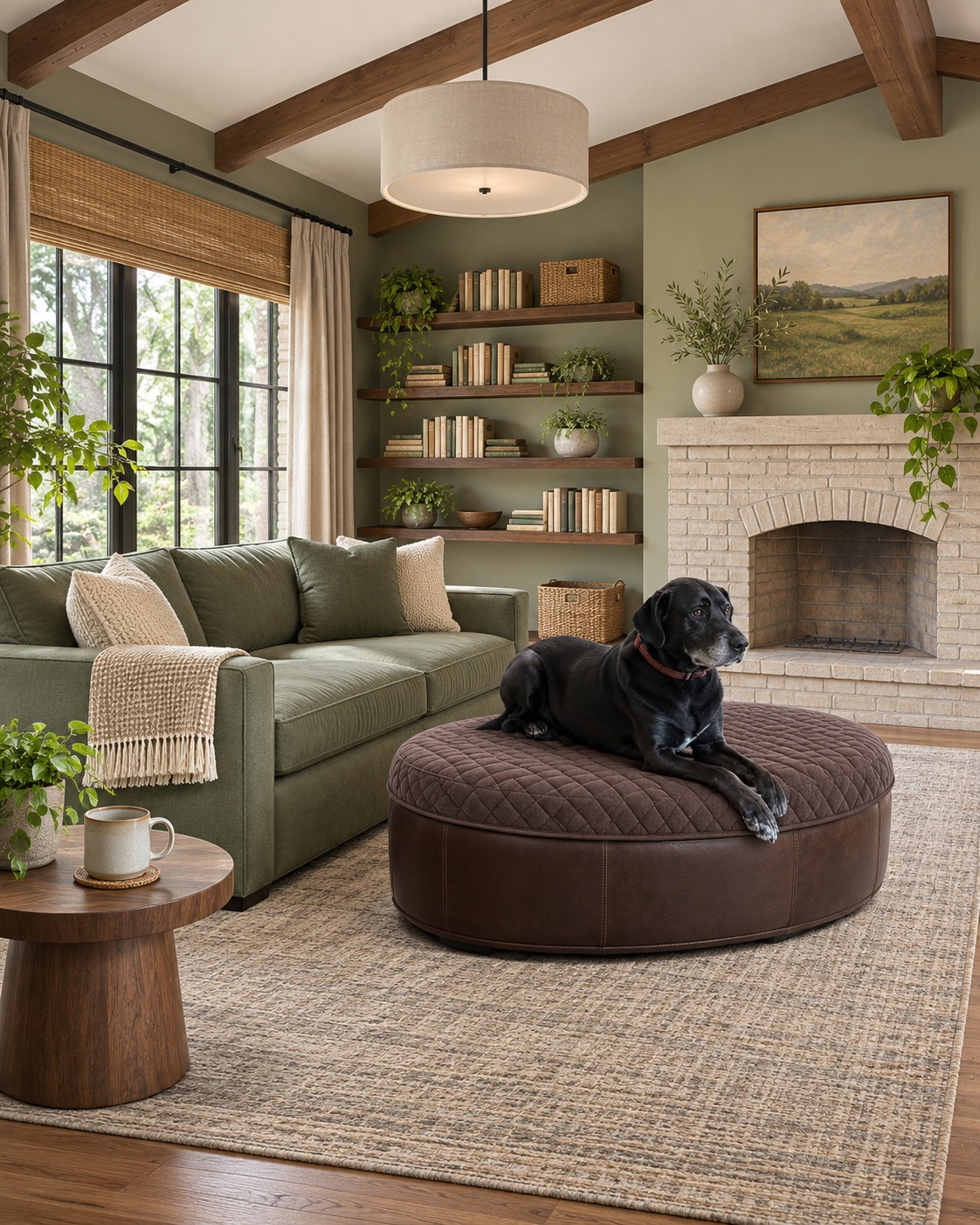
A broad, closed ottoman can be a comfortable resting spot for a dog that already uses furniture. A fitted protector helps separate that use from the upholstery underneath. Keep drinks on a nearby side table, and never open a storage lid while the animal is on it. Provide a floor-level bed as well, especially when climbing onto furniture is difficult.
17. Give an Industrial Room Softer Resting Areas
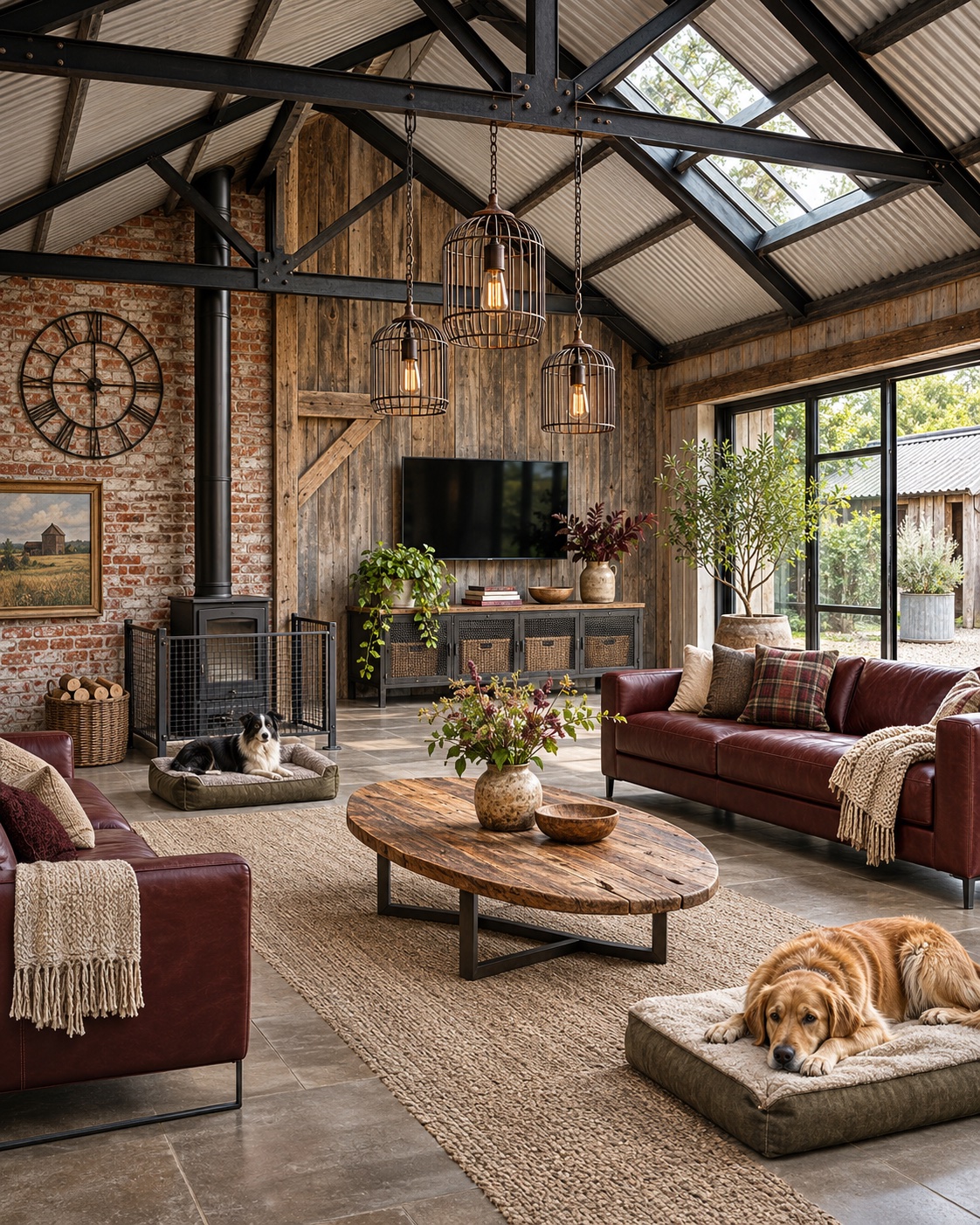
Leather, brick, timber, and stone create a strong industrial palette, but a pet still needs a comfortable resting surface. Add low beds and a secure runner where paws regularly cross the floor. Inspect reclaimed furniture for rough edges and loose hardware before bringing it into a shared living area. Keep stove access protected whenever it is operating, with bedding outside required clearances.
18. Give Each Dog a Separate Place to Settle
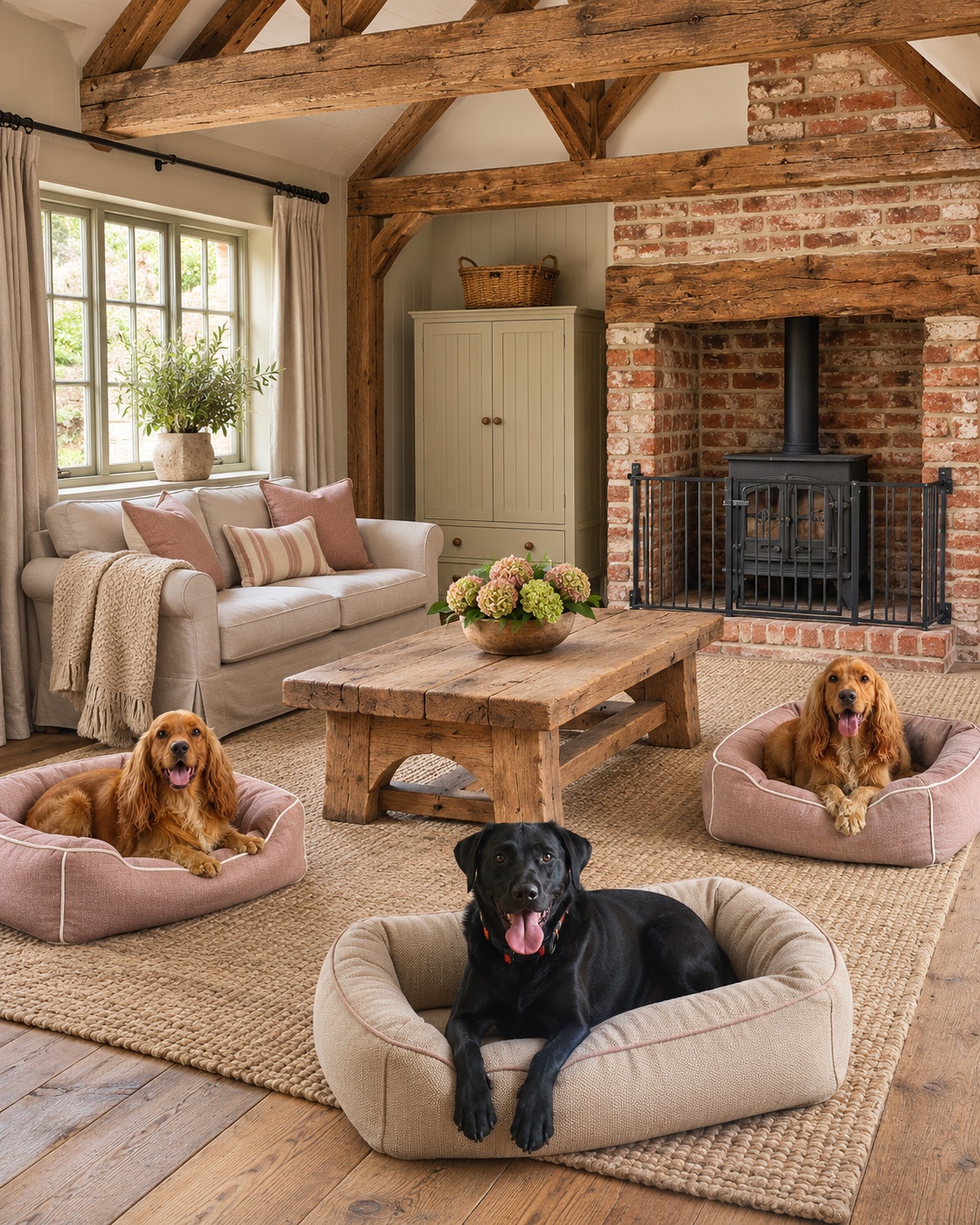
A coordinated collection of beds can look as considered as one oversized shared bed. Separate cushions let dogs spread out and make it easier to wash one cover at a time. Place the beds away from the hearth and leave access around them. Choose sizes based on how each dog sleeps, including the space needed to stretch rather than only curl up.
19. Create Several Resting Options in a Multi-Pet Room
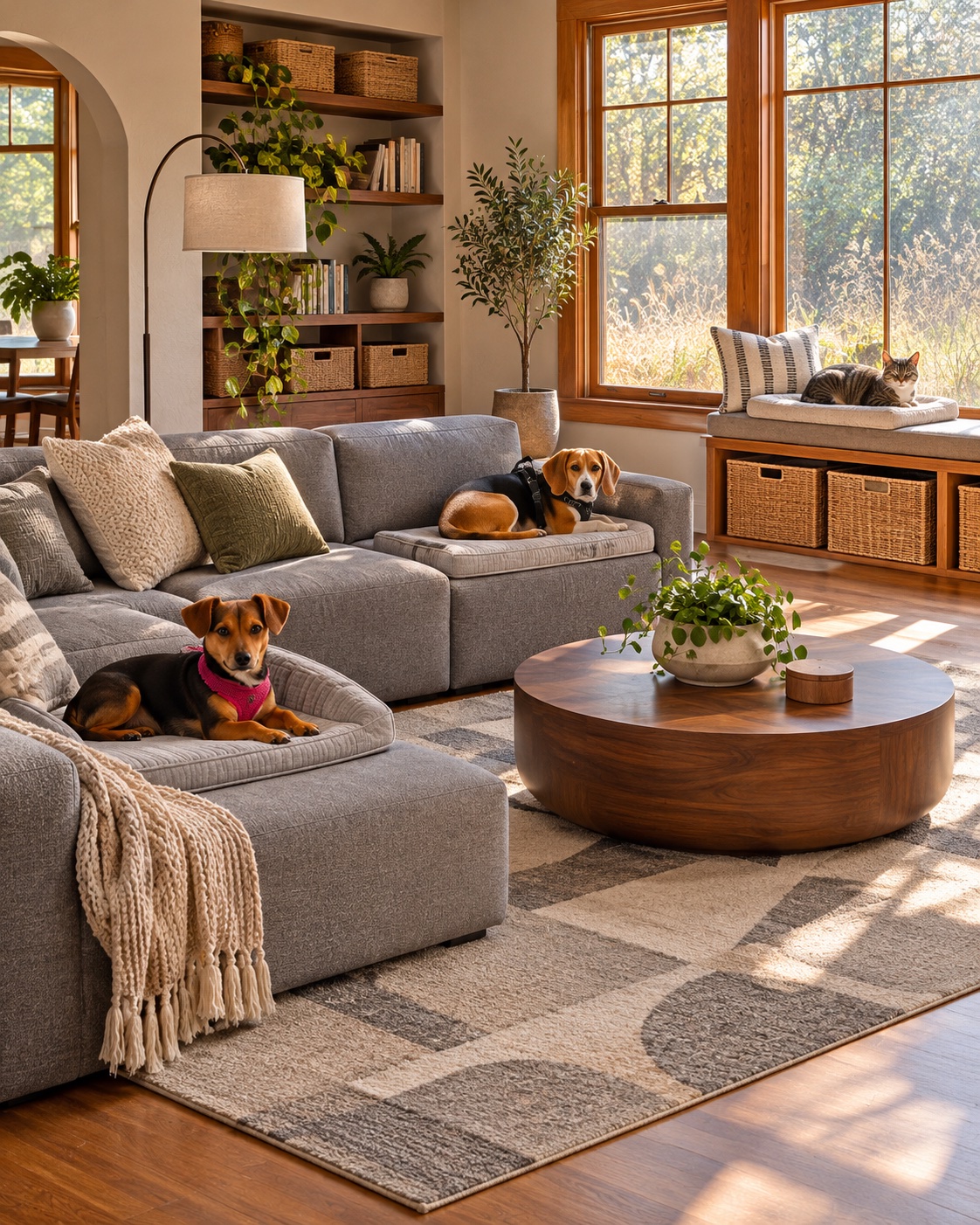
A sectional, window bench, and floor bed can distribute resting places across the same room. This avoids making one cushion the only appealing spot. Protect the seats pets use most and keep access between zones open. A cat may prefer a different position from the dogs, so observe actual habits before committing to a permanent arrangement or buying matching beds.
20. Coordinate Pet Furniture Without Making It Identical
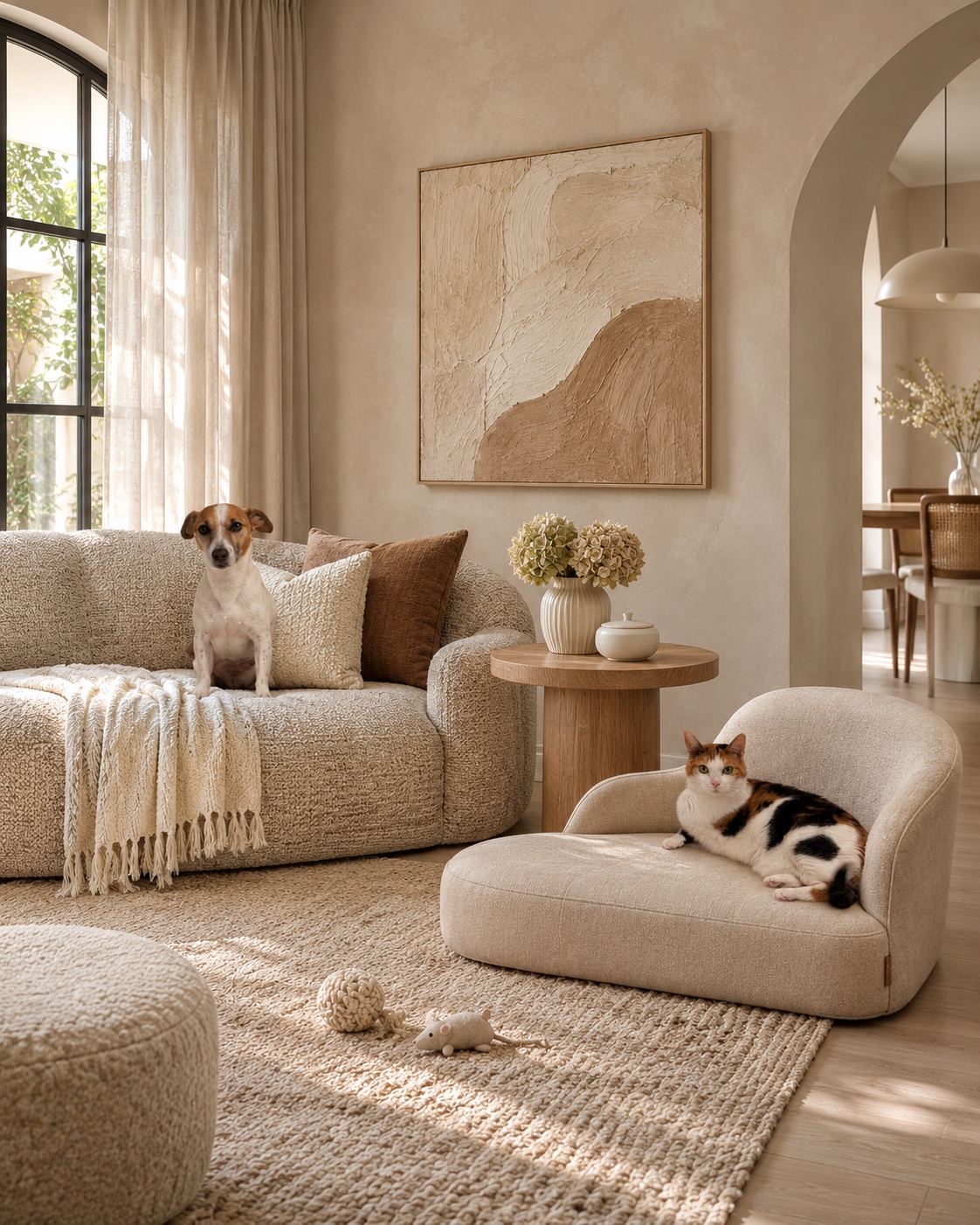
A small cat chaise can share the sofa’s neutral palette while keeping its own shape and scale. The result looks connected without forcing both animals into the same kind of bed. Use removable covers where possible, and give each resting place enough room around it. Keep lamp cords secured and place loose throws where they will not trail across the floor.
21. Add a Washable Layer to a Favorite Reading Chair
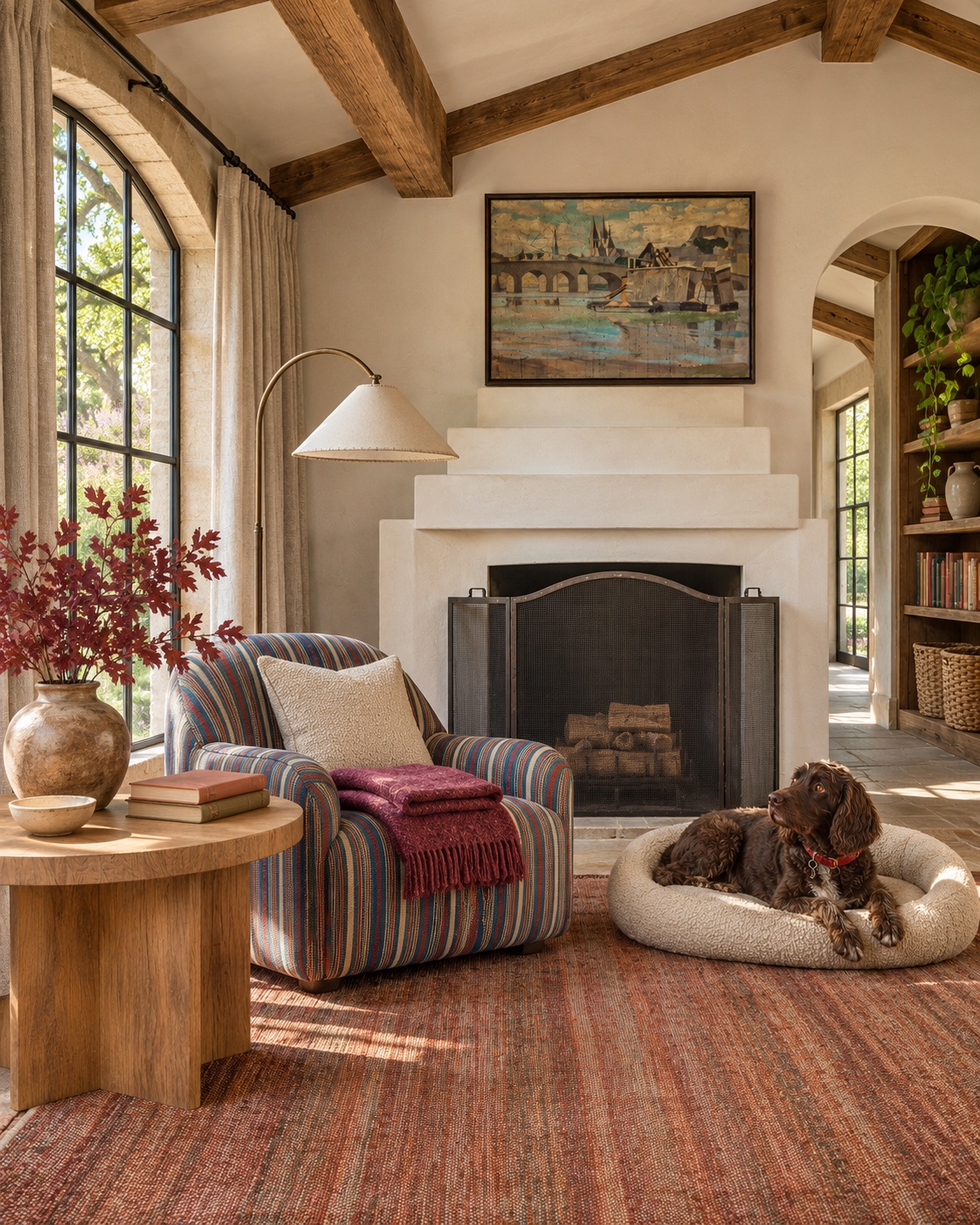
A patterned chair can remain the room’s focal point while a plain washable layer handles everyday contact. Keep a separate bed close enough for the dog to rest beside the reader. A broad side table is easier to use than a crowded cluster of small stands. Fold spare textiles into closed storage so they stay clean until needed.
22. Make a Studio Pet Station Compact and Complete
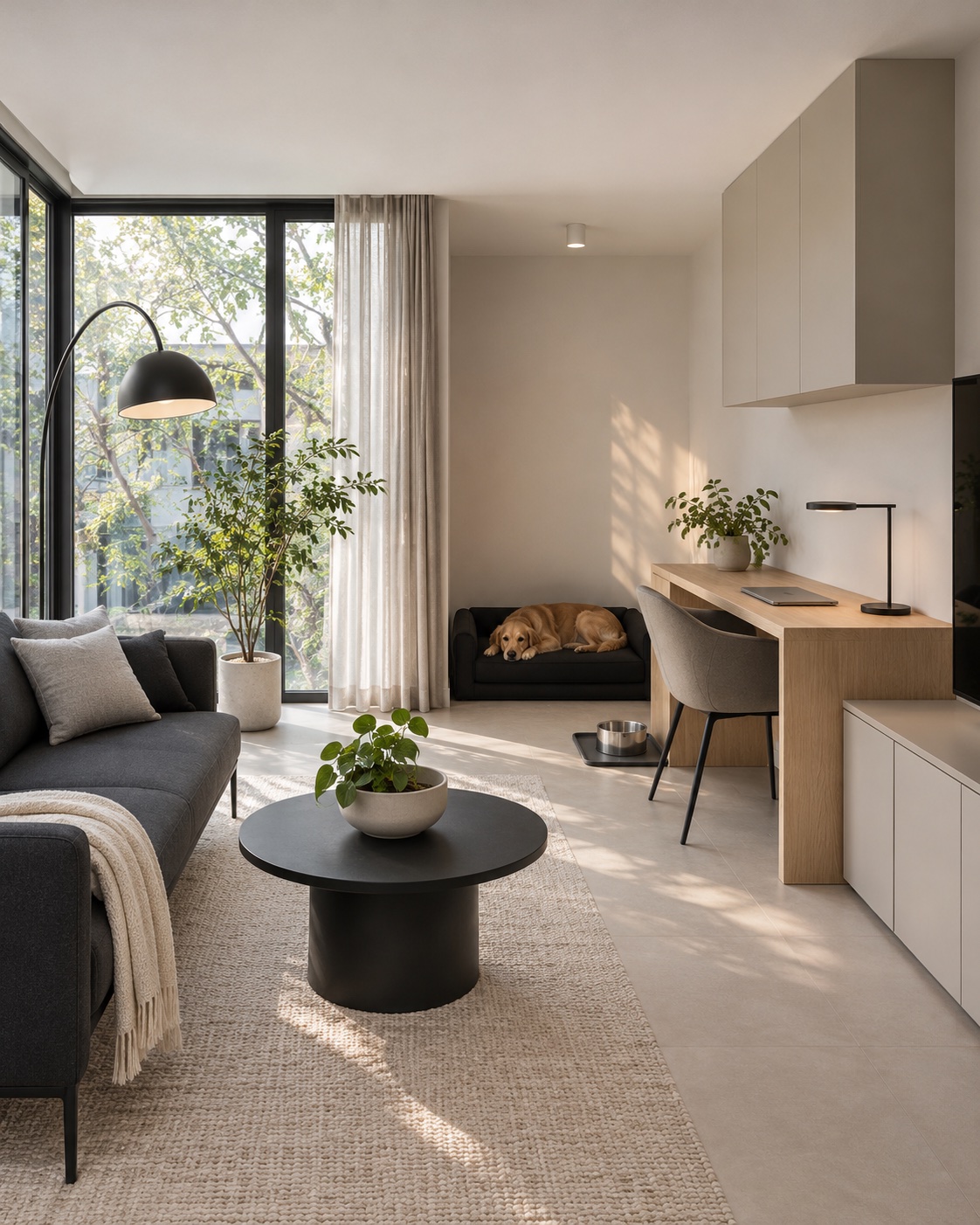
In a studio, a bed works best in a quiet nook that stays accessible when the desk chair is pulled out. Position the water bowl separately on a washable tray and leave the sleeping surface clear. Closed storage keeps food and supplies organized without filling the floor. Check that the arrangement still works when someone opens the wardrobe or unfolds additional seating.
23. Put the Water Bowl on a Protected Floor Surface
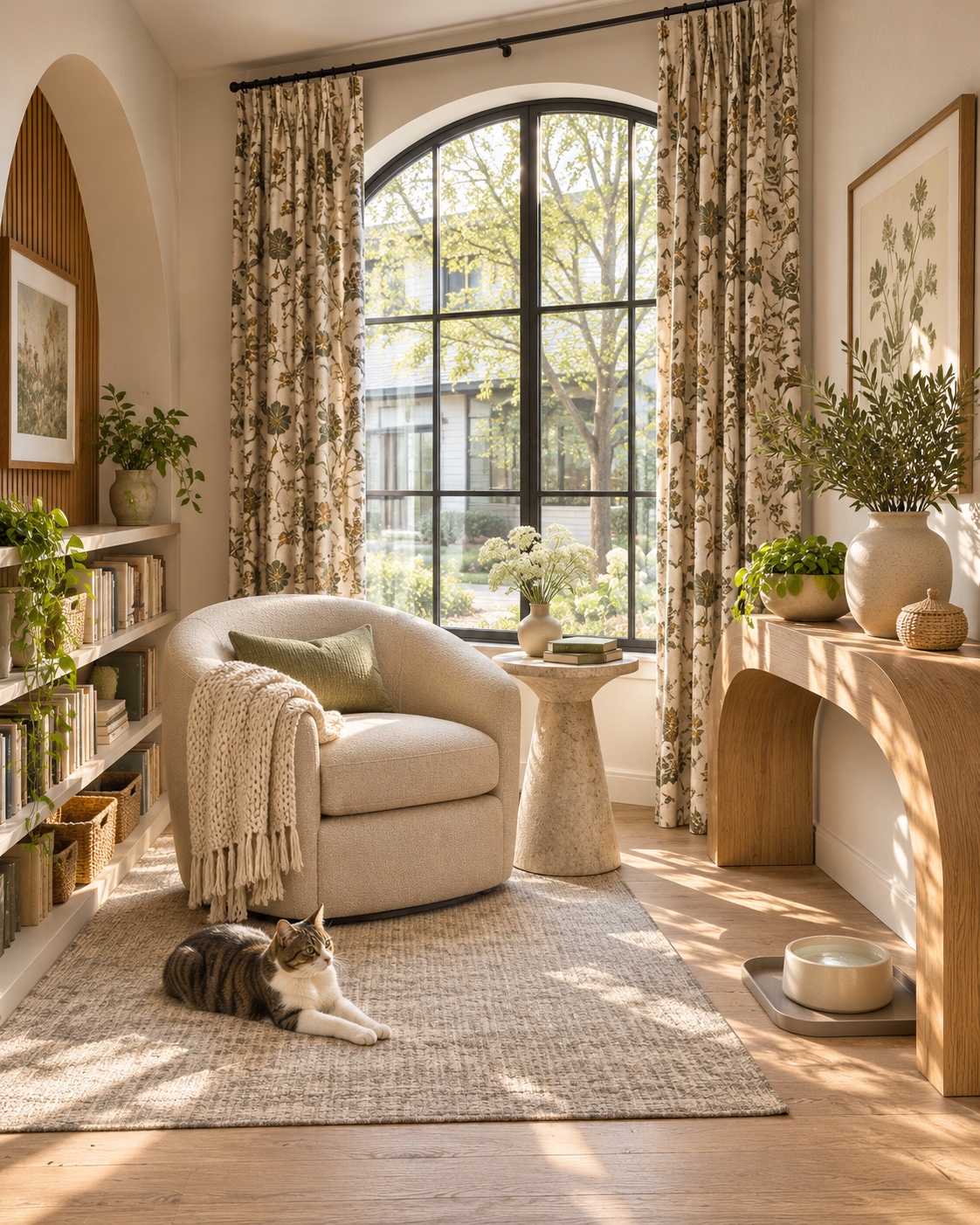
A reading corner can accommodate a water station without using the console as a bowl stand. Place the bowl on a washable, water-resistant tray at a comfortable floor-level location, away from electrical equipment. Check the surrounding floor for splashes during daily cleaning. Keep the route to the bowl open, and choose a location that does not require stepping over bedding.
24. Keep Shelves Organized Above the Pet’s Route
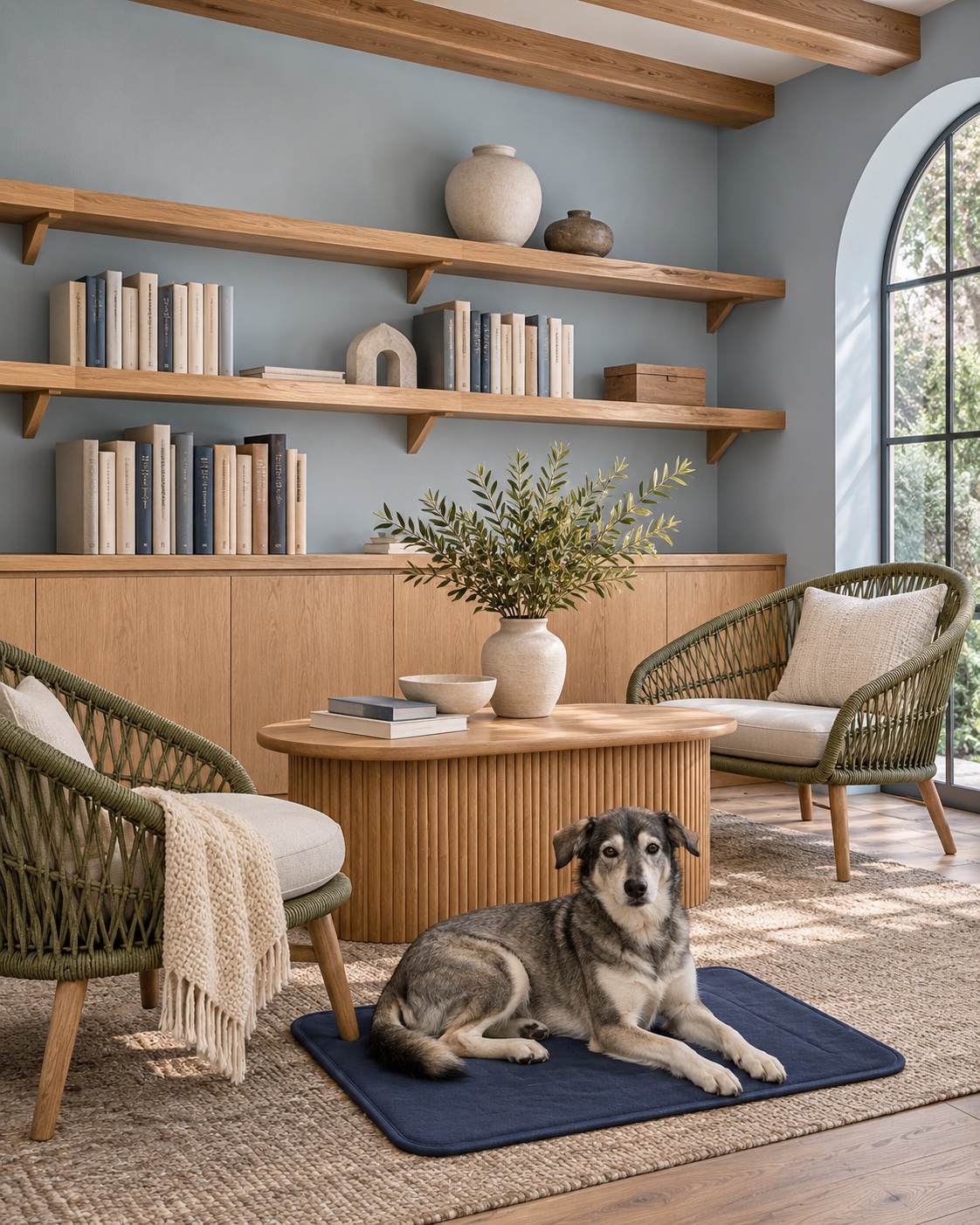
A pair of chairs and a fluted table can frame a resting mat without crowding it. Use closed lower cupboards for supplies and reserve upper shelves for decorative objects. Secure tall furniture according to its installation guidance. Avoid balancing fragile pieces at the edge of shelves or tables where a passing tail or an excited greeting could knock them down.
25. Plan a Small Holiday Lounge Around Clear Floor Space
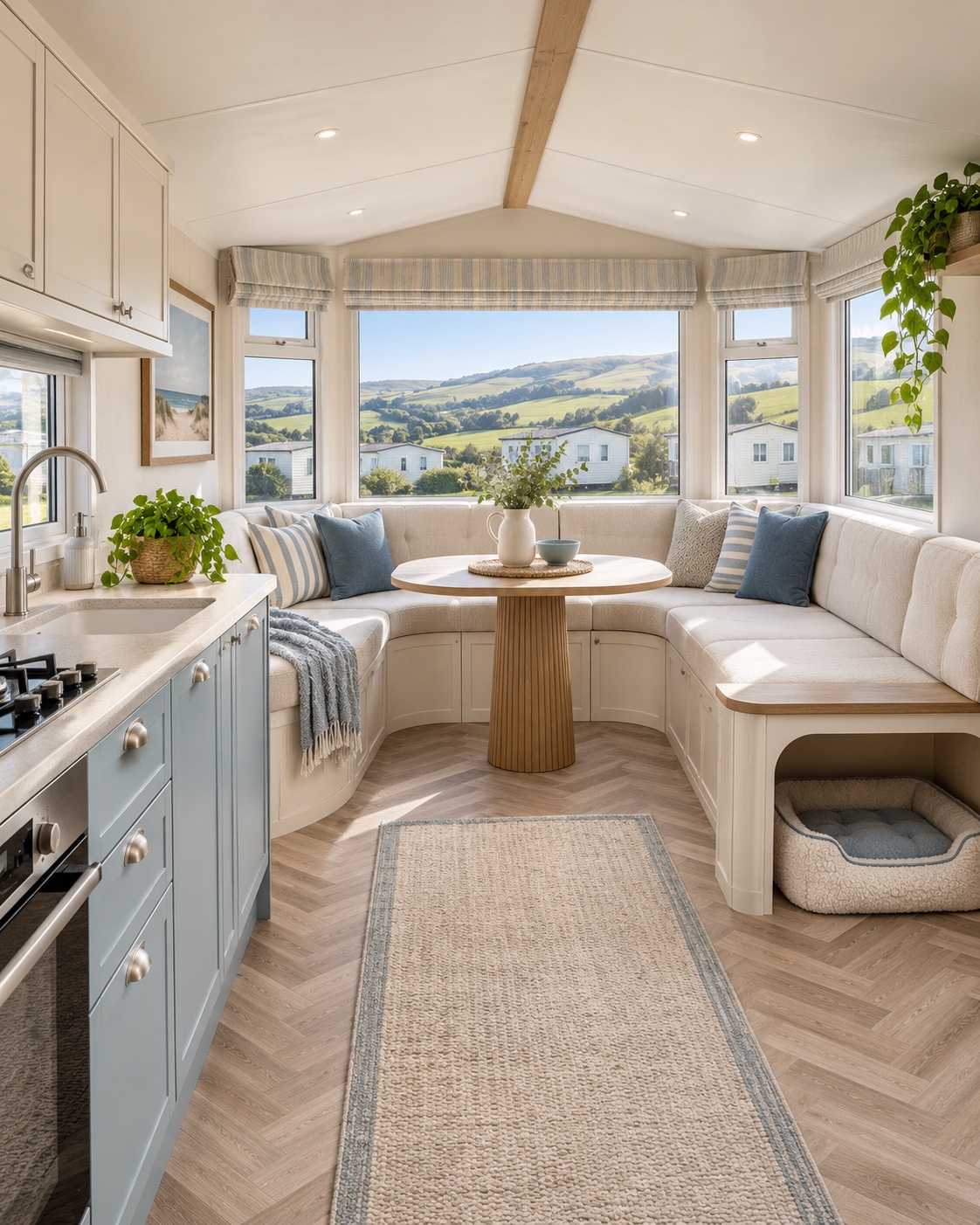
Compact caravan interiors benefit from built-in seating and furniture that serves more than one purpose. A bed beneath an open bench end can work if the space offers comfortable access, ventilation, and enough room for the animal. Keep a secure runner along the main route and store loose items before moving the vehicle. Test doors and drawers with the bedding in position.
26. Make Access to a Favorite Chair Easier
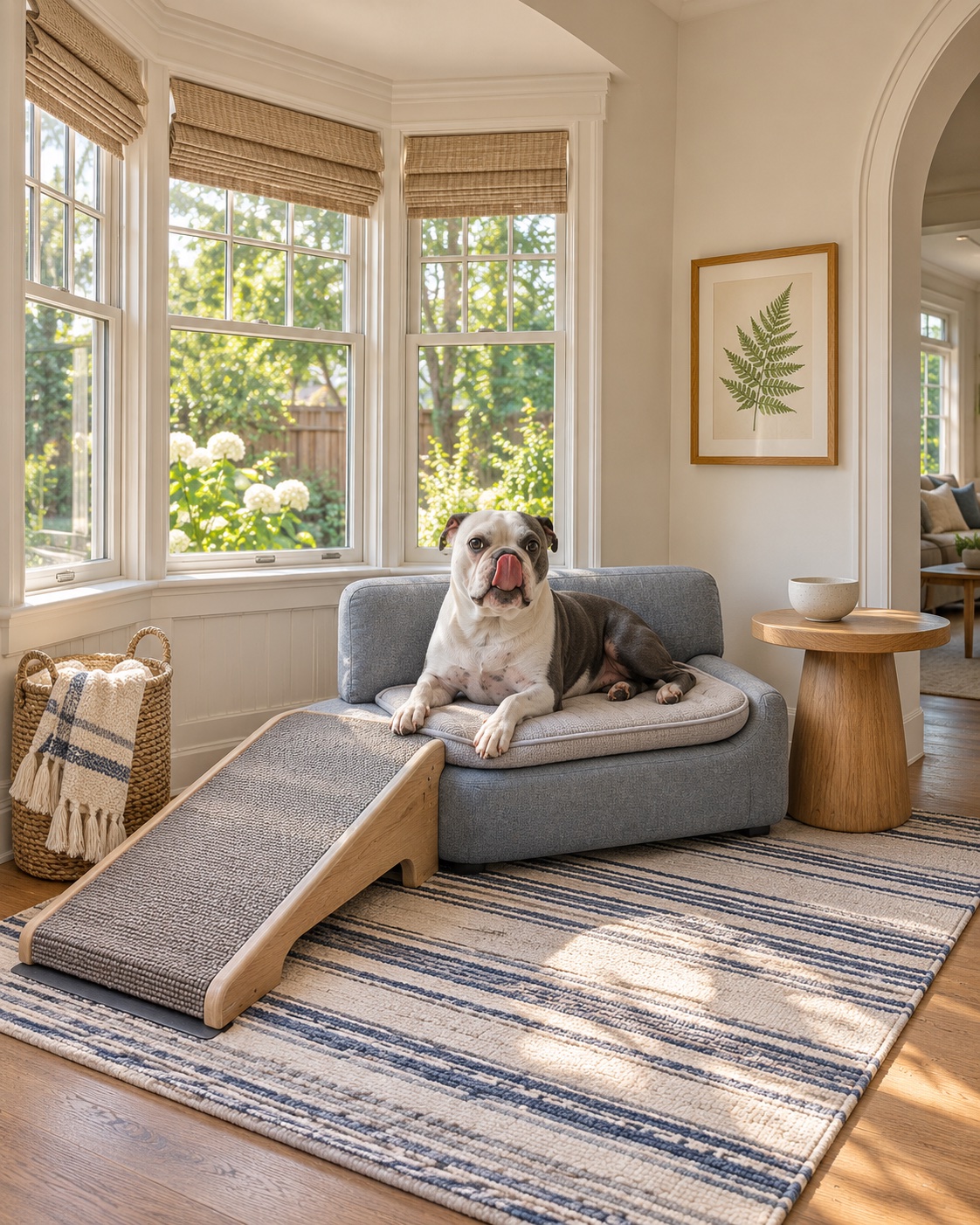
A low chair with a fitted cover can become a familiar resting place. If using a ramp, choose one appropriate for the animal’s size, with a stable attachment and a surface that provides grip. Position it so it does not obstruct the room’s main route. A floor bed remains useful for pets that prefer not to climb, even with assistance.
27. Design a Cat Corner with Choices at Different Heights
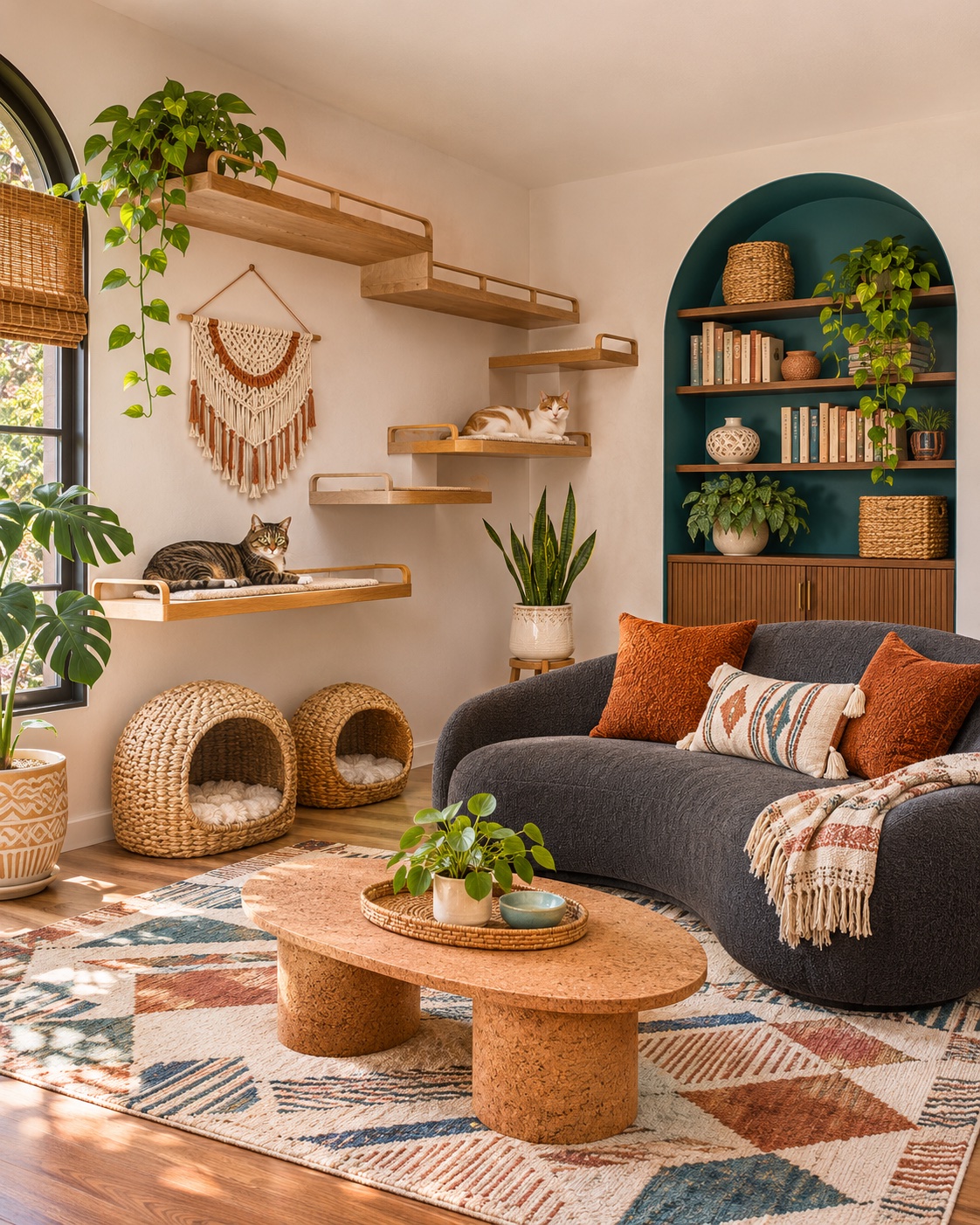
Woven caves provide sheltered floor-level options, while securely installed shelves add another route through the room. Keep climbing surfaces broad enough for the cat and separate them from decorative shelves holding breakable objects. Removable cushions help with cleaning. Inspect woven furniture for damaged strands over time, and adjust the arrangement if the cat prefers a simpler or lower resting place.
28. Borrow Hotel Comfort for a Calm Pet Corner
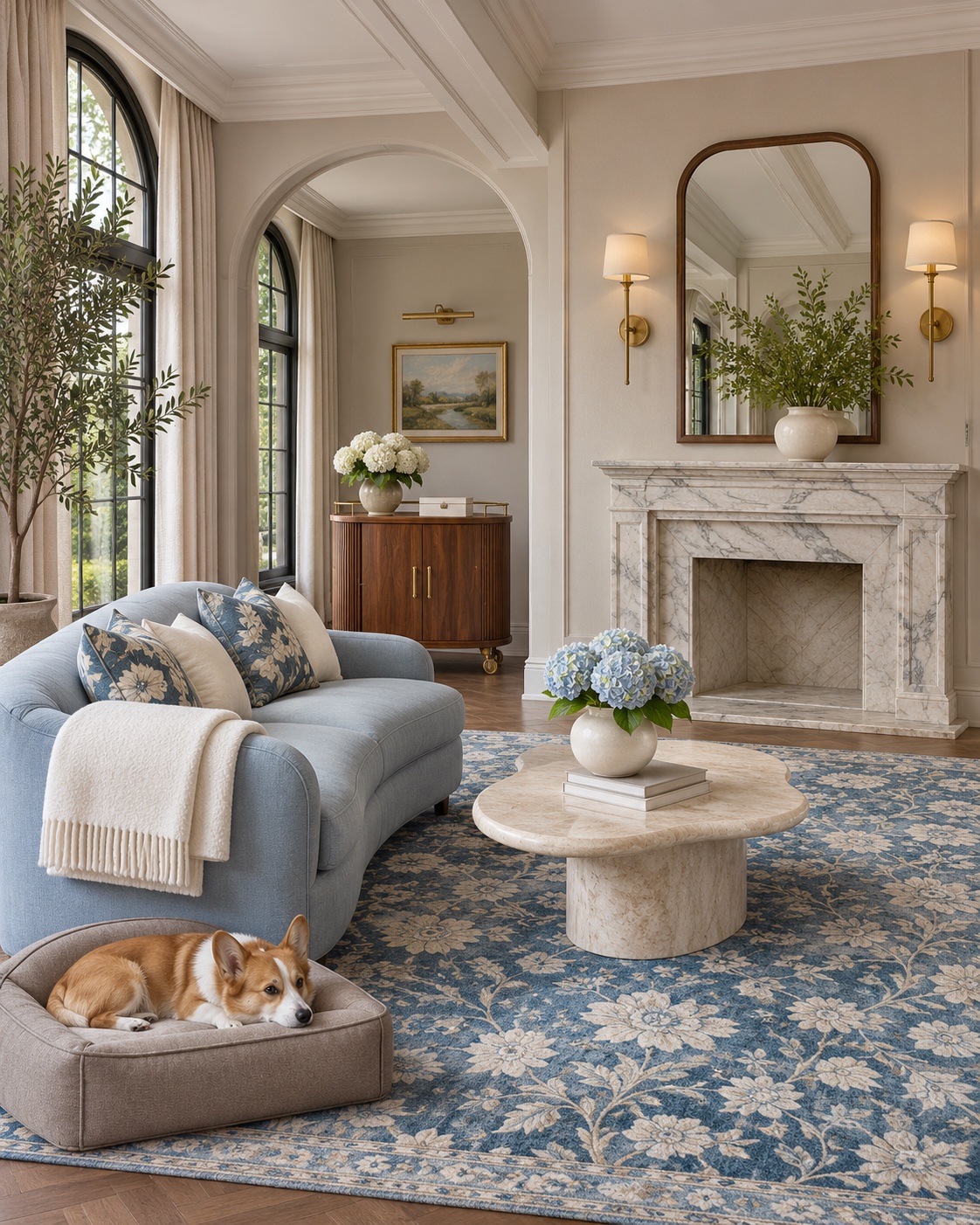
A tailored bed, folded spare blanket, and coordinated room palette create a welcoming corner without novelty accessories. Place the bed beside the sofa so the pet can stay close to people, and keep food preparation or serving surfaces separate. Closed storage in a trolley or cabinet can hold clean covers. Leave the bed well away from any fireplace that is in use.
Start with the Habits You See Every Day
Watch where your pet sleeps, drinks, scratches, and walks through the room before changing the layout. Begin with one useful improvement: a removable cover, a better-positioned bed, or storage that clears the floor. No surface is completely pet-proof. Compare real samples, confirm cleaning instructions, and check the exact identity of any plants you bring home. A room that is easy to maintain leaves more time to enjoy sharing it.
Visual inspiration: TheCoolist pet-friendly living room ideas. Original text and redesigned concept images by DIY Ideas.