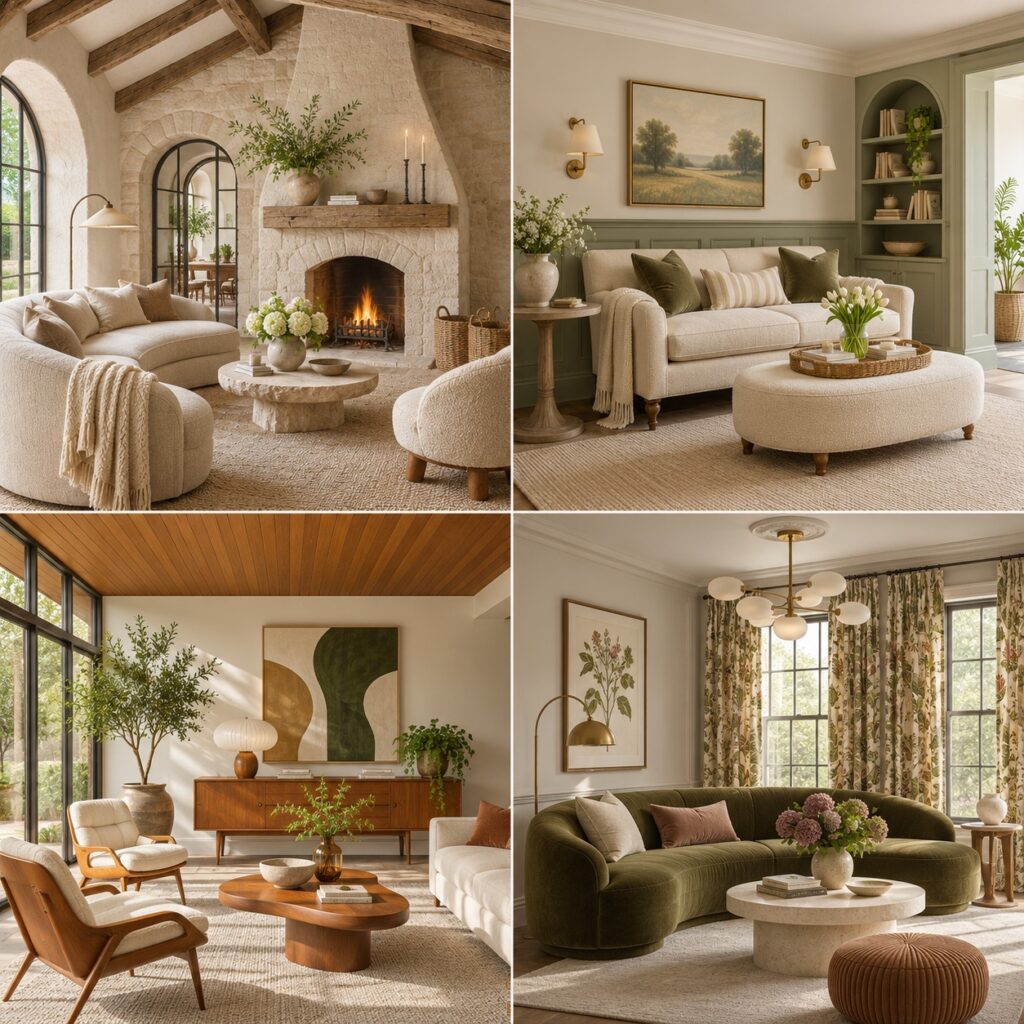
A living room needs to do more than look finished in a photograph. It should support quiet evenings, conversation, reading, and the routines that happen between them. The most useful updates often begin with furniture placement, a better light beside a favorite seat, or storage that removes a daily frustration.
These 29 living room concepts explore different ways to combine layout, texture, color, and personal objects. Use them as starting points and adapt the proportions to your own home. The images are AI-generated design concepts created for DIY Ideas, rather than photographs of completed projects.
1. Turn a Bay Window into a Social Corner
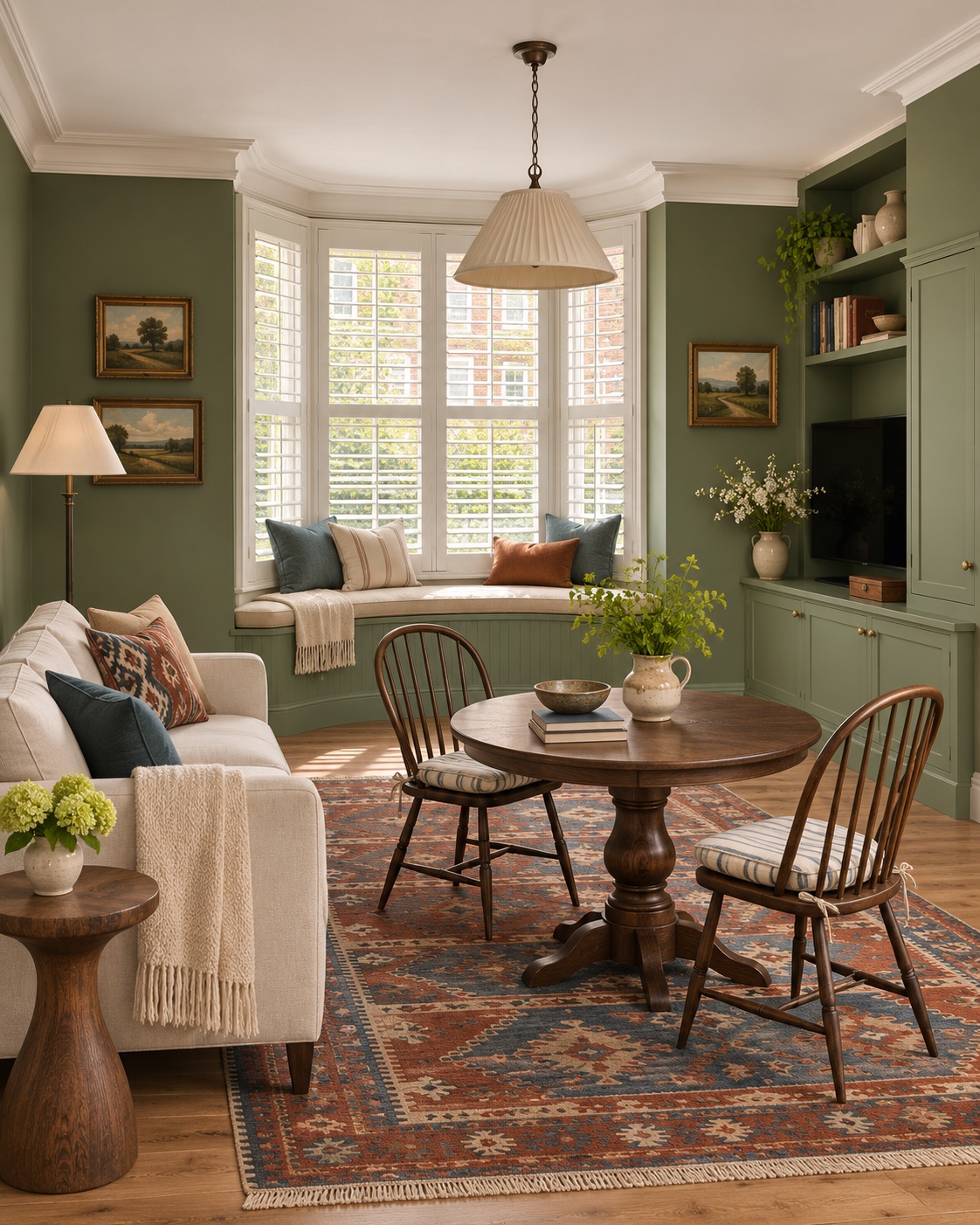
A fitted window bench adds a third place to sit without another bulky sofa. Pair it with a small loveseat and light spindle chairs that can move when guests arrive. Sage cabinetry connects the seating and storage, while a patterned rug brings the separate pieces together. Choose the table height around how you use the room: coffee, board games, or occasional meals.
2. Bring a Tall Room Back to Human Scale
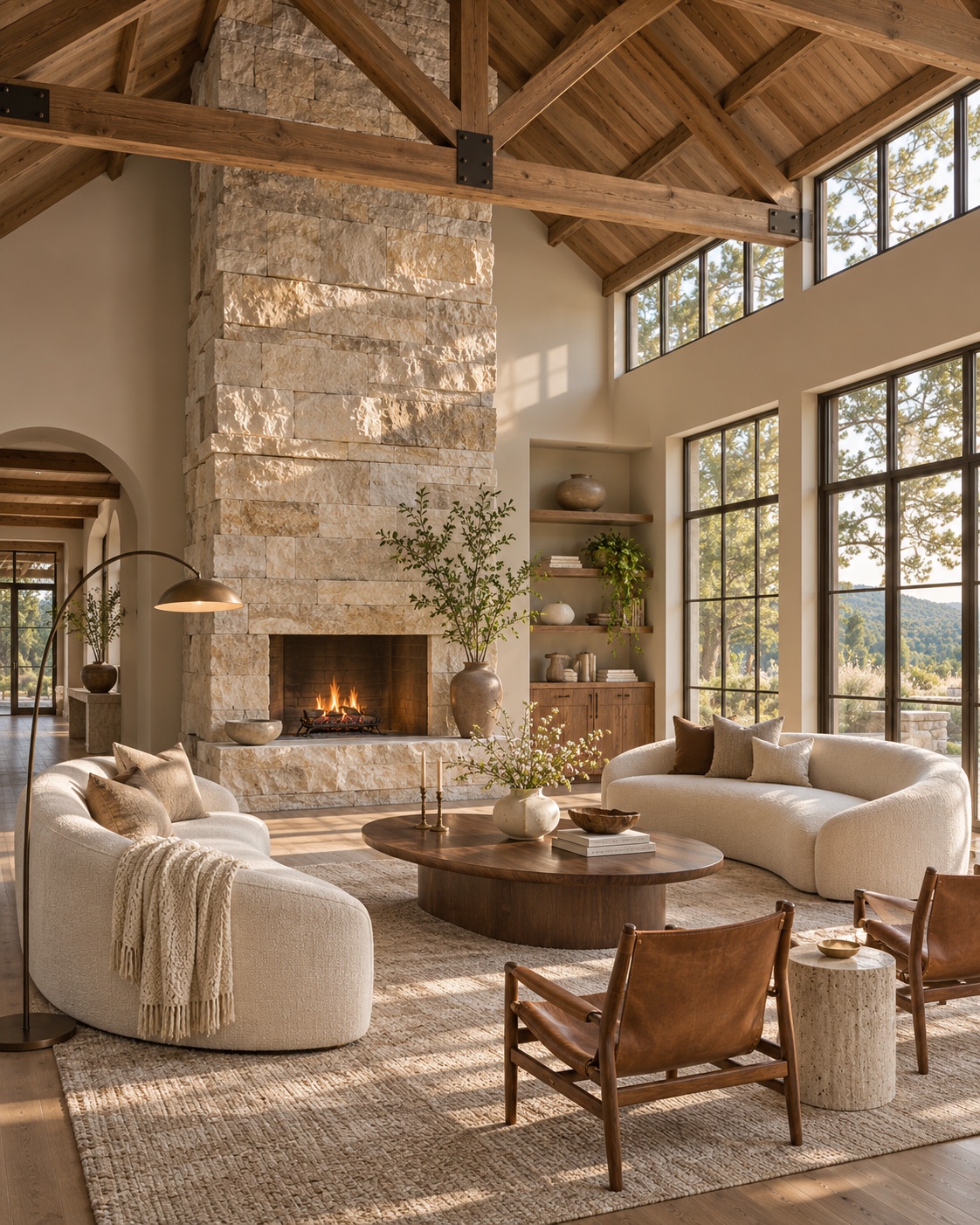
A lofty ceiling feels more welcoming when the furniture forms a close conversation group. Curved sofas and an oval table soften the strong lines of stone and timber in this concept. Keep the main seating on one generous rug, then use lower lamps to create an evening layer of light. The fireplace remains the architectural focus without forcing every chair against a wall.
3. Build a Warm Palette Around a Patterned Ottoman
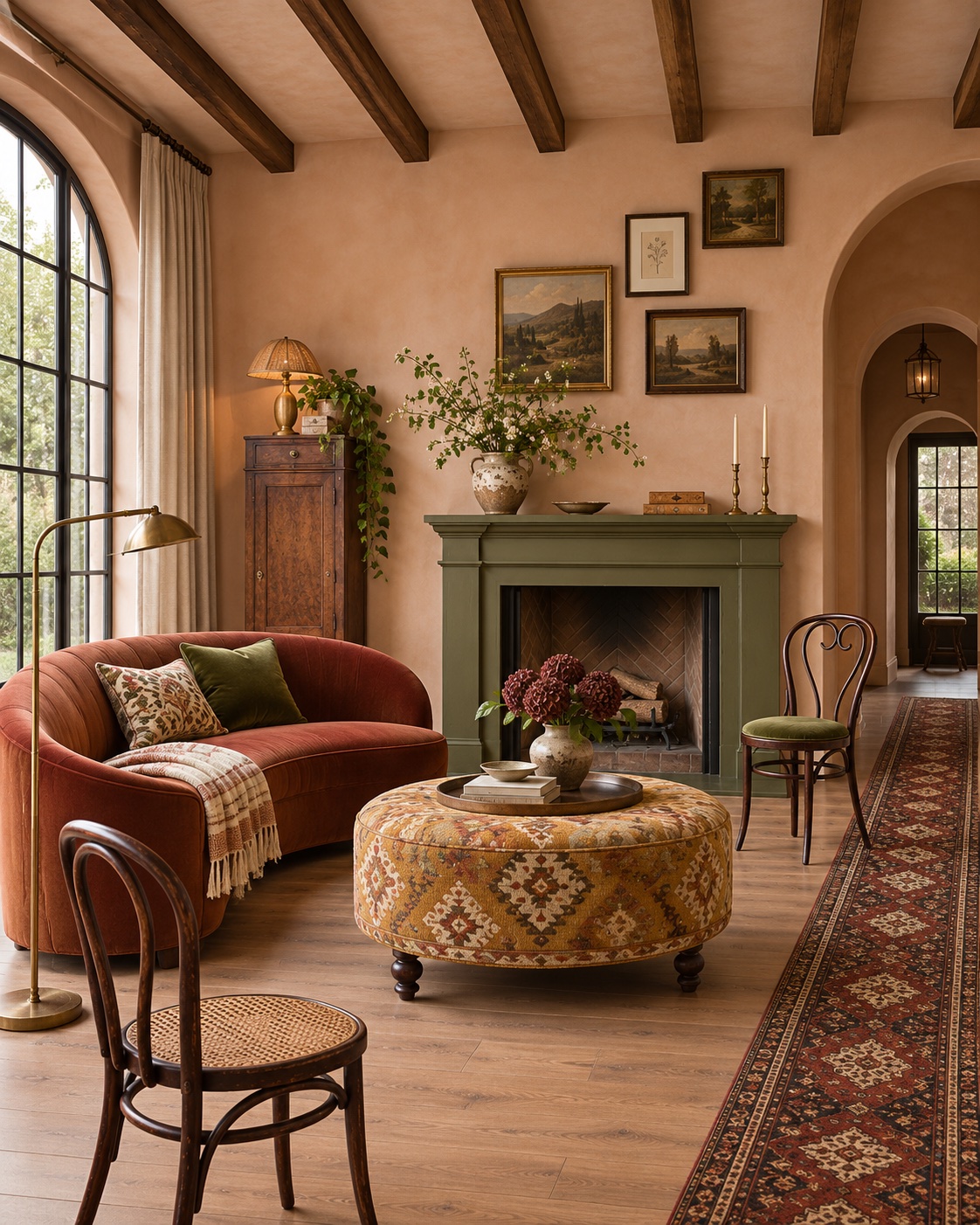
A patterned ottoman can supply the room’s entire color direction. Here, ochre, rust, and olive connect upholstery, painted joinery, and small accessories. Rounded seating keeps the combination relaxed, while exposed timber adds another texture. Before choosing extra cushions, repeat just two colors from the ottoman; leaving some surfaces plain gives the richer fabrics room to stand out.
4. Give Cottage Style a Lighter Silhouette
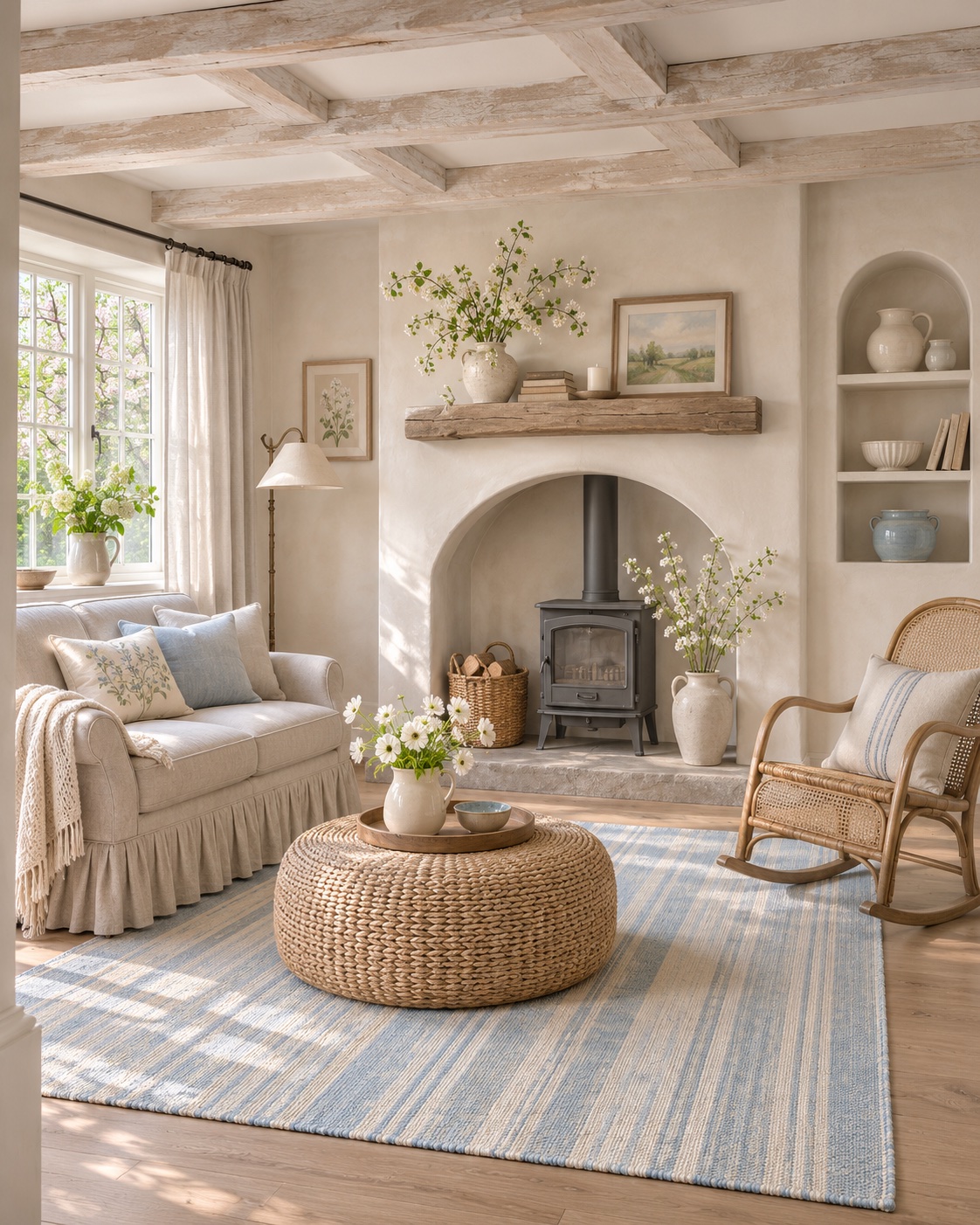
Cottage character can come from plaster, woven fibers, and simple timber rather than a room full of ornaments. An arched hearth recess becomes the anchor, with a skirted loveseat and open cane chair providing different shapes. A pale striped rug adds definition beneath the seating. Keep baskets and pottery in a few useful groups so the room remains easy to tidy.
5. Balance Navy Walls with Supple Leather
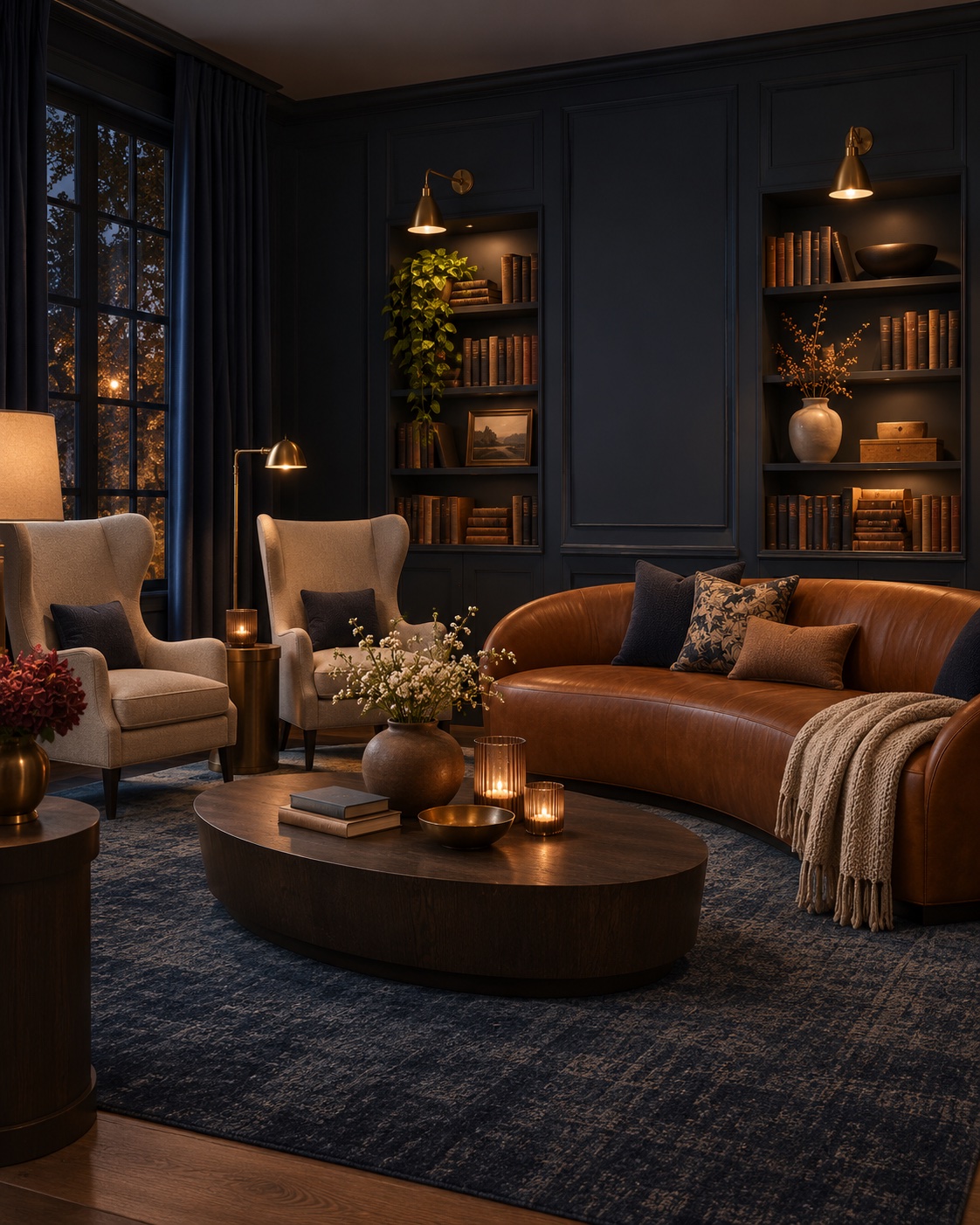
Deep blue walls create a sheltered backdrop for warm leather and lighter upholstered chairs. A curved sofa updates the traditional lounge arrangement, while an oval table keeps the center visually calm. Place reading lights beside the seats that actually need them. For an existing room, test a large paint sample in daylight and lamplight before committing to such a dark envelope.
6. Use Sculptural Furniture in a Formal Room
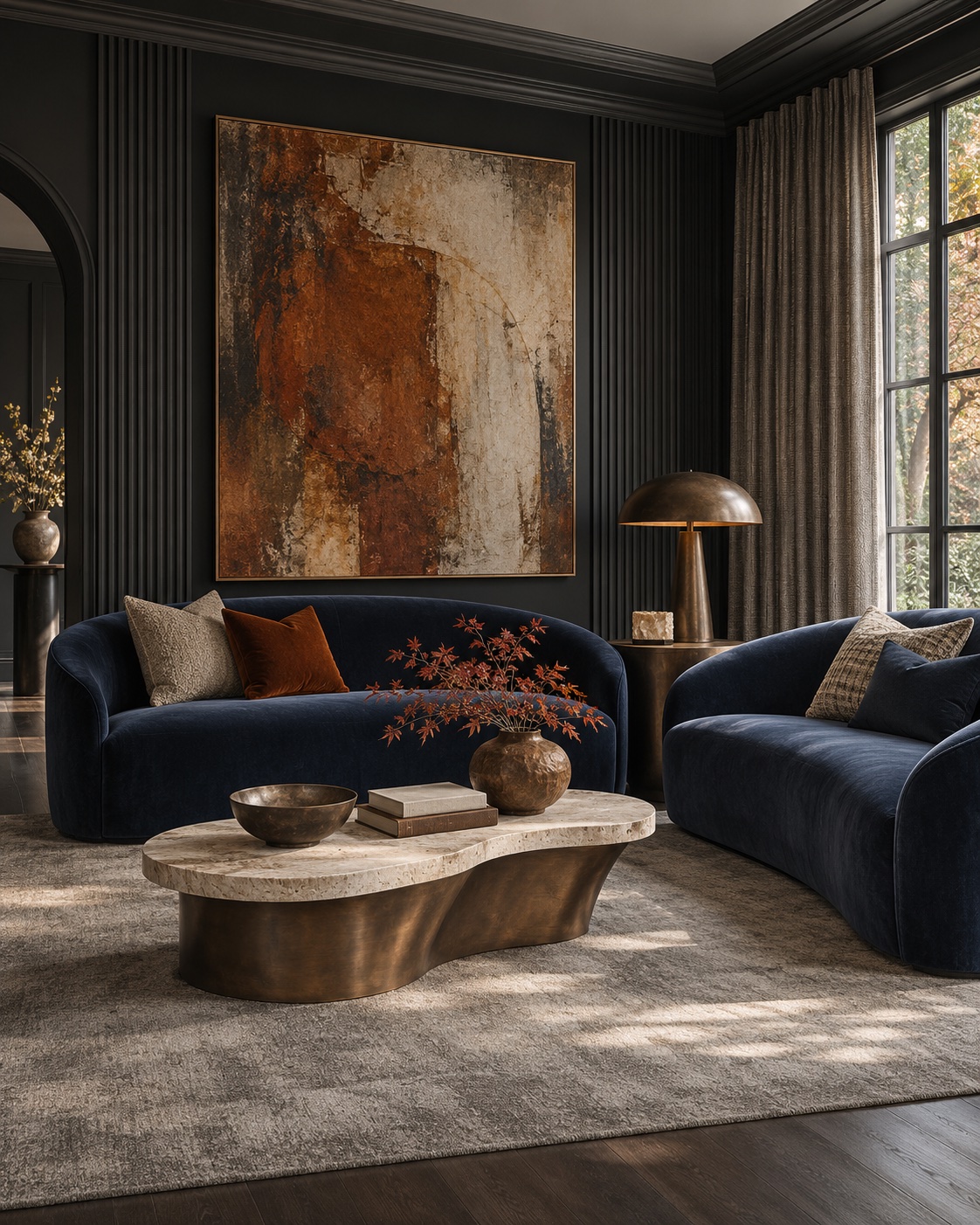
A formal interior becomes less predictable when a few pieces depart from straight lines. Curved velvet seating and a stone-topped bronze table introduce that movement here. The large abstract artwork supplies a focal point without a dense gallery wall. Keep decorative objects low on the table, and let the wall panels and fabric texture provide most of the detail.
7. Create Conversation Zones in a Bright Great Room
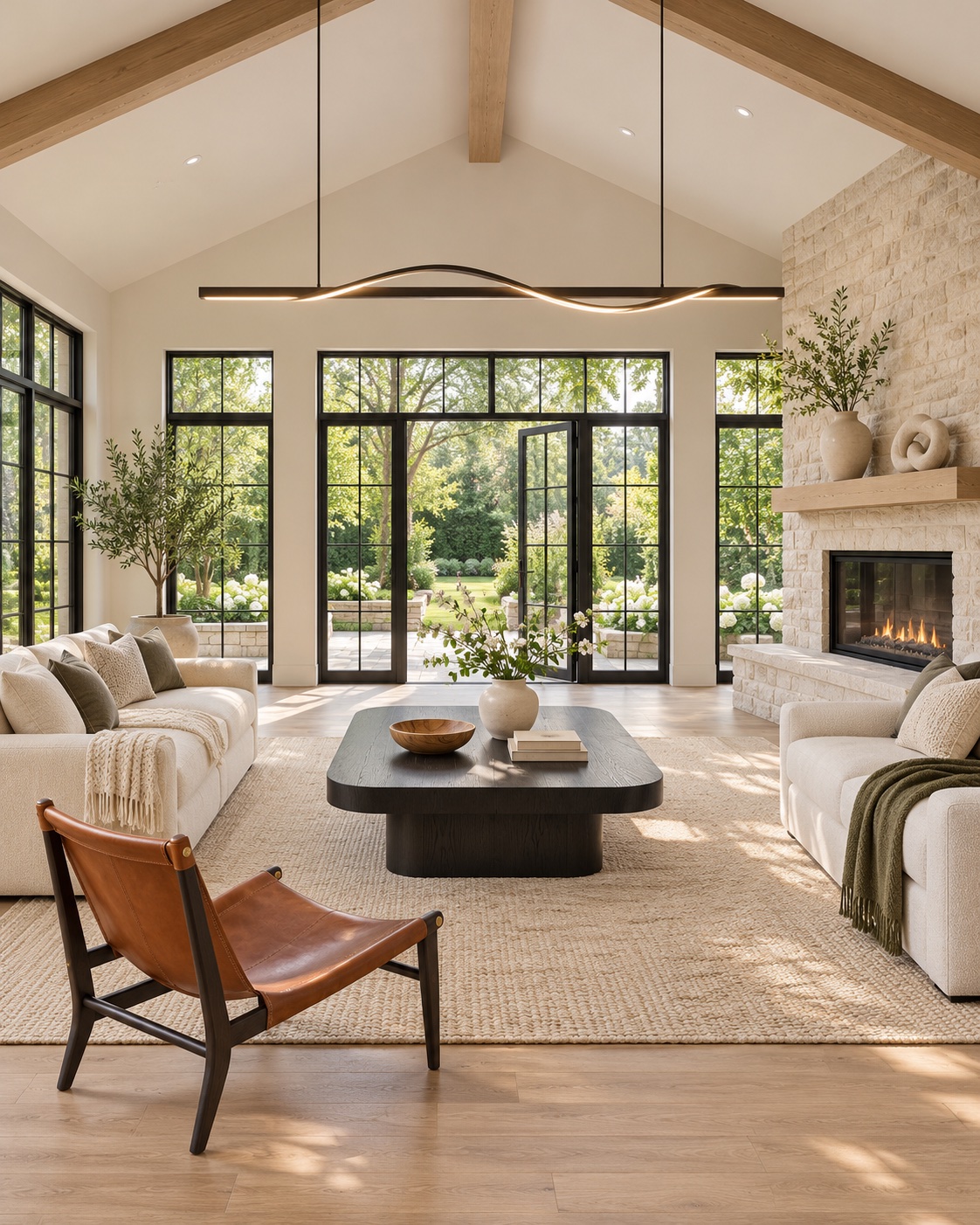
Two sofas facing one another can make an expansive room feel purposeful. An open-frame leather chair adds another seat without enclosing the group. Repeat black accents through the window frames, table, and pendant to give pale upholstery some definition. Check the route from the entrance to the garden doors before placing the rug; circulation should pass around the conversation area comfortably.
8. Refresh Retro Style with Botanical Details
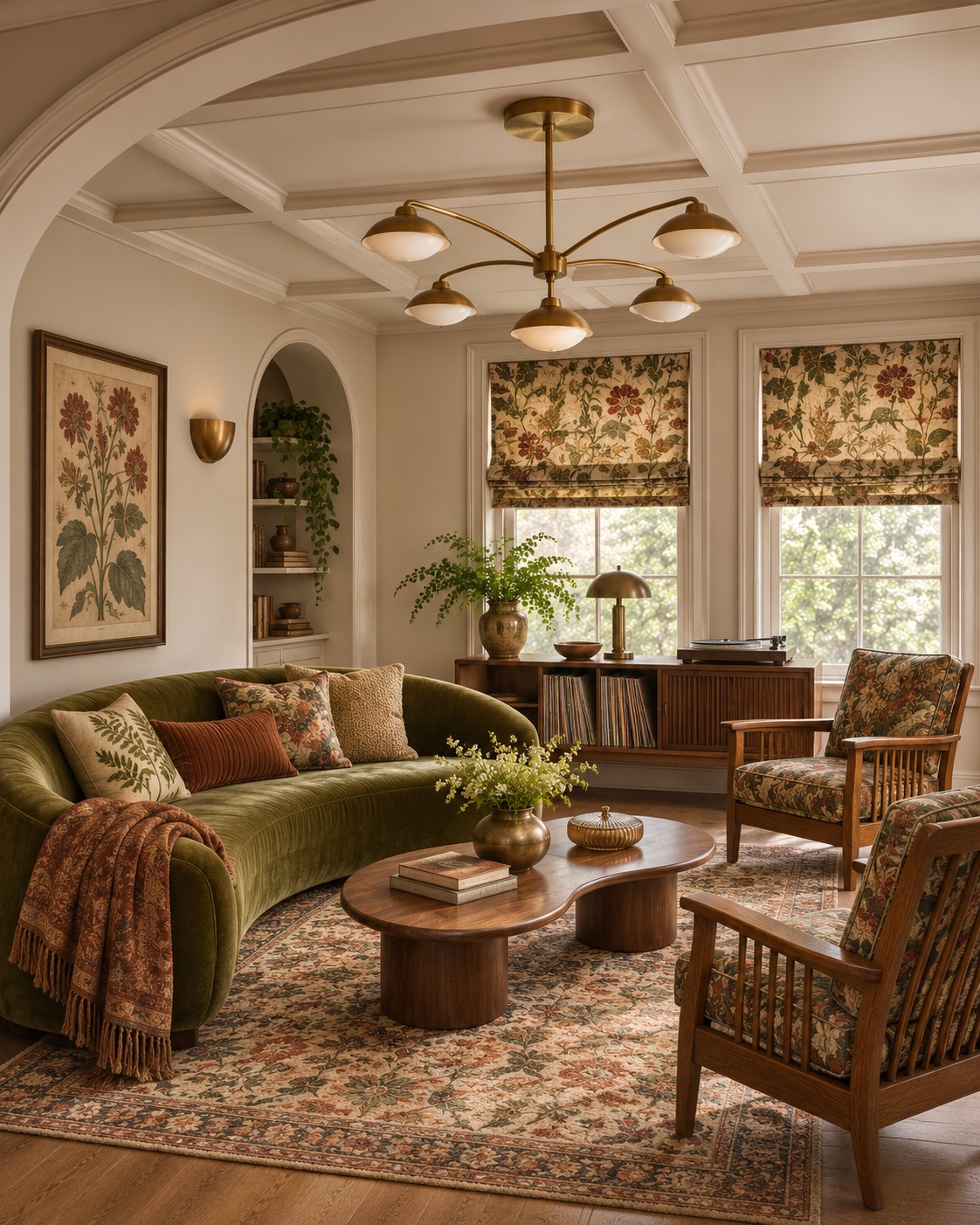
A crescent sofa and kidney-shaped table establish a playful retro rhythm. Botanical window treatments introduce pattern higher in the room, leaving the seating relatively simple. Mix warm wood with one mellow upholstery color rather than matching every vintage piece. A low cabinet can hold records, games, or media equipment while preserving the room’s horizontal lines and keeping the floor clear.
9. Make Books Part of the Architecture
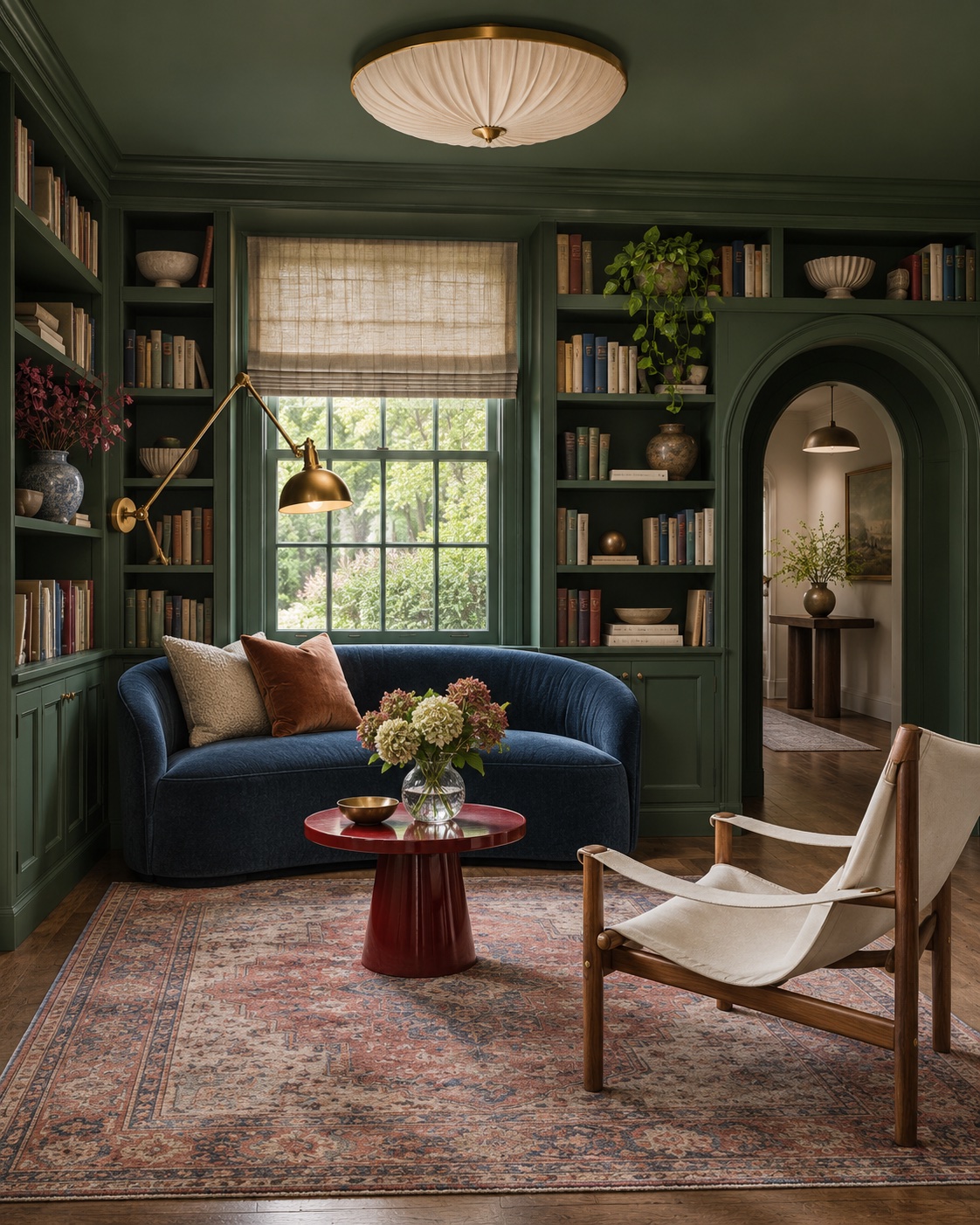
Bookshelves that frame a doorway turn a reading collection into the room’s structure. Painting the shelves and surrounding walls together gives the busy spines a quieter backdrop. A compact loveseat, comfortable chair, and small table are enough to make the space useful. Position an adjustable lamp near shoulder height for reading, and reserve some closed storage for less attractive everyday items.
10. Plan a Living Room for the Evening
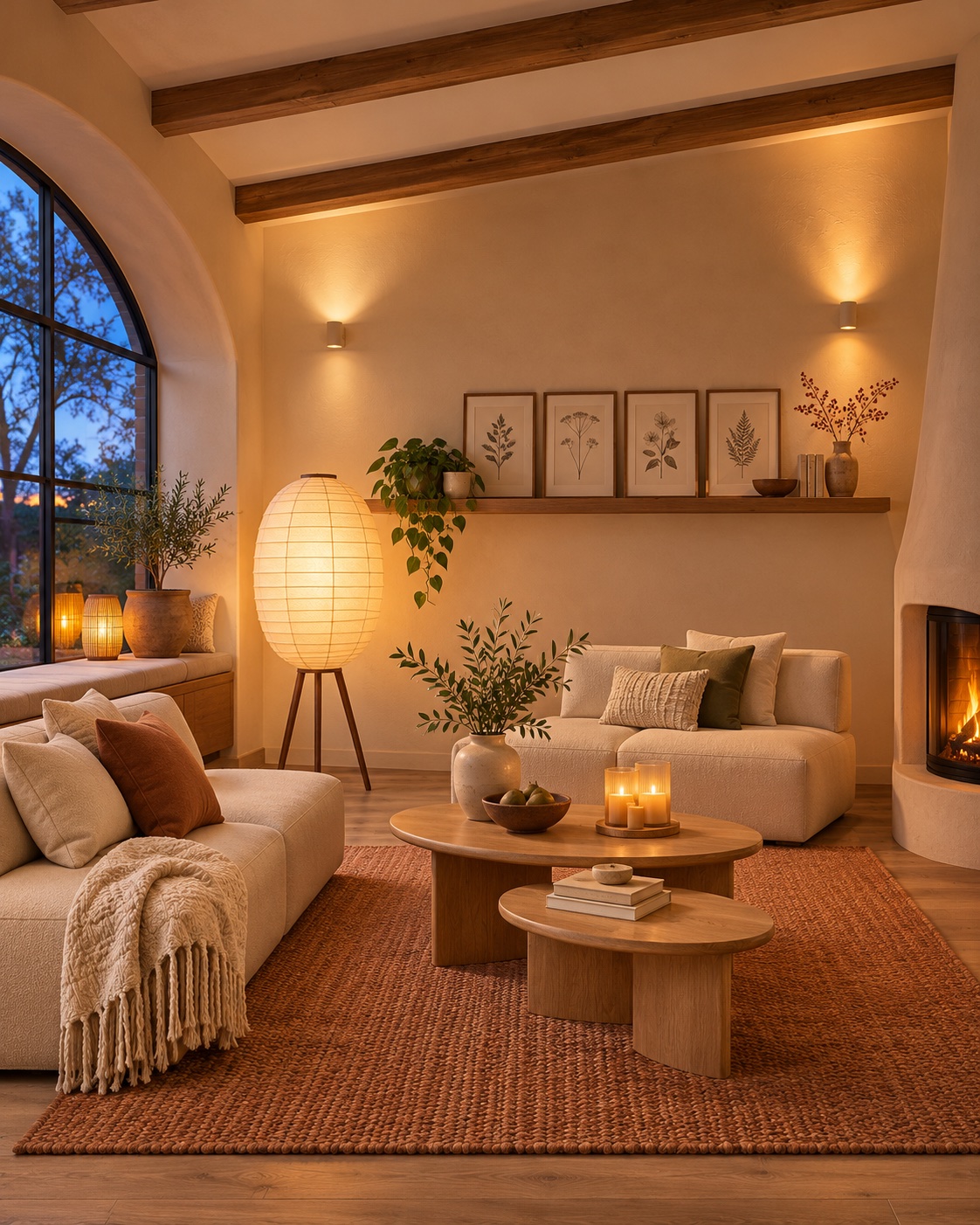
Warm lighting works best when it comes from several positions instead of one bright ceiling fixture. A floor lantern, discreet wall light, and soft background glow create layers around the seating. Separated modular pieces leave more options for rearranging the room. Use a tray or small side table where someone naturally reaches for a drink, rather than styling every surface at the center.
11. Let a Gallery Wall Grow Around Real Favorites
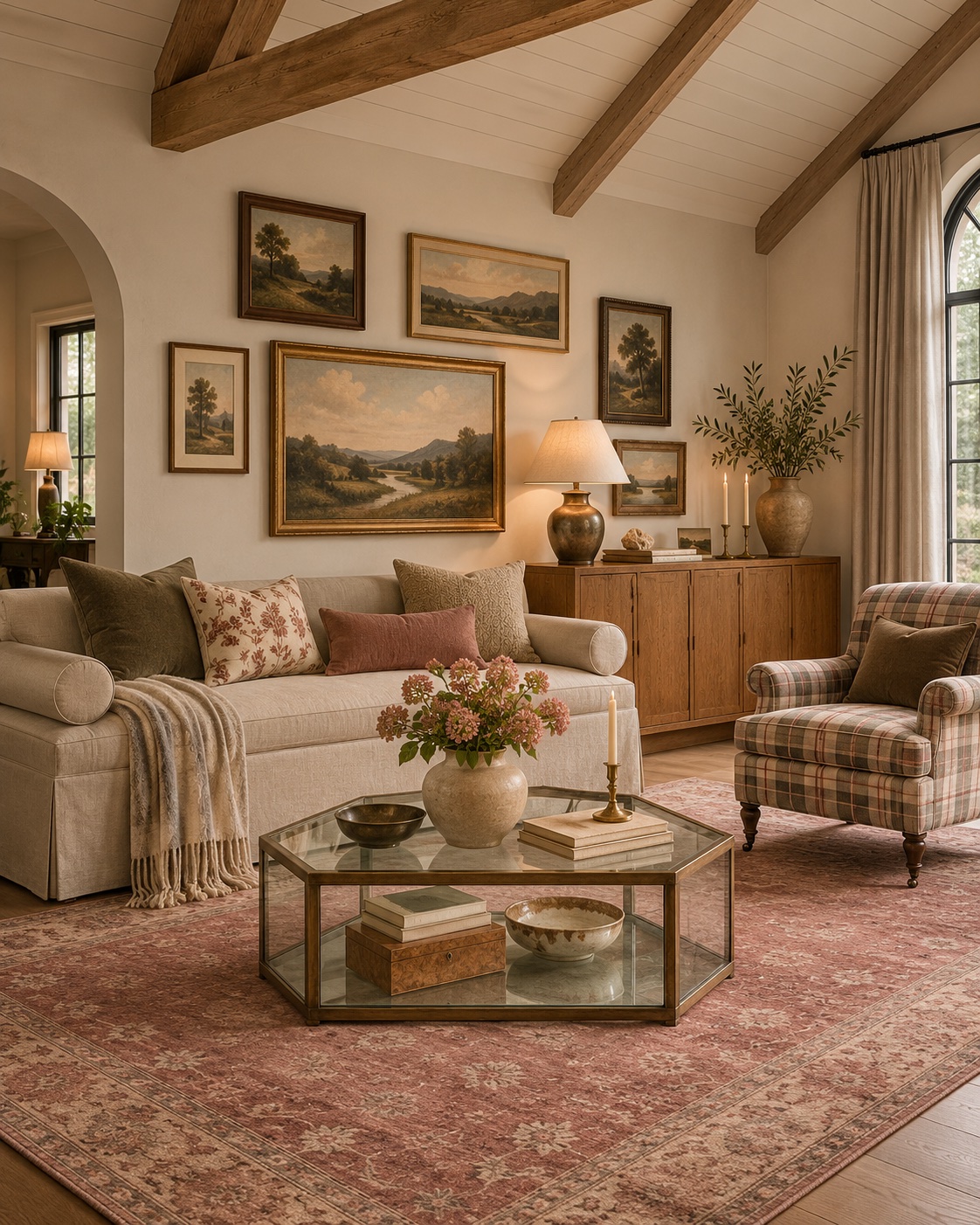
Start with a few pieces you enjoy looking at, then build the arrangement around their sizes and shared tones. A linen sofa and simple closed cabinet give the art a steady backdrop. A glass table keeps more of the rug visible in a compact group. Lay the frames out on the floor first, and leave enough breathing space above the sofa.
12. Pair Traditional Moldings with Confident Modern Art
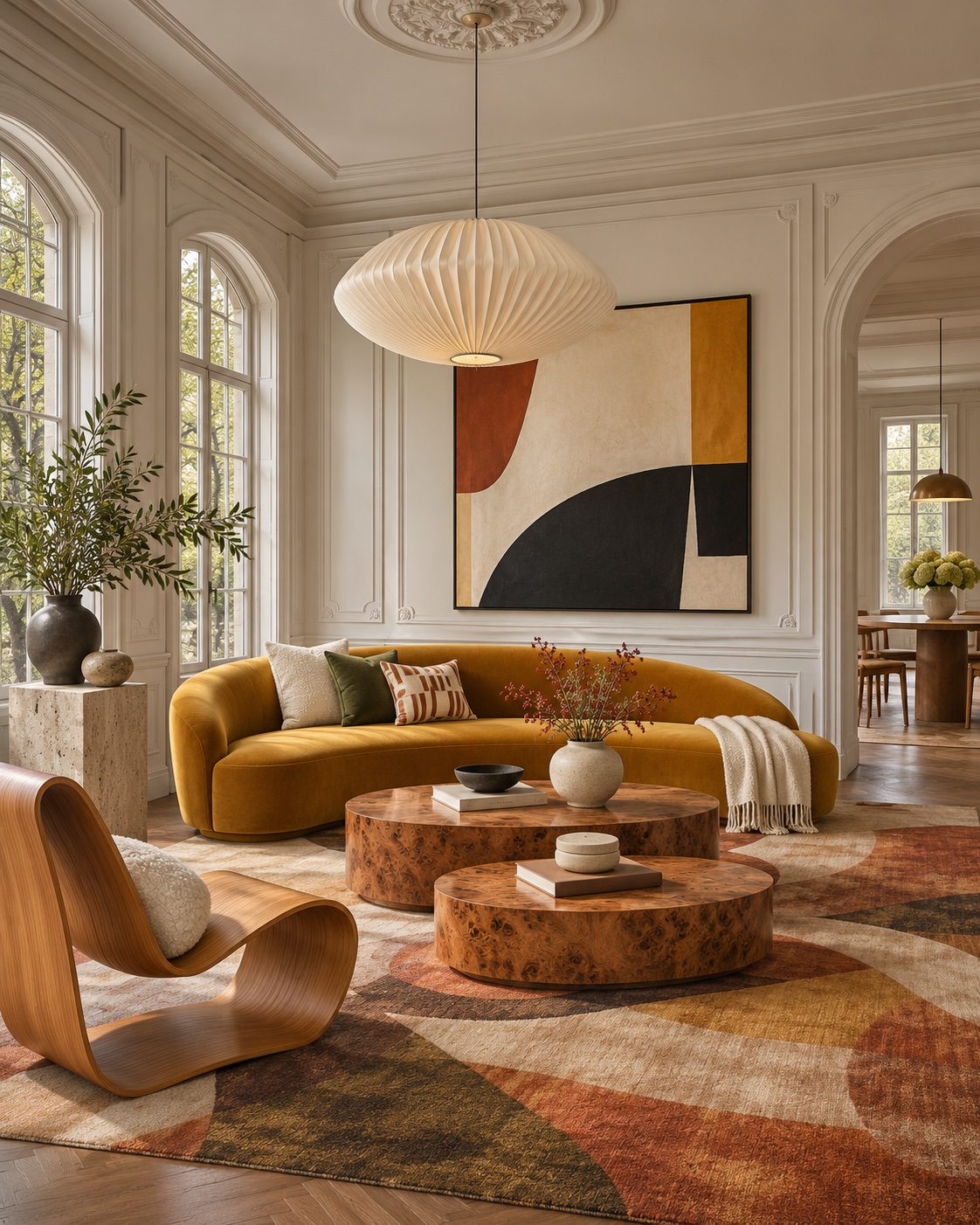
Classic wall details do not require a room of matching antiques. A mustard sofa, bentwood chair, and large geometric painting create a more personal combination. Burl wood adds visual movement, so keep neighboring accessories restrained. Choose the artwork before the smaller textiles, then borrow one or two of its colors for cushions or a rug to make the mix feel intentional.
13. Make a Small Apartment Comfortable After Dark
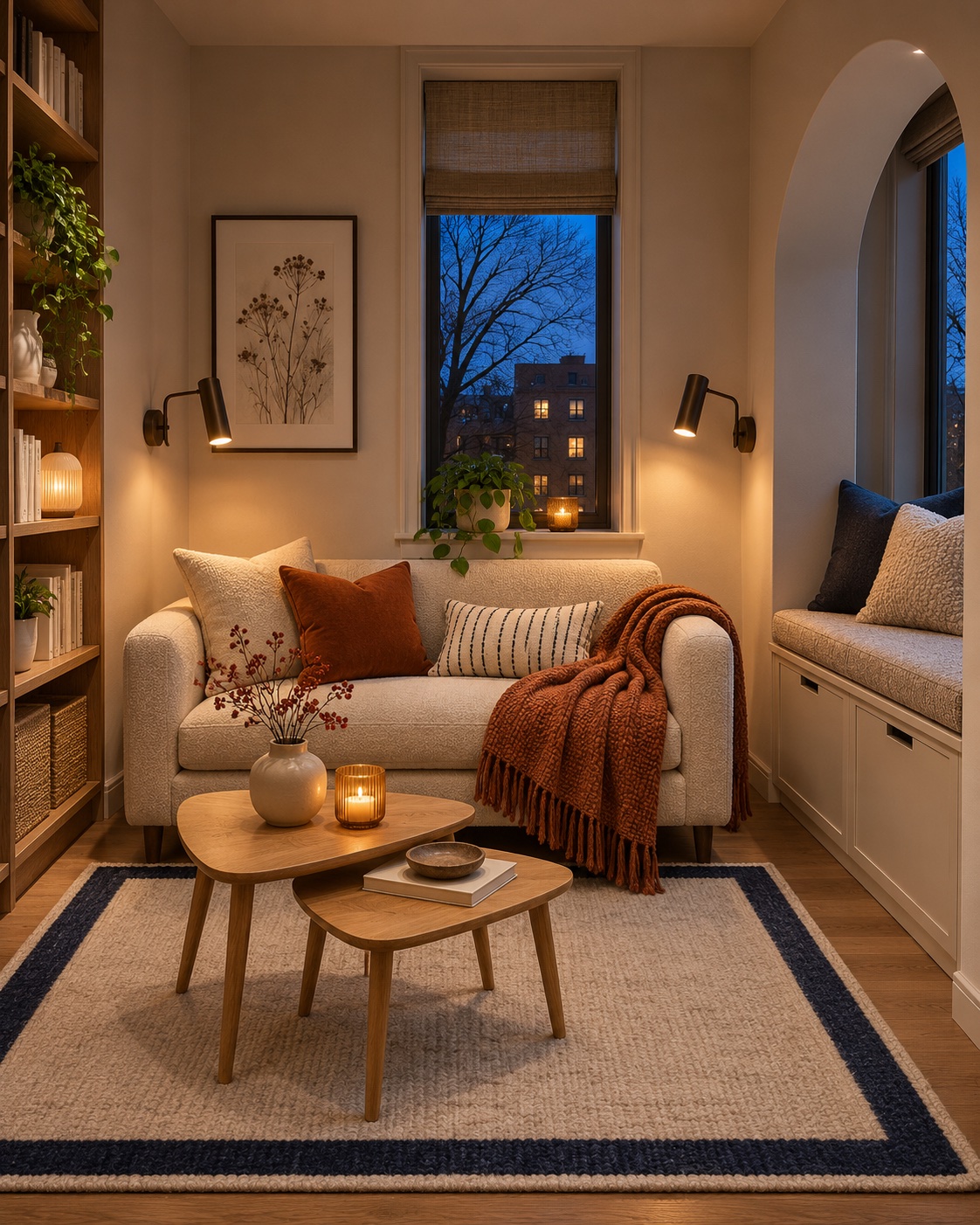
A compact loveseat and a window bench can provide flexible seating without filling the entire floor. Nesting tables offer a surface when needed and tuck together afterward. Rust textiles warm up the cream upholstery, while the darker rug edge gives the arrangement definition. Keep task lighting within easy reach, and choose storage that supports the everyday habits of the people using the room.
14. Combine Playful Color with Natural Fibers
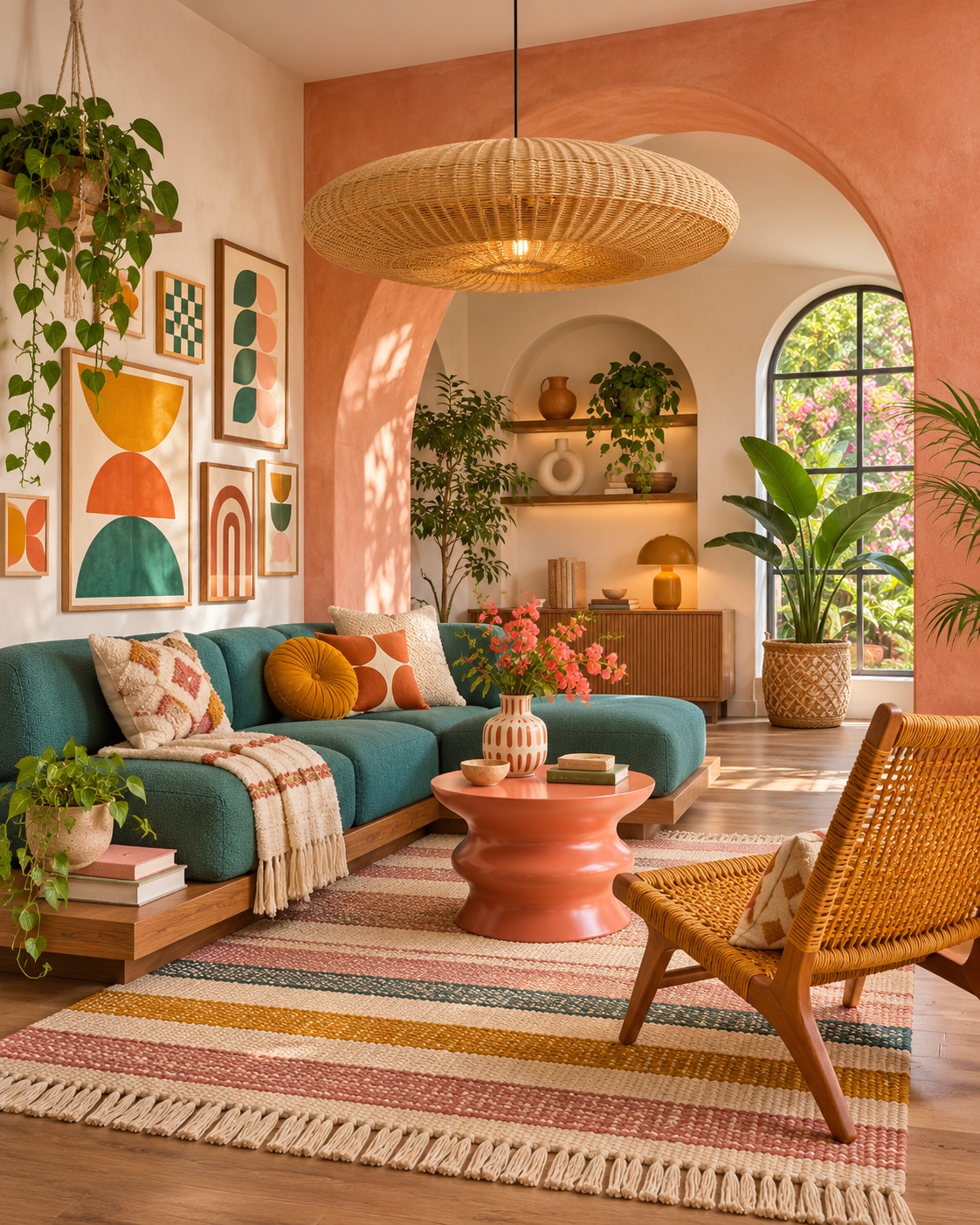
Teal seating and peach walls can feel lively without overwhelming the room when woven materials provide a softer layer. A raffia pendant, textured rug, and open lounge chair break up the solid color. Give the gallery wall its own area rather than scattering small pictures everywhere. Repeating one accent color in two or three places is enough to connect the different pieces.
15. Design a Traditional Room Around Conversation
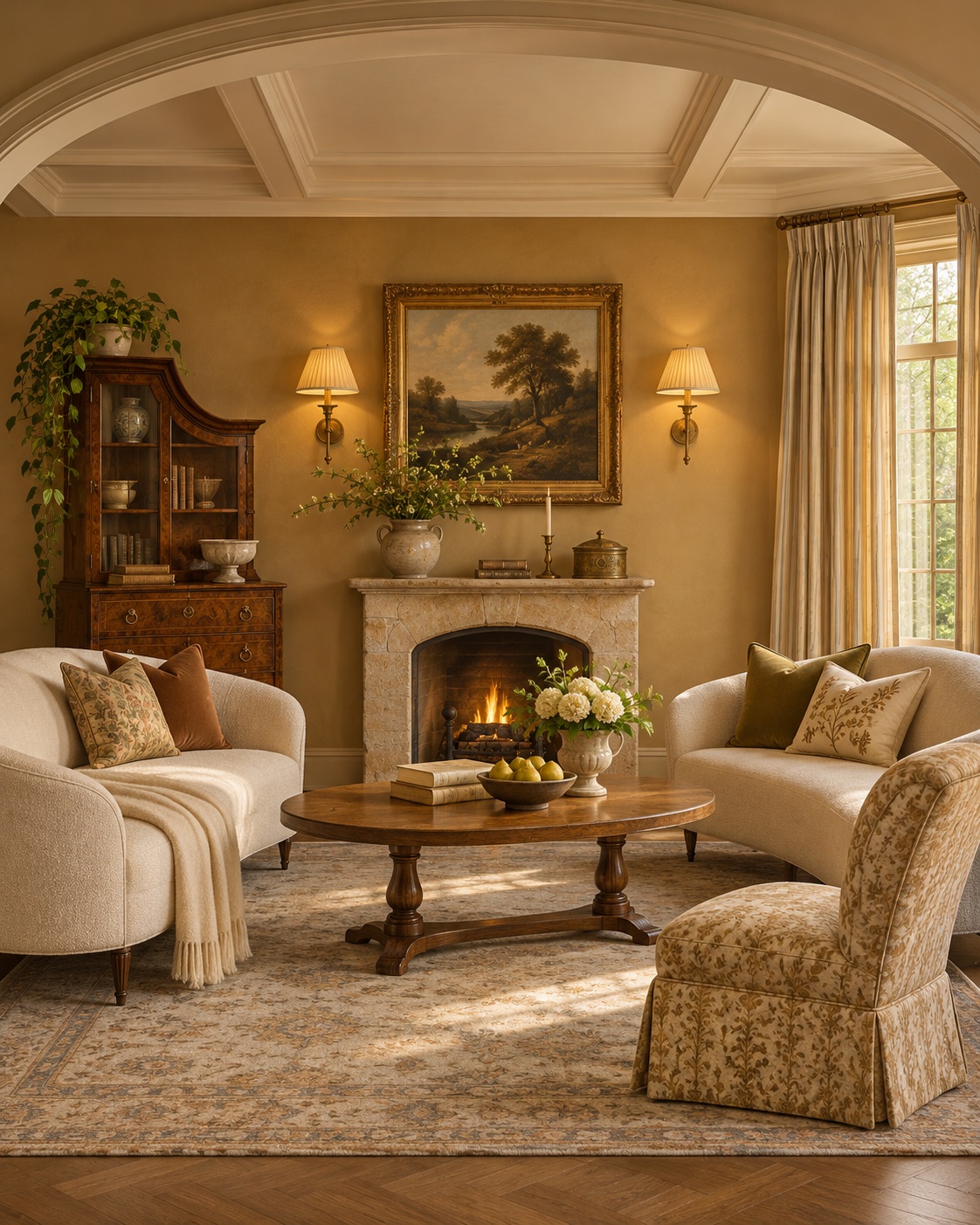
Small settees can create a more intimate arrangement than one oversized sectional. An oval table sits comfortably between them, while a slipper chair adds a seat that is easy to reposition. Warm neutral fabrics let the hearth and antique cabinet carry the character. Place lamps where they illuminate faces gently, and keep tall arrangements away from the main sightline between guests.
16. Use Plants to Organize a Long Room
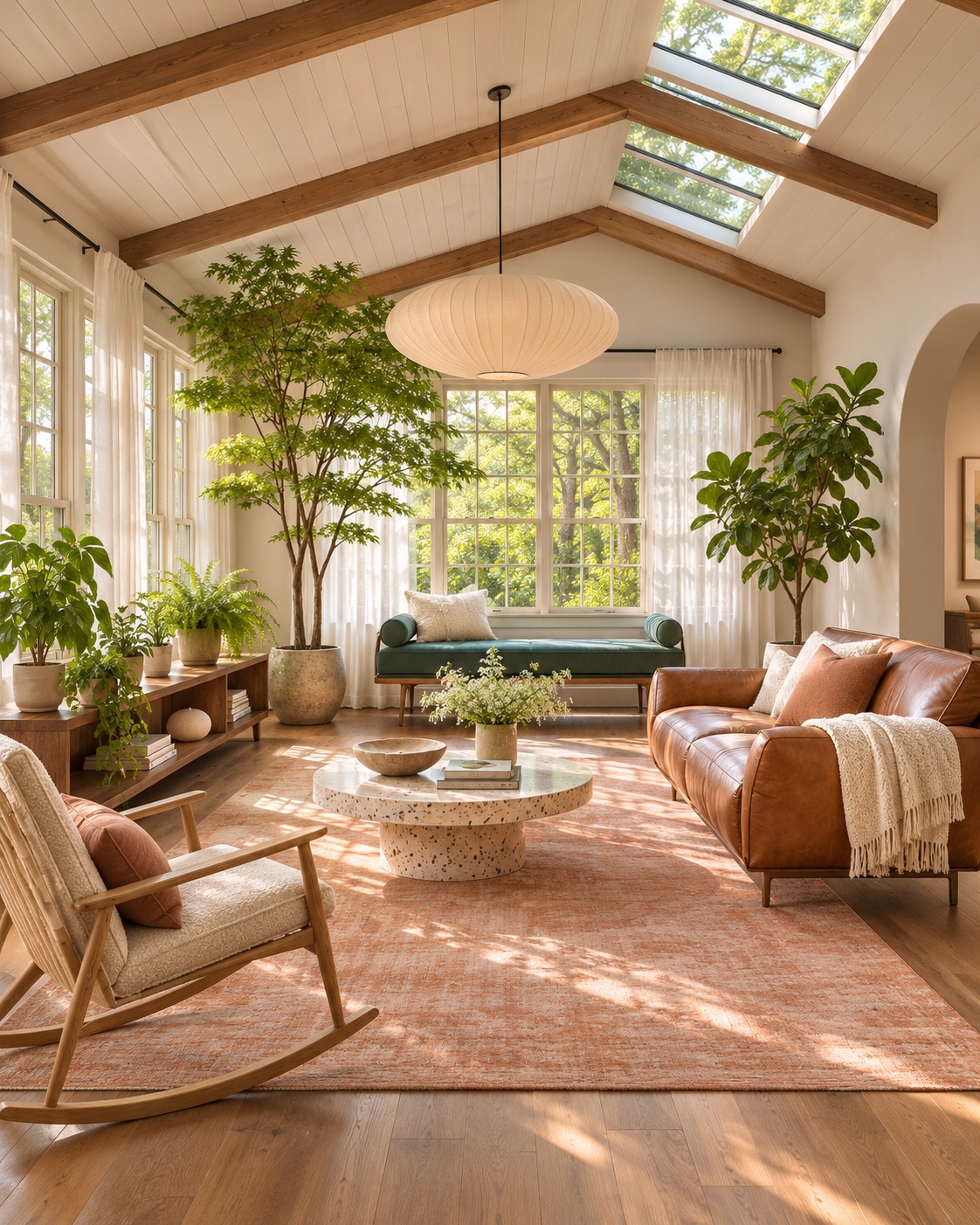
A long living room benefits from a clear seating zone instead of furniture lined up along both walls. A floated leather loveseat and window bench help define that zone here. Group plants where the light suits them, using a low shelf to vary their height. Leave access to windows and curtains, and choose containers with protection underneath for the finished floor.
17. Give Green and Pink a More Architectural Setting
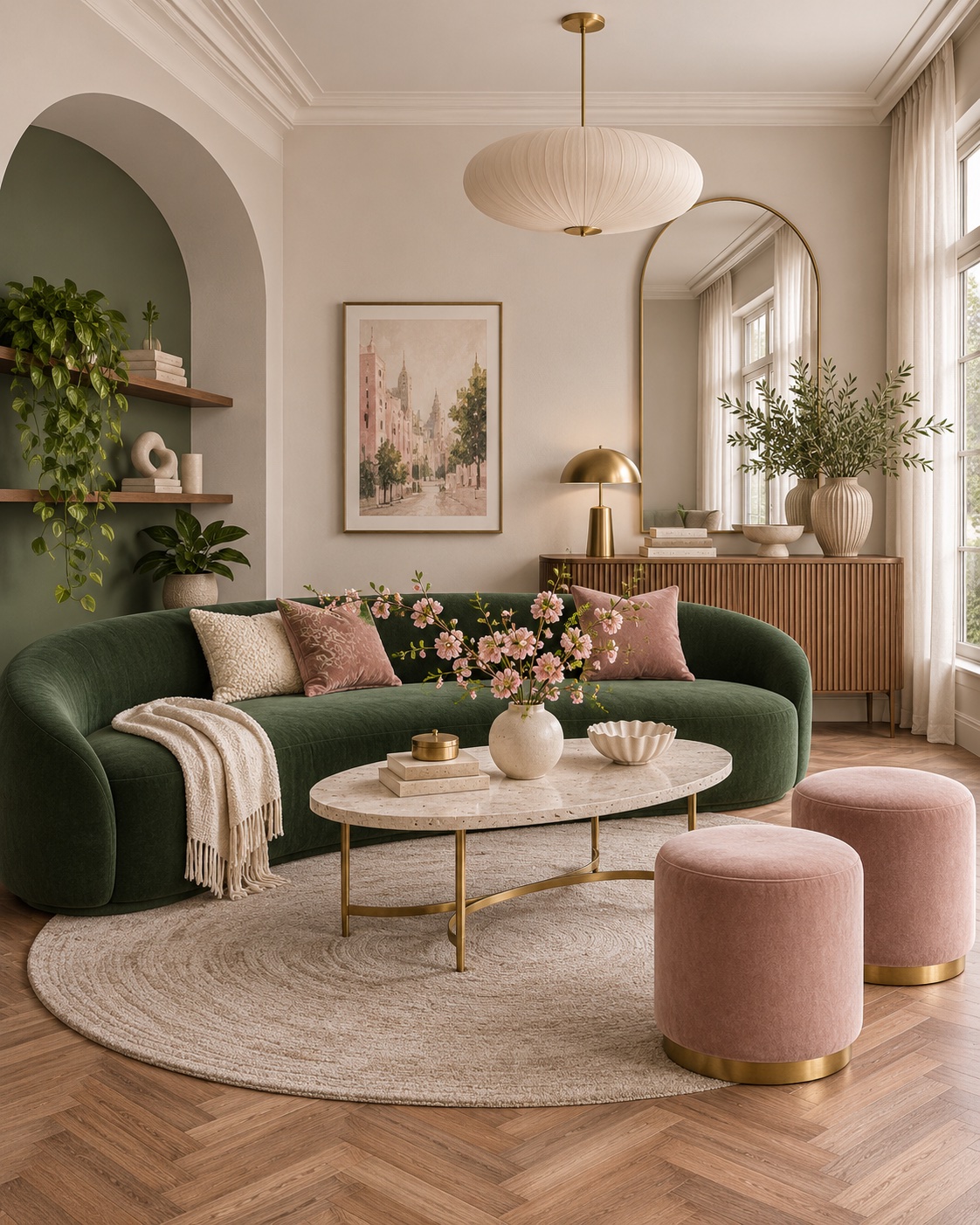
Emerald and blush become more composed when paired with strong furniture shapes. A curved sofa, cylindrical stools, and an oval stone table create variety without relying on elaborate ornament. A tall mirror and fluted console add vertical detail. Keep the metal finish consistent in the smaller pieces so the upholstery remains the main source of color and the room feels connected.
18. Decorate for the Holidays Without Losing Seating Space
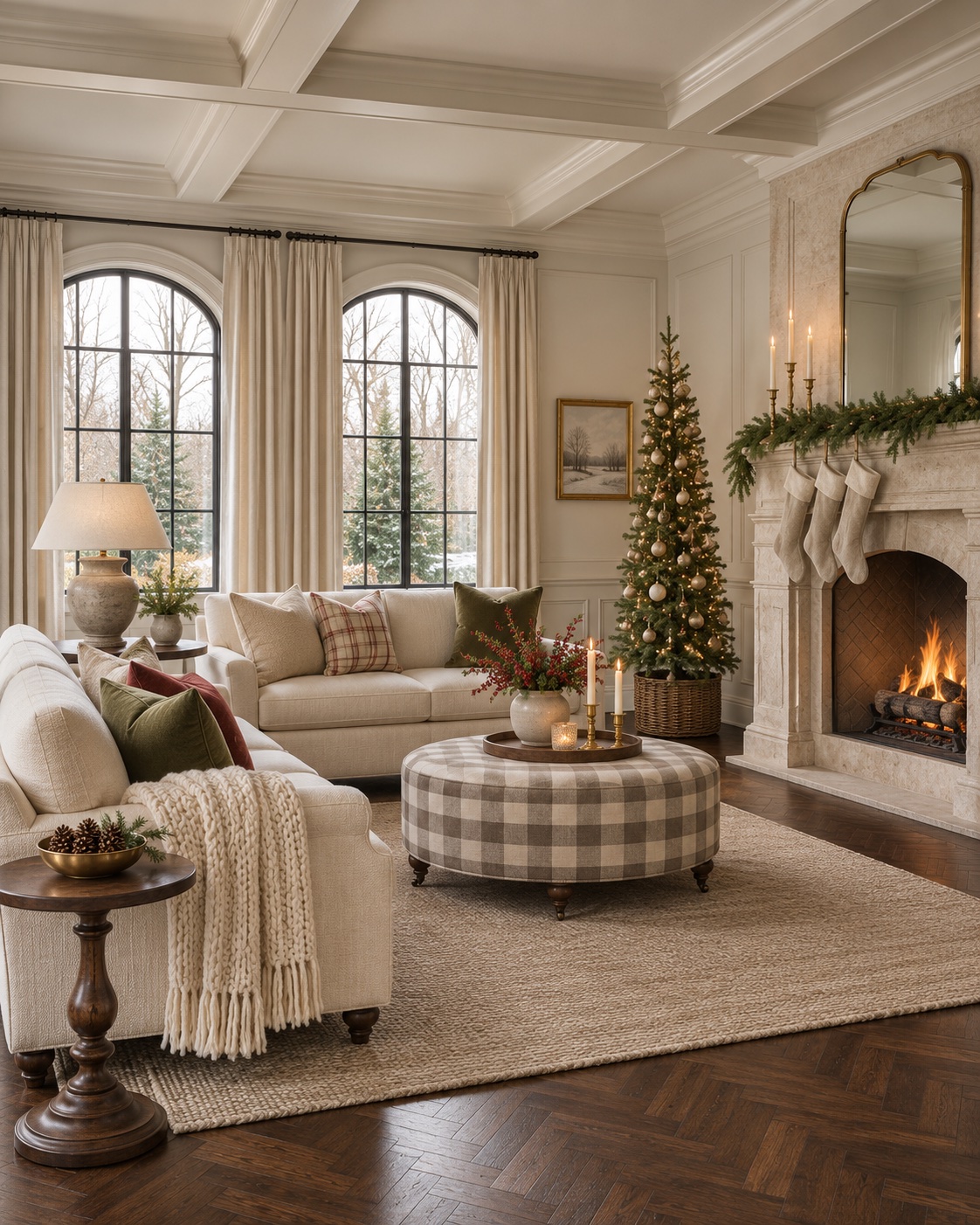
A slim tree and a restrained mantel arrangement can establish a festive mood while preserving the room’s everyday layout. Ivory seating and a checked ottoman keep the scheme soft and useful. Store the regular accessories before adding seasonal pieces to avoid crowded surfaces. Keep greenery, fabrics, and decorations away from heat sources, and follow the fireplace manufacturer’s clearance requirements.
19. Add Warmth to a Dark Contemporary Lounge
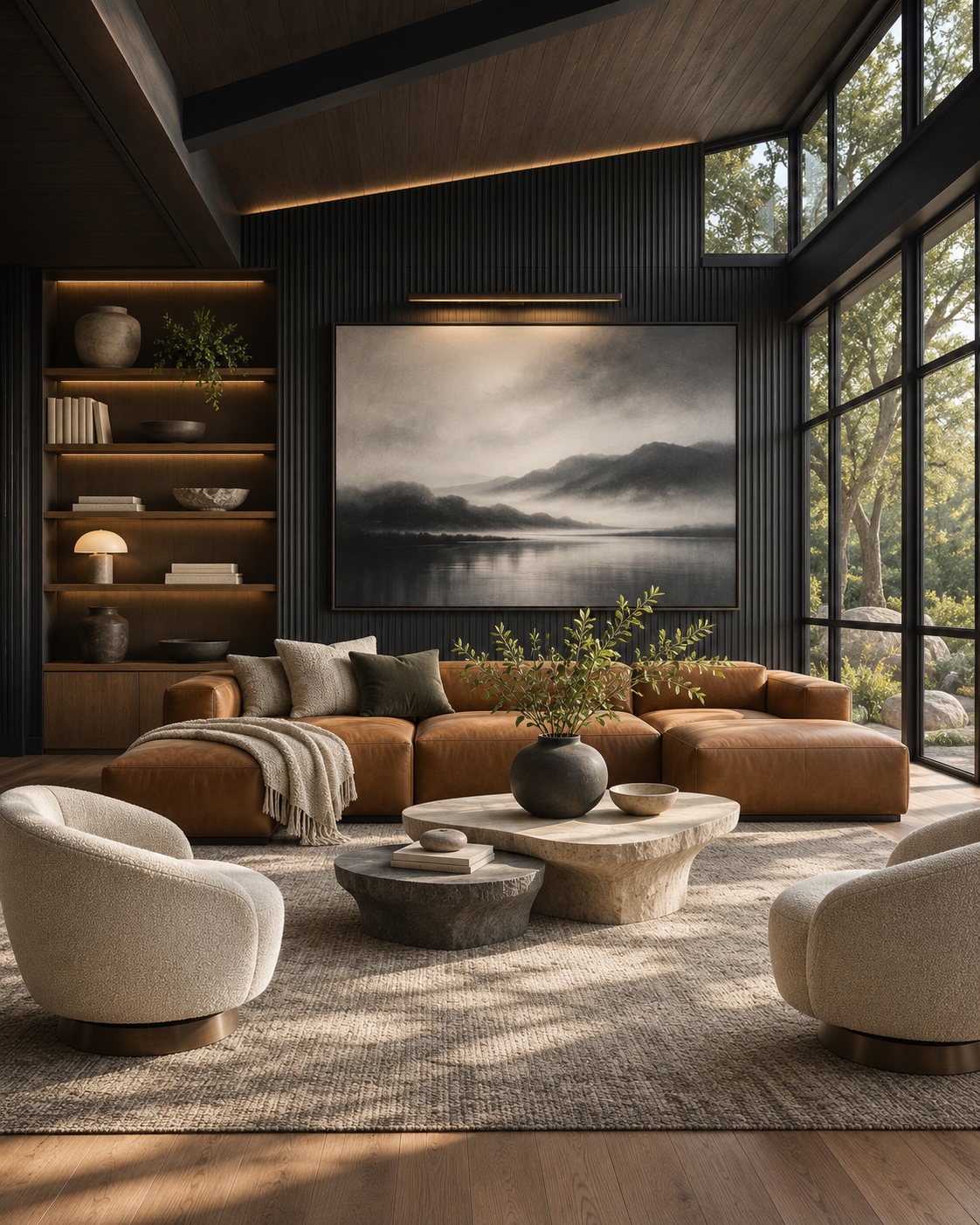
Dark wall treatments can make wood grain and caramel leather feel especially rich. Pale swivel chairs provide contrast and allow people to turn toward conversation or the view. Different table heights add flexibility without introducing many materials. Include lighting inside or near the shelving so it does not become a flat black wall once the daylight fades.
20. Create a Quiet Seasonal Display
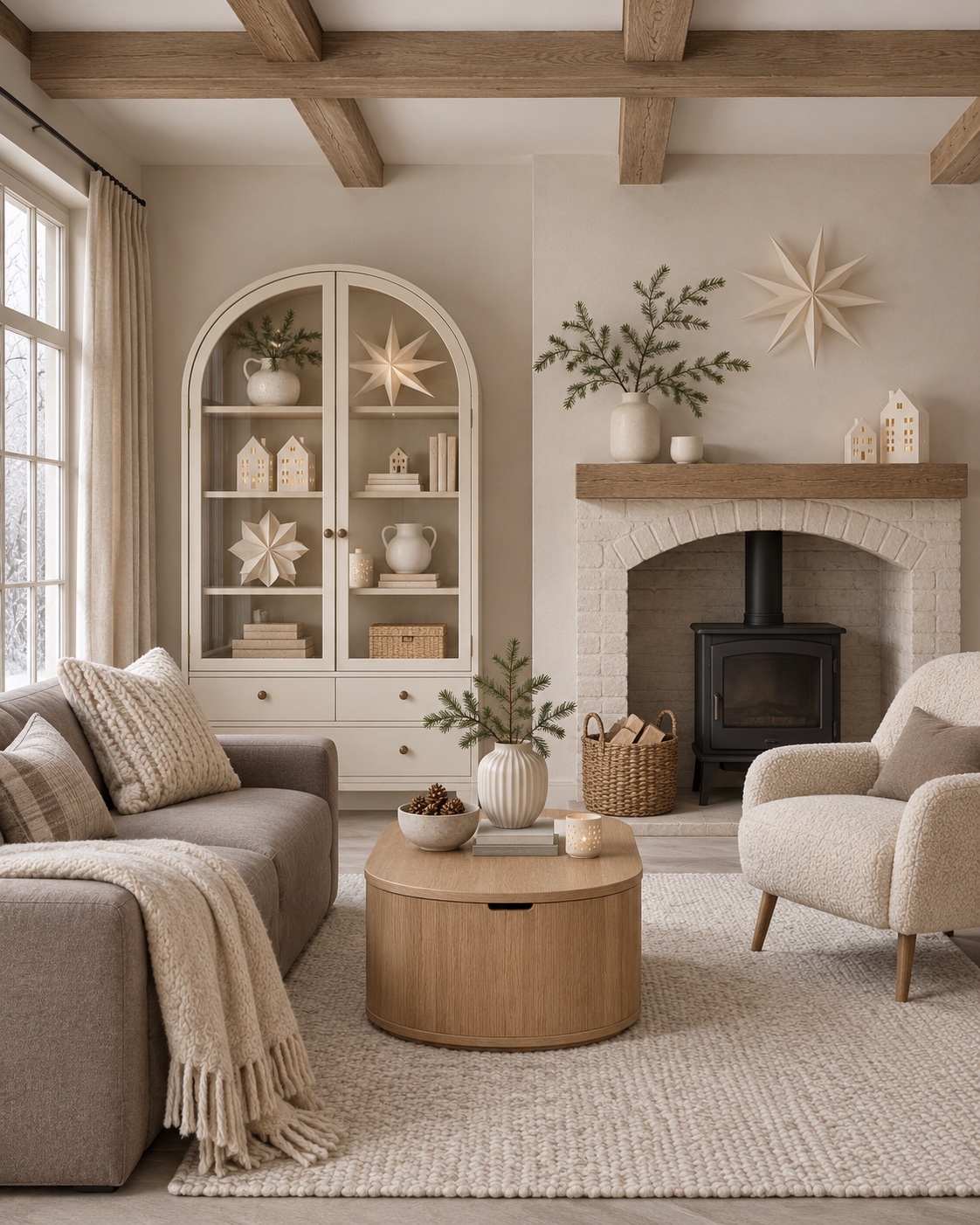
A small cabinet can hold most of the seasonal decoration in one place. Paper stars, ceramic houses, and a few branches bring a winter mood without covering every surface. Pair the display with comfortable wool and linen textures to make the room feel settled. Keep the coffee table available for daily use, and choose decorations that are easy to store together afterward.
21. Trade a Second Sofa for a Window Bench
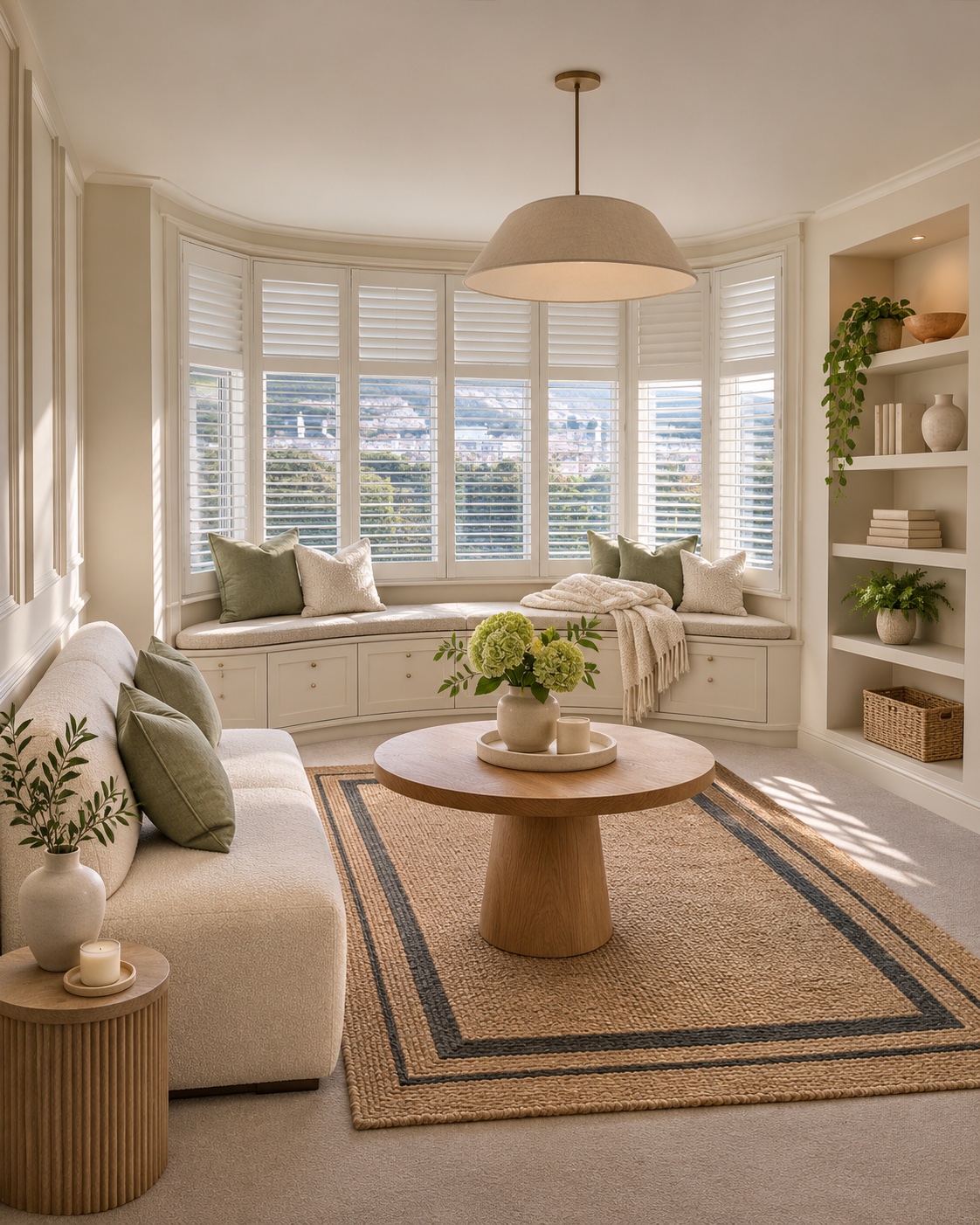
In a compact room, a fitted bench can use the bay more efficiently than another deep sofa. A small round table reduces sharp corners near the seating, while a bordered rug gives the arrangement a clear edge. Build storage access around how often you need it: drawers may be easier to use than a lift-up lid covered with cushions.
22. Keep Blue and White Fresh with Varied Textures
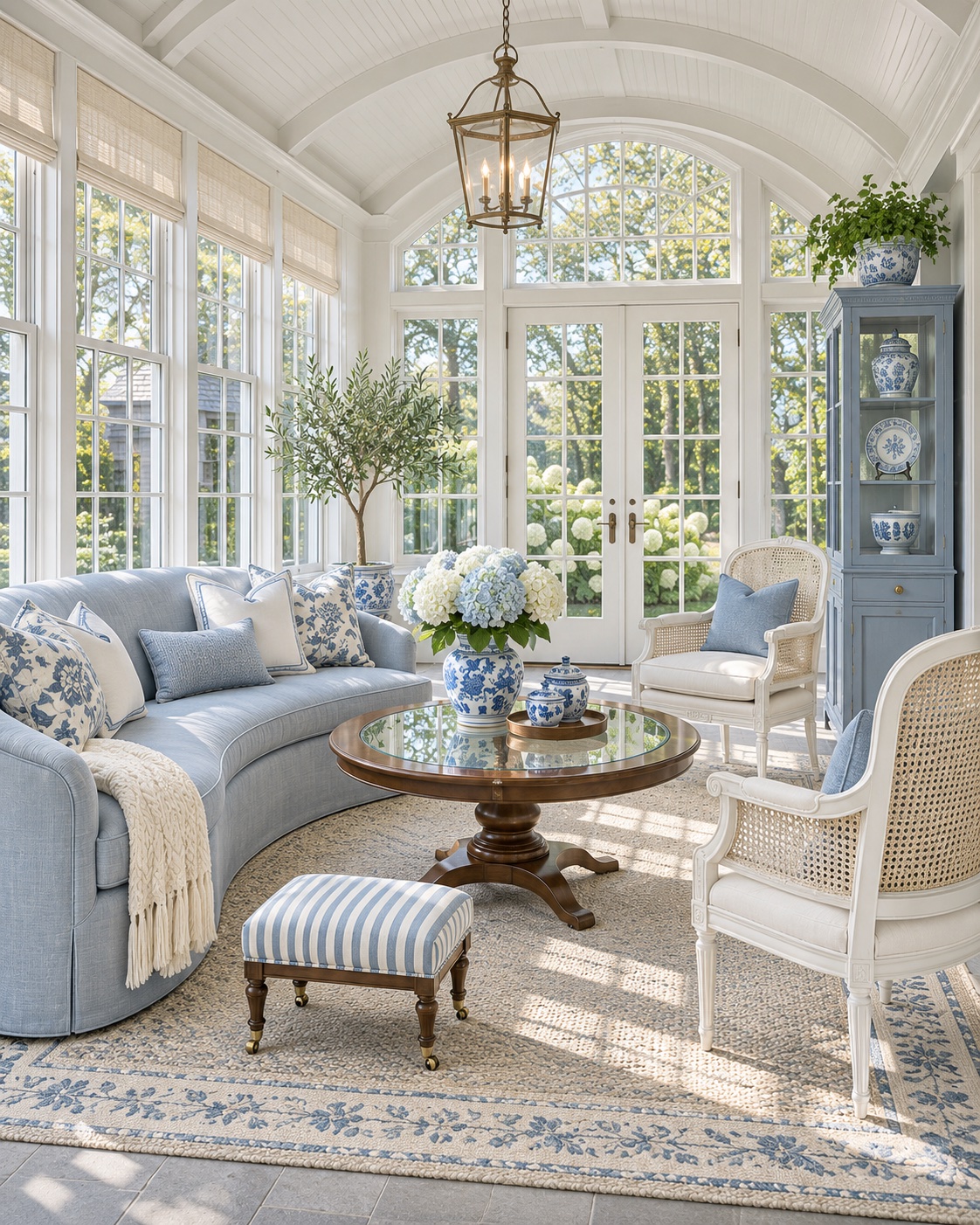
Blue and white feels more relaxed when the pattern appears in small doses. Mix a pale upholstered sofa with cane-backed chairs, a striped stool, and a few porcelain pieces. A wood table prevents the palette from feeling overly cool. If the room has extensive glazing, consider how curtains or shades will control glare without hiding the architectural detail.
23. Use Sage Paneling to Ground Cream Upholstery
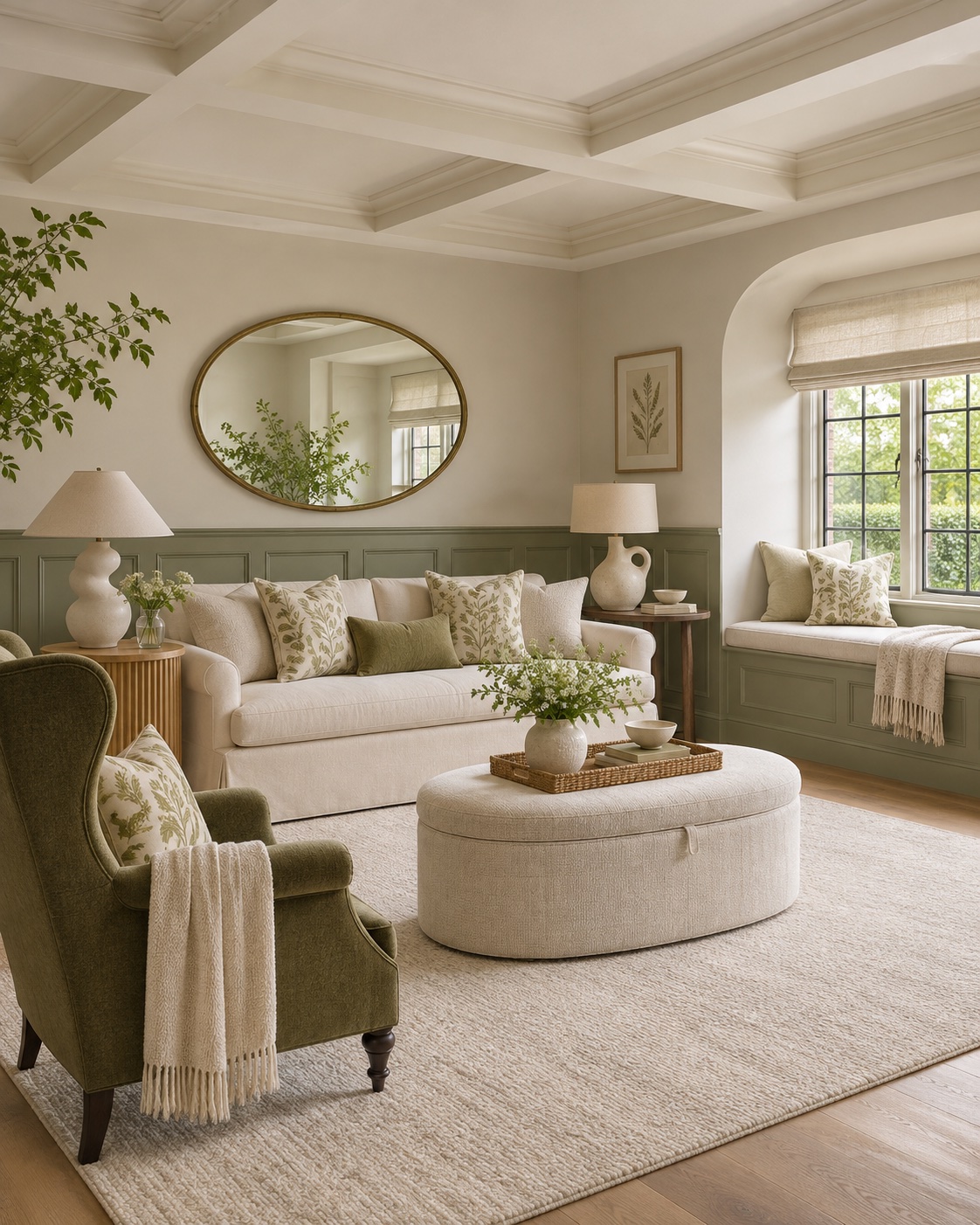
Painted lower wall panels create a visual base for light seating and soften the contrast with white upper walls. An olive chair gives the arrangement a deeper note, while an upholstered ottoman can serve as a footrest or tray surface. Vary the lamp shapes slightly to avoid a showroom effect. Check that the ottoman opens comfortably if it also provides storage.
24. Mix Vintage Pieces Through Shared Proportions
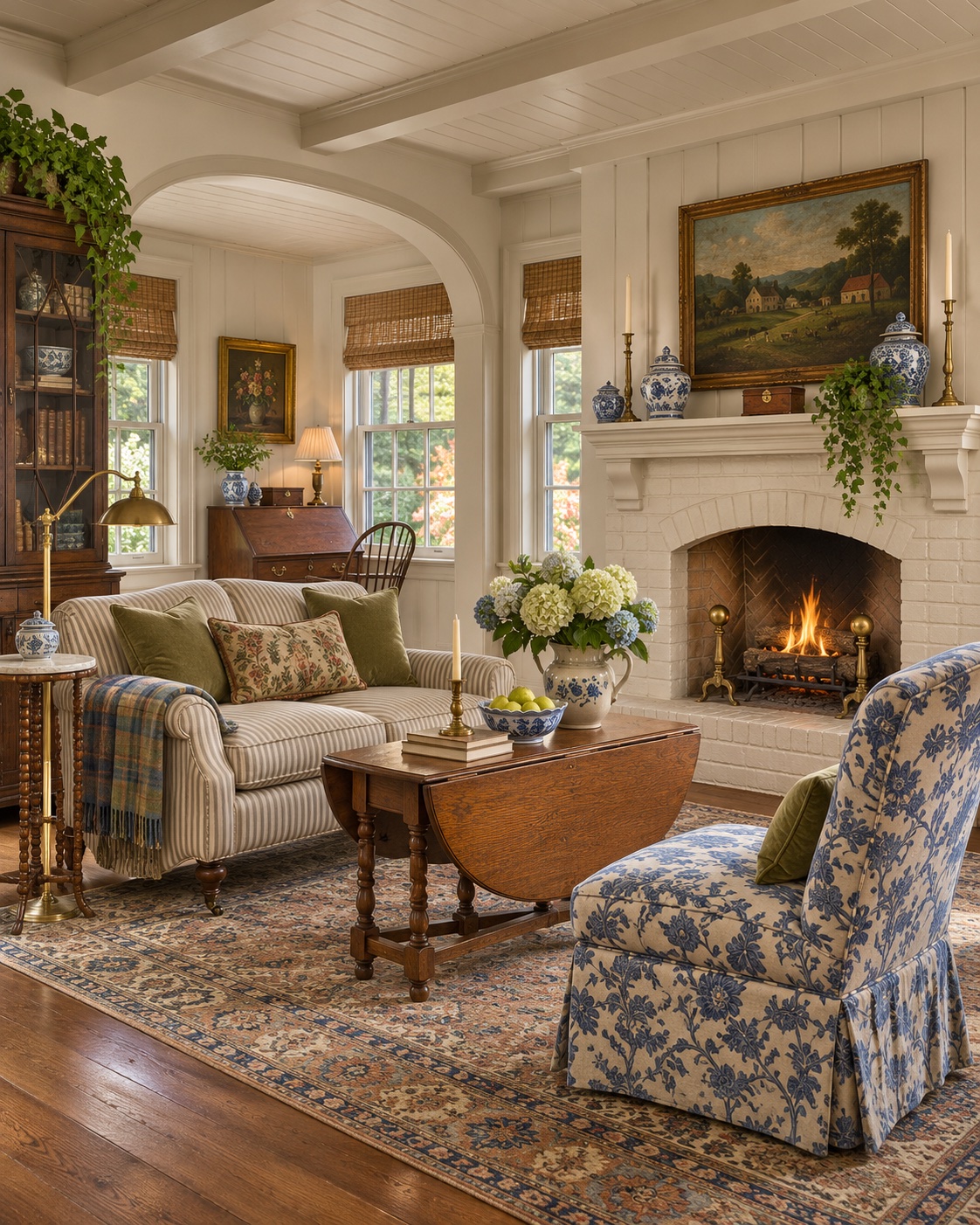
A striped loveseat, floral chair, secretary, and drop-leaf table can belong together even when they come from different periods. Similar wood warmth and a controlled fabric palette help connect them. Keep the largest patterns apart so each reads clearly. Before repurposing an antique as a coffee table, check its height, stability, and finish against the way the room will be used.
25. Make Space for Reading and Games
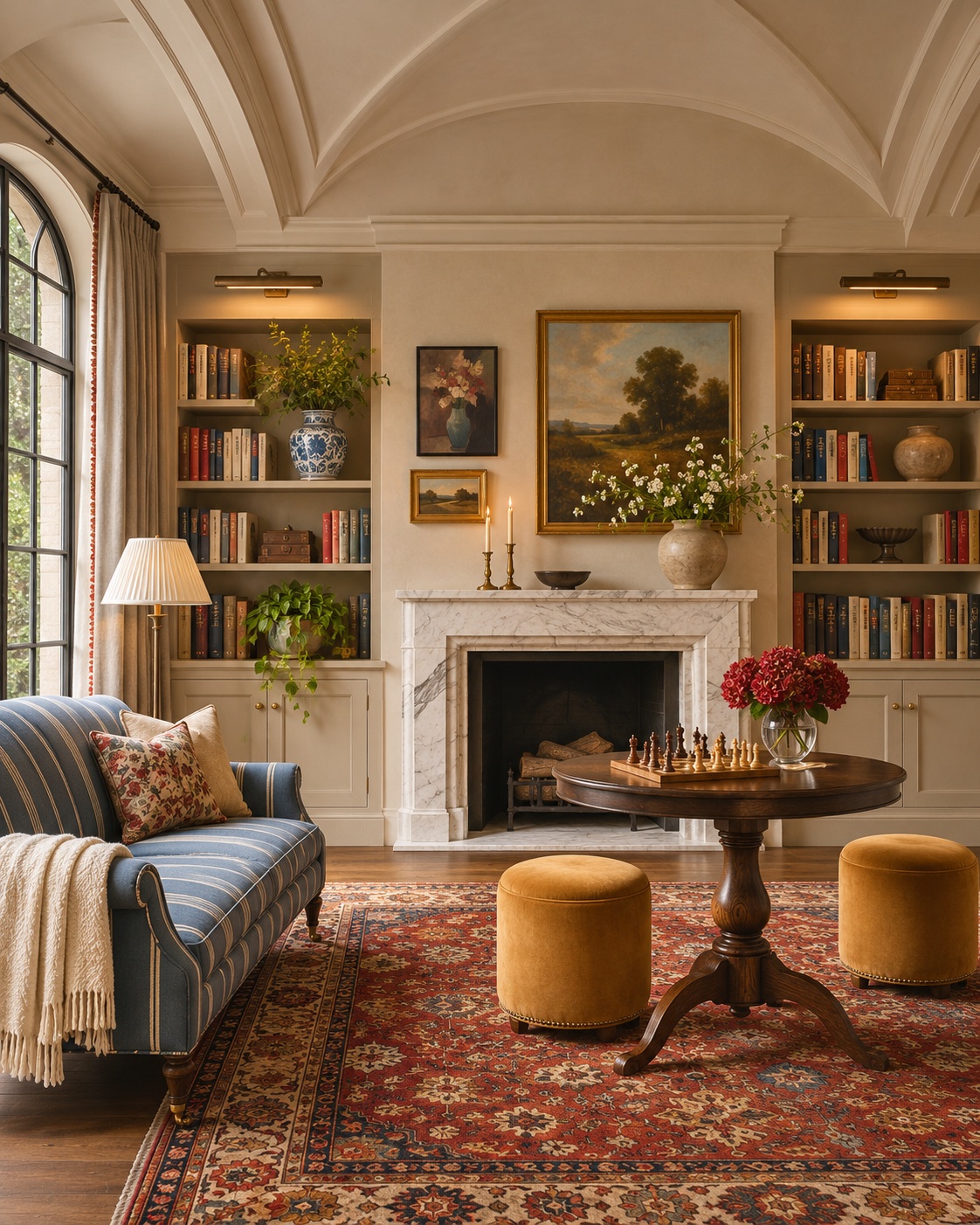
A small games table creates a reason to use the living room beyond watching a screen. Place it near seating that supports an upright posture, with nearby storage for pieces and books. Stripes and a patterned rug add character while the shelves remain a quiet neutral. Make sure the table can be reached without moving heavy furniture each time someone wants to play.
26. Give a Neutral Salon a Strong Outline
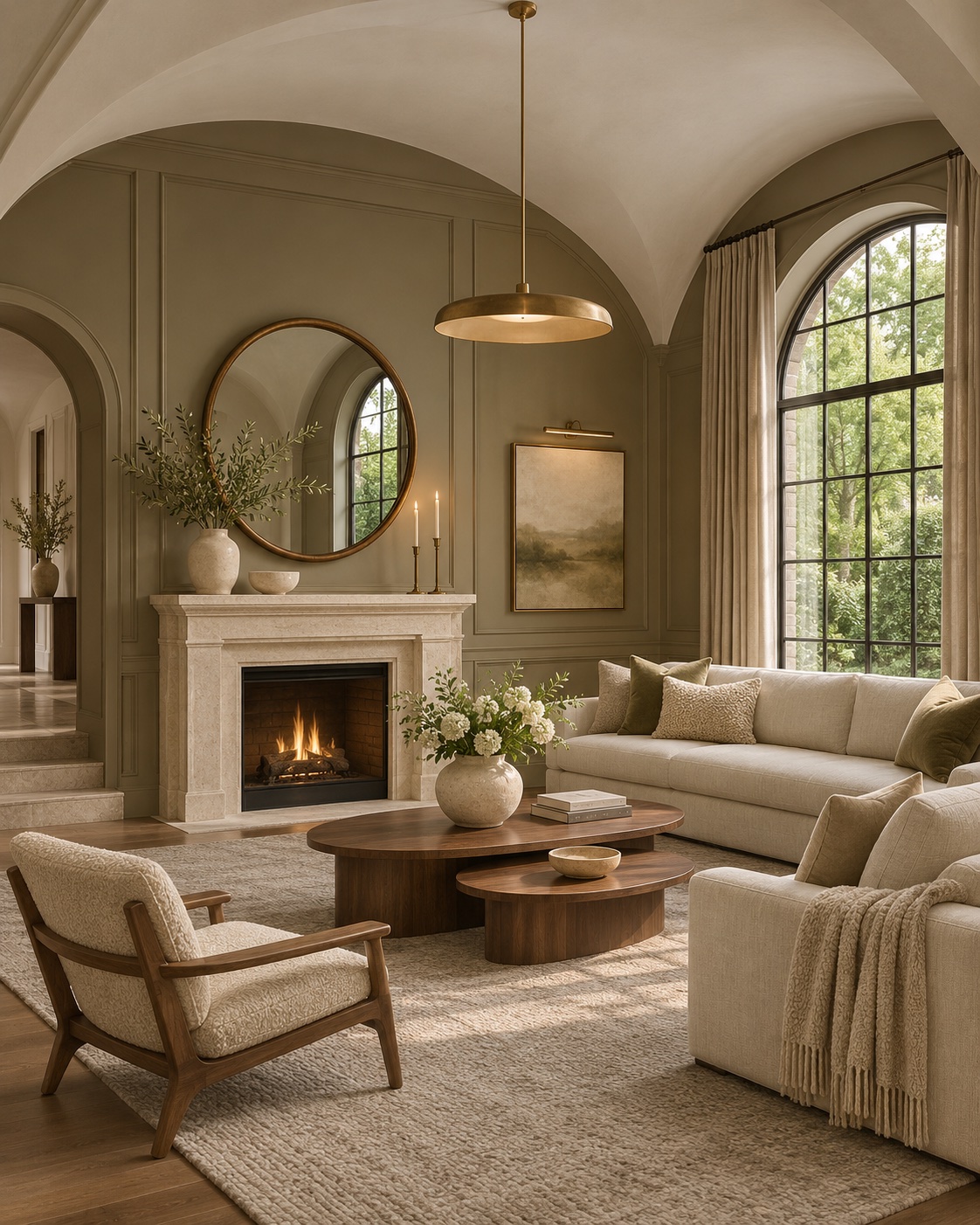
A restrained palette benefits from distinct shapes: an arched window, round mirror, open armchair, and oval tables each contribute a different line. Warm wood keeps cream upholstery from feeling flat. Allow curtains to frame the window rather than crowd the seating. If the room feels unfinished, adjust the scale of the rug and lighting before adding more small decorative objects.
27. Build an Evening Retreat Around a Window Alcove
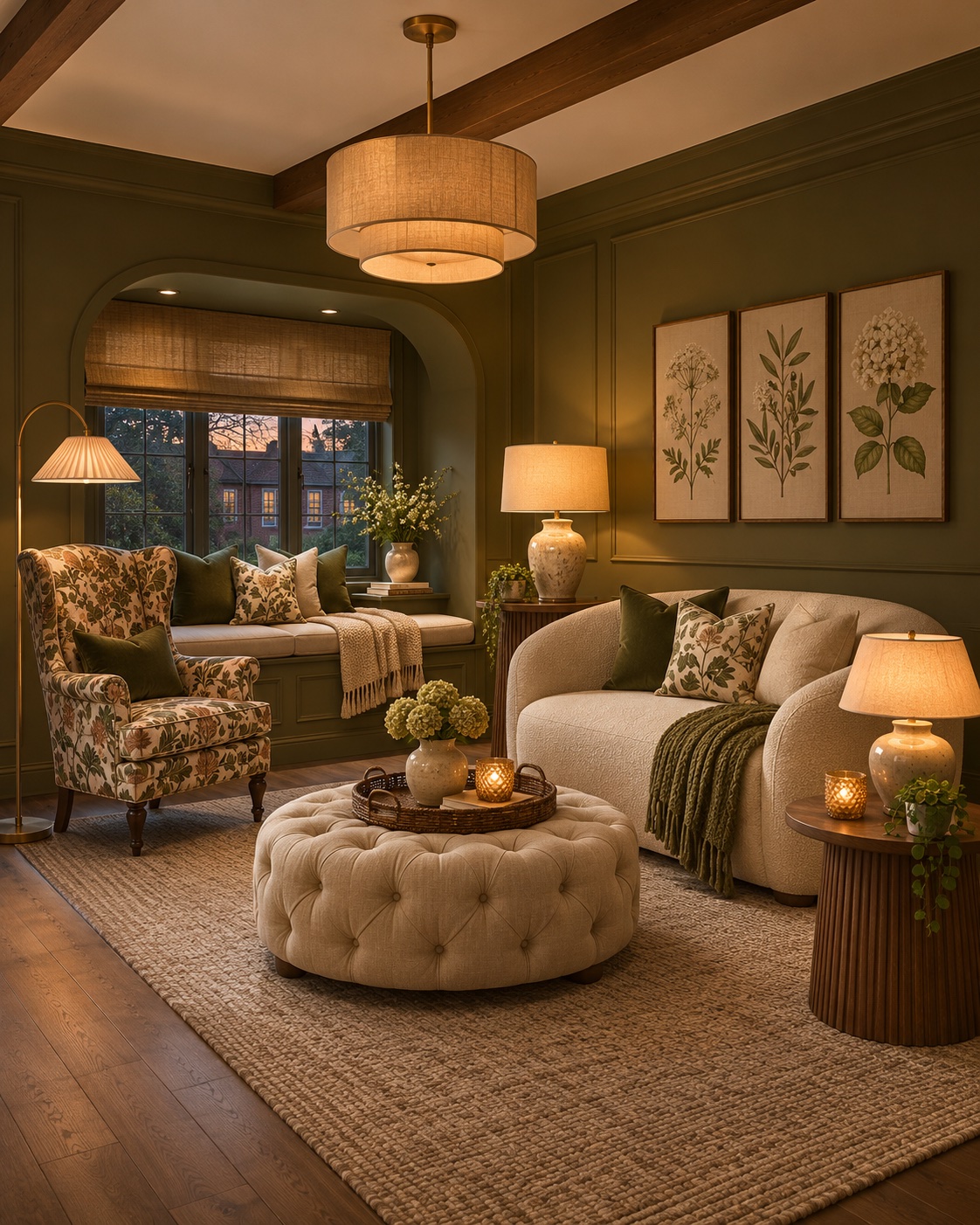
A window seat gives an otherwise awkward recess a purpose and provides a quieter place to read. In the main group, a curved sofa and patterned chair keep the room comfortable without exact matching. Lamps at different heights create pockets of light. Use a firm tray on a tufted ottoman when serving drinks, then remove it when the ottoman becomes a footrest.
28. Mix Velvet with Stone and Open Woodwork
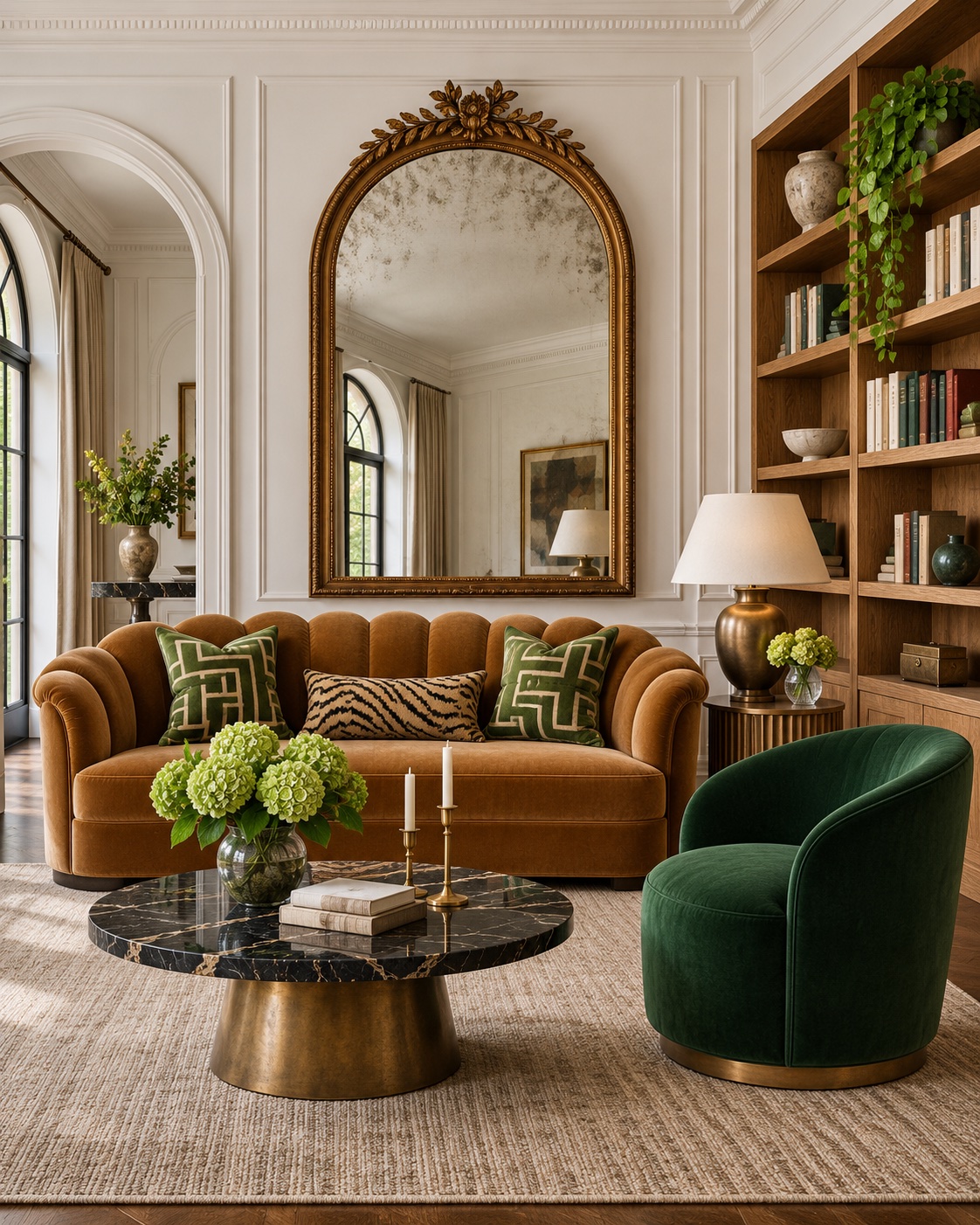
Velvet has a strong presence, so contrast it with surfaces that feel different to the eye and touch. A caramel sofa and emerald chair work with a dark stone table and open shelving in this concept. Limit competing cushion patterns to a few deliberate choices. A mirror can add depth, but check what it reflects from the main entrance before fixing its position.
29. Finish with Warm Midcentury Shapes
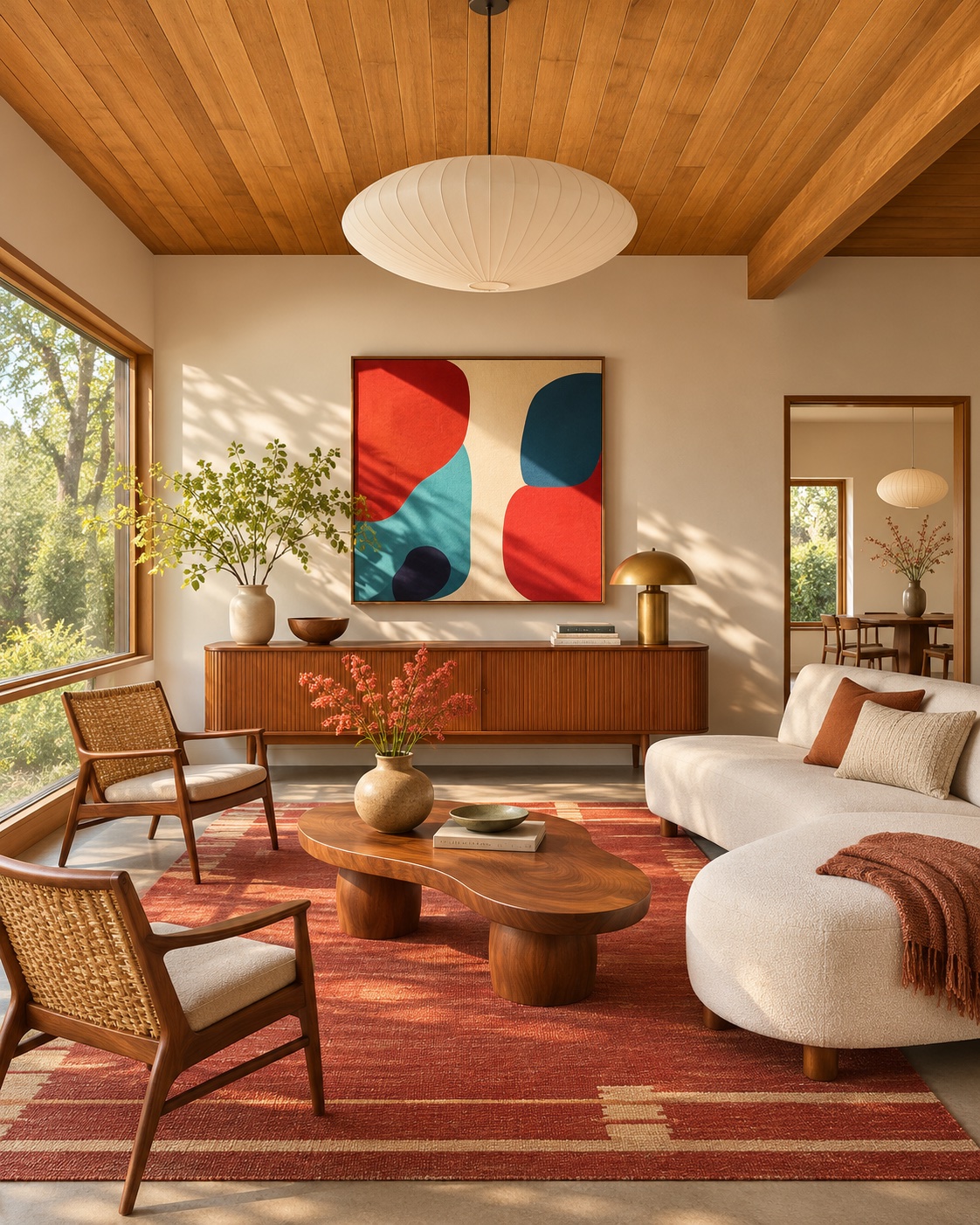
Timber overhead, low storage, and open wooden chairs give this room a warm framework. A freeform coffee table softens the seating group, while one large abstract artwork supplies color without visual clutter. Keep enough exposed floor around the rug to show the room’s proportions. The most useful pieces should earn their space through comfort, storage, or a surface within reach.
Choose the Changes That Improve Everyday Use
Begin with one practical problem: an awkward route through the room, insufficient reading light, or furniture that does not suit the way you relax. Measure the space and test the layout before buying larger pieces. Once the arrangement works, use textiles, art, and a few personal objects to give it character. You can build a convincing room gradually; every surface does not need an accessory.
Visual inspiration: TheCoolist living room ideas. Original text and redesigned concept images by DIY Ideas.