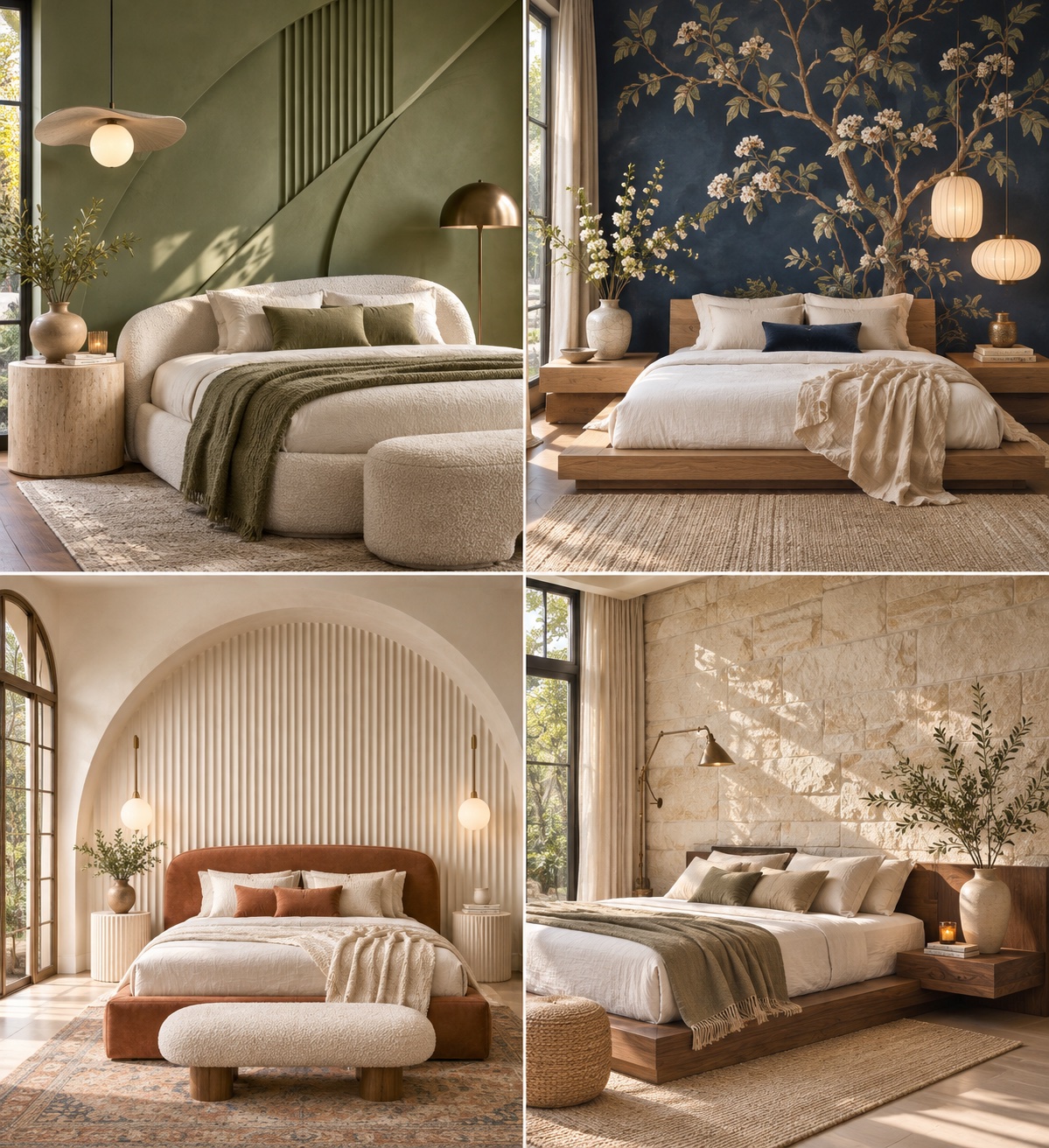
An accent wall can give a bedroom direction before you add many accessories. The right texture, pattern, or architectural detail helps frame the bed and connects the furniture to the room around it.
These 28 ideas explore paneling, timber, wallpaper, stone, murals, and sculptural finishes. Each source image has been individually redesigned for DIY Ideas, with new combinations of furniture, geometry, materials, and styling. The AI-generated images are visual concepts to adapt to your own room.
1. Frame the Bed with Quiet Ivory Molding
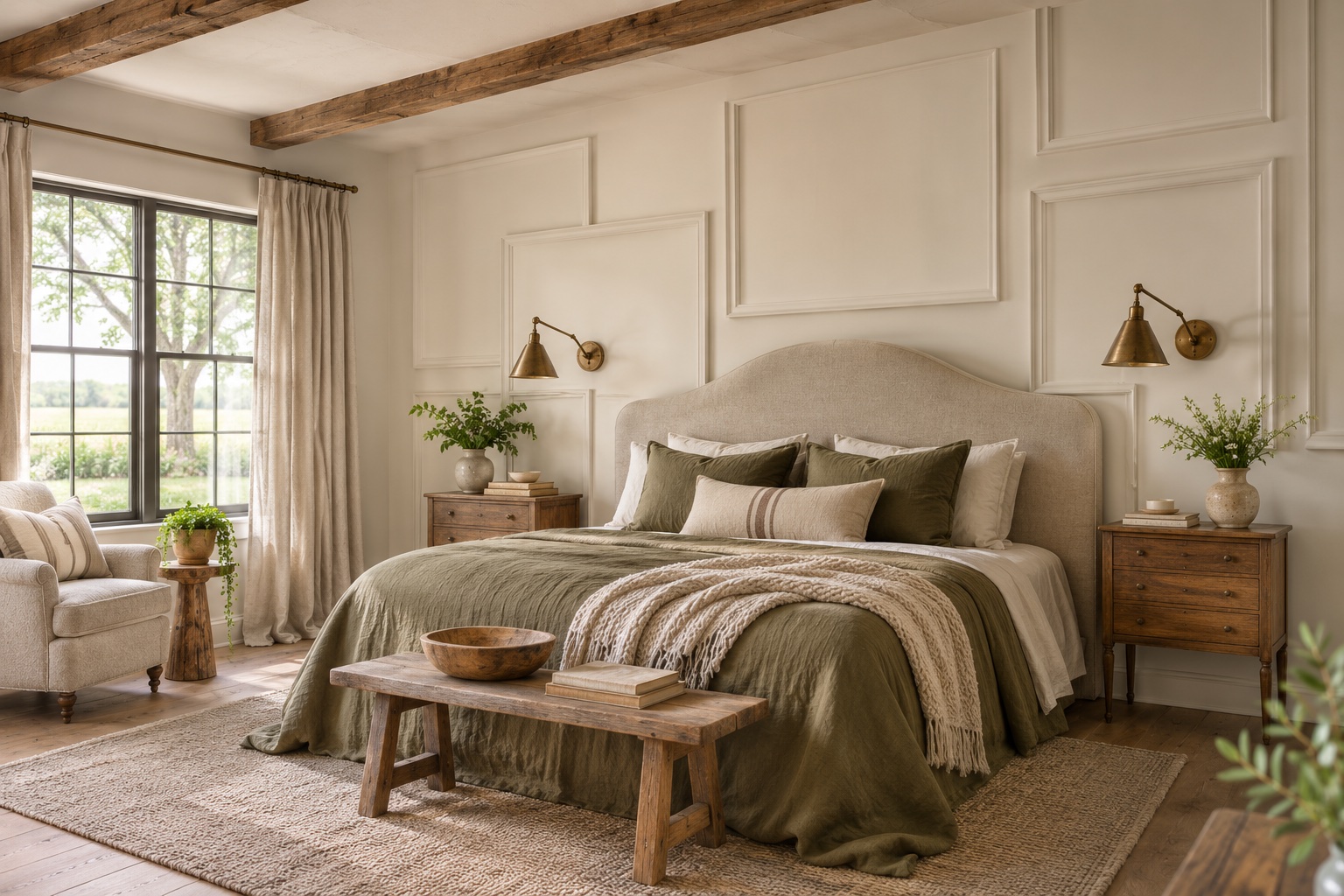
Fine molding gives a plain wall structure without introducing a busy print. In this bedroom, unequal rectangular panels sit behind a curved linen headboard, while olive bedding and aged oak furniture keep the palette warm. Plan the panel arrangement around the bed and bedside lights first. A small adjustment to the spacing can make the whole wall feel intentional.
2. Give Black Paneling a Softer Center
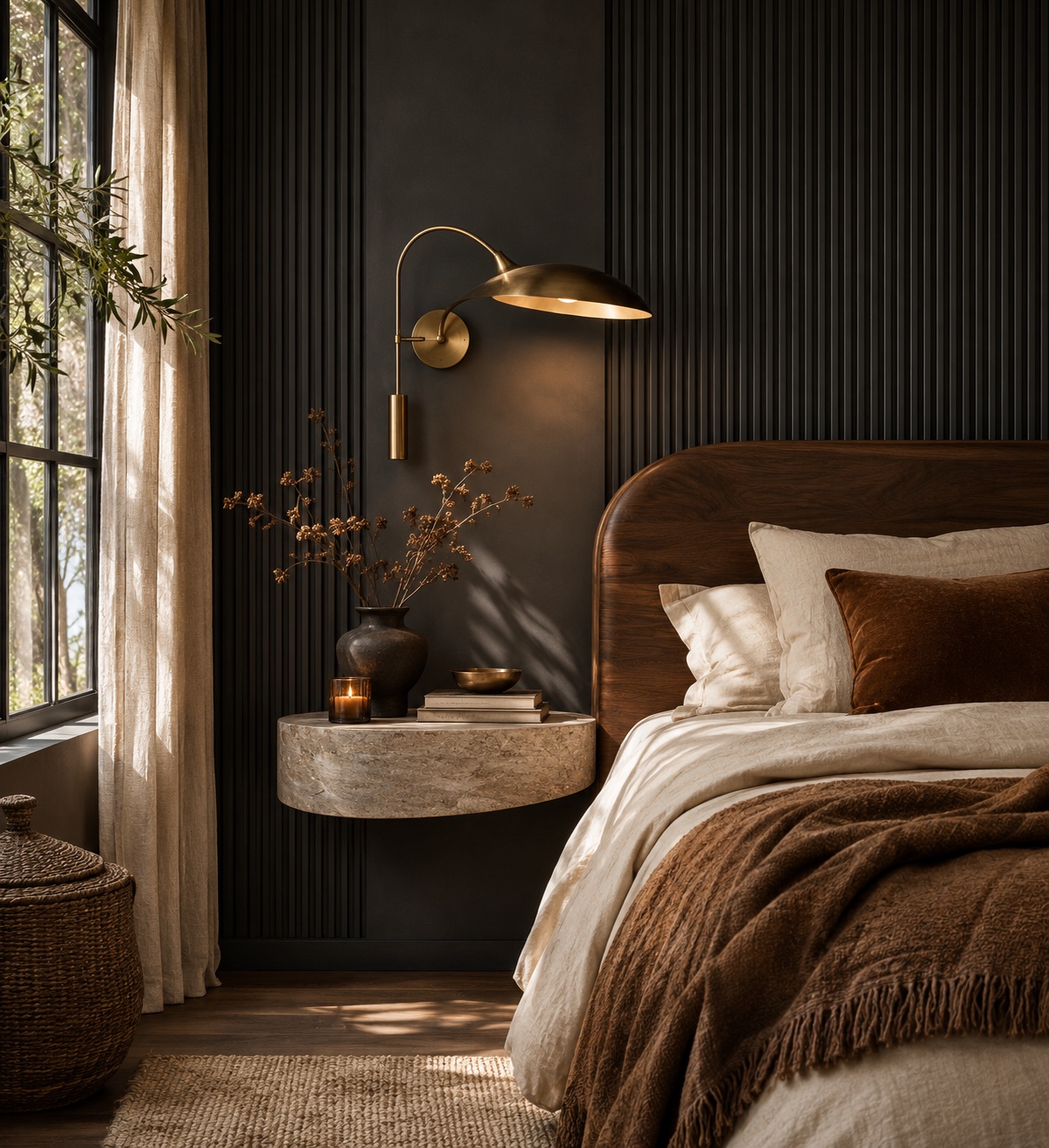
A dark reeded wall becomes inviting when its hard lines meet a rounded headboard. The smooth inset provides a resting place for the eye, with brass lighting adding a gentle highlight. Floating stone tables keep the floor visible on either side. Let the wall texture do most of the decorating and use soft, plain bedding to balance it.
3. Build the Room around a Broad Sage Arch
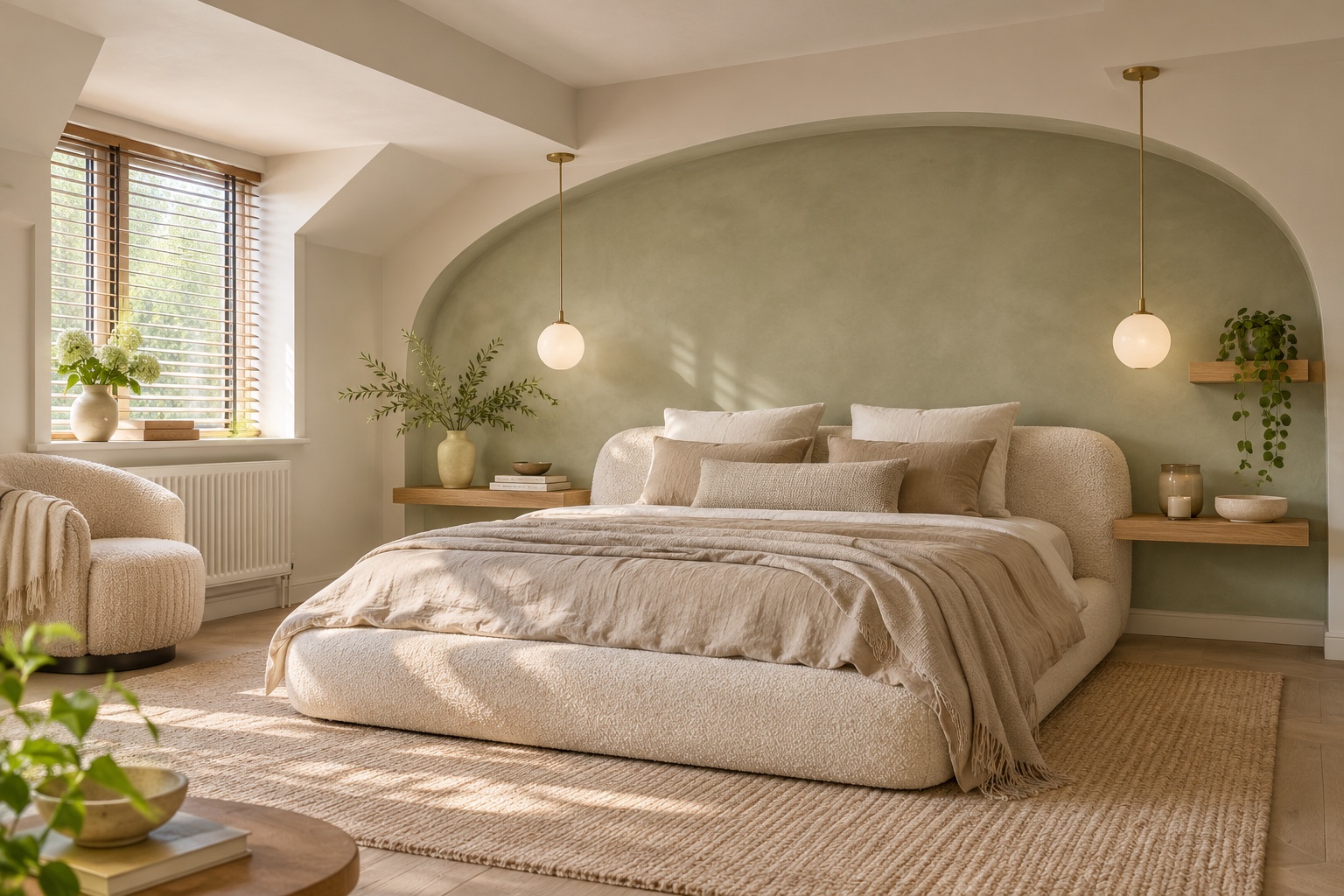
A wide arched recess frames the sleeping area like a quiet alcove. Its generous curve contrasts with the low upholstered bed and slim oak ledges. Globe pendants continue the soft geometry without copying the arch exactly. Before adding a built feature, check how its depth affects the bed position, sockets, and access to both sides.
4. Light a Recess within Navy Panels
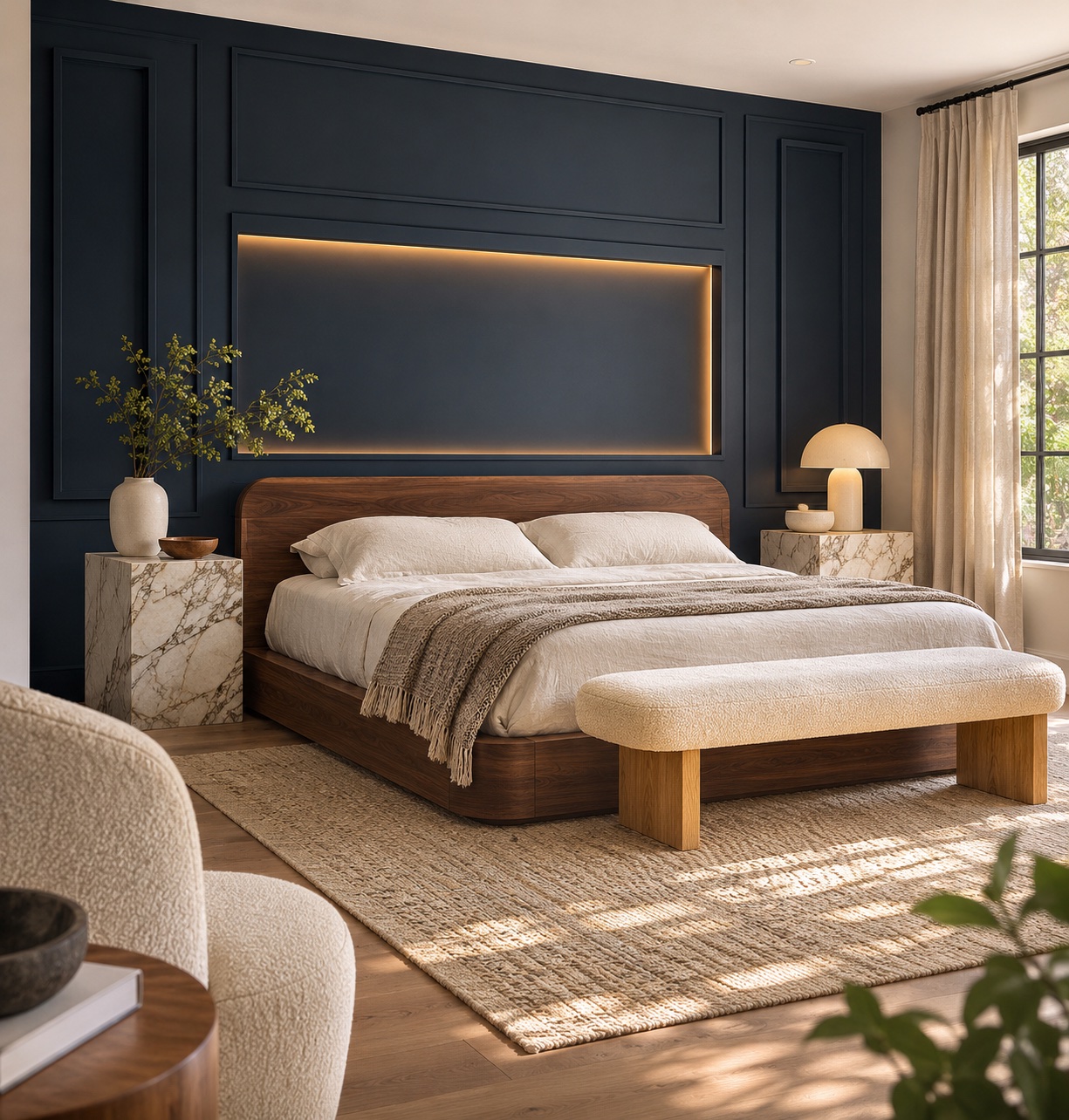
A shallow illuminated recess can add depth to an otherwise flat wall. Here, navy rectangular panels surround a walnut bed, while a pale bench and stone bedside tables keep the composition grounded. Use concealed lighting as a soft background layer, with separate reading lights where needed. The wall should still look balanced when the accent lighting is off.
5. Hang Woven Sculpture against Indigo
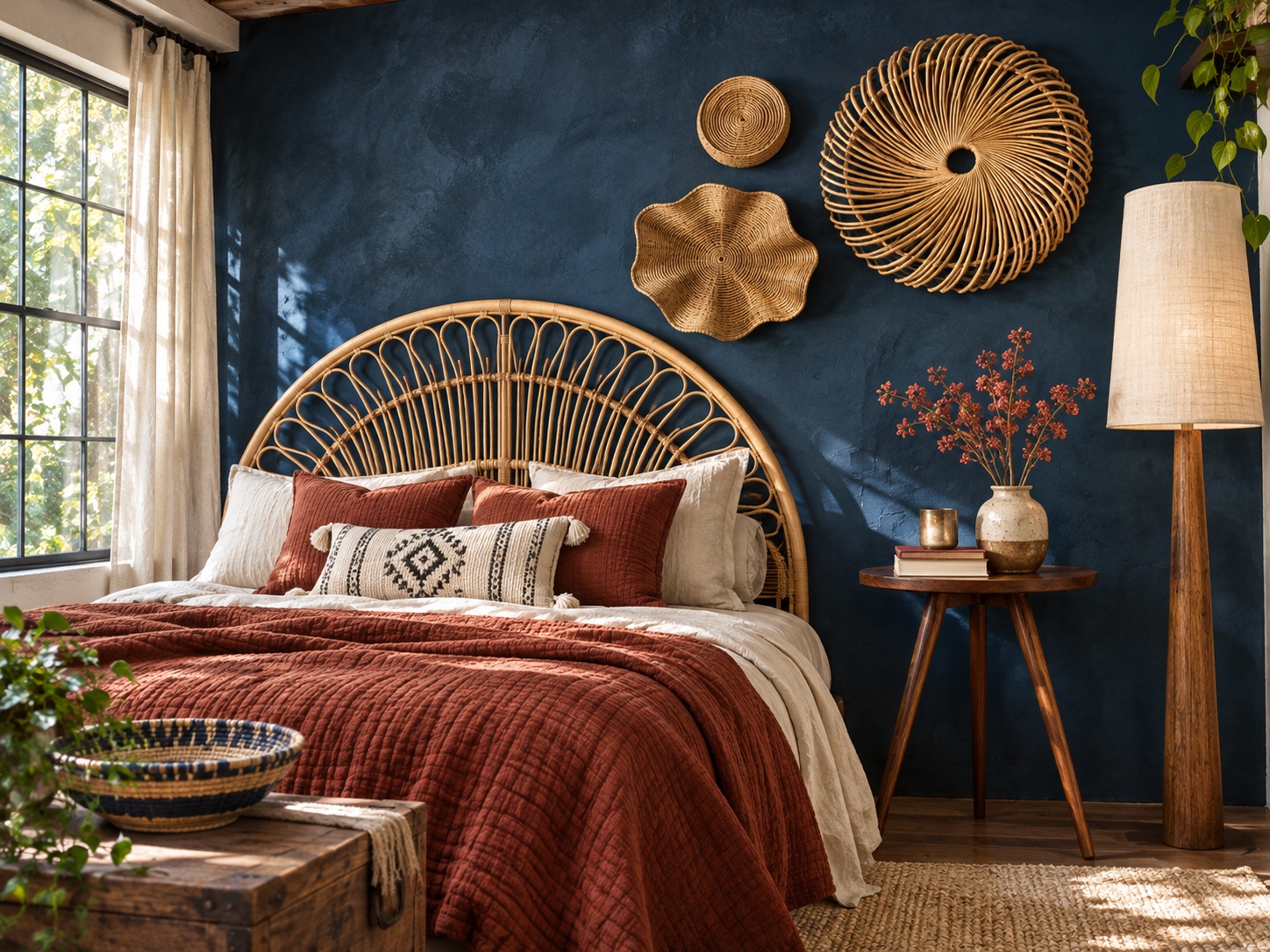
Three woven discs introduce irregular texture to a deep indigo wall. Their natural fibers connect with the arched rattan headboard, while rust textiles bring warmth to the darker background. Vary the size and placement of the pieces rather than making a rigid row. Leave breathing room around them so each outline remains visible.
6. Break Vertical Paneling with a Horizontal Line
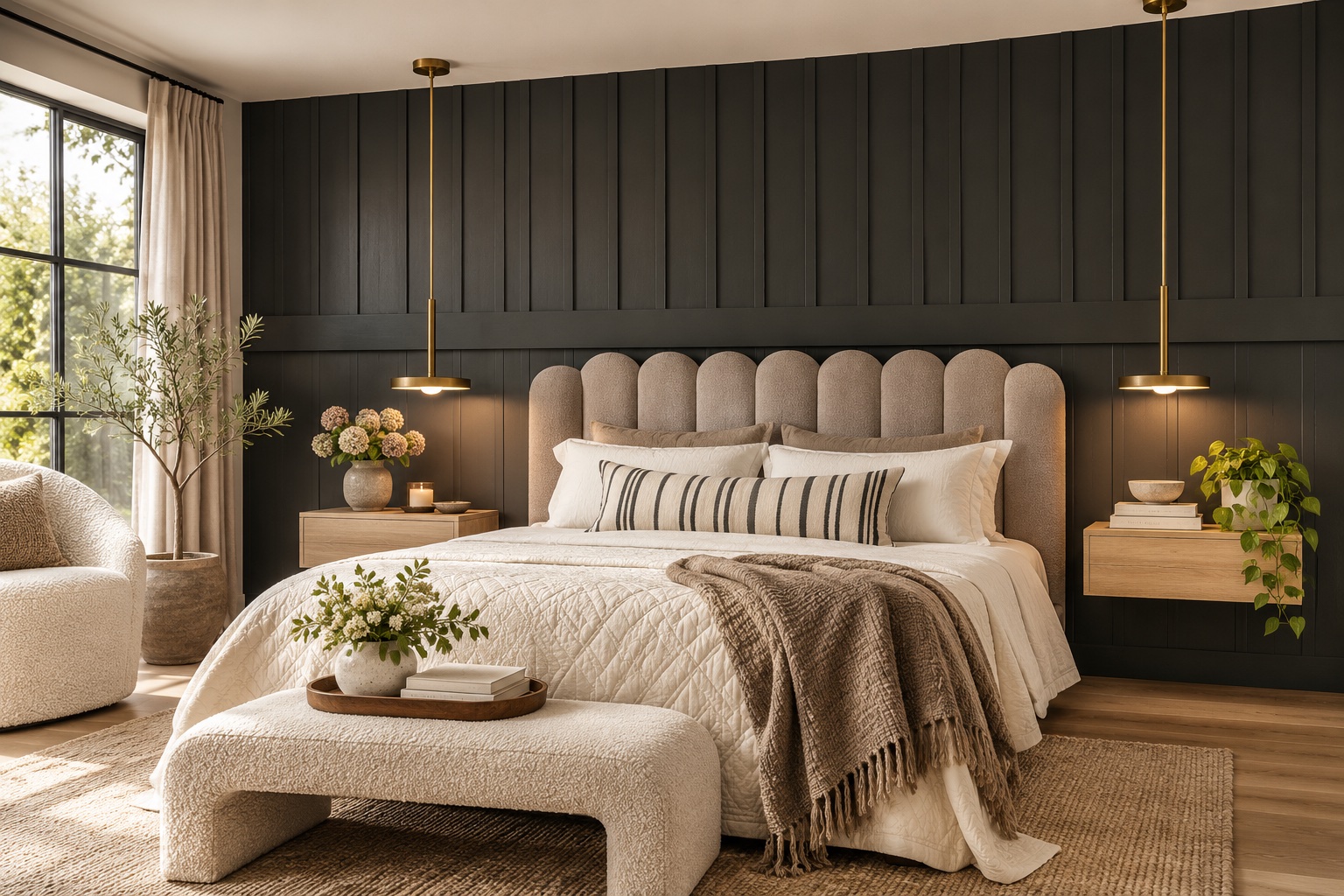
A horizontal interruption gives tall charcoal panels a more considered rhythm. The scalloped headboard softens that geometry, and floating oak drawers add warmth at a practical height. Slim brass pendants leave the bedside surfaces open. Sketch the wall with the furniture included so the horizontal line does not meet the headboard at an awkward point.
7. Make a Wildflower Mural the Main Artwork
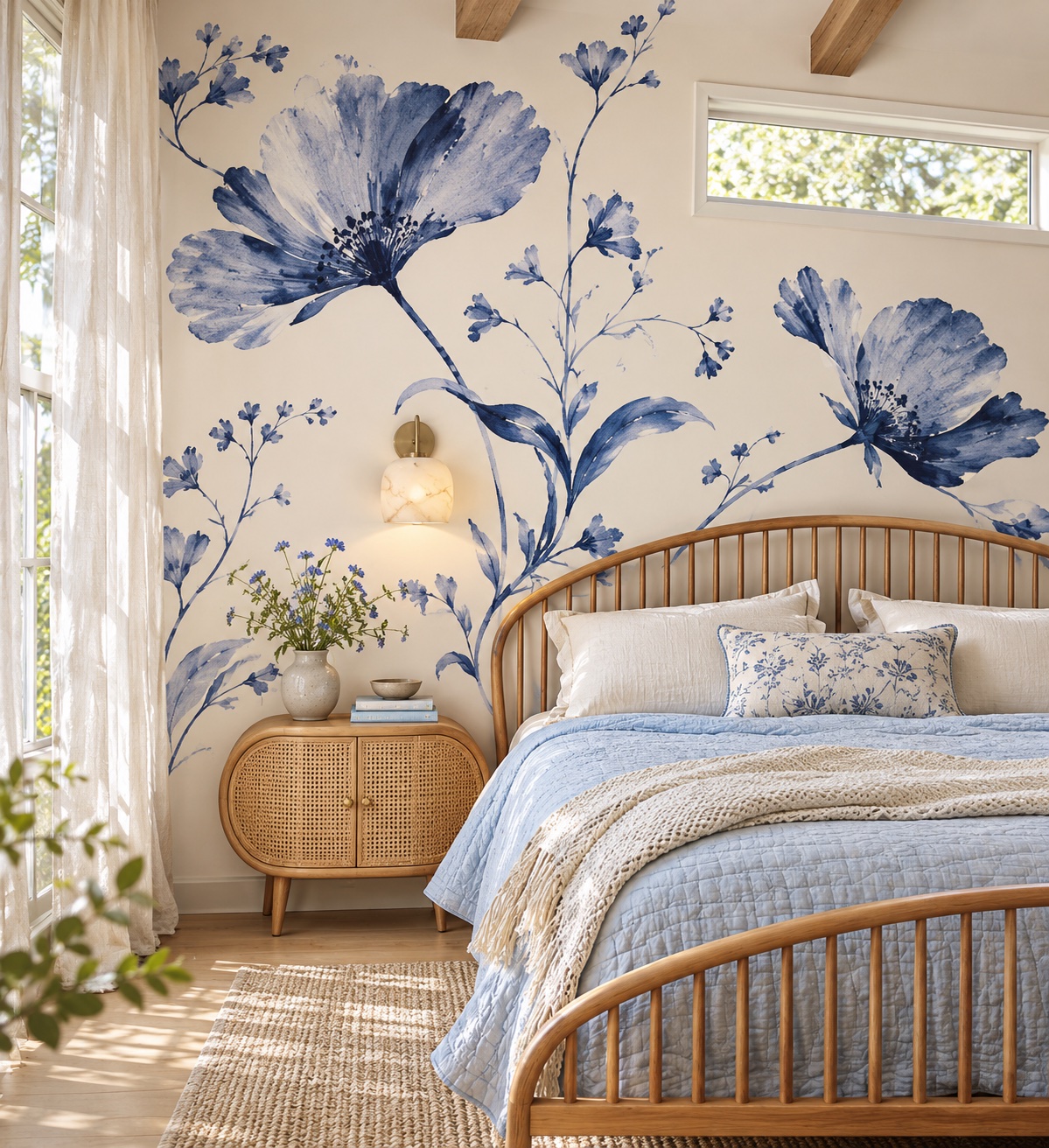
An oversized blue botanical mural gives this room a distinct personality with very little extra decoration. The spindle bed allows parts of the pattern to remain visible, and a simple blue quilt repeats the color at a smaller scale. Keep neighboring walls quiet. A sample viewed in both morning and evening light helps judge whether the blue feels right.
8. Combine Beadboard with One Large Botanical Print
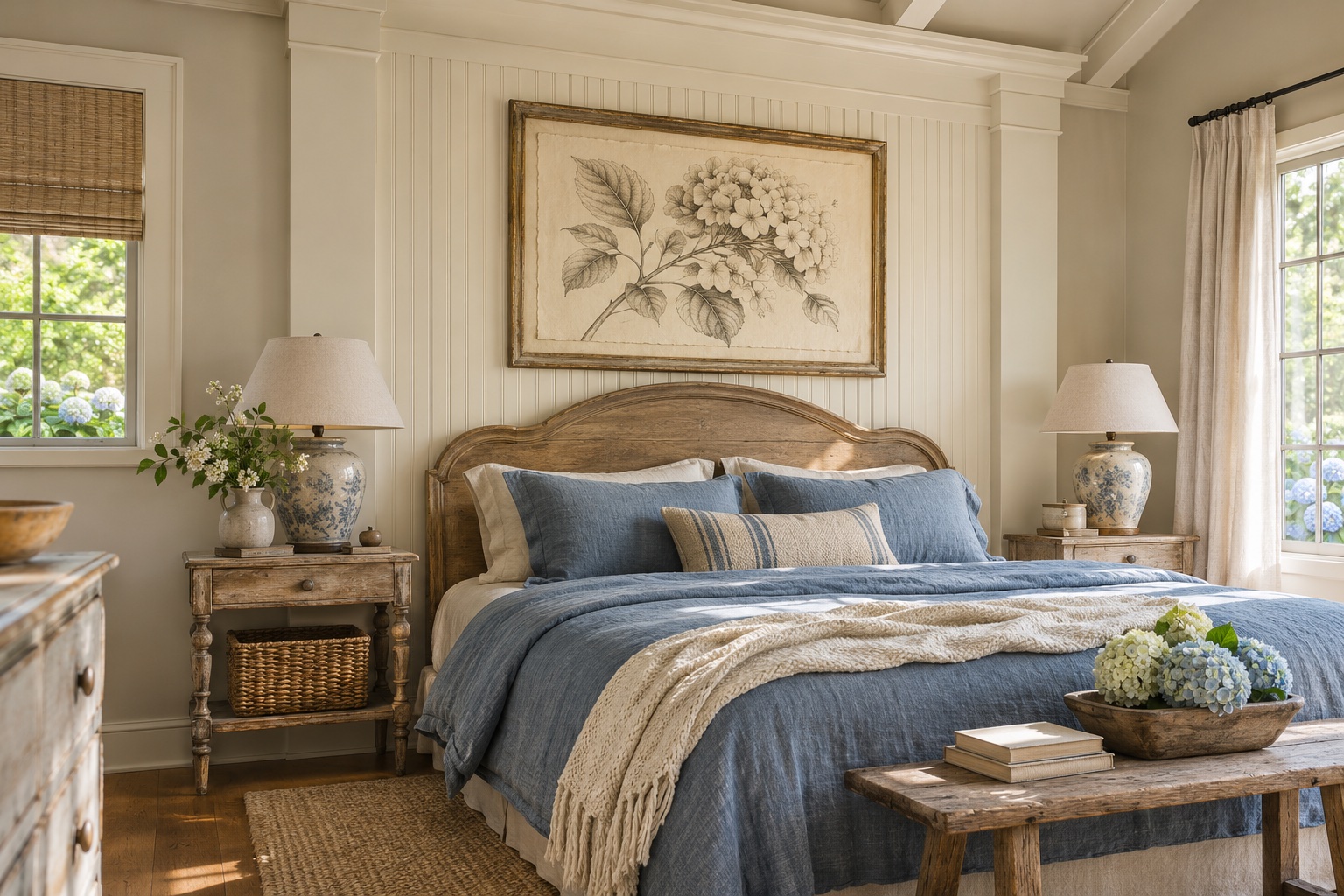
Ivory beadboard creates a modest architectural frame for a generous botanical drawing. Broad side pilasters give the central section a clear boundary, while weathered oak and blue bedding make the room feel relaxed. Choose artwork large enough to hold its own above the headboard. Several tiny pictures would weaken the calm, centered composition.
9. Pair Olive Battens with a Metal Bed
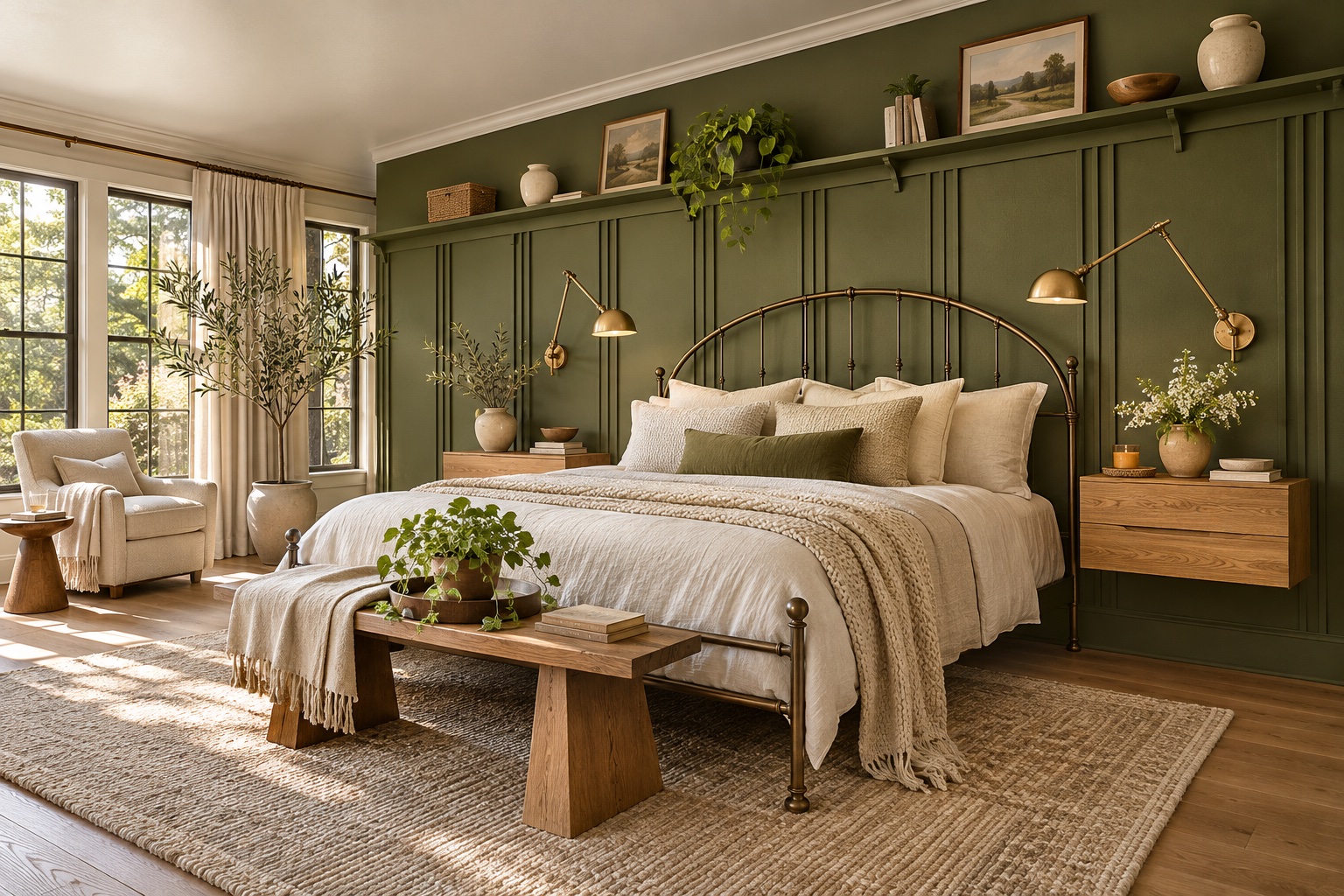
Closely paired battens give an olive wall more depth than a standard evenly spaced grid. A dark metal bed adds an open, curved silhouette, and floating oak drawers keep the lower part of the room simple. The narrow picture ledge offers room for changing artwork. Position it beyond the seated head zone and secure everything properly.
10. Try a Woven Geometric Wallcovering
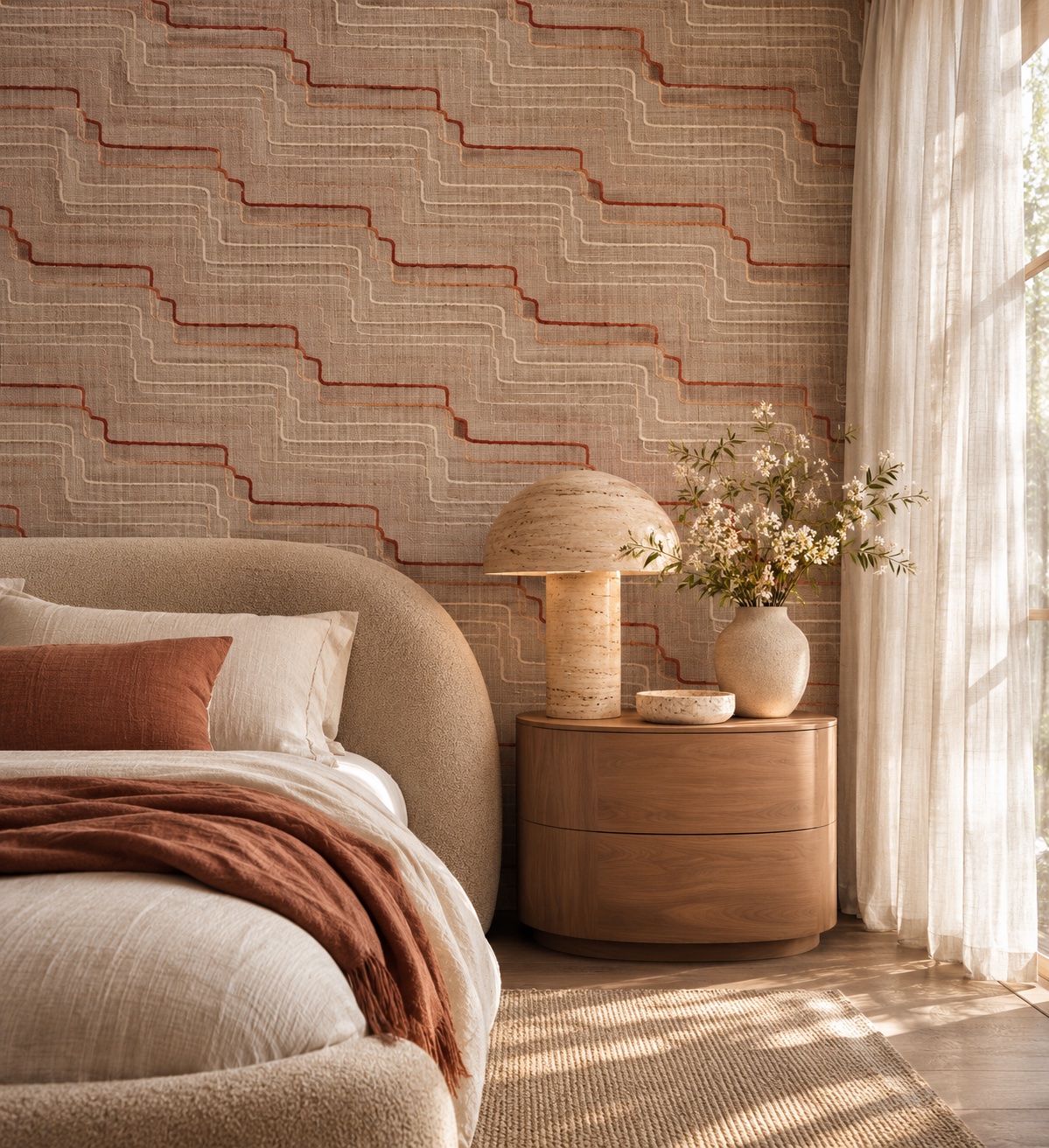
A stepped cream-and-terracotta pattern brings movement without the sharpness of a glossy print. Its woven appearance suits the rounded taupe bed and curved walnut furniture. Repeat one of the lighter colors in the bedding to keep the room cohesive. When ordering wallpaper, allow for the pattern repeat and test how the seams read under side lighting.
11. Scale Up a Diamond Relief
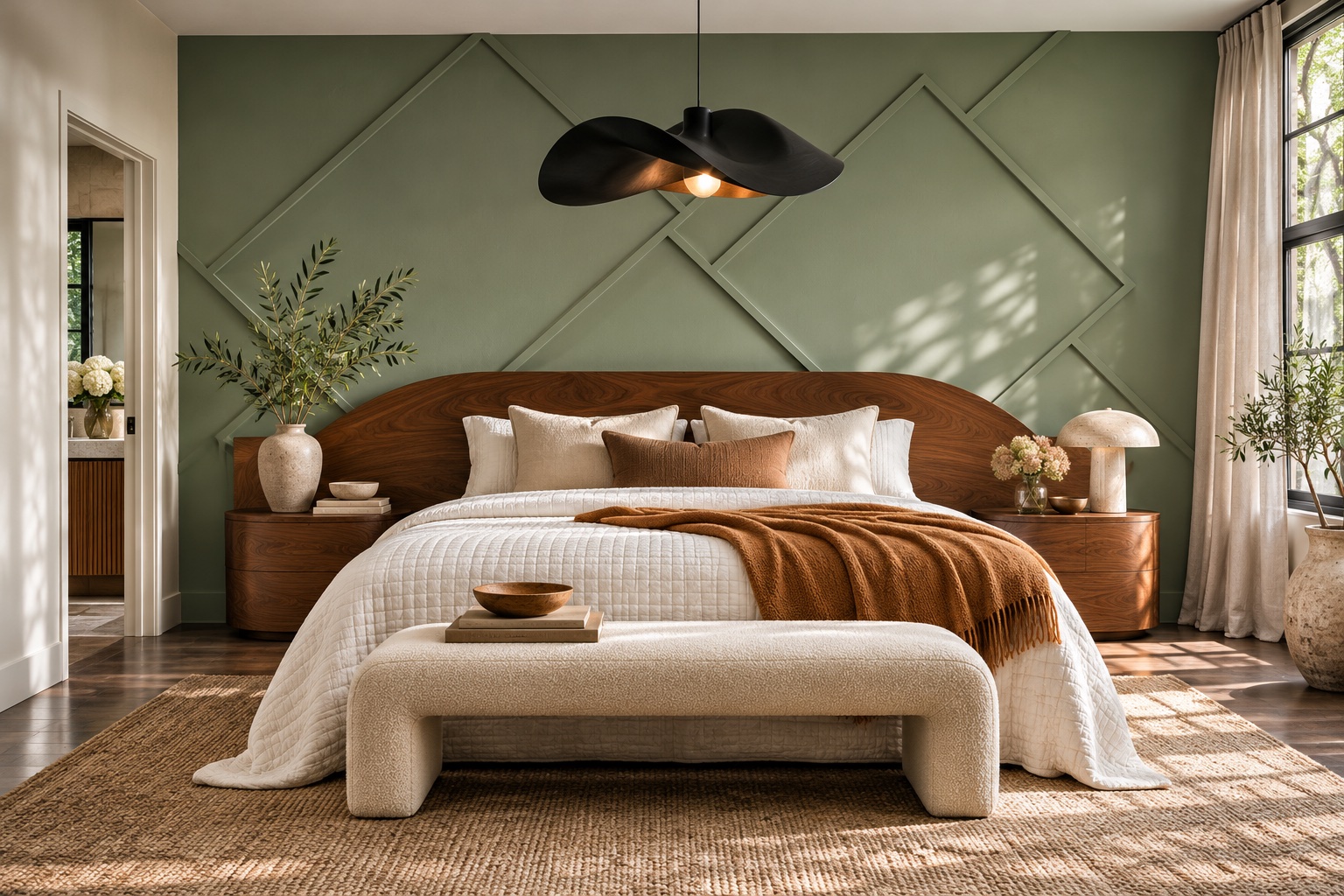
Large sage diamonds create a strong accent without filling the wall with many small lines. The curved walnut headboard offers a contrasting shape, while a cream bench keeps the foot of the bed light. A sculptural pendant provides another focal detail at a different height. Keep secondary patterns restrained so the relief remains easy to read.
12. Run Dark Planks Horizontally
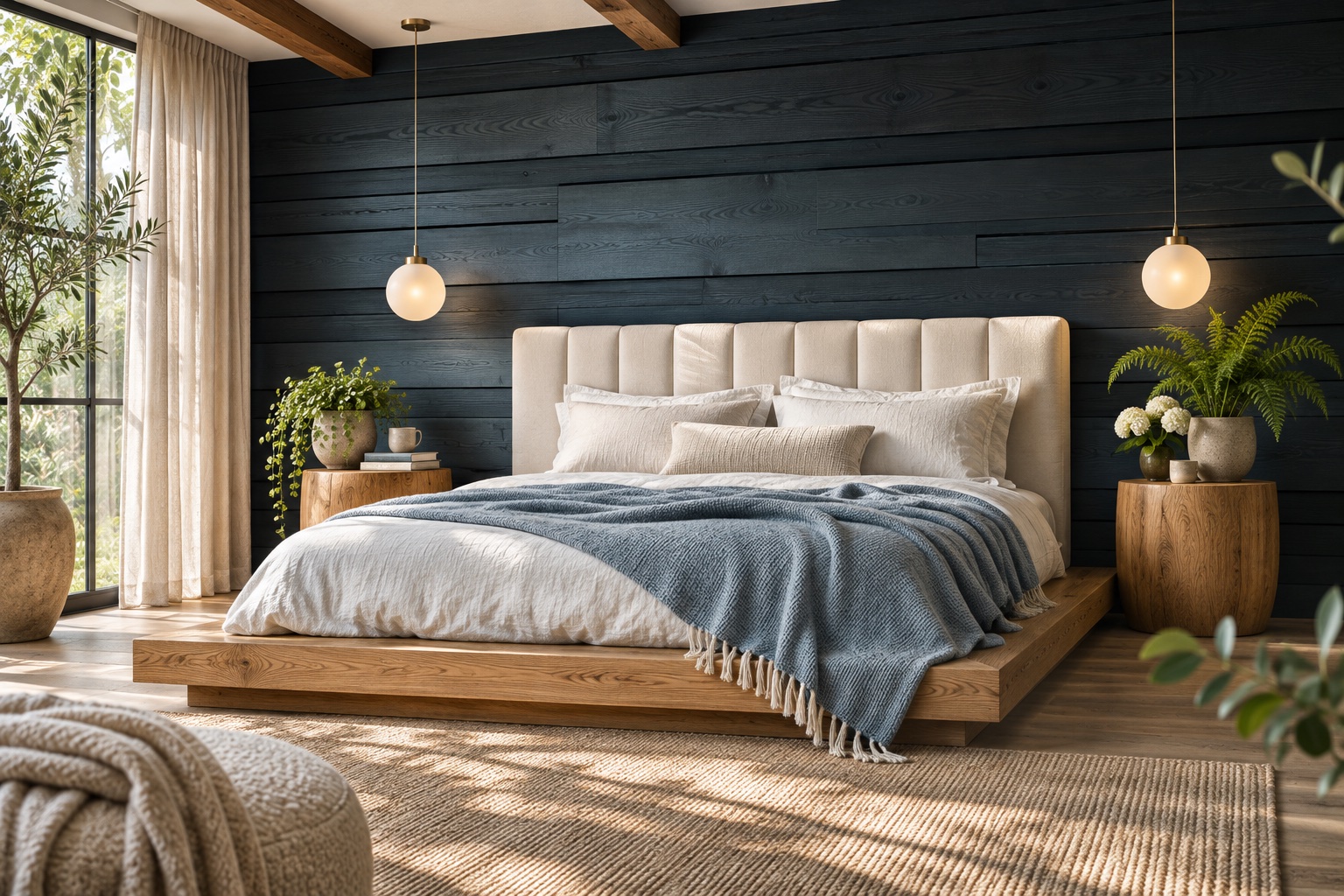
Horizontal planks can make a bed wall feel broad and settled. Varying the board widths adds interest to the blue-black finish, while an oak platform and pale upholstery prevent the room from becoming too heavy. Round bedside tables interrupt the long lines. Use a consistent finish across the planks so their spacing, rather than color variation, leads the design.
13. Add Diagonal Inlays to Timber Panels
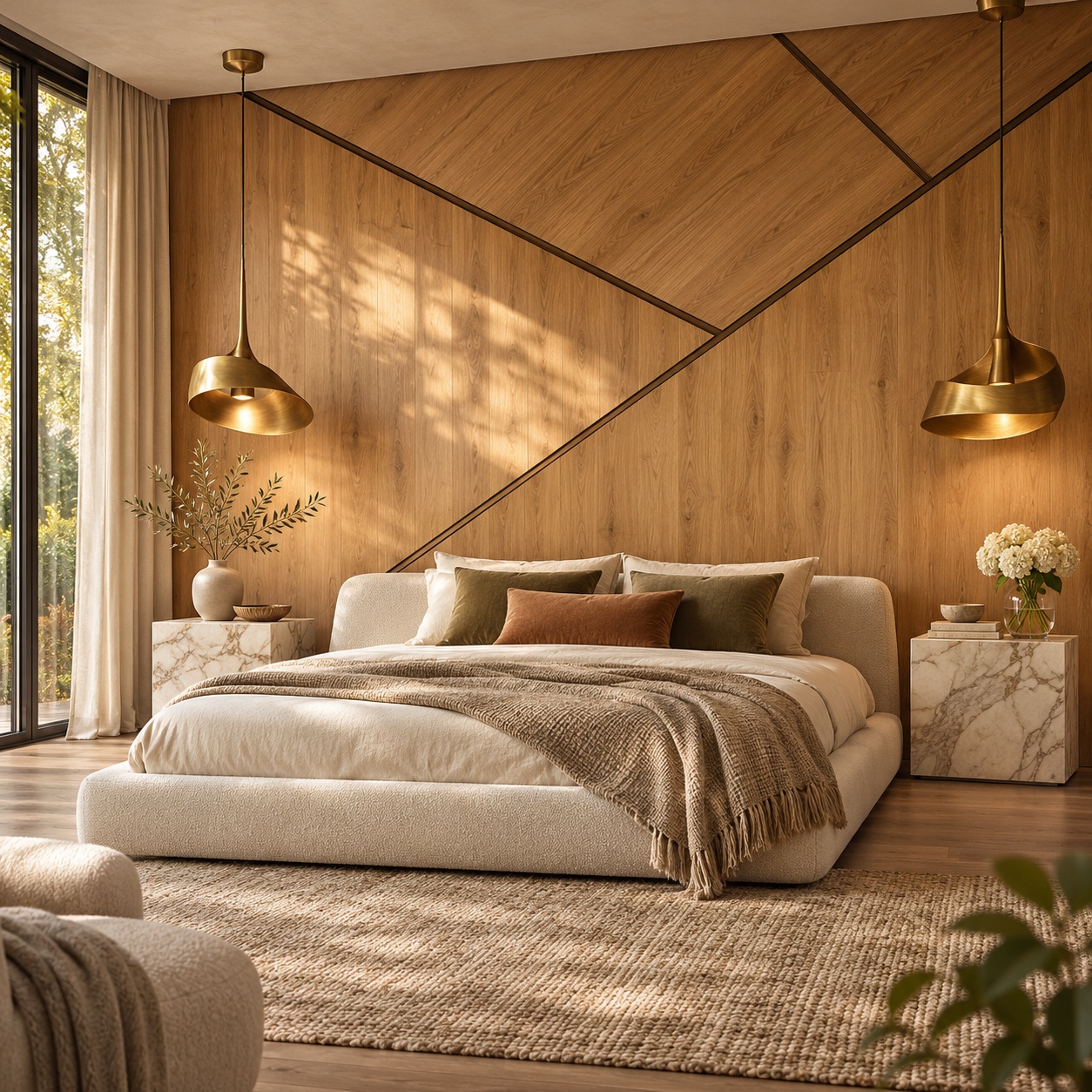
Natural timber panels gain a more tailored character through narrow bronze diagonal inlays. The lines are decorative, so the surrounding furniture can stay simple: a pale bed, compact marble tables, and slender lights. Plan the joins as a whole wall composition. A few well-placed diagonals usually feel calmer than a dense network of crossing strips.
14. Use Open Oak Chevrons on Graphite
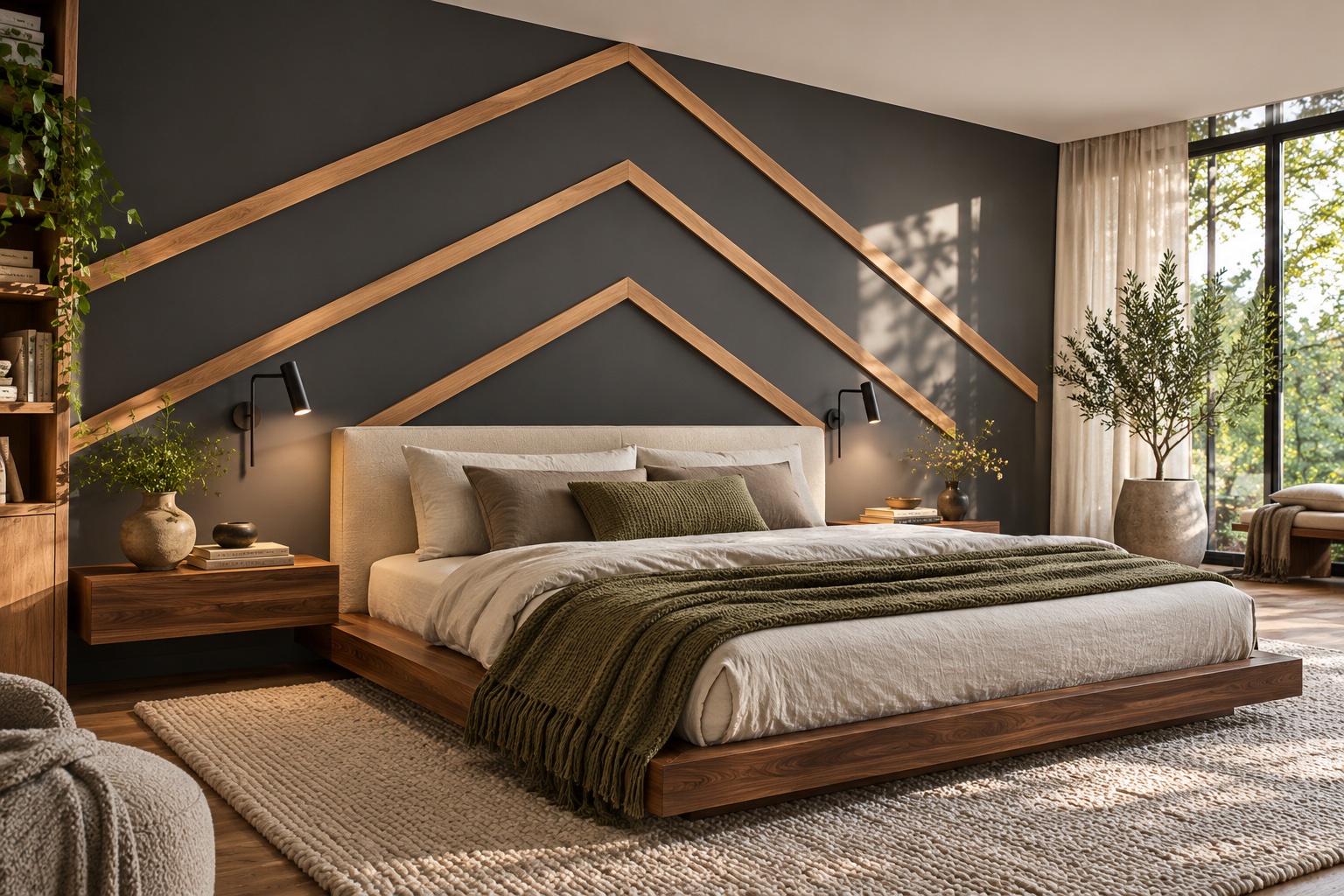
Three broad oak chevrons create a graphic installation against graphite paint. Their open centers reveal the wall behind, keeping the feature from feeling solid or bulky. Walnut furniture and an olive blanket make the contrast warmer. Center the overall grouping around the sleeping area, then leave enough empty wall at each side for the pattern to breathe.
15. Mix Sage Panels with Cane
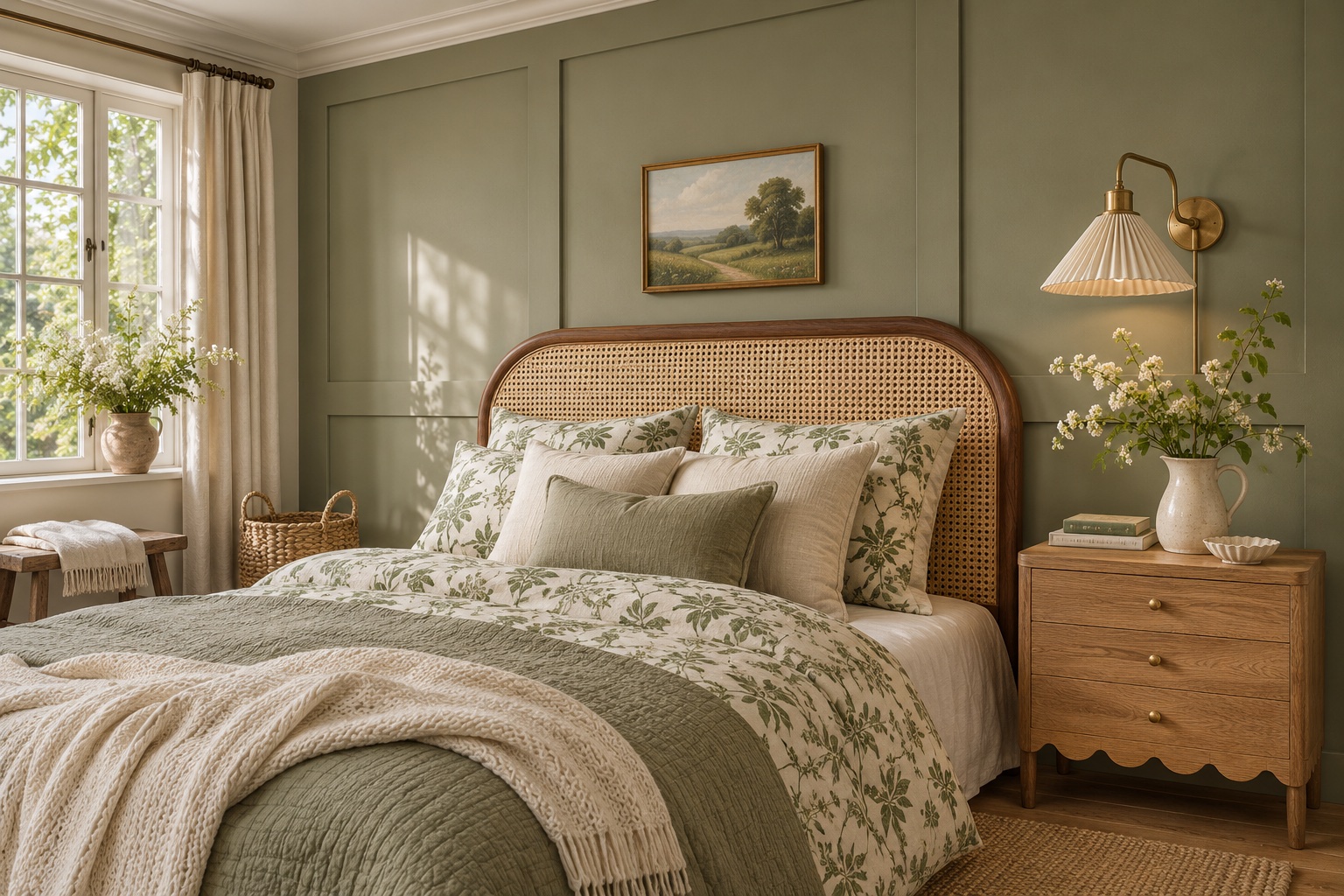
Broad rectangular panels provide a calm backdrop for the finer texture of a cane headboard. A scalloped oak bedside table and botanical bedding add gentle detail without demanding a different color palette. This approach works especially well when the wall finish stays matte. Let the cane and fabric supply the smaller patterns within the room.
16. Layer Picture Ledges above Two-Tone Paneling
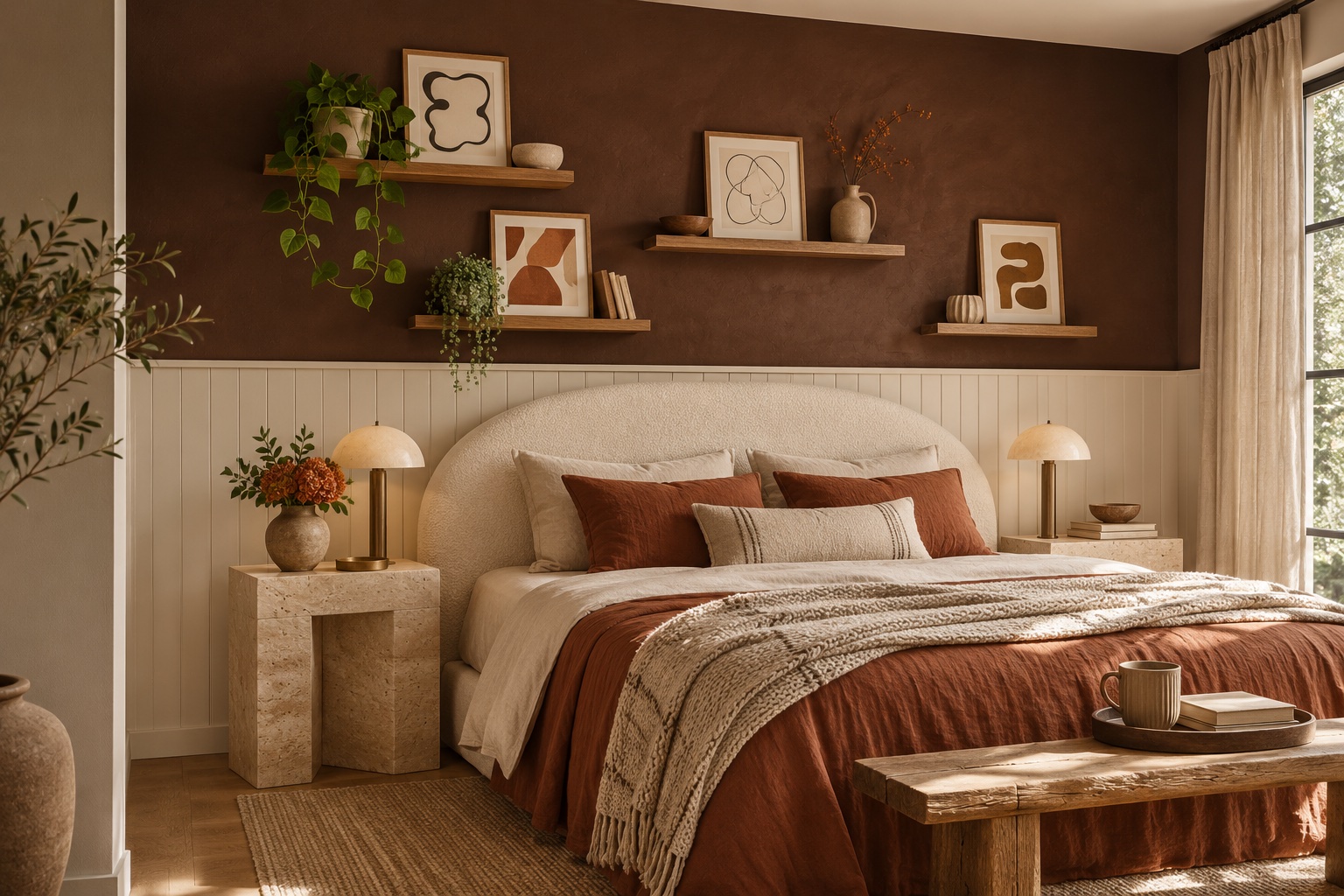
Ivory lower paneling and brown plaster divide this wall into two distinct zones. Offset oak ledges hold original drawings and a few sculptural objects, while a curved cream bed bridges the transition. Keep the display light and securely mounted. Arrange the ledges on paper first so the composition feels balanced even when individual objects change.
17. Let Reclaimed Wood Keep Its Character
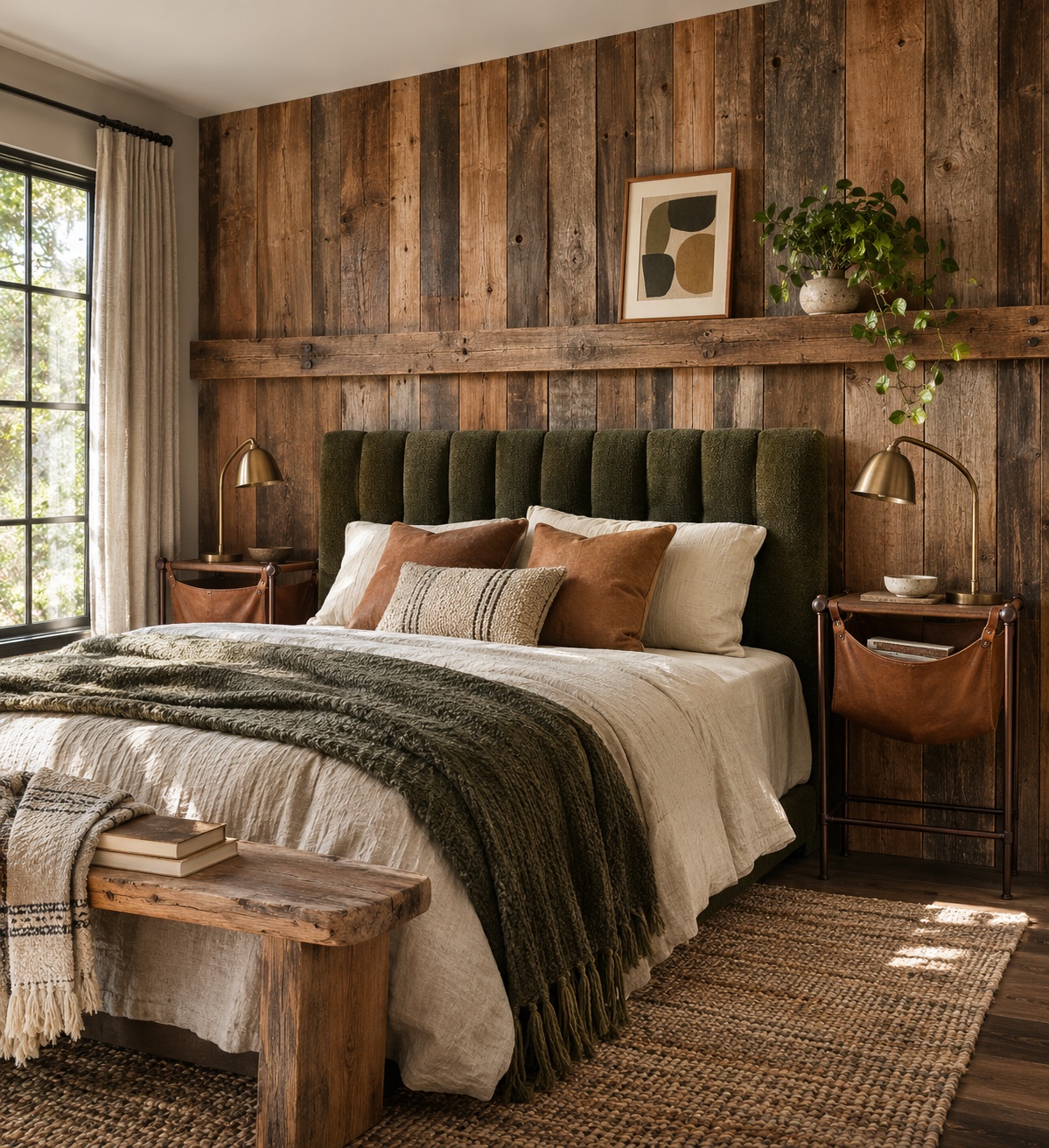
Weathered vertical boards bring a sense of age that new paint cannot reproduce. A horizontal crossrail gives the wall structure, while an olive headboard and leather sling tables support the rustic mood. Avoid matching every wood tone exactly. The room feels more natural when the timber varies slightly but the bedding remains calm and uncomplicated.
18. Set Botanical Wallpaper above Cream Wainscoting
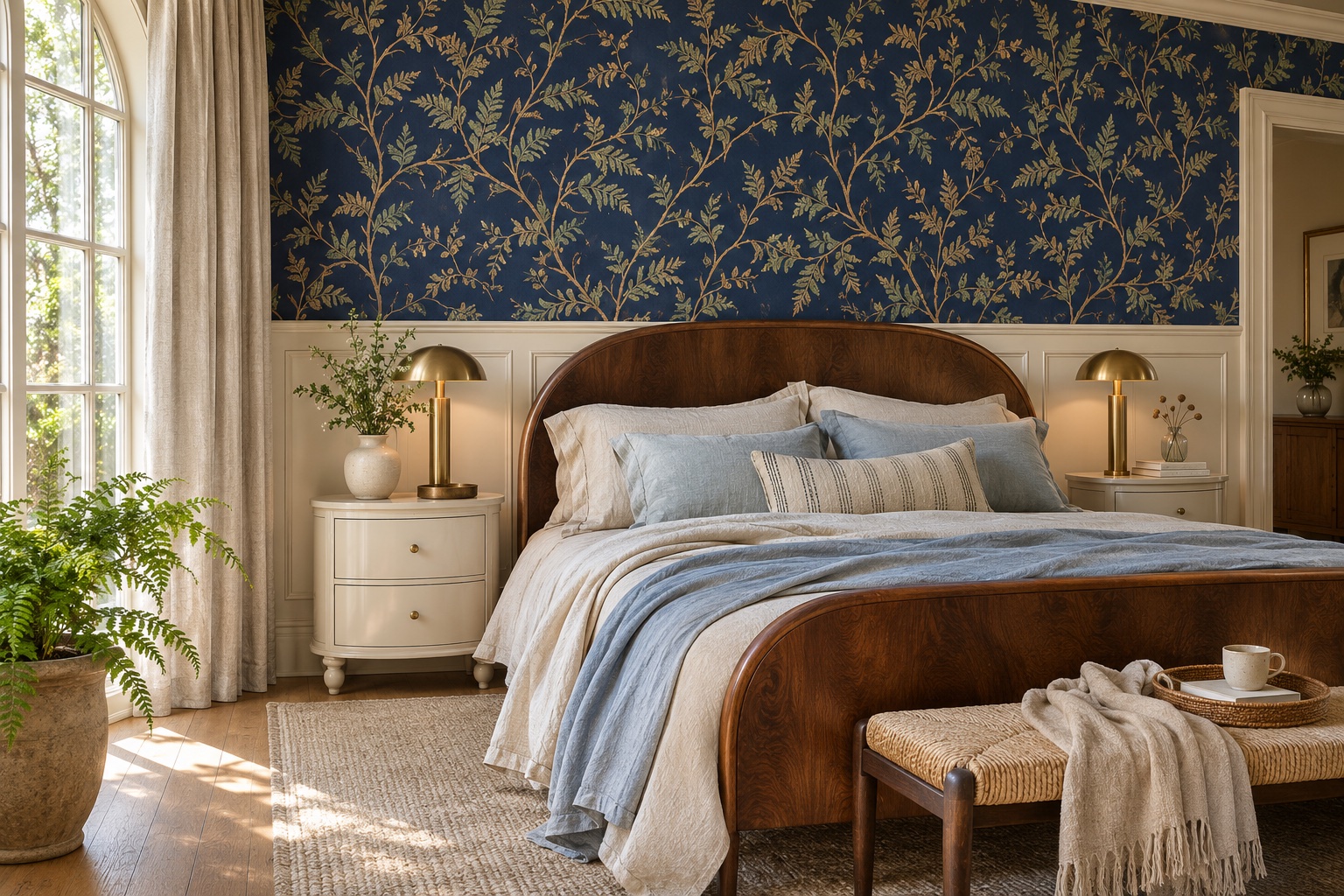
A dark botanical print becomes easier to live with when cream paneling provides a quiet lower section. The curved walnut bed connects the warm plant outlines in the wallpaper with the furniture below. Brass mushroom lamps add a soft glow. Align the wainscot height with the main furniture proportions before deciding where the pattern should begin.
19. Highlight Gray Panels with Brass
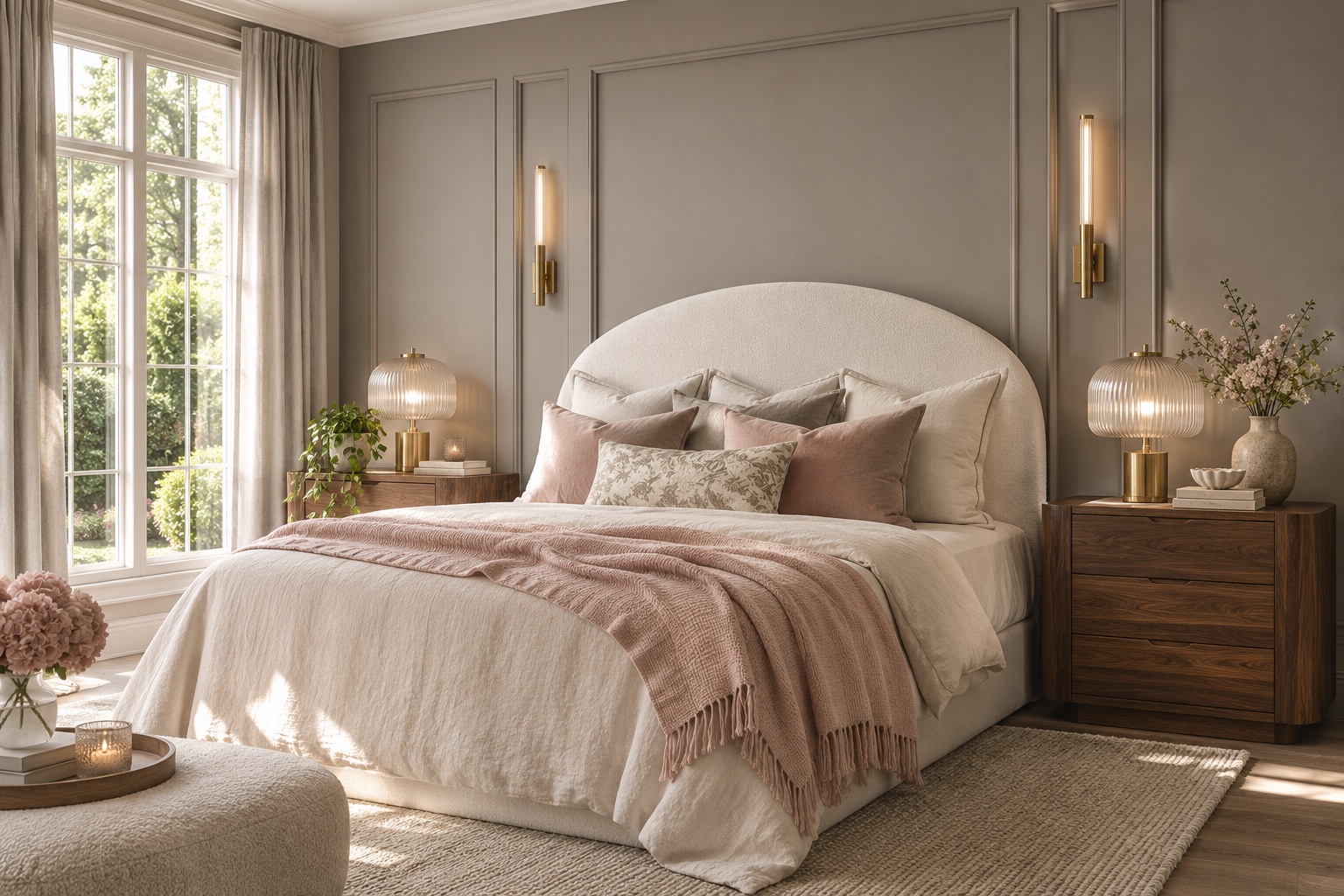
Broad warm-gray panels give this bedroom a composed background. Slim brass lights add vertical emphasis, while an arched cream headboard and blush bedding soften the straight lines. Walnut cabinets provide useful storage without feeling heavy. Choose the wall color beside the actual upholstery; a gray that looks warm on a sample can change noticeably in a different room.
20. Frame a Wide Central Bay in Slate Blue
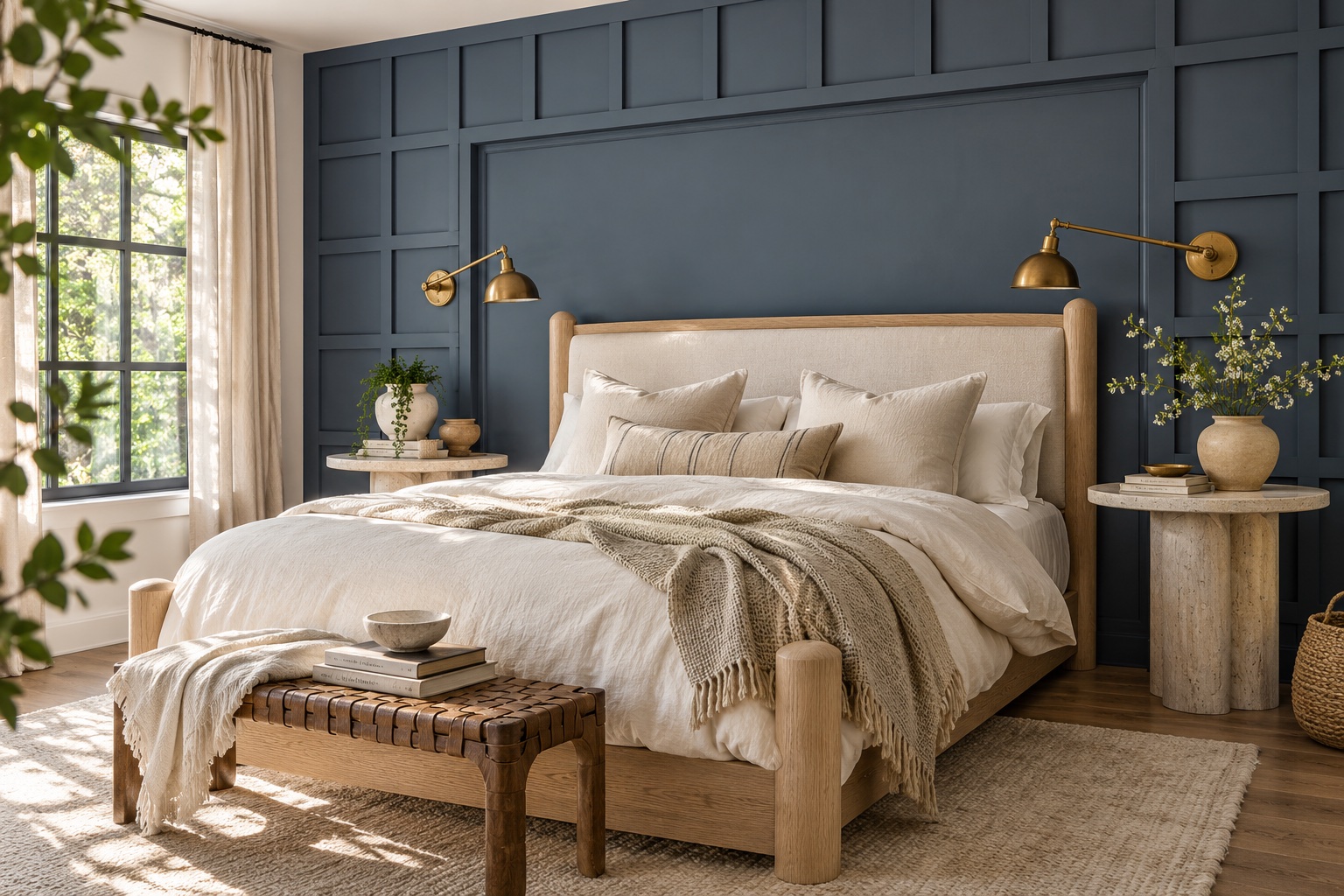
A large central panel gives the bed a clear place within a surrounding grid of smaller squares. Pale oak posts and cream upholstery provide contrast against the slate-blue wall, while round stone tables introduce a different material. Brass swing-arm lights make the arrangement feel practical. Keep the central bay generous enough that the headboard does not appear squeezed into it.
21. Follow a Sloping Ceiling with Battens
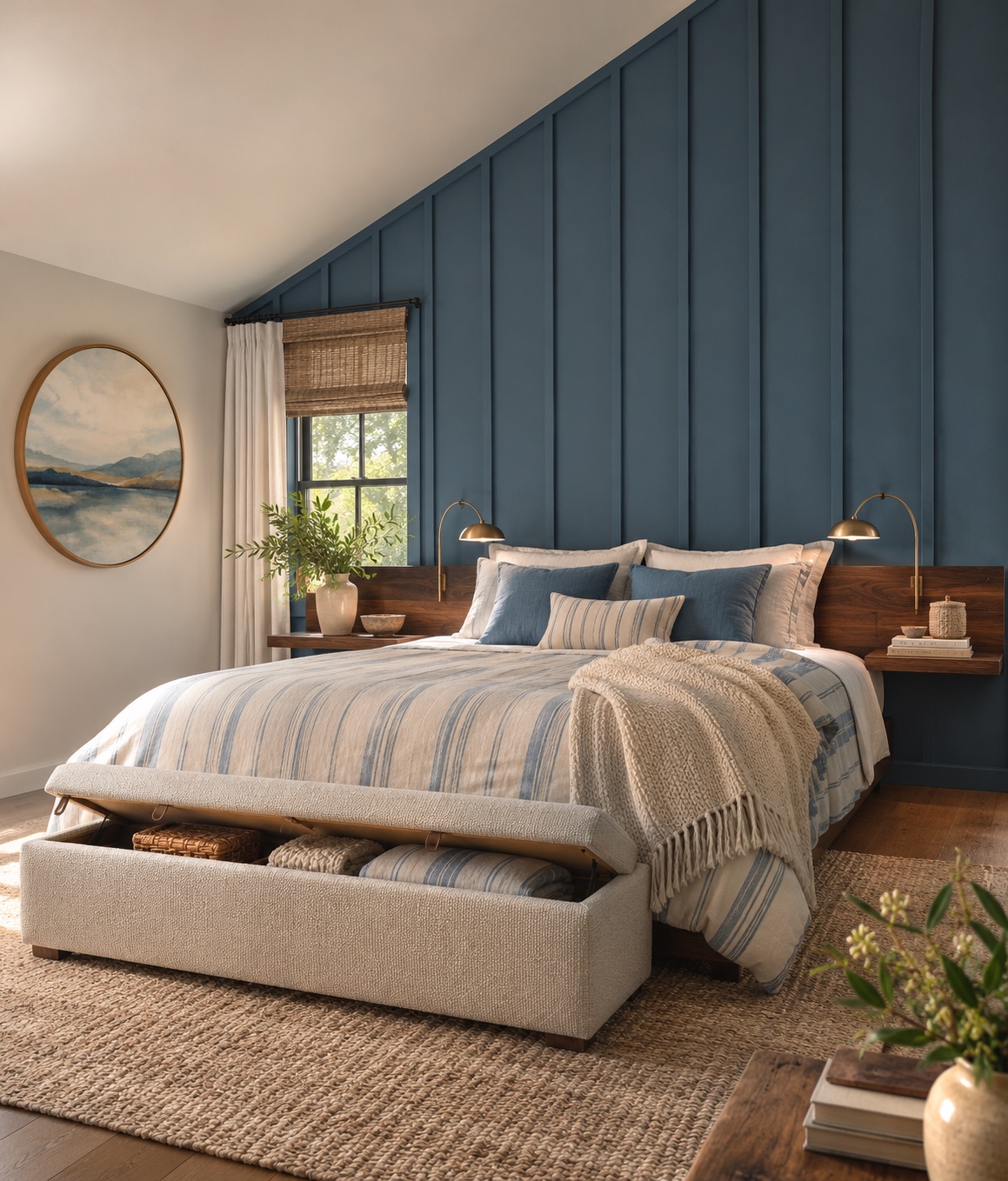
A sloping ceiling becomes a feature when vertical battens rise naturally to meet it. Blue paint unifies the irregular wall, and a low walnut bed leaves the upper shape visible. Attached bedside ledges reduce separate furniture pieces. A long storage bench adds capacity at the foot, provided there is still comfortable room to move around it.
22. Use Mushroom Panels for a Gentle Cottage Room
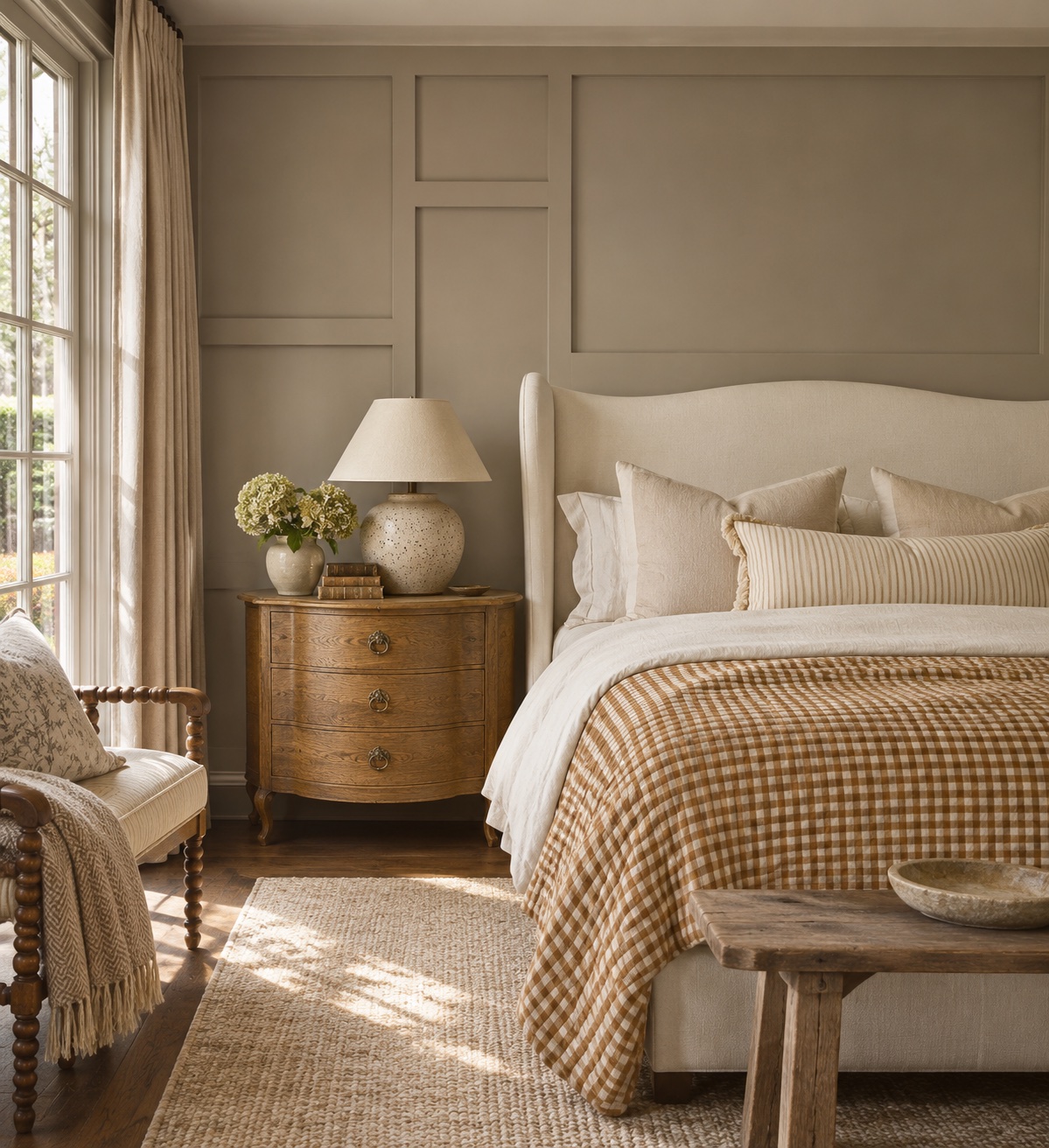
Unequal rectangular panels bring subtle structure to a mushroom-colored wall. A cream winged headboard, curved antique-style chest, and caramel gingham quilt give the room an easy cottage feeling. The pattern stays on the bed, allowing the wall to remain restful. This is a useful direction when you want character without a dramatic color contrast.
23. Give Classic Molding a Charcoal Finish
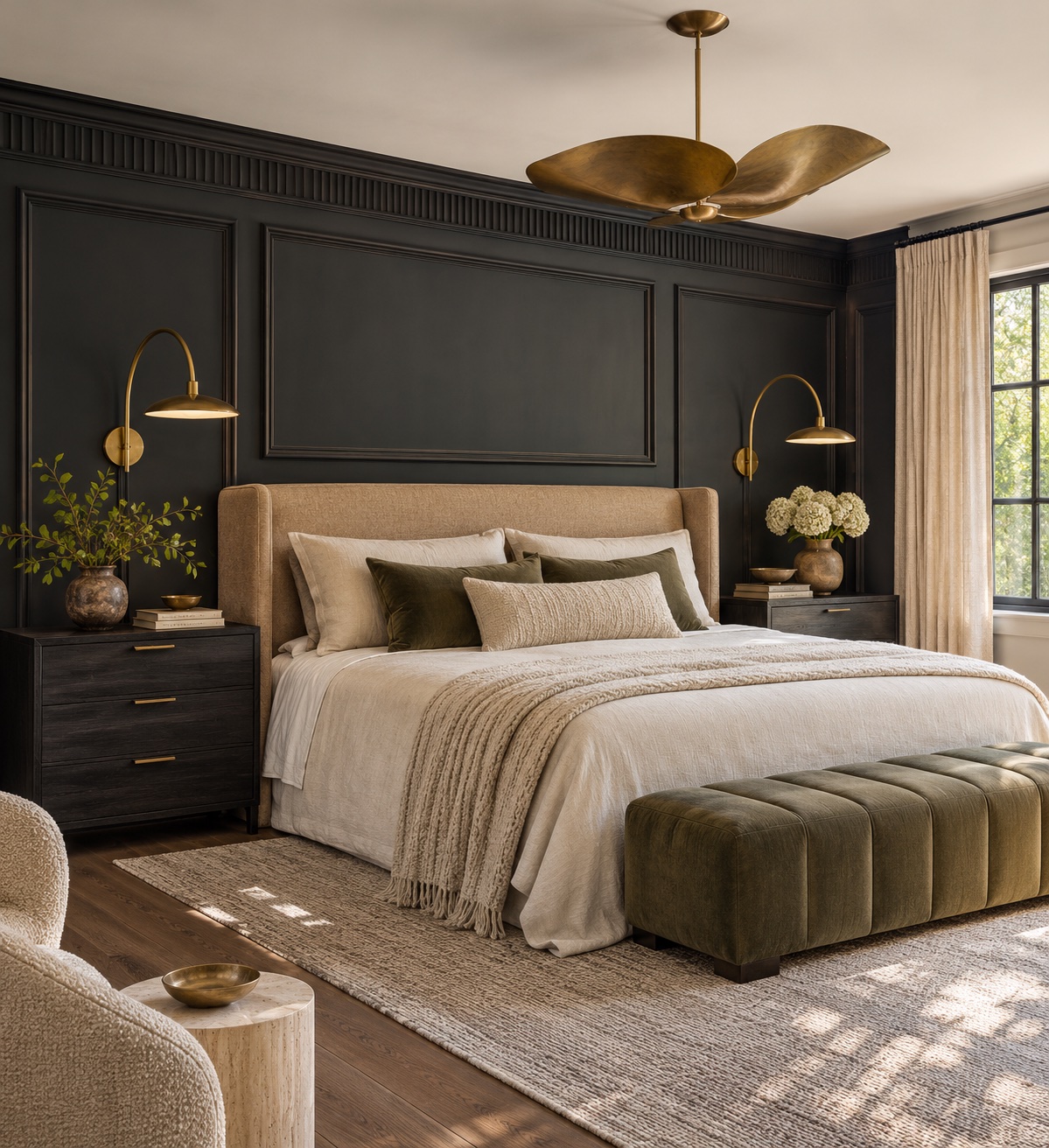
Deep charcoal makes traditional molding feel intimate and substantial. A narrow upper frieze adds detail near the ceiling, while camel upholstery and brass lighting keep the room warm. An olive bench introduces a muted color at floor level. Balance the dark wall with light curtains and bedding so the architecture remains visible in daylight.
24. Bring Rough Limestone behind the Bed
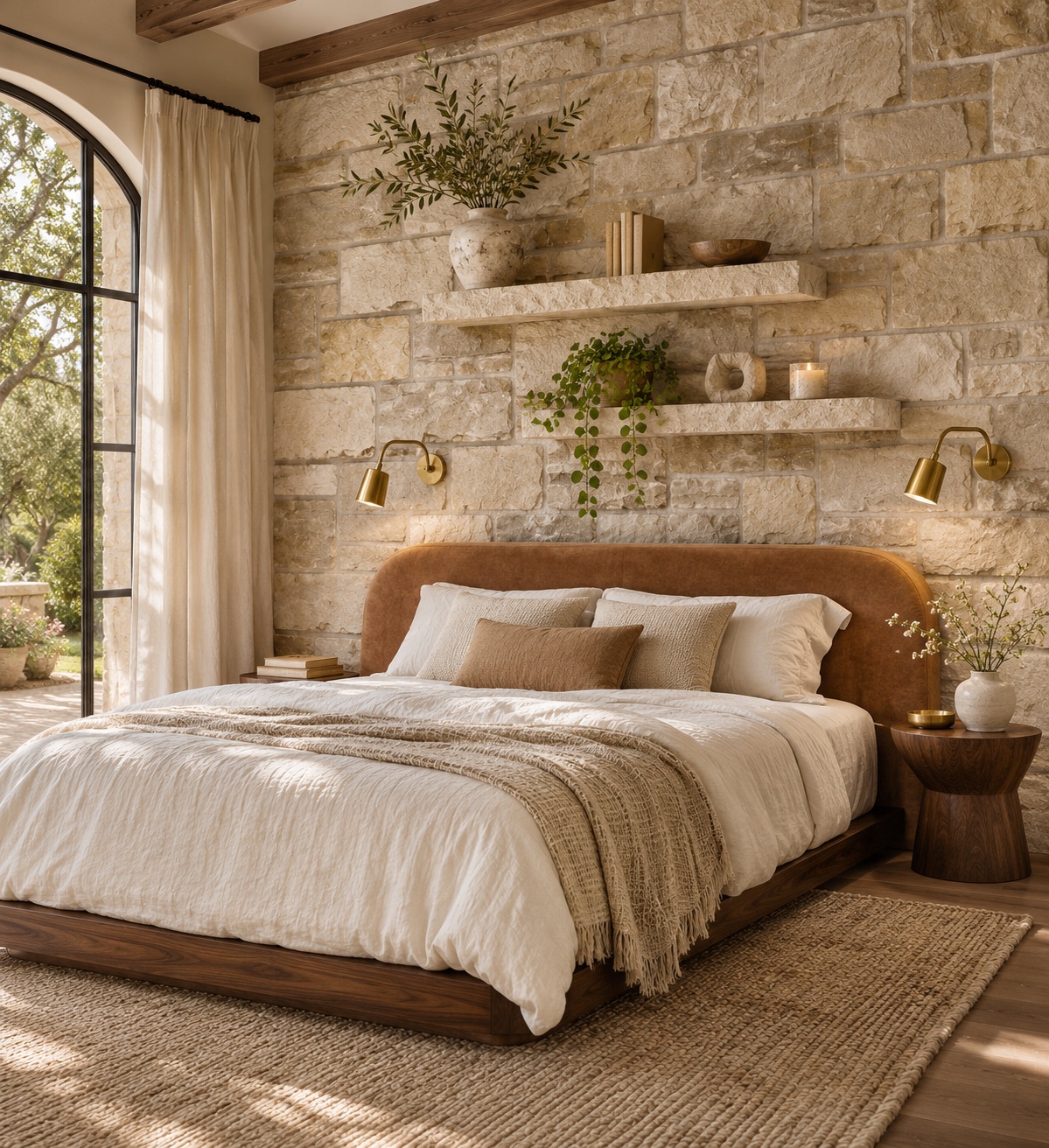
A limestone wall offers texture through its uneven blocks and natural variation. A low walnut platform and caramel headboard provide smoother surfaces against it. Keep accessories few, allowing the masonry to remain the main feature. If adapting the concept with cladding, consider its weight, fixing system, and edge details before choosing the final product.
25. Pair Blue Limewash with One Oversized Canvas
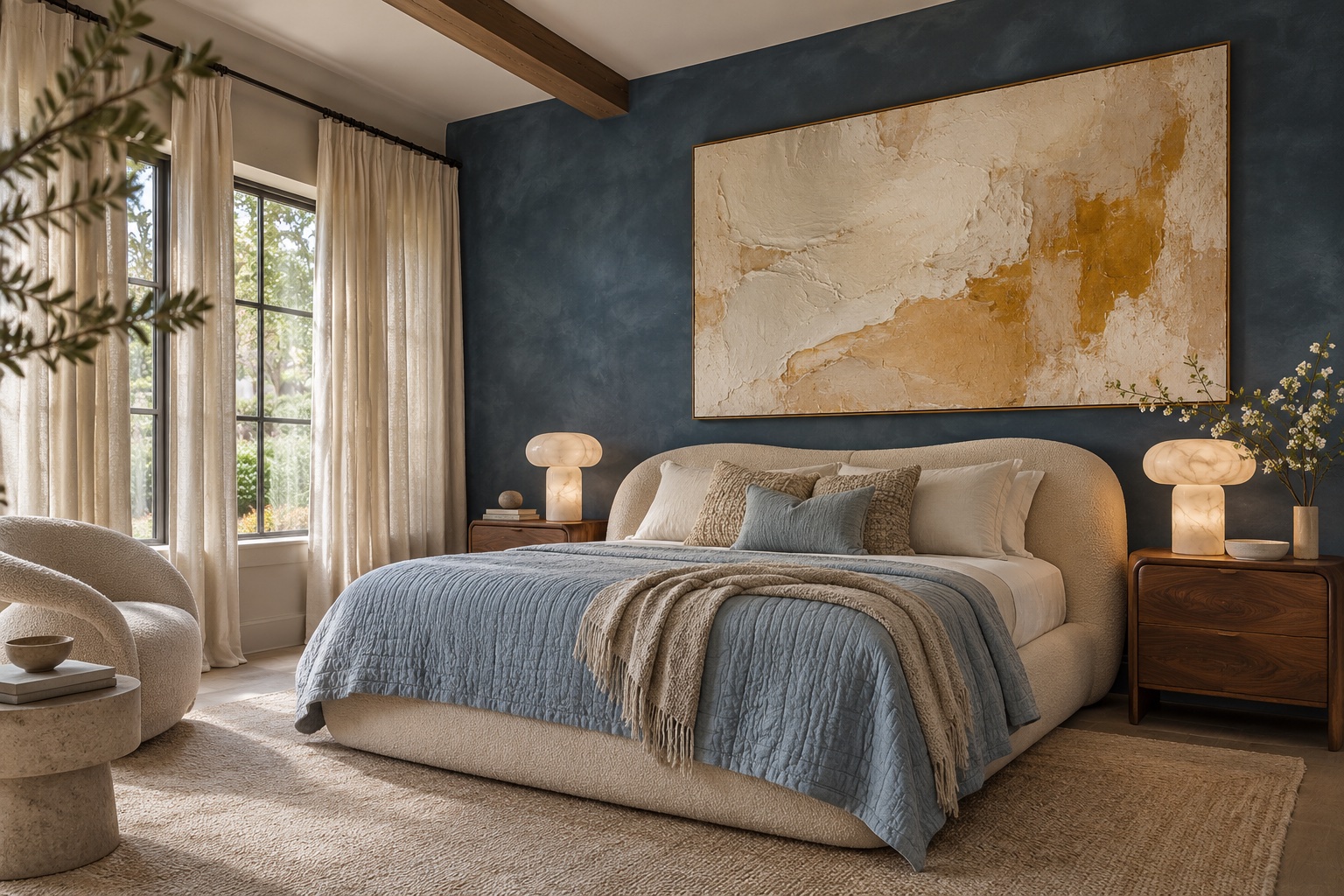
Softly mottled blue paint creates depth without a repeated pattern. One large cream-and-ochre canvas adds contrast above a curved sand-colored bed, while alabaster-style lamps bring a warm glow at each side. Match the artwork to the width of the sleeping area rather than the full wall. The quiet background gives the painting room to stand out.
26. Create an Off-Center Fluted Arch
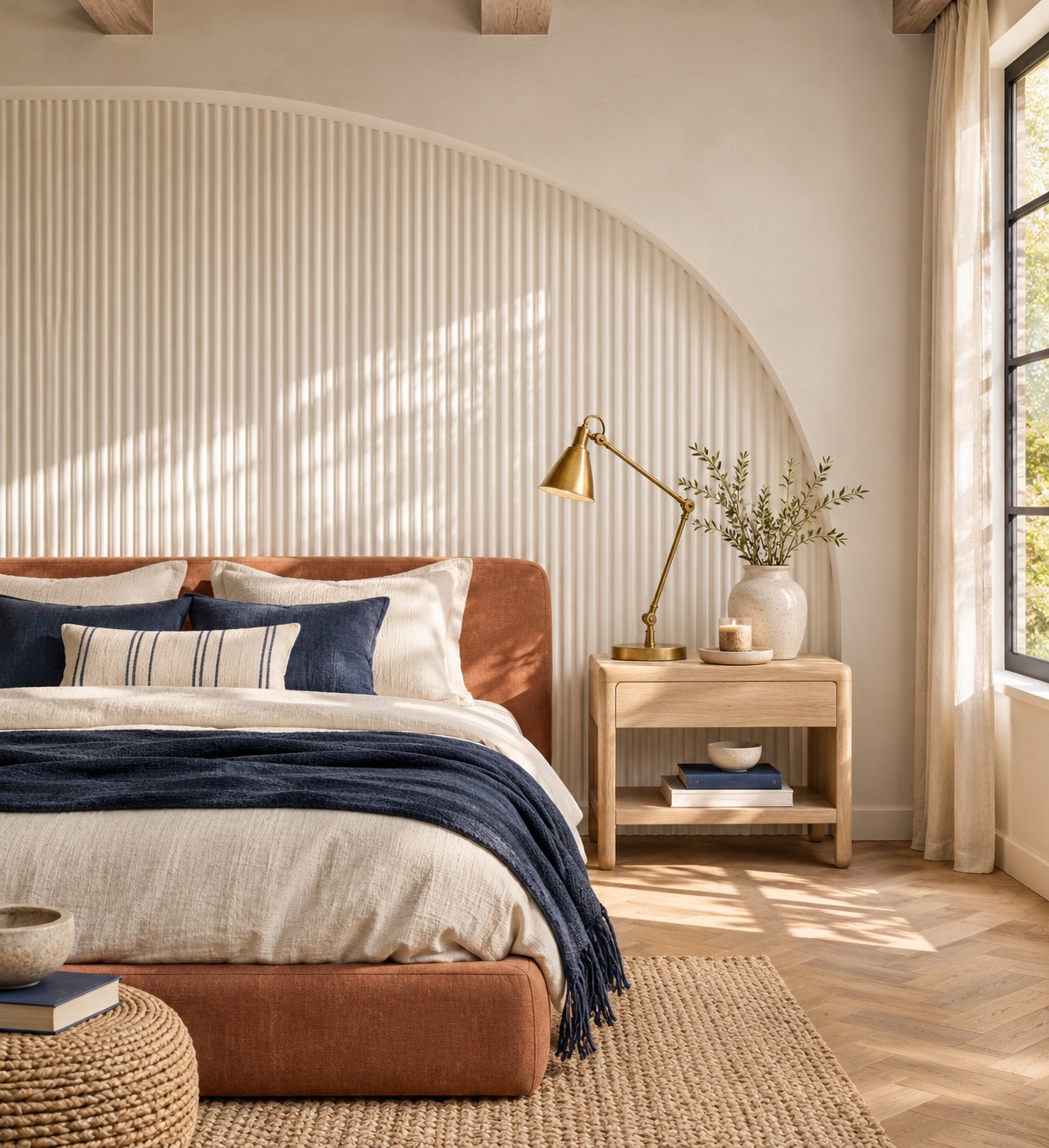
An asymmetrical arch gives fluted white paneling a more sculptural outline. Terracotta upholstery and navy textiles bring color to the lower half of the room, while pale oak keeps the furniture light. The design is strongest when the arch has a clear relationship to the bed. Mark its outline at full scale before committing to construction.
27. Soften Concrete with Upholstery and Walnut
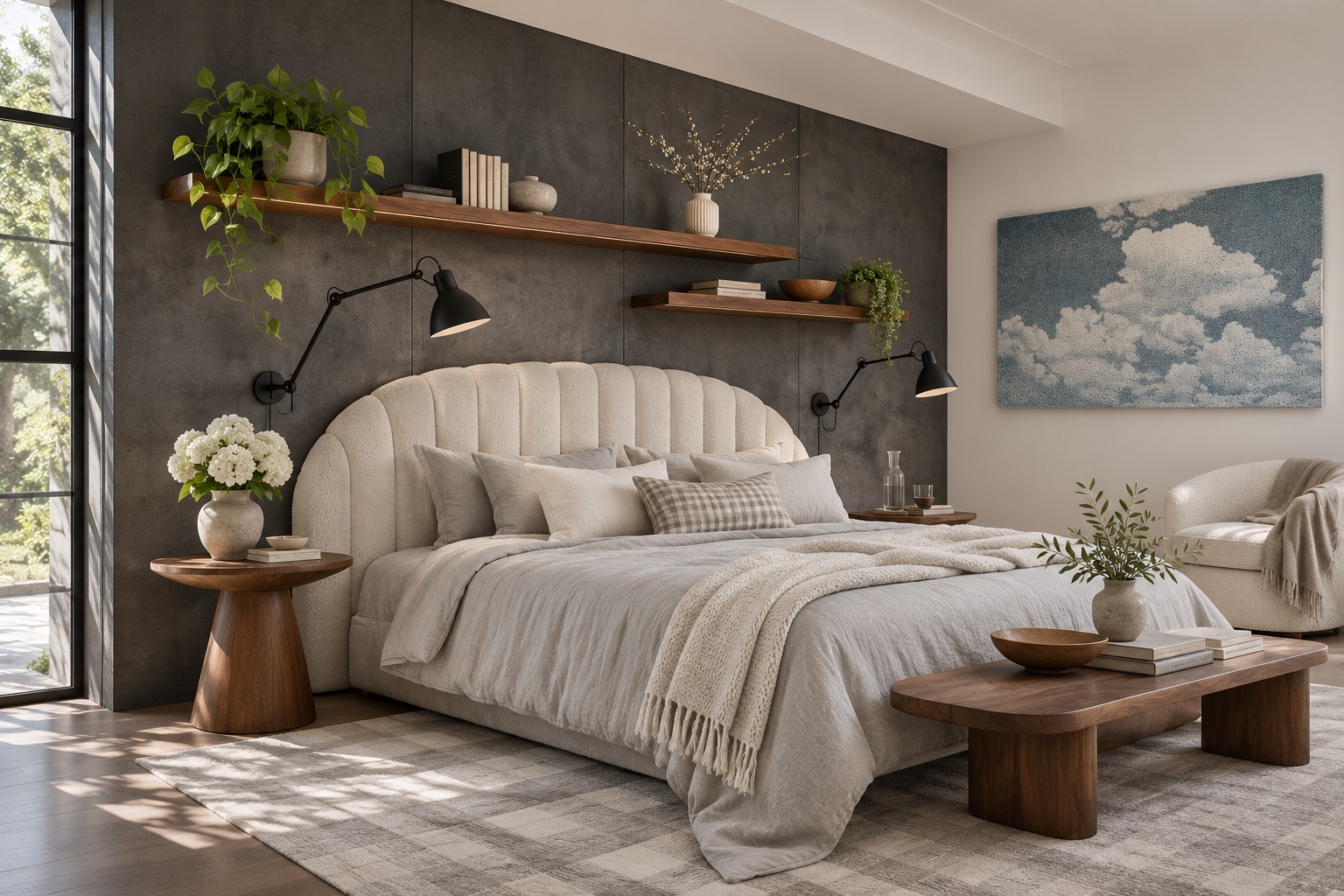
Charcoal concrete-look slabs can feel welcoming beside a generous cream channel headboard. Walnut shelves and rounded tables add warmth, while adjustable black reading lights keep the overall palette disciplined. A checked rug introduces a smaller pattern underfoot. Use soft curtains and bedding to balance the harder wall texture throughout the rest of the room.
28. Finish with Asymmetrical Midnight Geometry
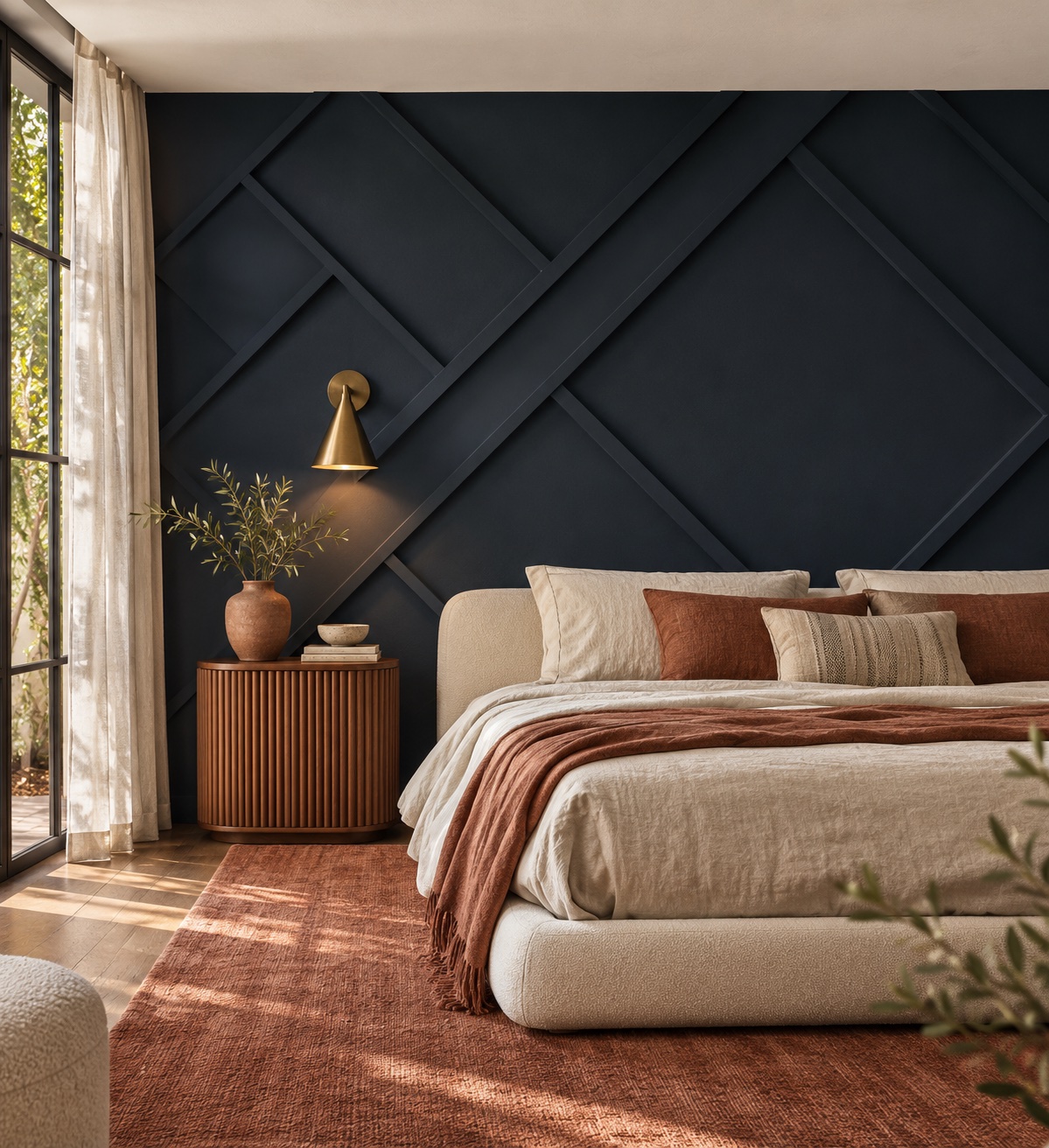
Wide diagonal bands create a bold relief in a deep midnight finish. A low cream bed gives the pattern plenty of space above it, and ribbed walnut tables echo its texture on a smaller scale. Rust textiles prevent the palette from feeling cold. Keep the wall and raised strips the same color so shadows provide the contrast.
Choose a Wall That Works with Your Room
Start with the bed position, available light, and furniture you intend to keep. Then choose one dominant wall treatment and let the remaining finishes support it. Samples, a measured drawing, and a simple furniture layout will help you turn a striking image into a bedroom that feels comfortable every day.
Visual inspiration: TheCoolist. Text and redesigned concept images created for DIY Ideas.