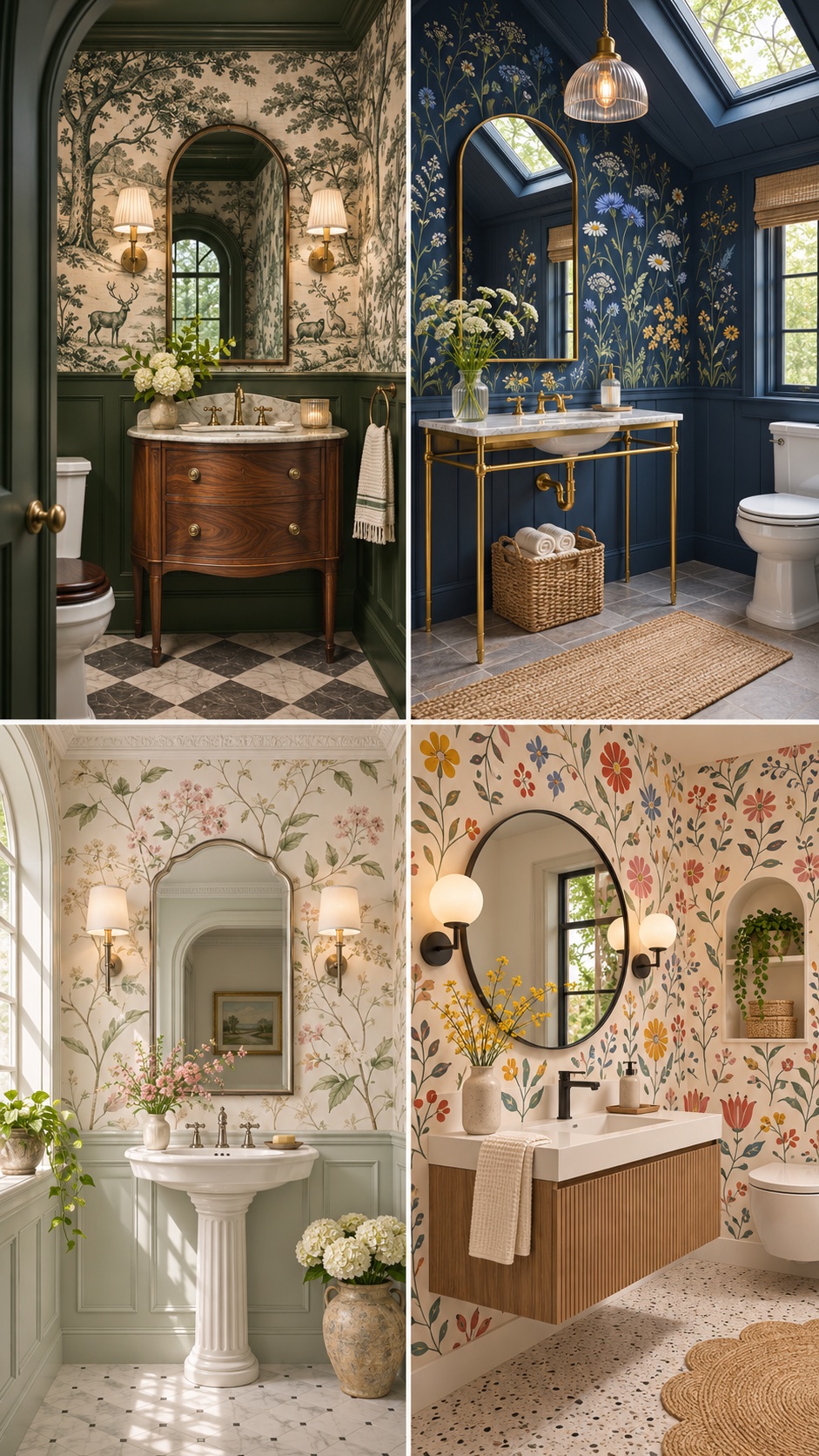
Wallpaper can give a bathroom a clear personality, from a quiet leaf print above painted panels to a dramatic landscape around a small washstand. The best starting point is the room itself: its light, its fixtures, and the amount of wall that will remain visible.
These 24 individually reimagined concepts explore different pattern scales, vanity shapes, and material combinations. Use them to compare the effect you want before choosing a specific product. For installation, check the wallpaper manufacturer’s guidance for bathroom use, wall preparation, ventilation, and exposure to moisture; suitability varies by product.
Visual note: The images are AI-generated design concepts, not photographs of completed renovations.
1. Frame a Woodland Scene with Dark Paneling
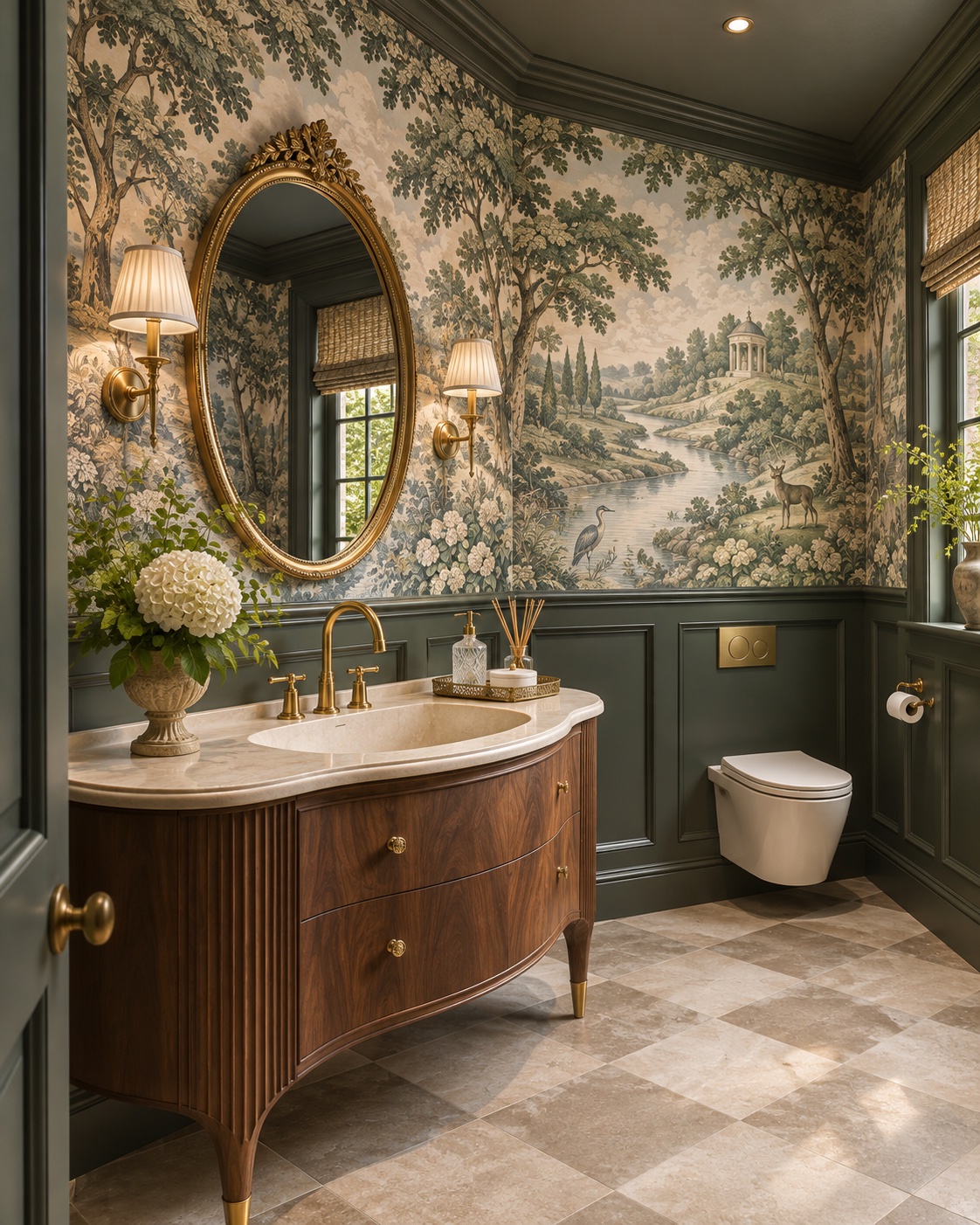
Treat a scenic paper like a mural: decide which part of the landscape should remain visible before positioning the mirror. A river or clearing can provide a natural focal point beside the basin. Deep painted panels give the lower walls a quieter surface, while a curved timber vanity introduces a different shape. Keep accessories modest so they do not conceal the scene.
2. Layer Fine Leaves Above Olive Panels
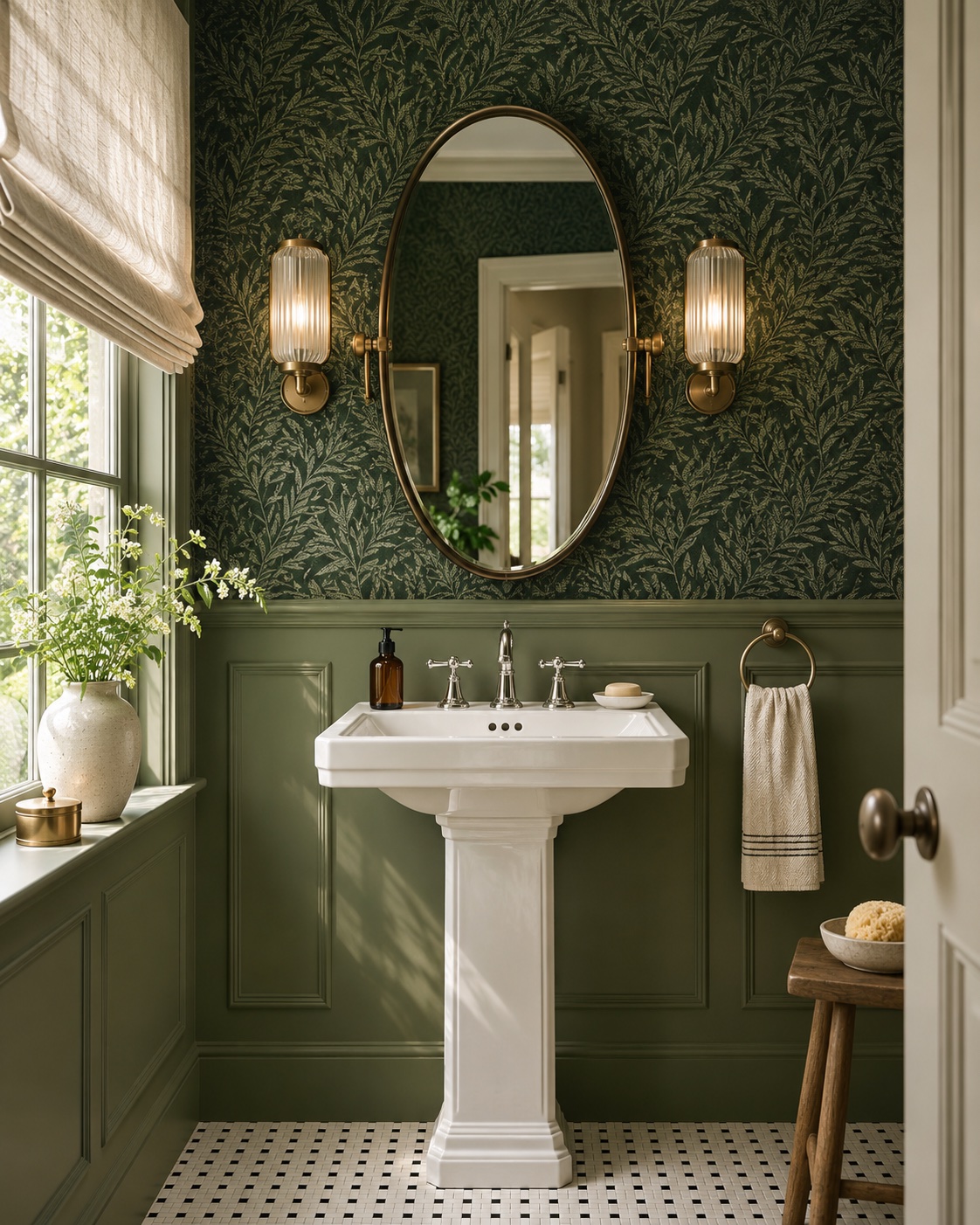
A closely spaced leaf pattern works well with a simple pedestal basin because there is little cabinetry competing for attention. Choose the panel color from the wallpaper background, then use the mirror and lighting to introduce contrast. A pale blind softens the window without adding another print. Check the wallpaper sample under the lights you actually use in the evening.
3. Give Oversized Flowers Room to Unfold
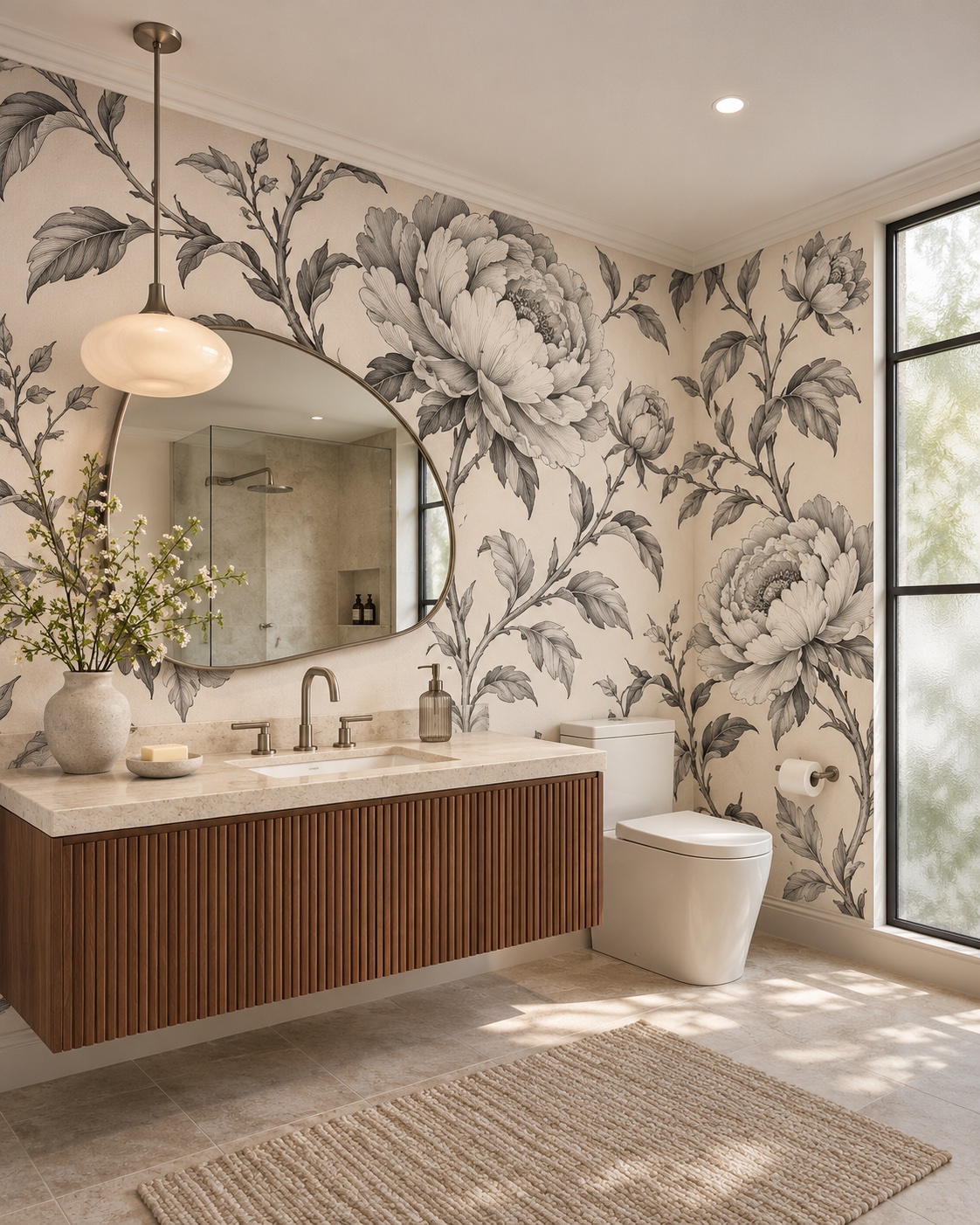
Large blooms need enough uninterrupted wall to show their shape. Plan the position of the largest flowers around the mirror rather than letting every important detail disappear behind it. A floating timber vanity gives the composition a grounded base. Keep the countertop and floor relatively quiet, especially when the paper already has strong outlines and several shades.
4. Combine Garden Florals with a Furniture Vanity
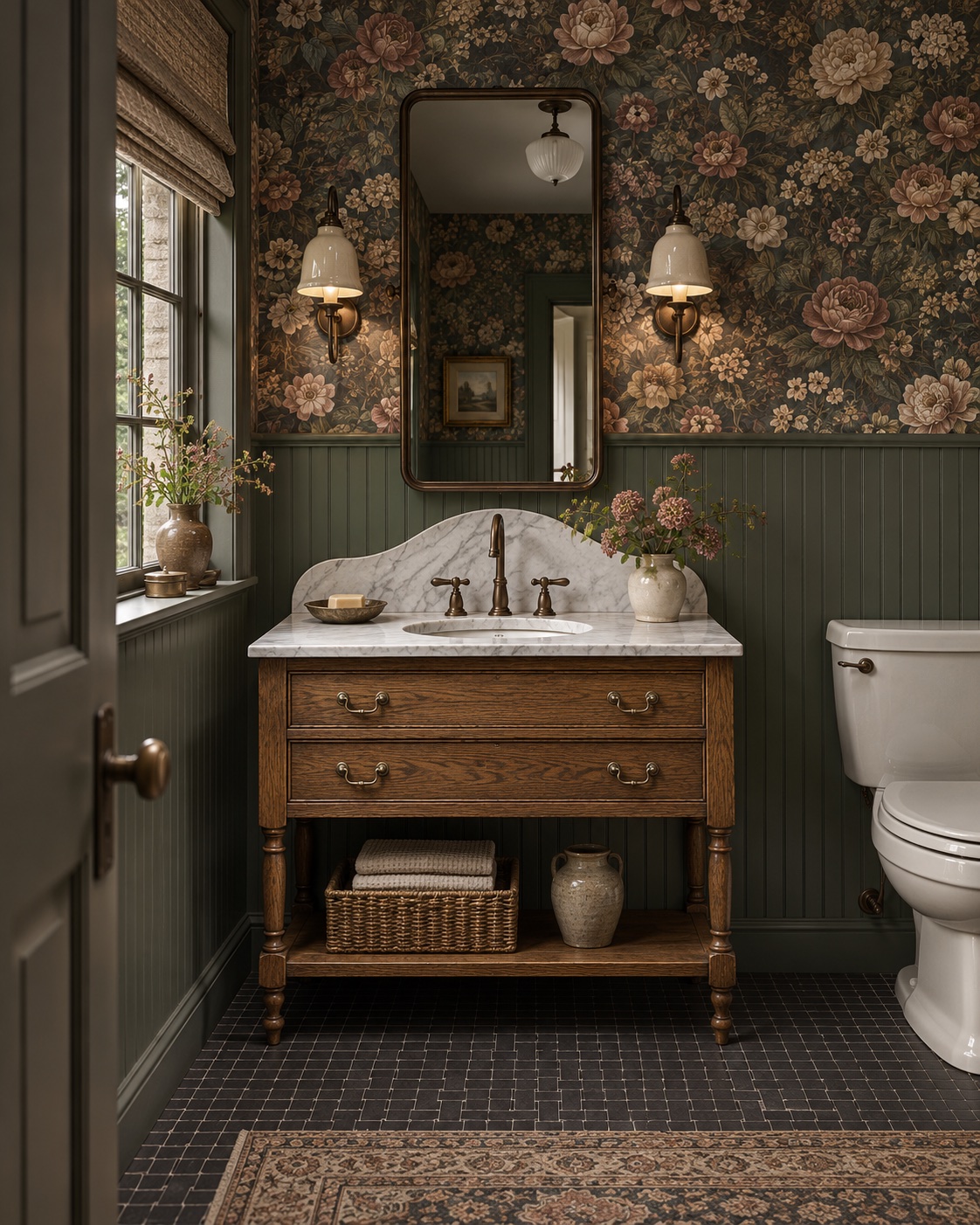
A small floral repeat can complement an antique-style washstand without making the room feel like a period set. Balance detailed drawer fronts with a plain mirror frame and uncomplicated lighting. Vertical paneling adds a separate rhythm below the paper. The vanity should still offer convenient storage, so keep the decorative items to one side of the basin.
5. Make a Bird Motif the Main Feature
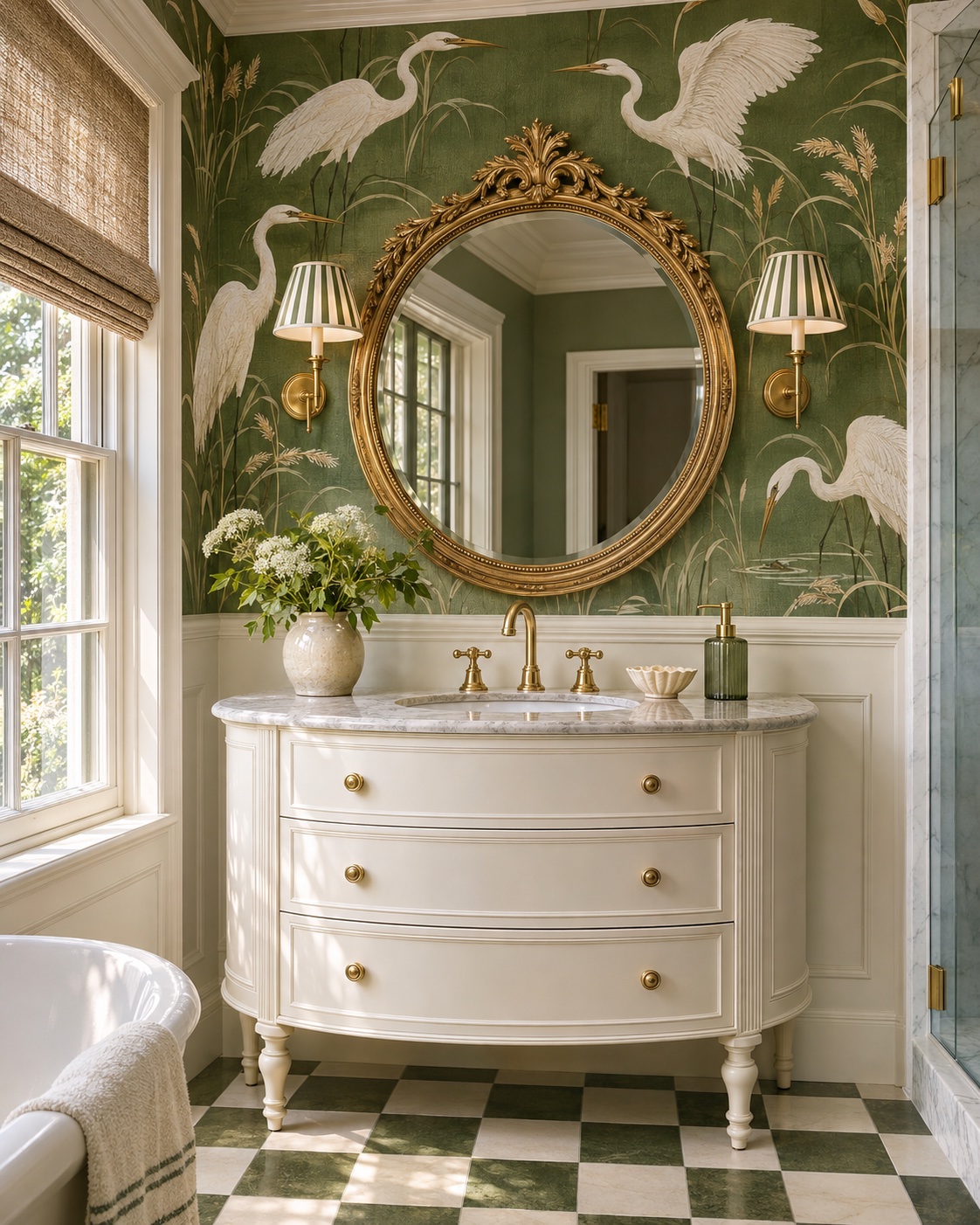
Large bird illustrations create movement across a wall. Look at how their wings and long necks relate to the mirror before deciding where the pattern begins. An ivory vanity and a few warm metal details let the drawing remain prominent. If the floor is patterned too, repeat only a small part of the wallpaper palette to connect the surfaces.
6. Pair Expressive Florals with a Simple Countertop
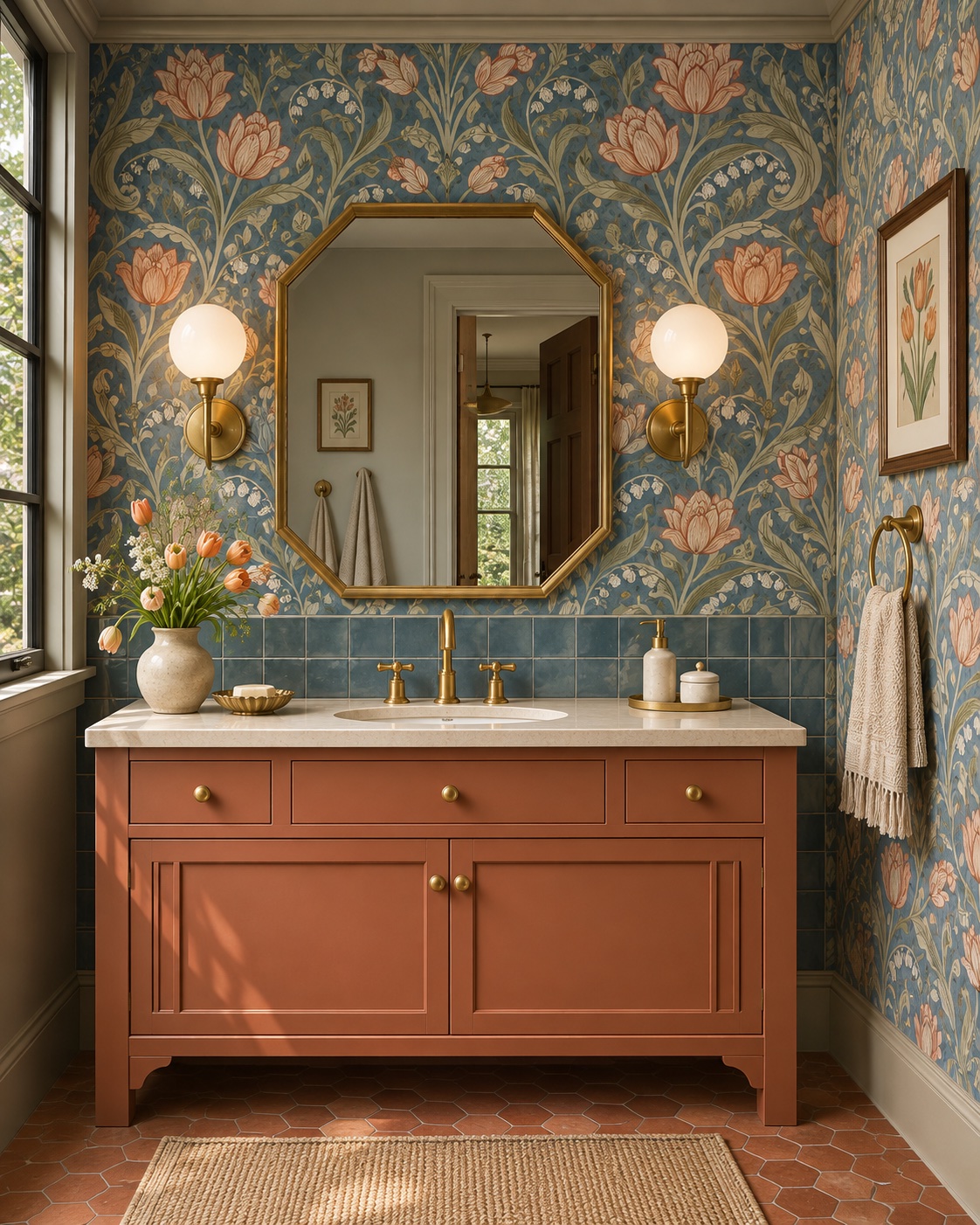
A richly drawn floral paper can supply the palette for the entire vanity area. Pull one subdued shade into the cabinet, then choose a plain countertop that gives the eye a resting place. A shaped mirror adds interest without introducing another printed surface. Keep the backsplash tall enough for the way the basin is used and choose its material separately from the wallpaper.
7. Use a Small Medallion Repeat for Rhythm
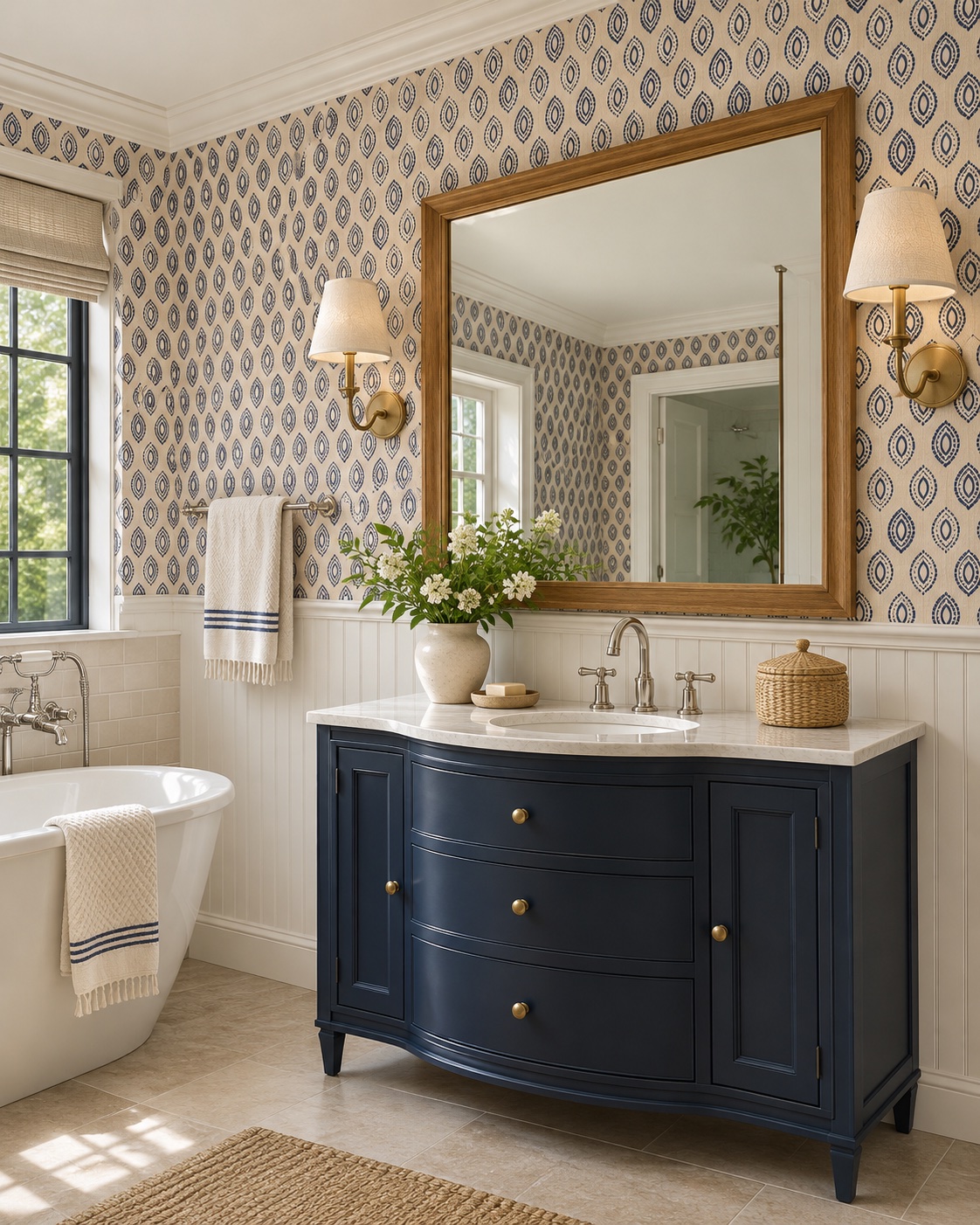
Repeating medallions offer a more ordered alternative to loose flowers. Their regular spacing makes the relationship with corners, mirrors, and trim especially noticeable. Test several pattern positions before installation. White lower walls keep the room from becoming visually dense, while a dark vanity anchors the arrangement. In a bathroom with a tub, keep paper out of the immediate splash area.
8. Let Rich Wallpaper Surround a Light Console
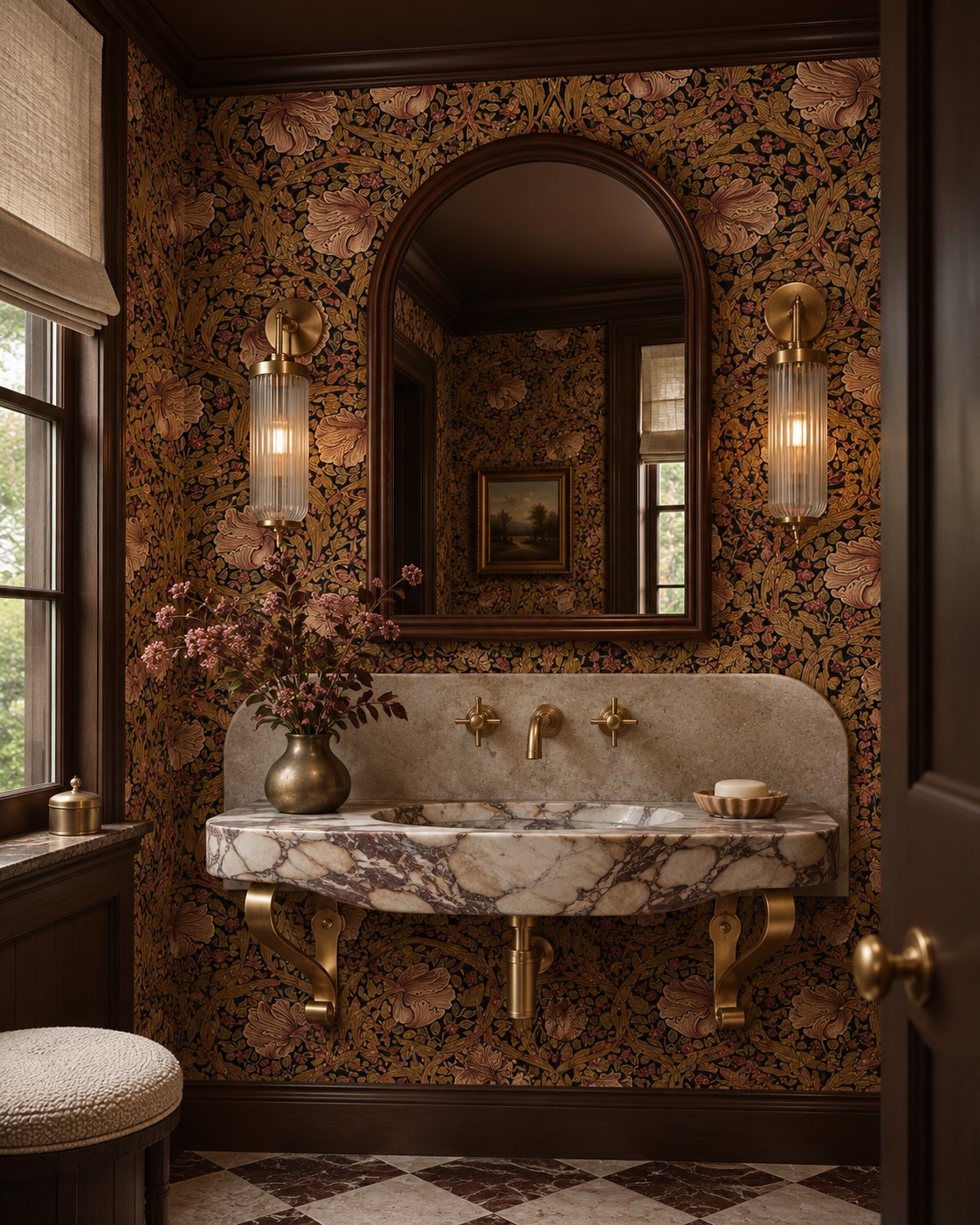
An open console basin exposes more wall than a full vanity, allowing a decorative print to continue behind it. This approach suits a powder room where extensive storage is less important. A shallow stone backsplash provides a practical break at the basin. Choose a mirror with a distinct outline, but avoid adding several competing ornamental frames nearby.
9. Build a Night-Garden Palette
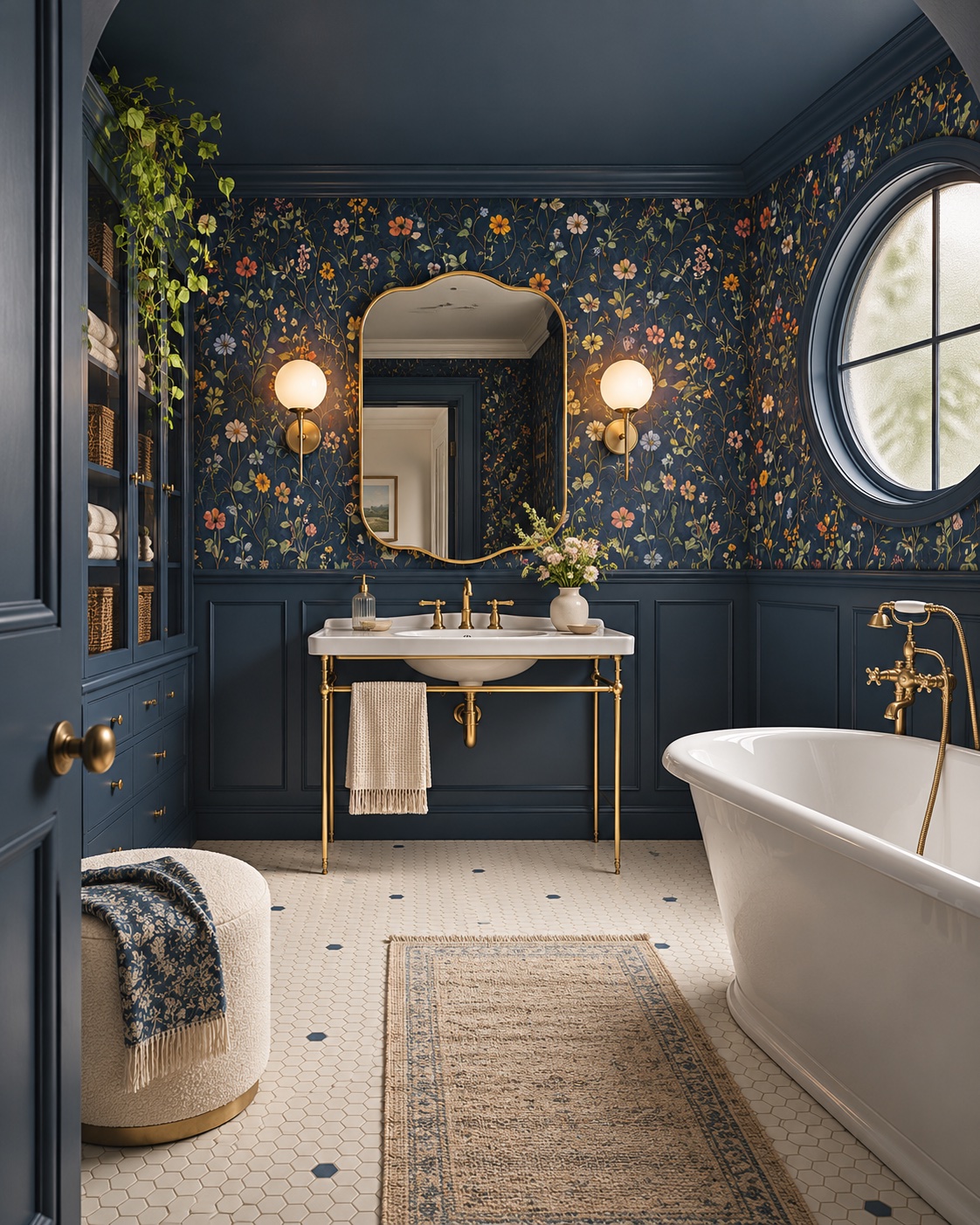
Small flowers on a dark ground can feel lively without turning the room into a bright patchwork. Repeat the background shade in the lower walls and keep the basin light. A few brass details provide clear edges against the darker surfaces. Consider the ceiling as part of the composition, and use a large sample to judge whether the overall effect feels comfortable.
10. Try a Lighthearted Woodland Print
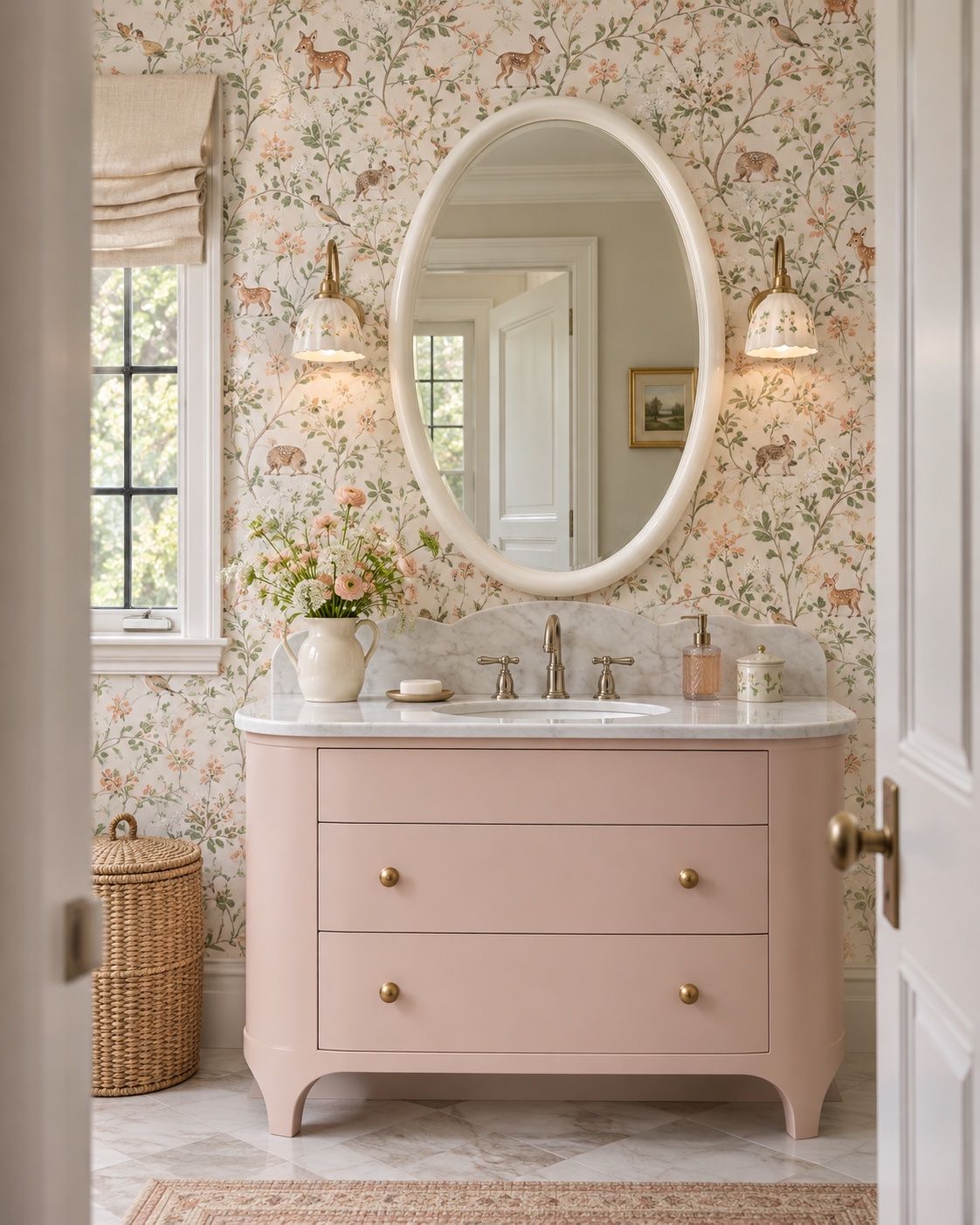
Tiny animals and foliage can bring a playful note to a guest bathroom. A restrained cabinet shape helps the room feel composed even when the print contains many details. Pick towels and containers in solid colors rather than adding more motifs. A mirror with a softly irregular outline can echo the drawing, while a pale floor keeps the small room open.
11. Use Metallic Butterflies as an Accent
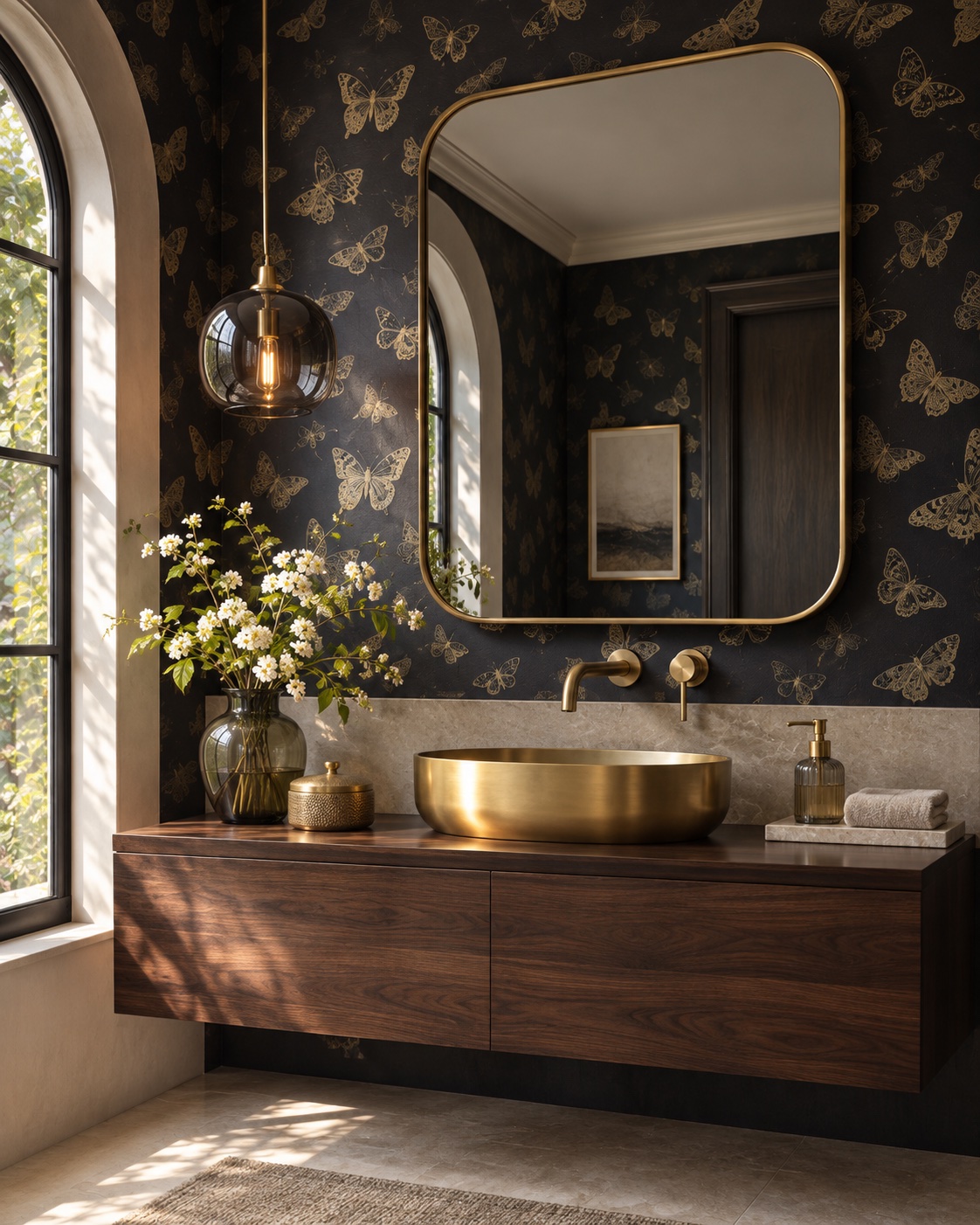
A metallic motif changes character as the light moves across it. View a sample from the doorway and beside the basin before committing to a whole room. A simple mirror and dark timber vanity give the butterflies a clear backdrop. One warm metal basin or light fitting can connect with the pattern; every accessory does not need the same reflective finish.
12. Brighten a Cottage Vanity with Open Florals
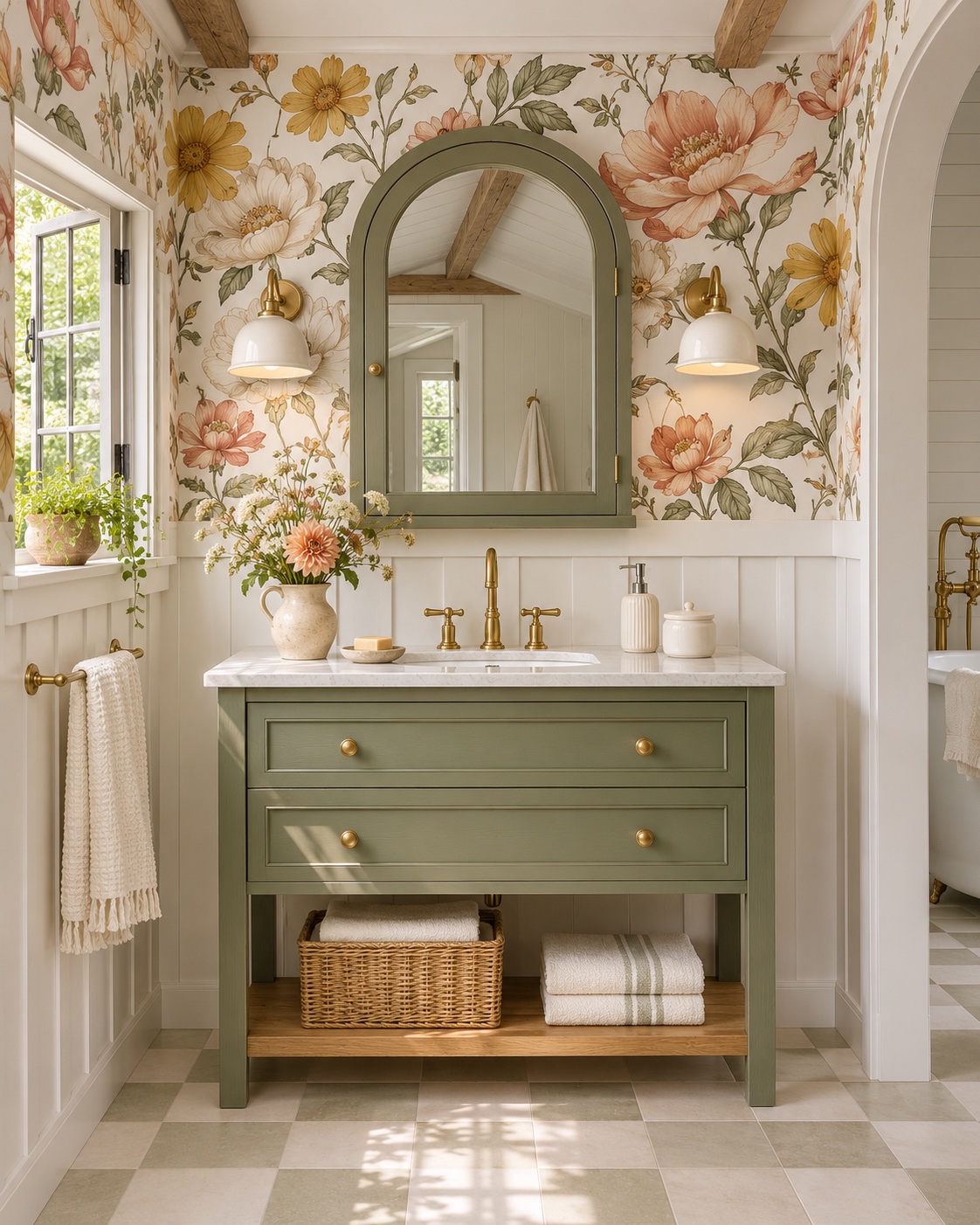
A pale background leaves breathing room between large flowers. White trim and a green vanity can carry this lightness through the rest of the room. Keep the shelf beneath the basin useful with one basket instead of a collection of ornaments. A small side window and modest wall lights allow the wallpaper to remain the main decorative surface.
13. Give a Double Vanity a Quiet Repeat
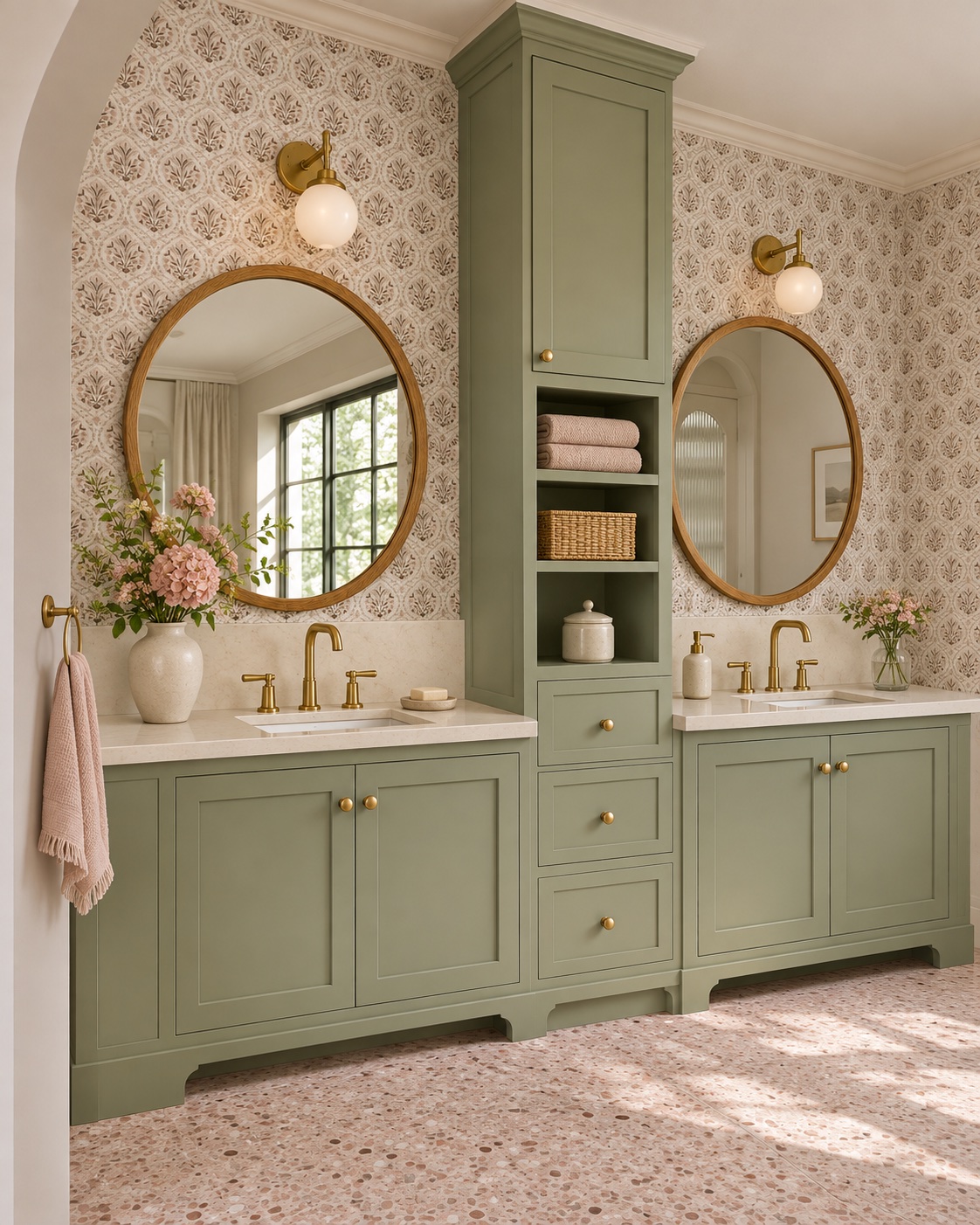
A fine, low-contrast print can work across a longer wall without overwhelming two sinks and their mirrors. A central storage tower creates a useful division and reduces the amount of exposed pattern. Choose the mirror shapes before finalizing the cabinet arrangement. Matching hardware and a continuous backsplash keep the two stations visually connected even when each has its own accessories.
14. Bring a Soft Grid into a Dressing Area
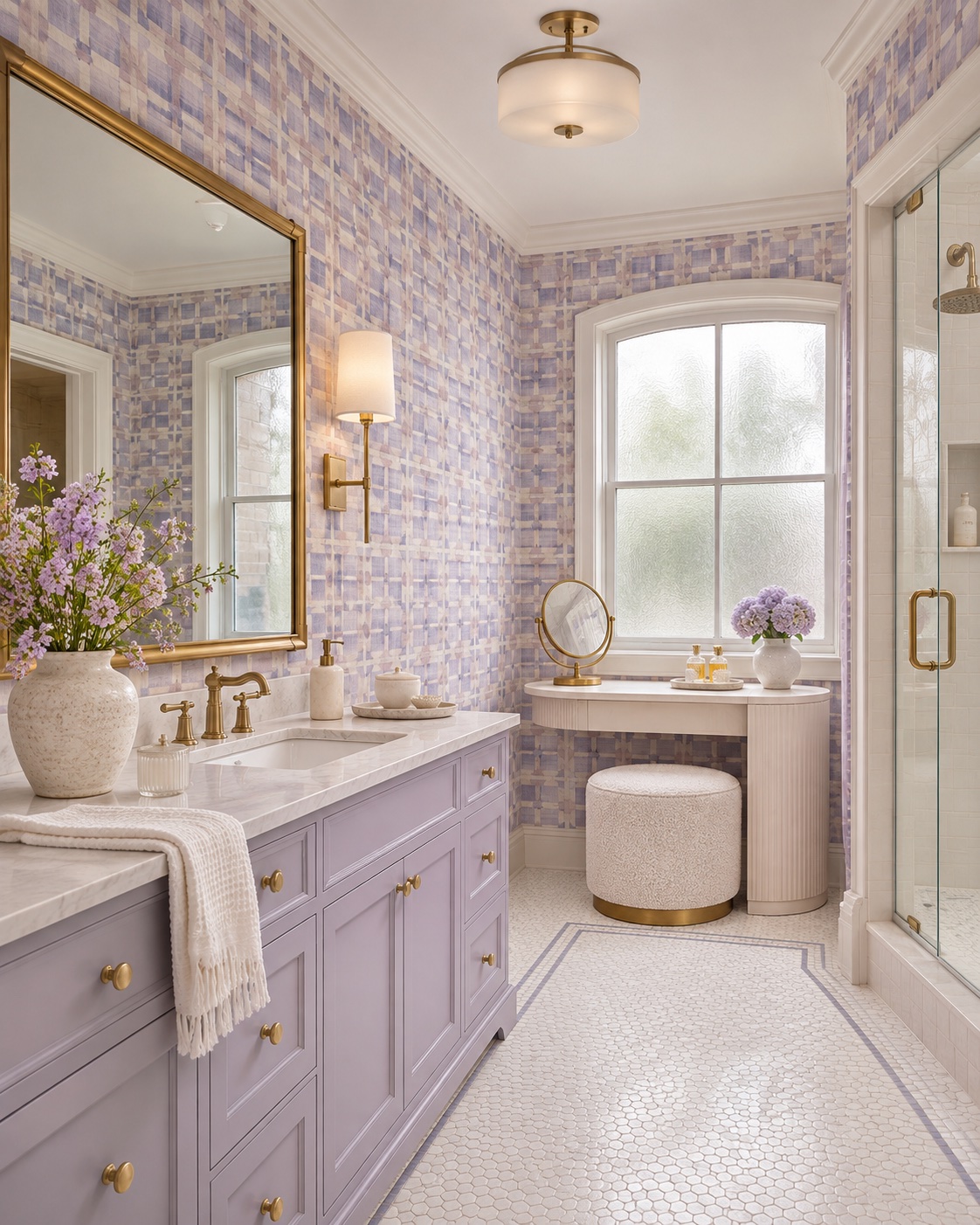
A loose grid gives a bathroom a tailored feel without relying on floral imagery. Its straight lines make alignment around door frames and mirrors particularly important. Lavender cabinetry can echo the paper while a pale stone top provides contrast. A separate compact dressing table adds another function; keep enough clear space for the stool to move comfortably.
15. Balance Graphic Blue with Plain Surfaces
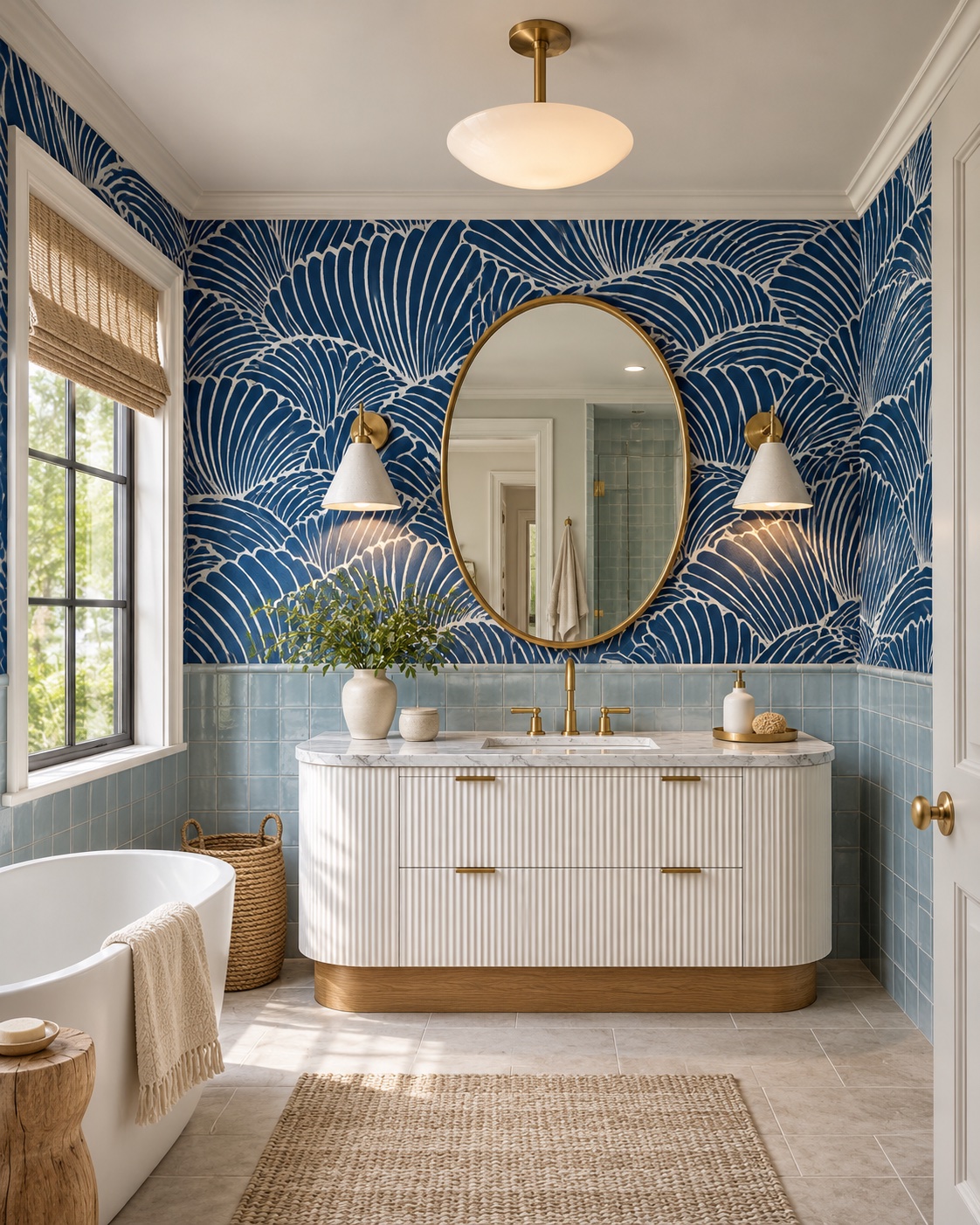
Bold blue-and-white linework creates a strong backdrop for a simple vanity. Use a large mirror to interrupt the pattern and make the basin area easy to read. Plain tile below the paper can relate to the design without repeating it exactly. When choosing art or towels, start with solid colors so the wall remains the clearest visual statement.
16. Let Folk Florals Animate a Narrow Room
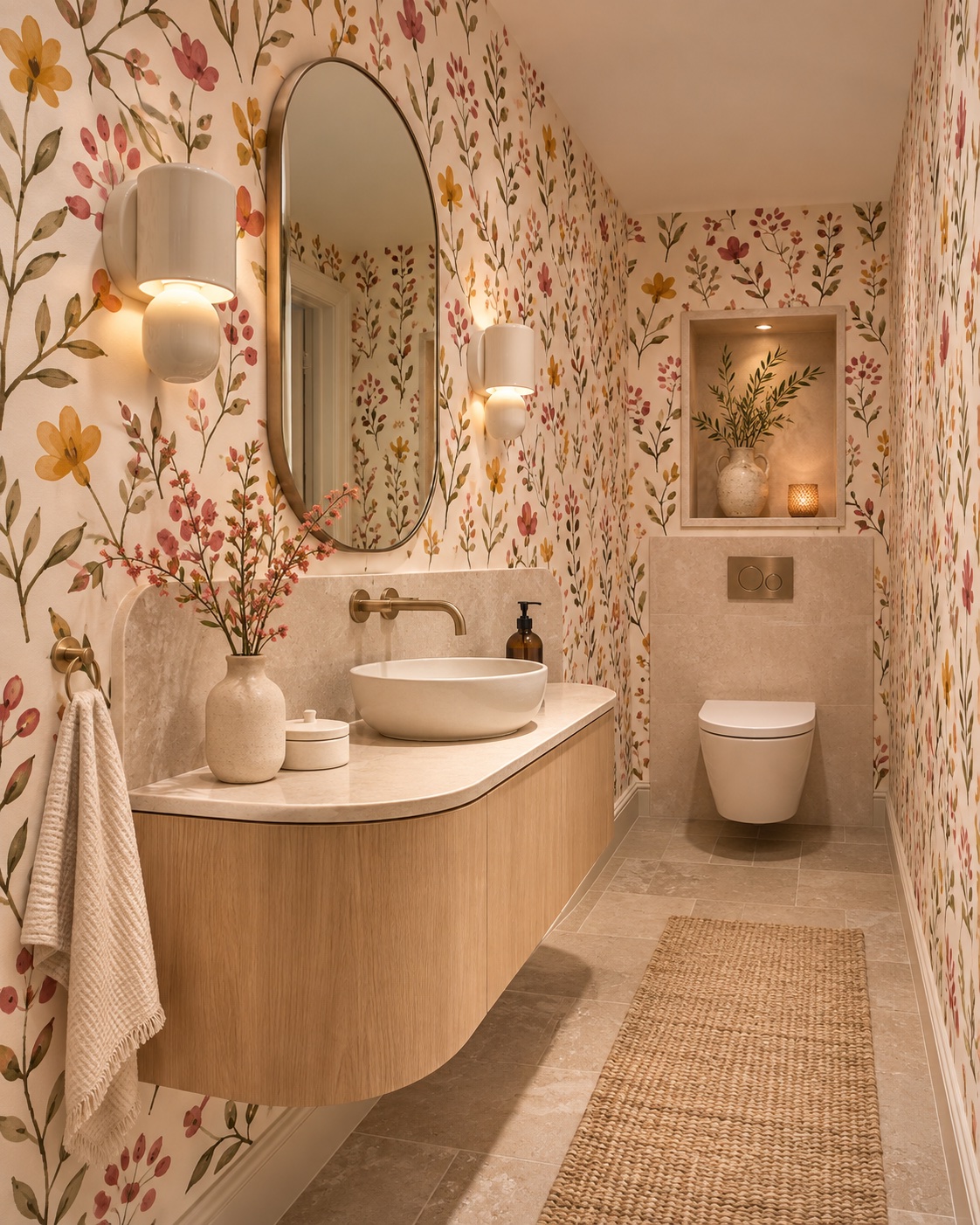
A loose arrangement of flowers and branches brings variety to a long, compact powder room. A floating vanity exposes the floor and avoids making the entrance feel crowded. Keep the wall niche and mirror simple so they do not compete with the illustration. A small splashback behind the basin can be quiet in color while still providing a distinct practical surface.
17. Give a Decorative Mirror Space to Stand Out
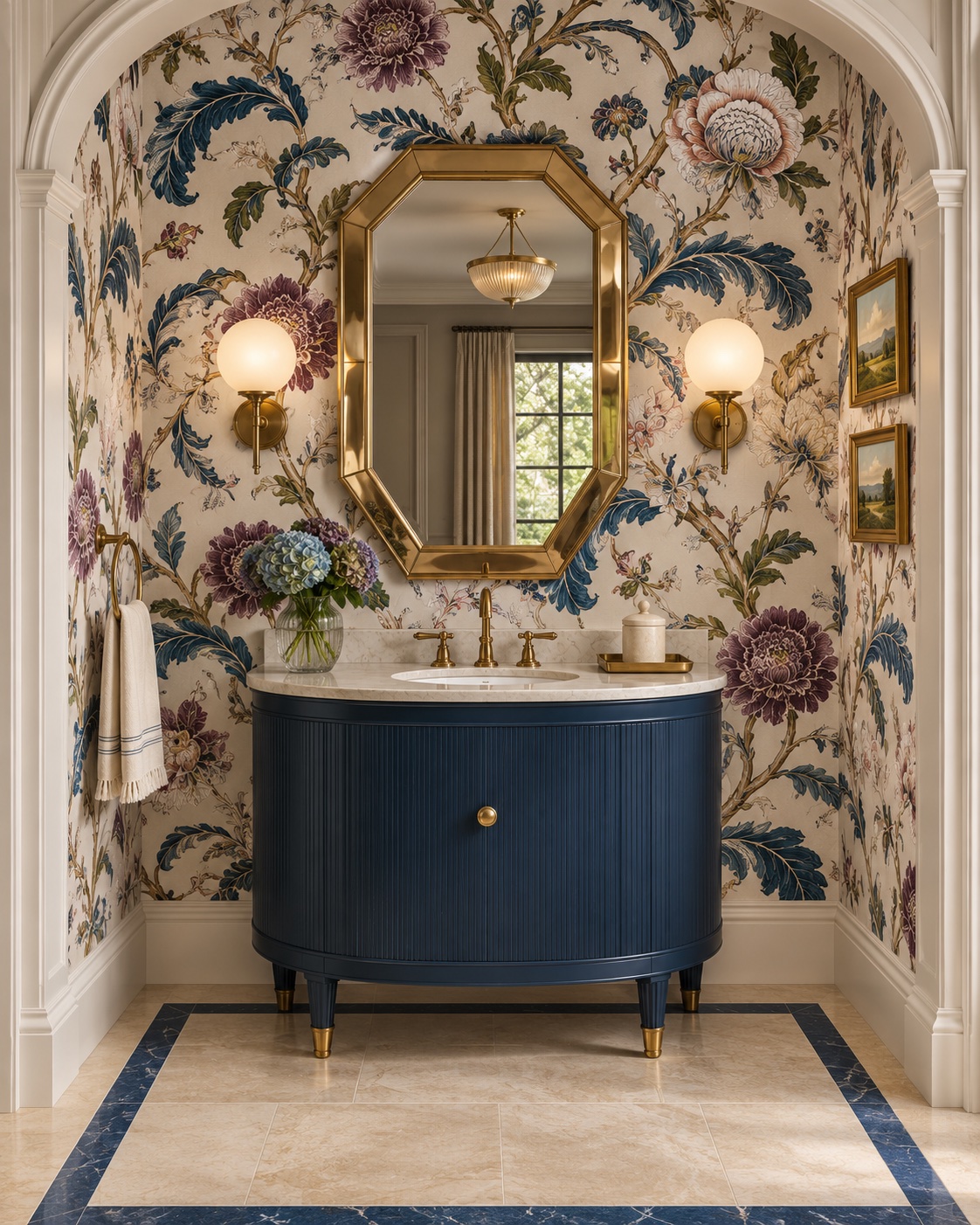
An expressive mirror and a scrolling floral paper can coexist when their shapes are clearly different. A faceted frame reads strongly against curved stems and leaves. Use a single cabinet color drawn from the print, then limit the counter accessories. Before buying the mirror, mark its outline on the wall to check its relationship with the sconces and basin.
18. Keep Meadow Stems Airy Above Pale Panels
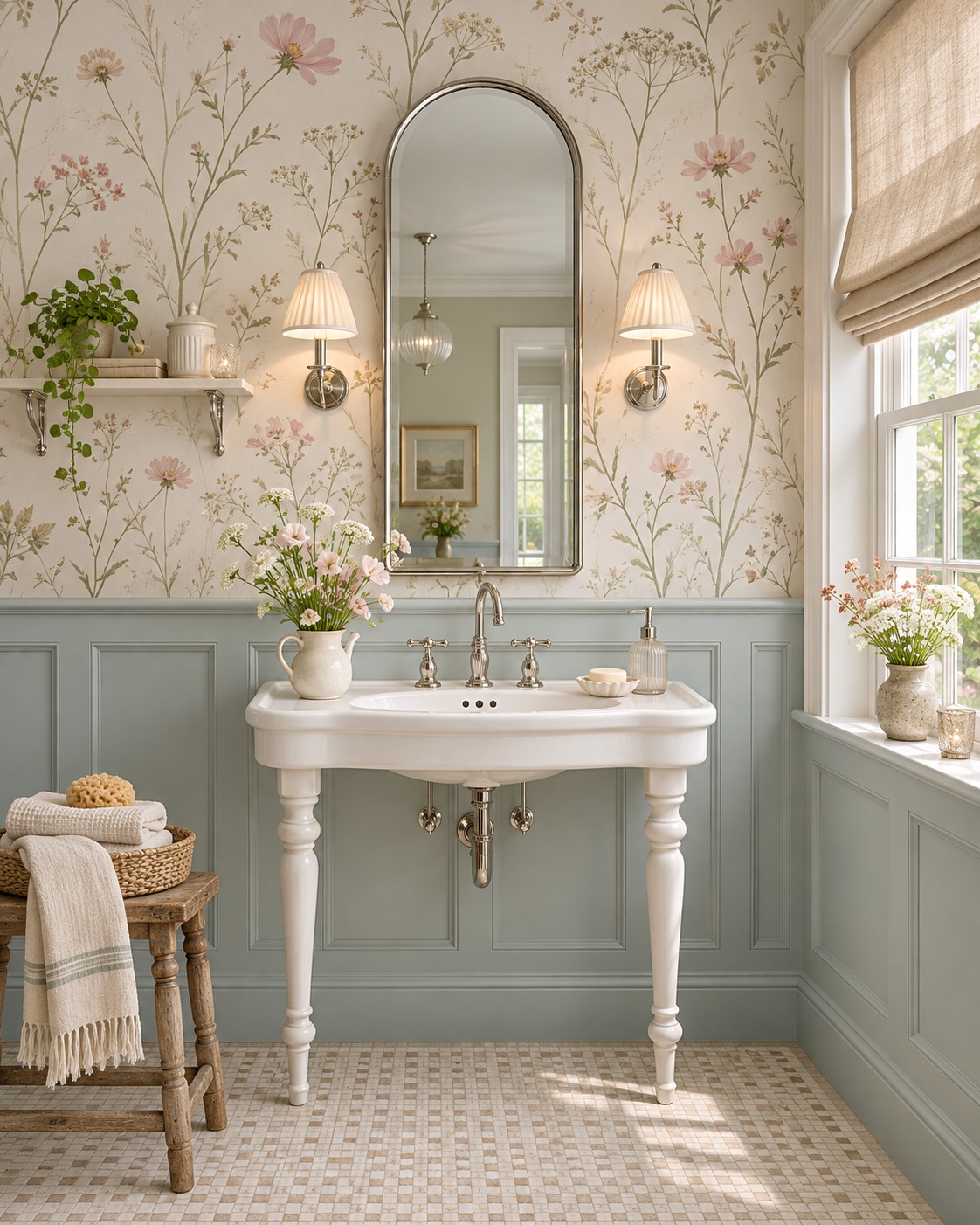
Widely spaced stems can make a small powder room feel gentle and uncluttered. Pale blue panels provide a continuous band beneath the illustration, while a narrow mirror preserves more visible wallpaper. A console or pedestal basin suits this light arrangement. Keep flowers and decorative objects away from the floor where they could crowd the already limited walking space.
19. Use a Pale Geometric as a Backdrop for Art
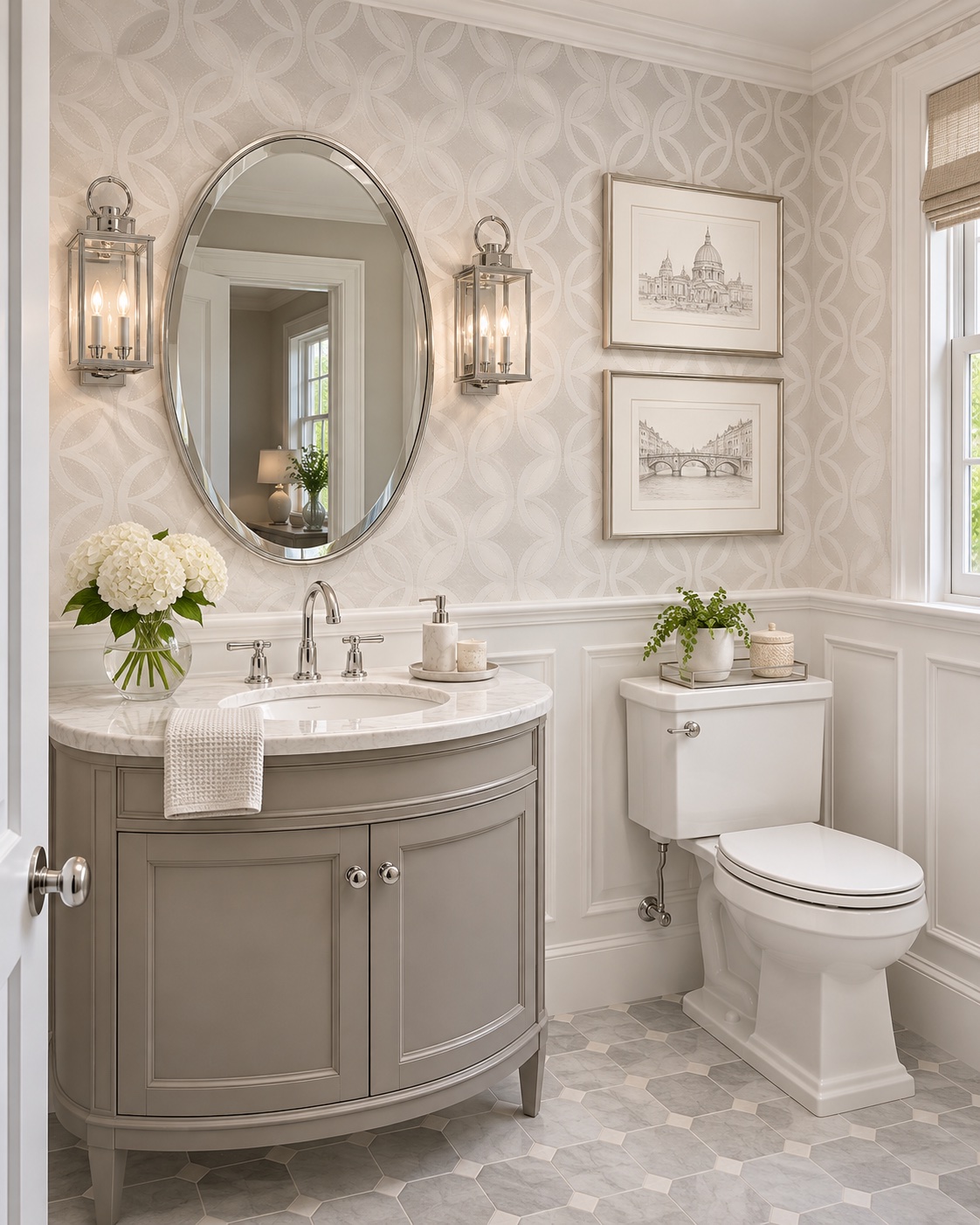
A restrained geometric paper can sit behind a small group of framed sketches. Choose generous mounts and simple frames so the artwork has a clear boundary against the repeat. White panel molding below offers a second, larger scale of pattern. A grey vanity and polished metal fittings keep the palette coherent without needing every surface to match.
20. Add Energy with a Blue Starburst
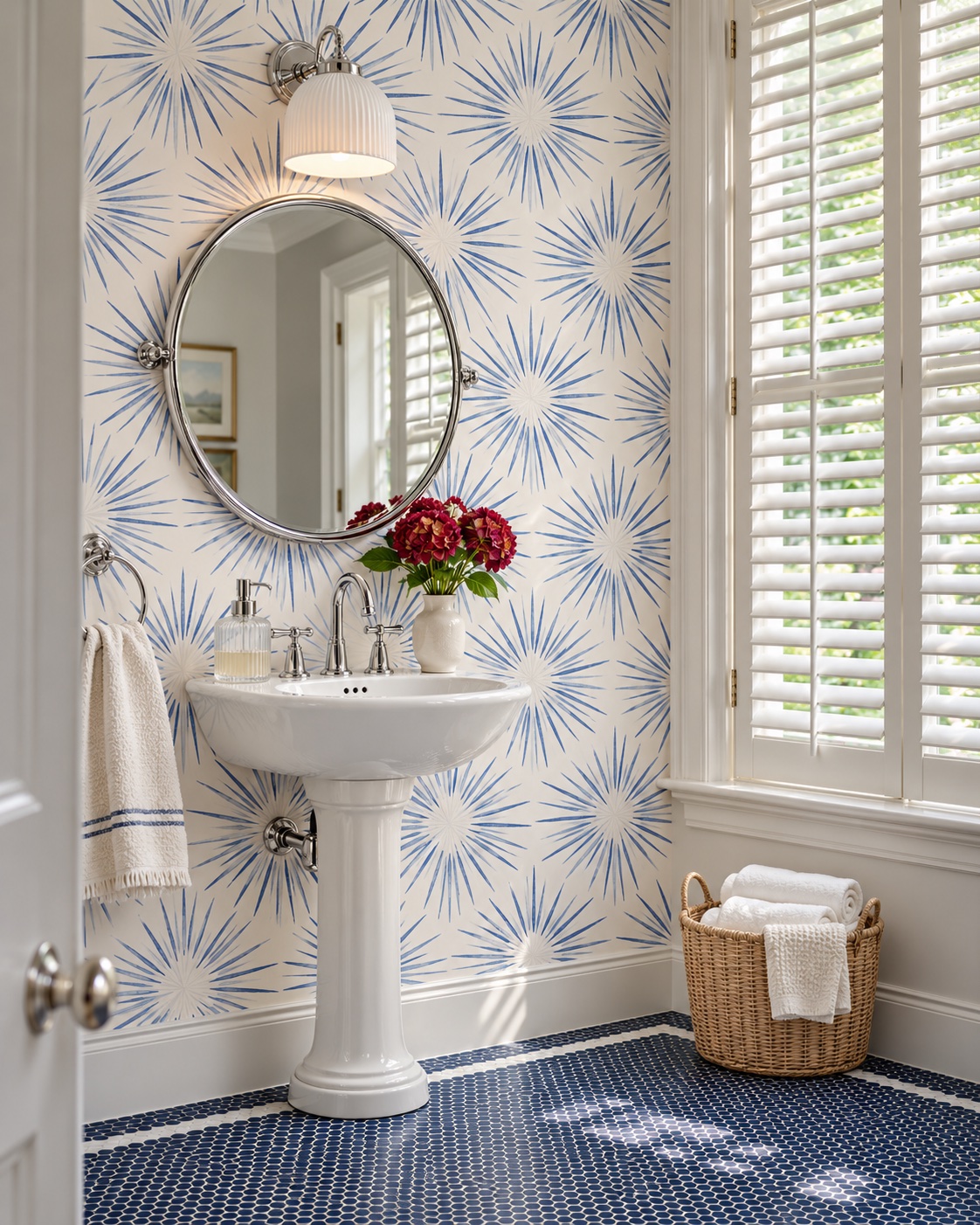
Radial motifs provide movement even in a small bathroom. Place the sample next to the basin and floor tile to compare their scales: two equally busy repeats may compete. A white pedestal basin gives the wallpaper a clean silhouette. A plain window treatment and a woven basket introduce quieter surfaces around the graphic wall.
21. Separate Botanical Paper from the Basin Wall
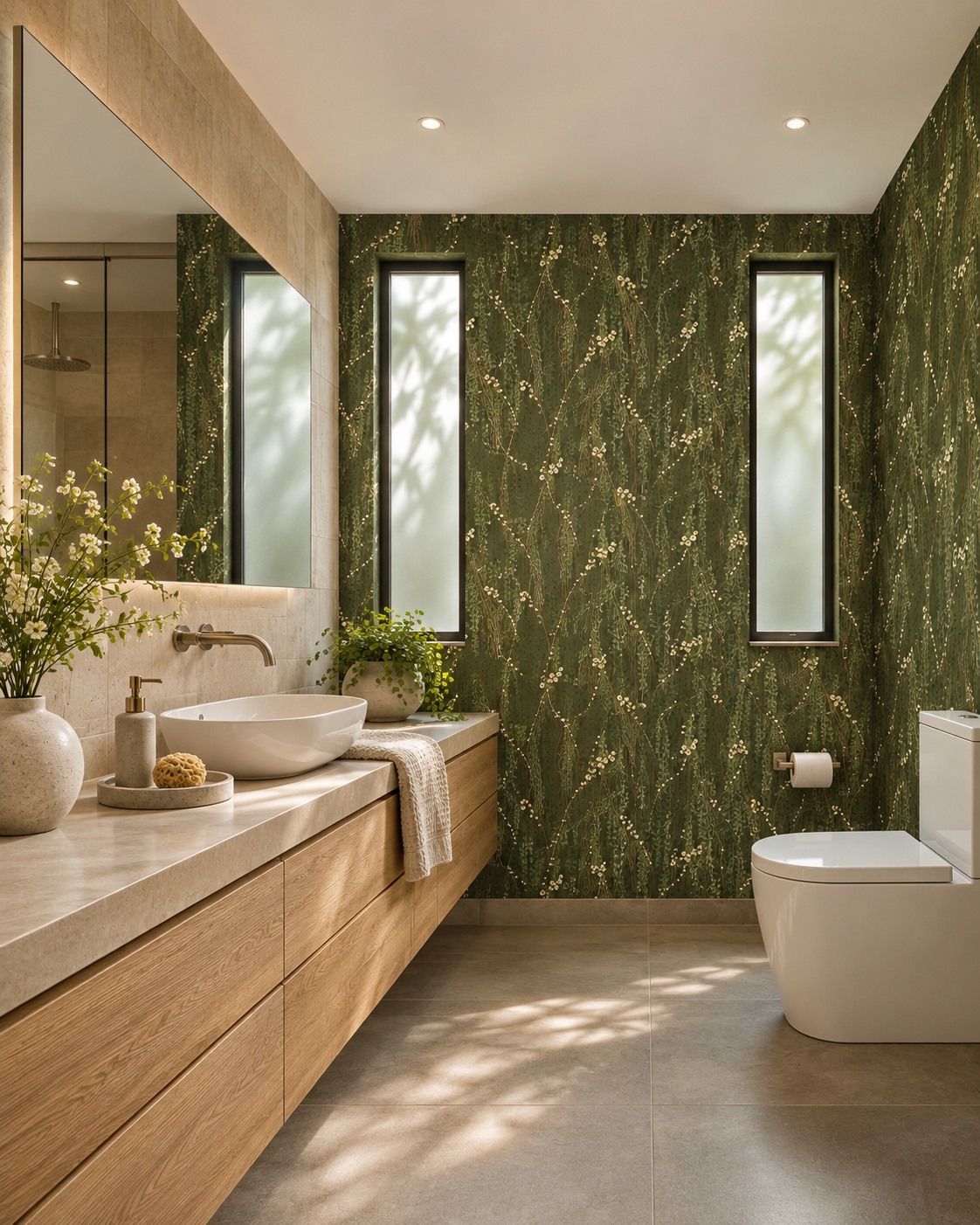
Wallpaper does not need to cover every wall to define the room. A green trailing pattern can occupy the side or rear wall while tile surrounds the basin. A floating wood vanity bridges the two finishes. Narrow windows create useful breaks in the print; consider their placement when deciding which part of the repeat should appear at the corners.
22. Combine Monochrome Ferns with Dark Lower Walls
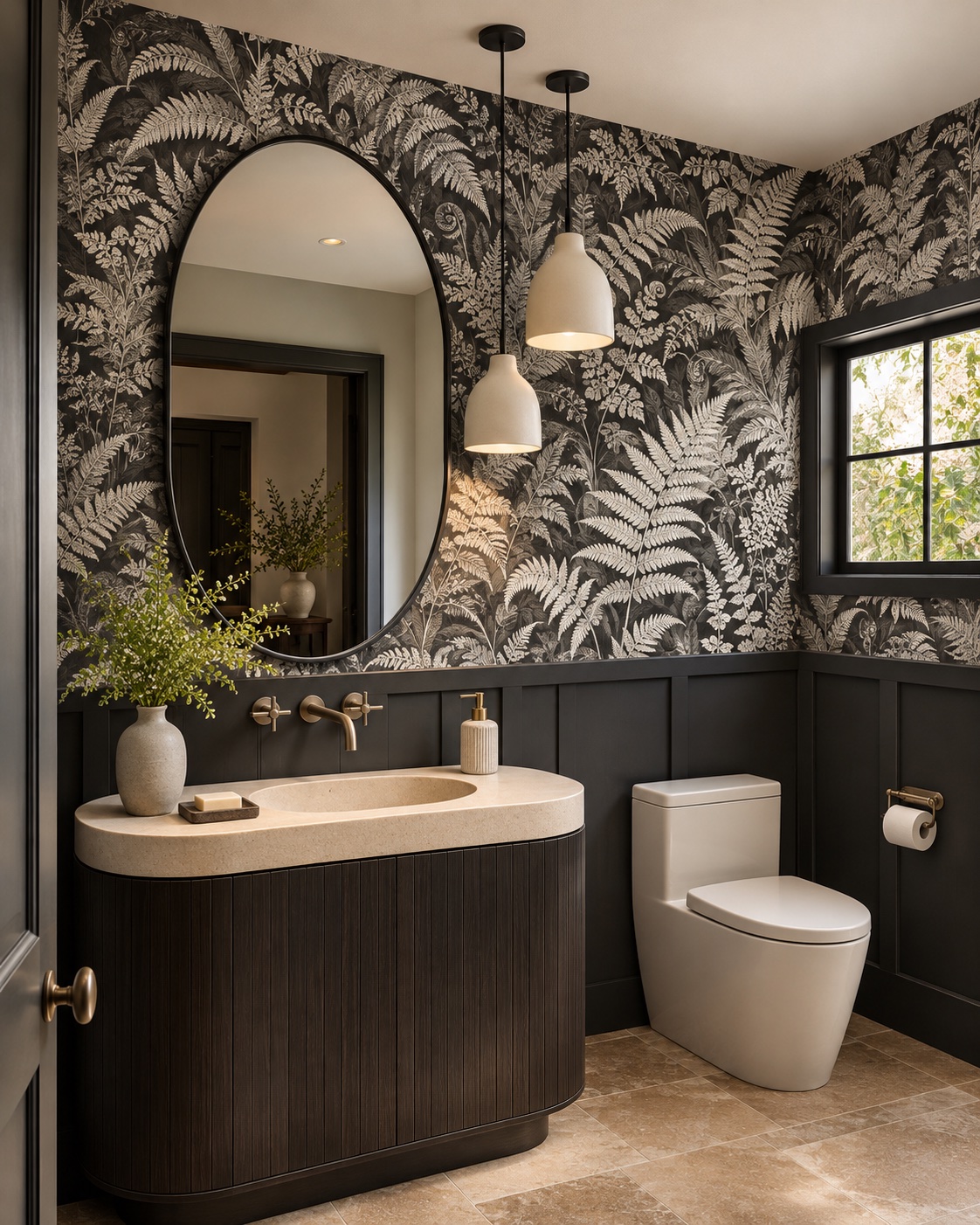
A black-and-cream botanical print can feel rich without adding several colors. Dark paneling below gives the foliage a clear stopping point. Rounded cabinetry and an oval mirror soften the vertical wall details. Keep lighting warm enough to reveal the texture of the paper, and compare the sample beside your chosen countertop rather than evaluating it on its own.
23. Choose a Small Berry Print for a Classic Powder Room
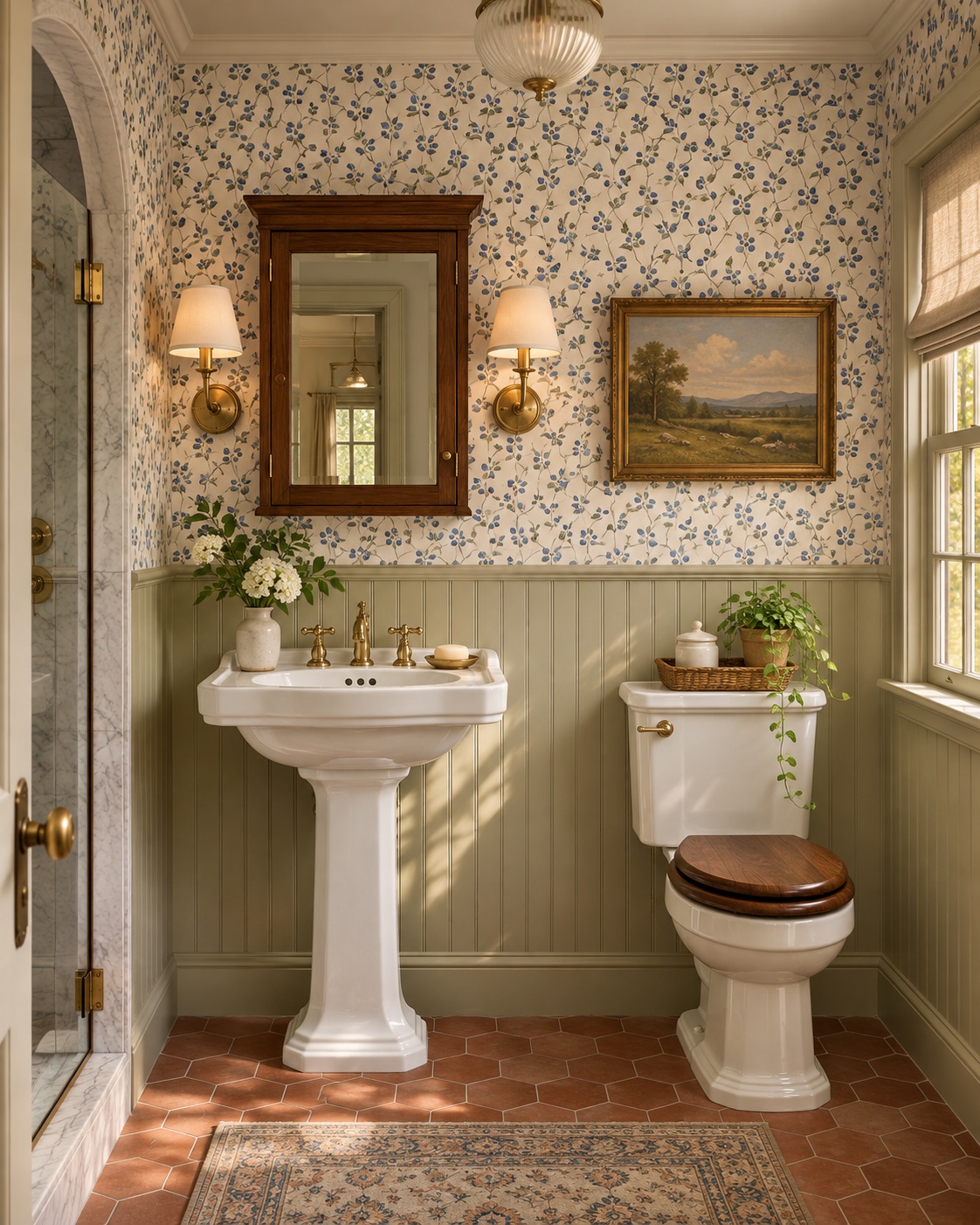
A compact repeat can add character around traditional fixtures without dominating them. Pale olive beadboard and a walnut mirror cabinet introduce larger areas of color and texture. One landscape picture gives the room a personal detail. Check that the cabinet door can open freely and that the light fittings remain comfortably clear of its edges.
24. Connect Tropical Wallpaper with a Tiled Shower
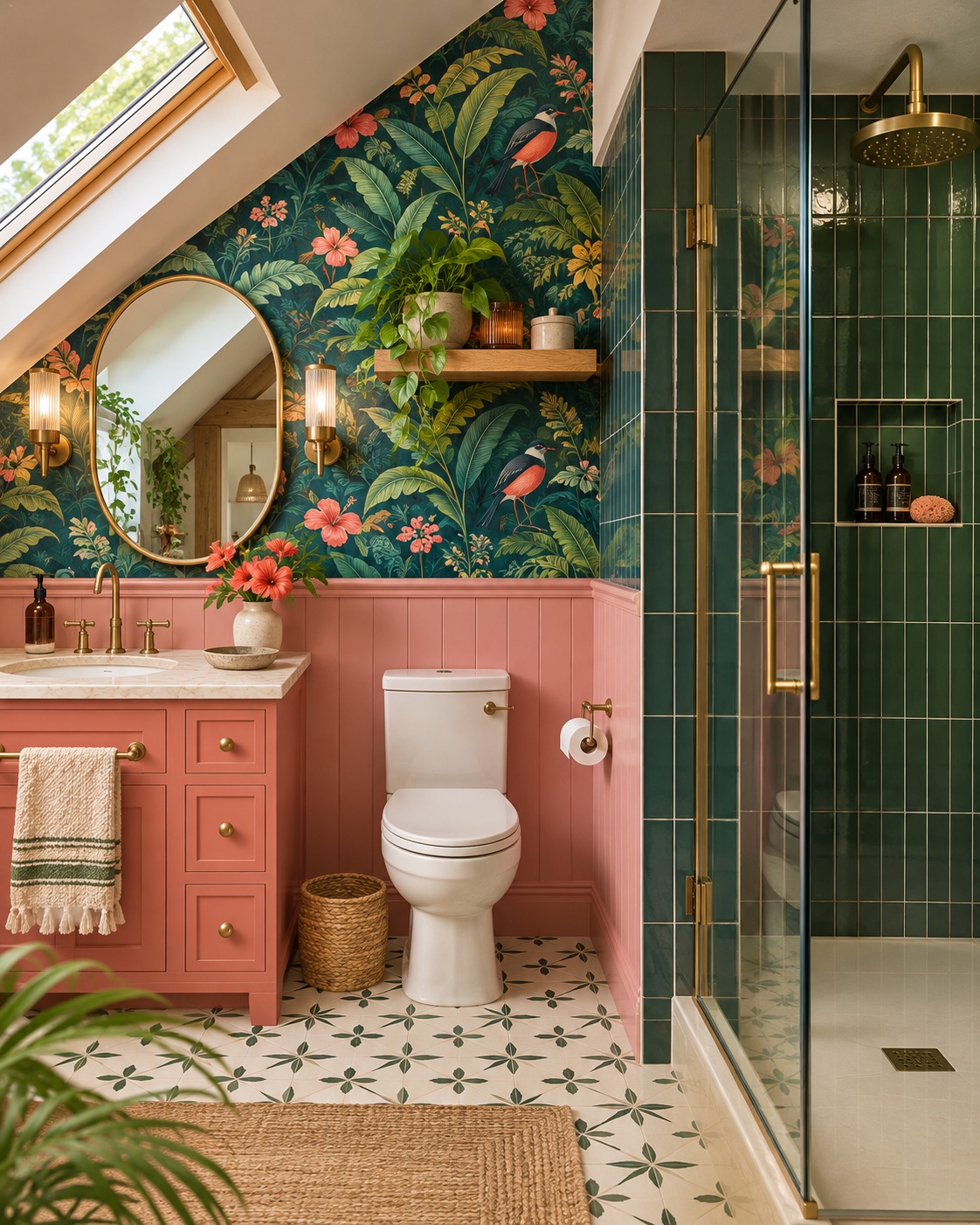
A vivid tropical print can sit beside a shower when the wet zone has its own appropriate finish. Here, green tile carries one of the wallpaper colors into the enclosure, while rose paneling warms the dry side of the room. Use a tiled return and glass screen to define the transition. Keep shelves and accessories simple because the wall pattern already supplies plenty of detail.
Plan the Pattern Before You Order
Place a generous sample beside the mirror, countertop, and trim, then view it in daylight and under your evening lighting. Measure the wall areas and openings, and account for the manufacturer’s pattern repeat when estimating material. For a full bathroom, decide where wallpaper ends and the splash-resistant finishes begin before installation starts.
Visual inspiration: TheCoolist’s bathroom wallpaper collection. The commentary and individual redesigns were created for DIY Ideas.