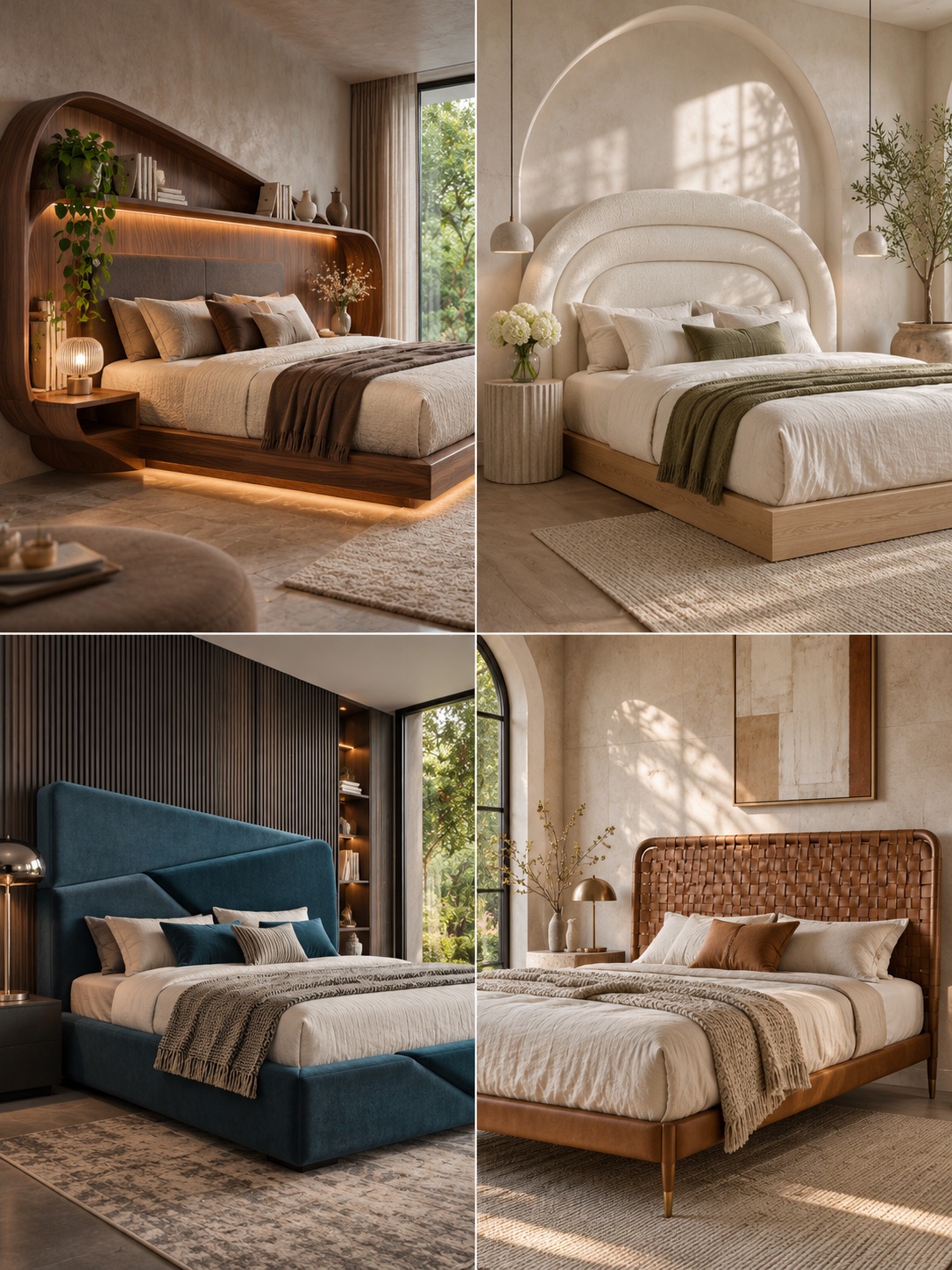
A bed frame sets the proportions of a bedroom long before the cushions and lamps arrive. Its height, outline, material, and relationship to the bedside furniture can make the same mattress feel tailored, relaxed, sculptural, or quietly practical. These 35 concepts explore different ways to use wood, upholstery, woven panels, and integrated details to give the sleeping area a clear identity.
The images below are AI-generated design concepts created for DIY Ideas. They illustrate redesigned bedroom settings, rather than photographs of products available to buy or construction plans.
1. A Walnut Platform with Integrated Shelves
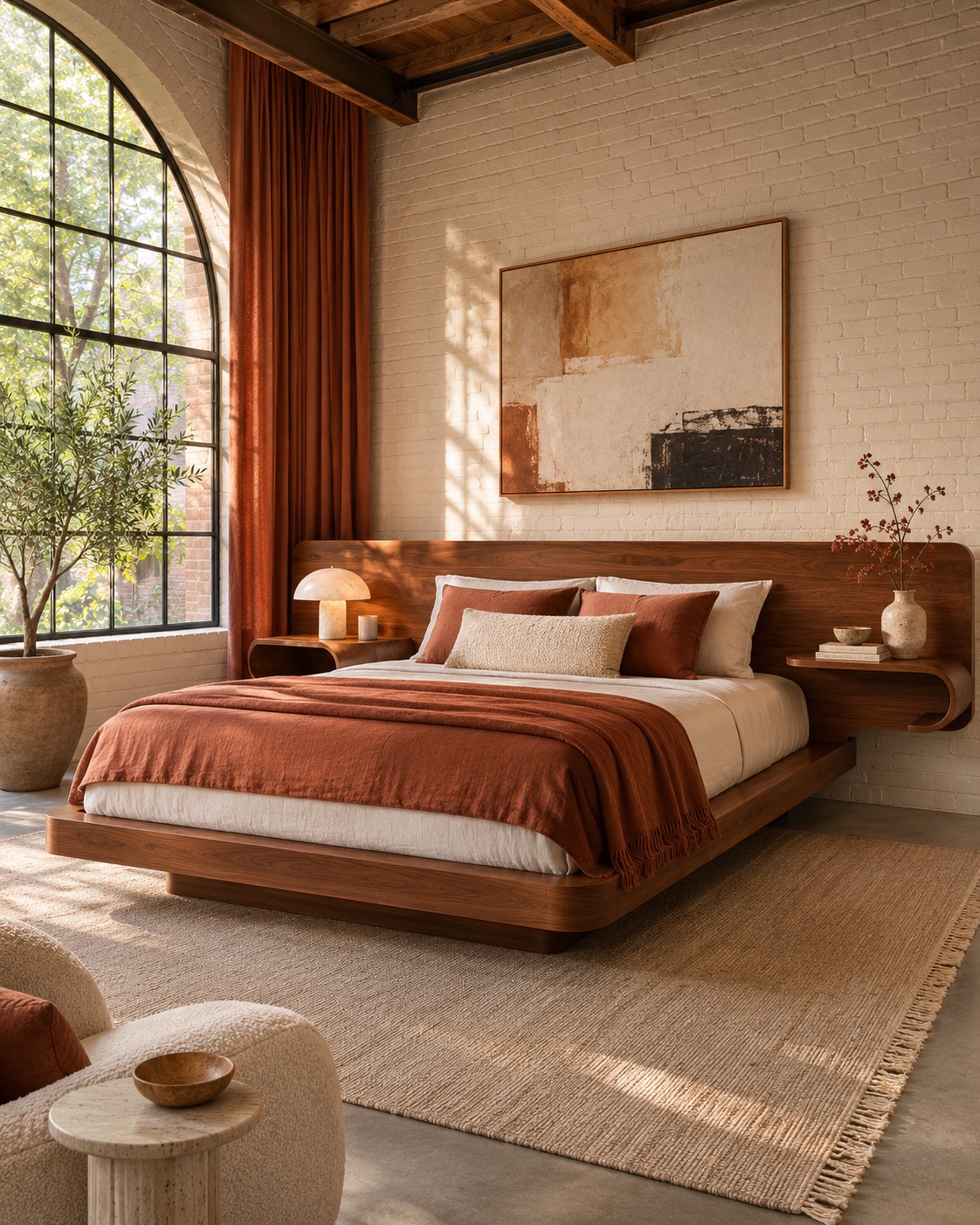
A wide wooden headboard can organize the whole sleeping area. Here, curved bedside shelves continue its horizontal line while a recessed base gives the platform a lighter appearance. Keep bedding tucked enough to reveal the rounded frame. Before choosing integrated shelves, check that their height works with your mattress and that you can comfortably reach the far edges.
2. Mixed-Width Upholstery Channels
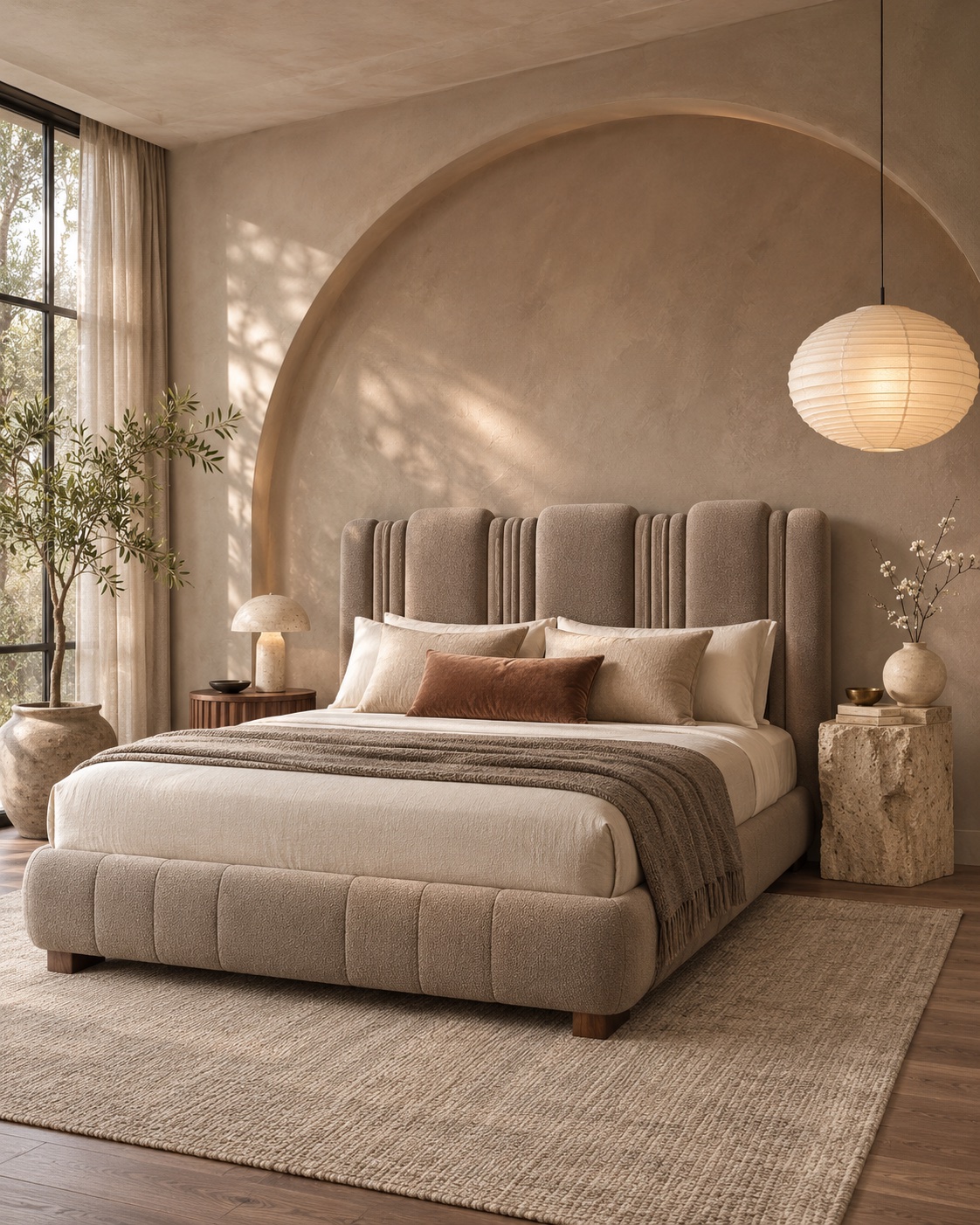
Alternating broad cushions with narrower channels makes a neutral headboard more interesting without adding a busy pattern. The soft footboard repeats the upholstery in a quieter way. A plaster arch and mismatched bedside pieces create depth around it. For a similar result, choose one main fabric and vary the scale of the details rather than mixing several competing finishes.
3. Overlapping Oval Cushions
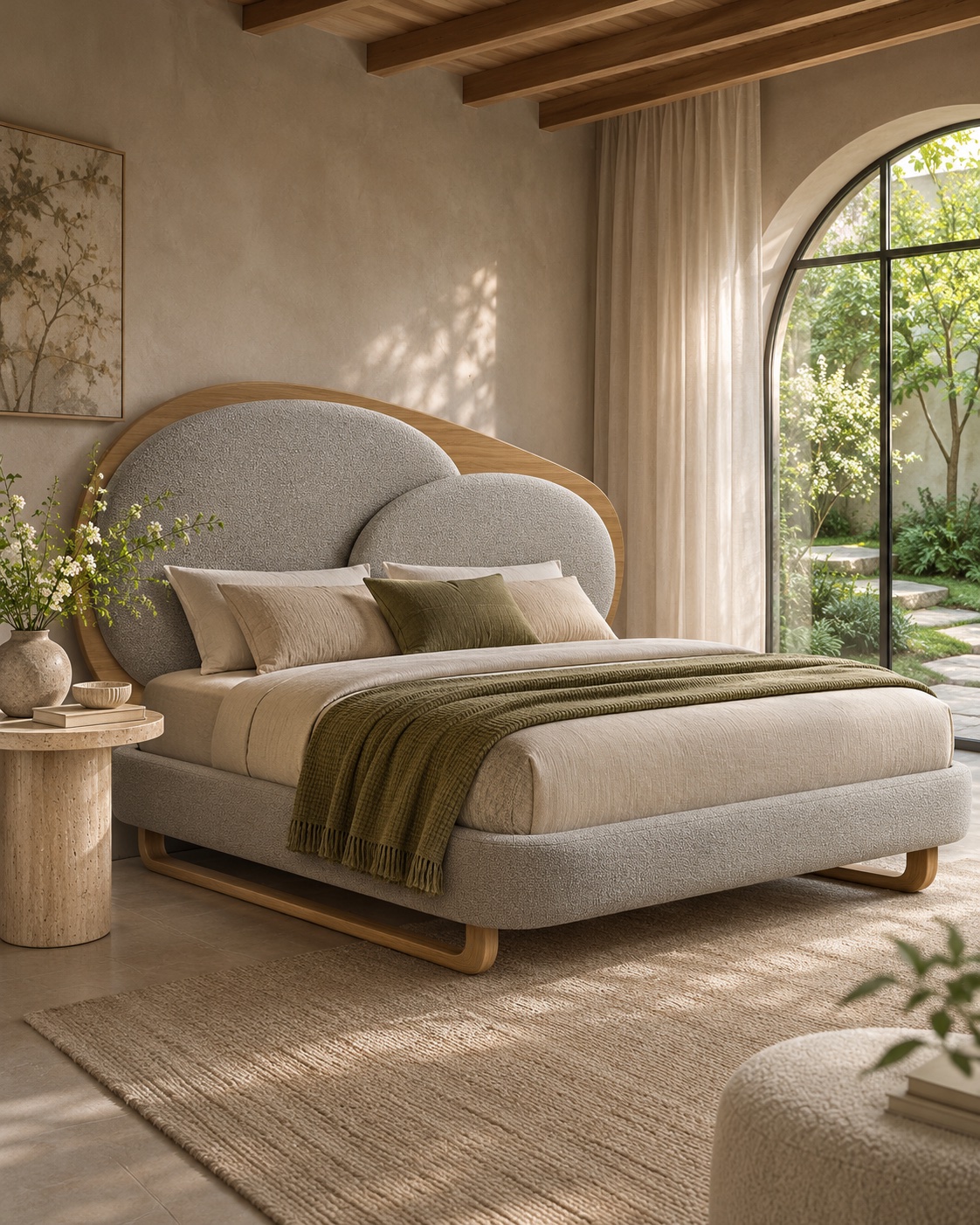
An overlapping oval headboard turns a familiar padded bed into a sculptural centerpiece. The timber backing and sled-style feet keep the curved upholstery connected to the rest of the room. Let a few larger pillows sit low so the outline remains visible. A round side table works especially well beside this shape because it avoids crowding the bed with sharp corners.
4. A Wraparound Upholstered Shell
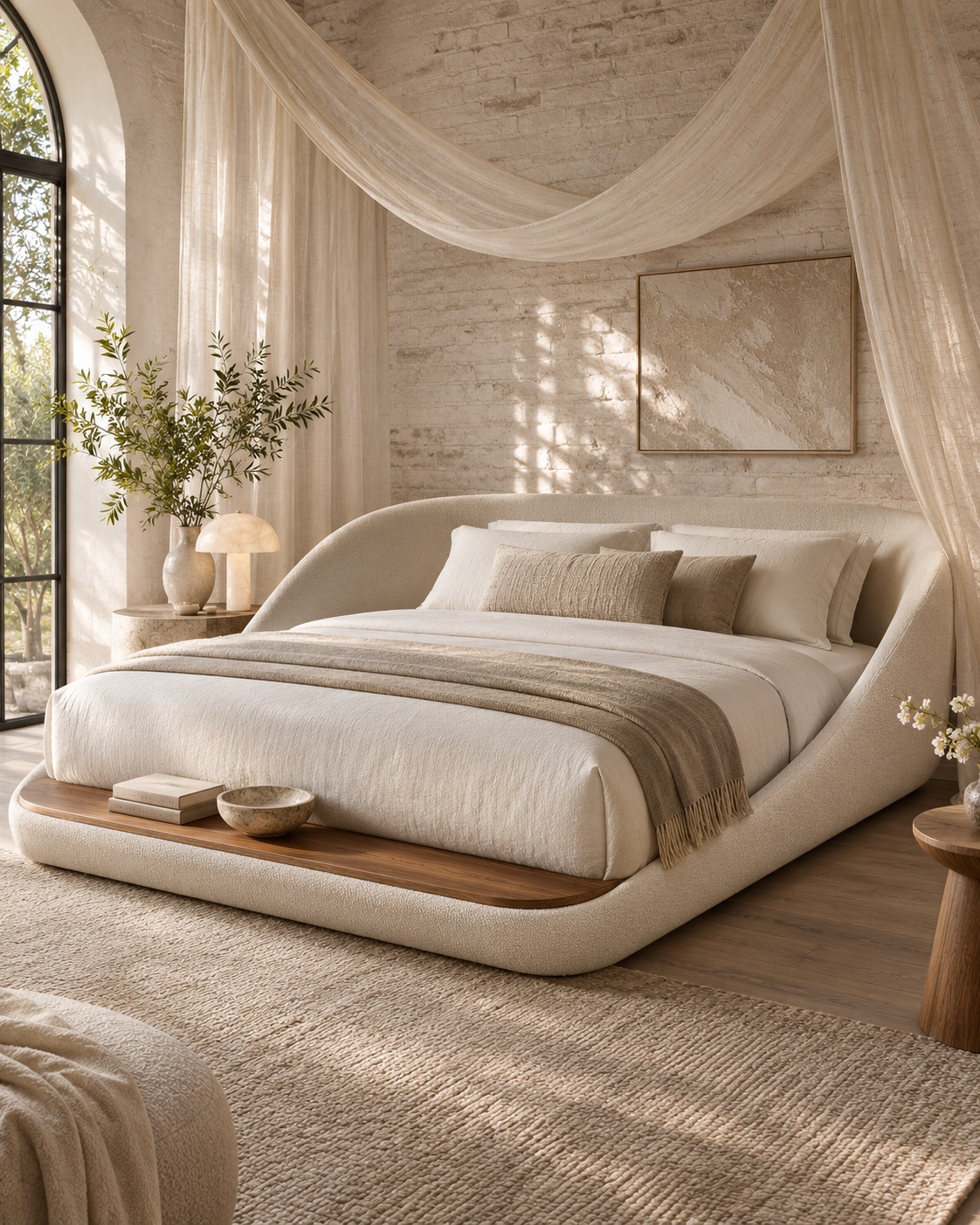
A continuous curved headboard gives the bed an enclosed, restful character. Its shallow wings work best when the room still leaves comfortable access on both sides. A restrained wooden detail at the base prevents the upholstery from becoming visually heavy. Pair this frame with simple linen bedding and a softly textured wall so the silhouette remains the main feature.
5. A Stepped Deco Crown
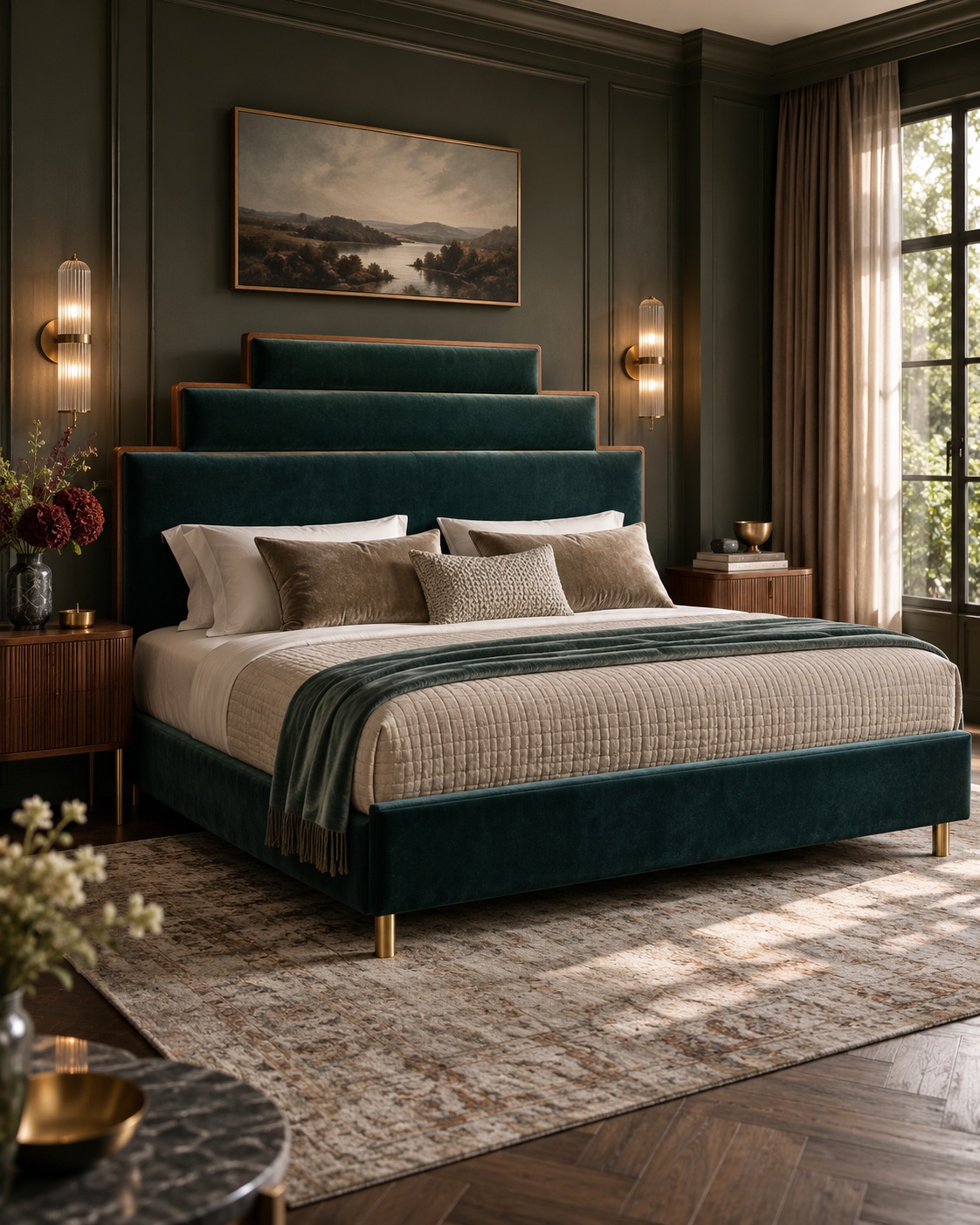
A stepped headboard brings architectural rhythm into the bedroom. Broad levels feel calmer than a dense row of narrow peaks, while a dark velvet surface makes the outline easy to read against a lighter wall. Keep the footboard slim and let small brass details provide contrast. Bedside lamps should sit below the tallest section rather than competing with its crown.
6. Soft Scallops and Woven Texture
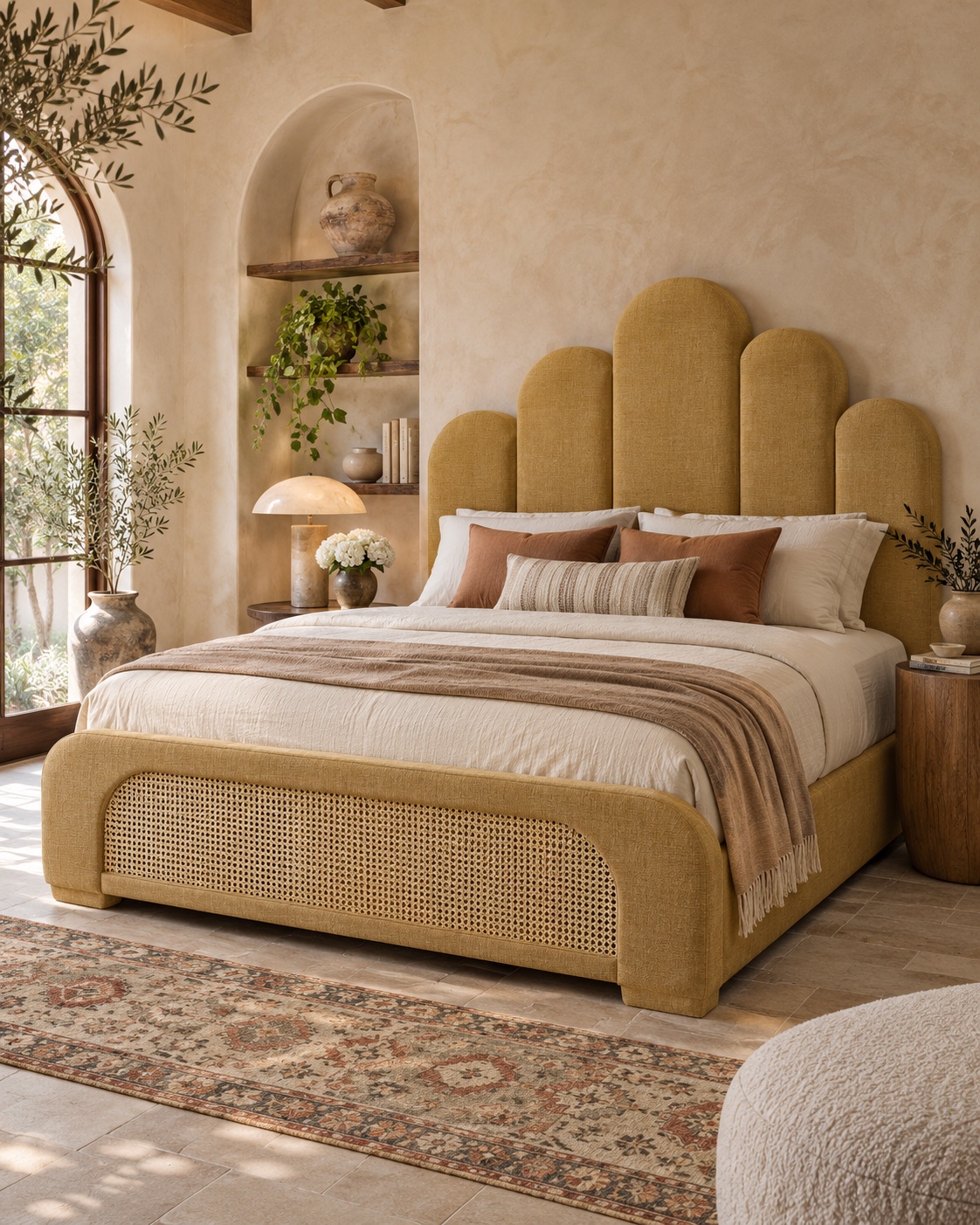
Rounded headboard lobes introduce a playful shape without needing a vivid print. A woven detail at the foot of the bed adds a different texture and connects the upholstery to natural accessories. This idea suits a warm, relaxed room with plaster walls and simple curtains. Check the footboard height against your mattress so the scalloped design does not make changing bedding awkward.
7. Two Ways to Use Geometric Padding
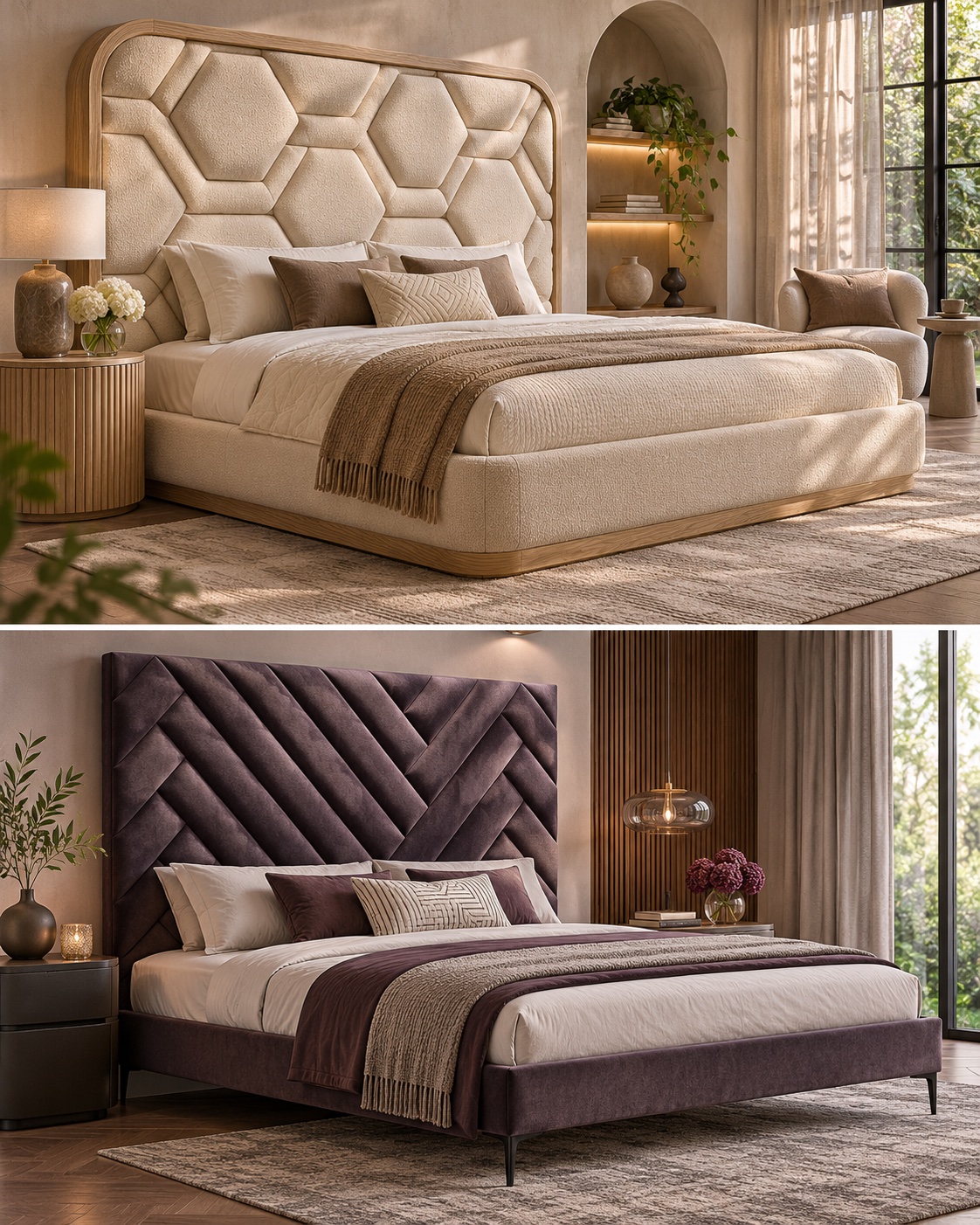
Geometric upholstery can be interpreted through interlocking polygon shapes or broad diagonal bands. The first feels structured and decorative; the second introduces a stronger sense of movement. These two concepts show how changing the pattern scale alters the character of the same furniture category. Choose a quiet duvet and limit nearby wall art so the headboard has room to stand out.
8. An Asymmetric Layered Headboard
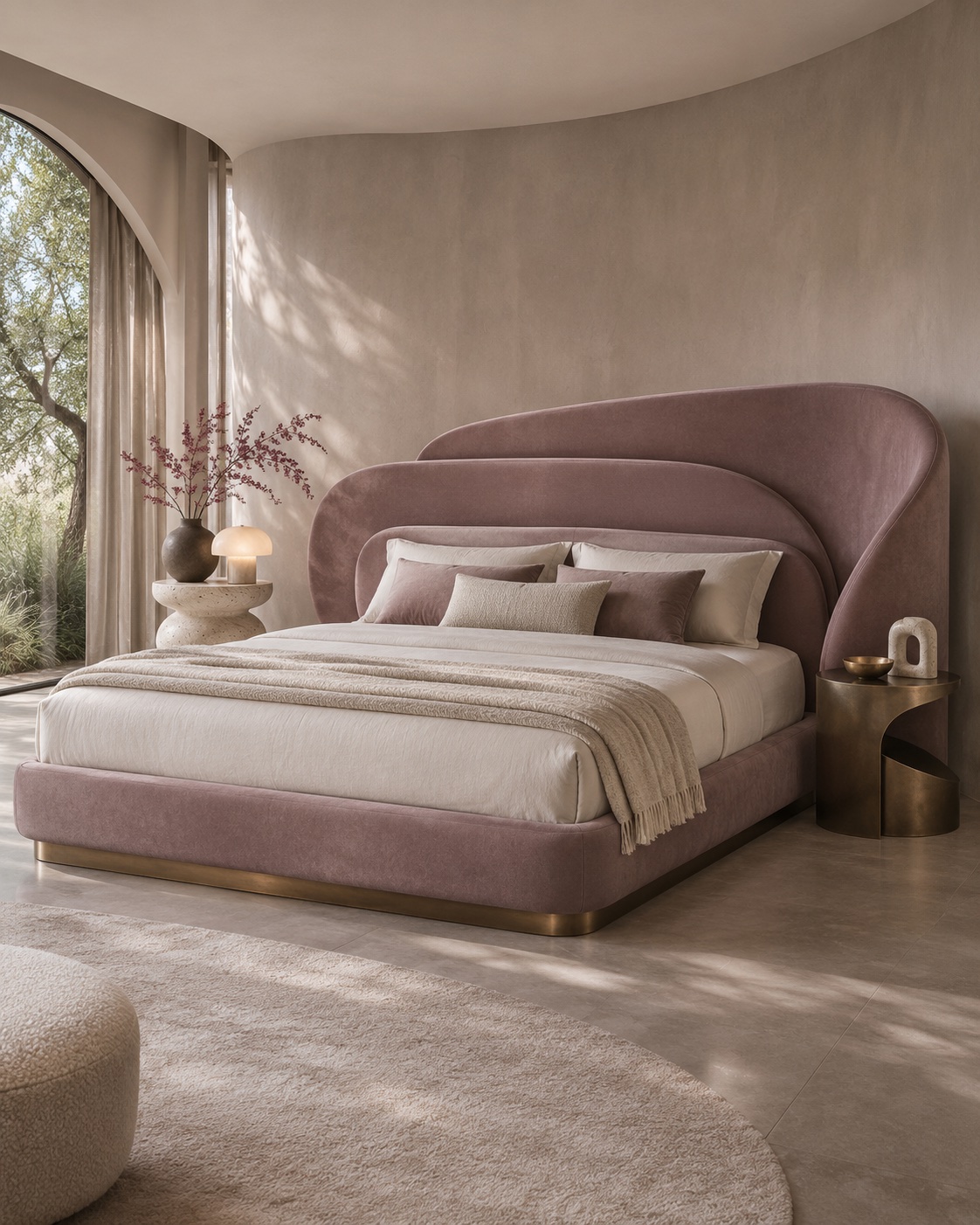
Offset rounded layers make a wide headboard feel less formal. The design can support an intentionally uneven bedside arrangement, such as a pedestal on one side and a small cabinet on the other. Keep their useful surfaces at compatible heights. A low base helps balance the generous headboard, while a plain wall prevents the layered outline from getting lost.
9. A Graphic Chevron Centerpiece
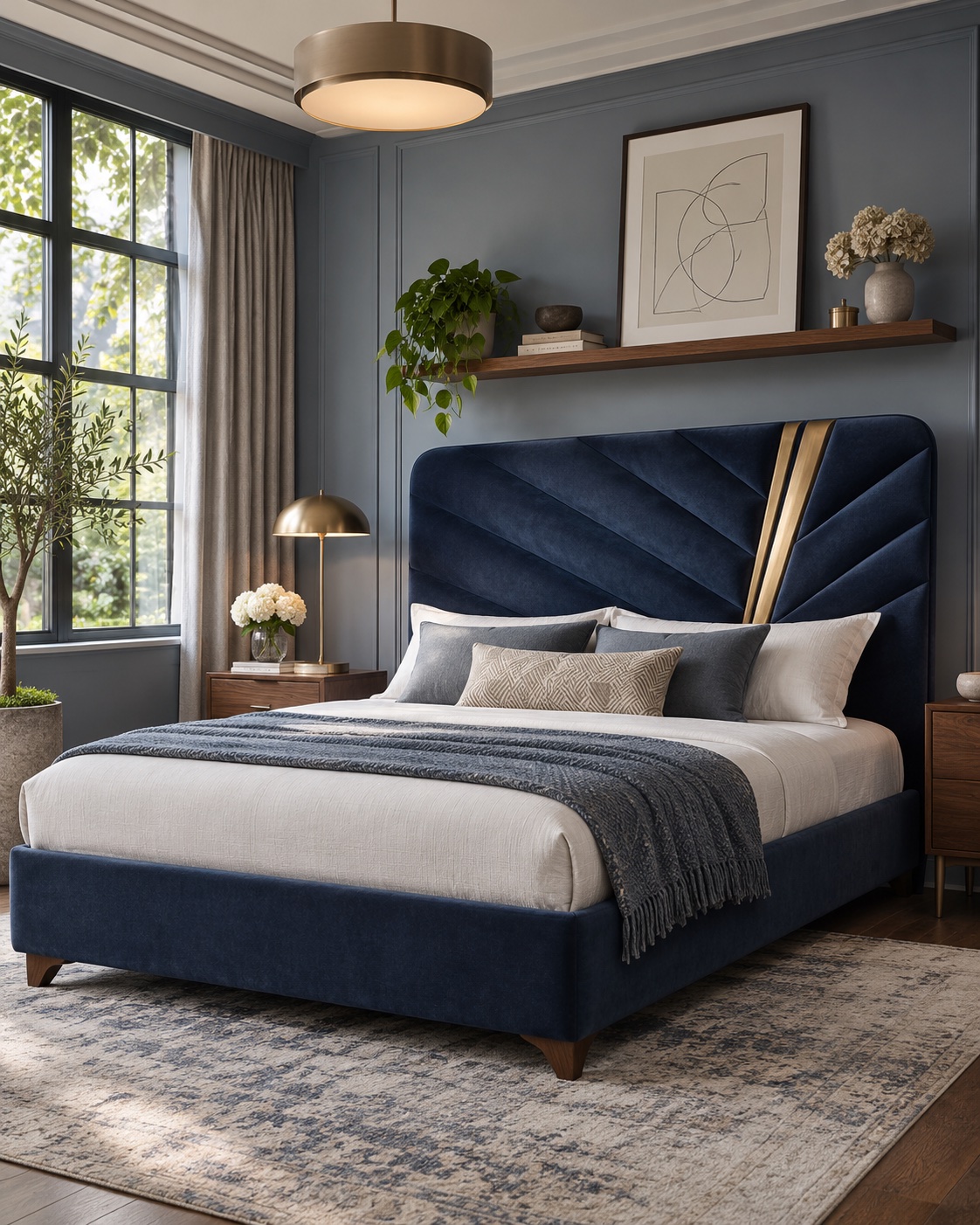
Broad chevrons give a dark upholstered bed a clear direction. A single metallic line adds definition without covering the frame in ornament. This is a useful approach when you want a statement bed but prefer solid-colored linens. Position the bed where the full headboard can be seen from the doorway, and keep artwork modest in both size and contrast.
10. Horizontal Channels with a Wood Border
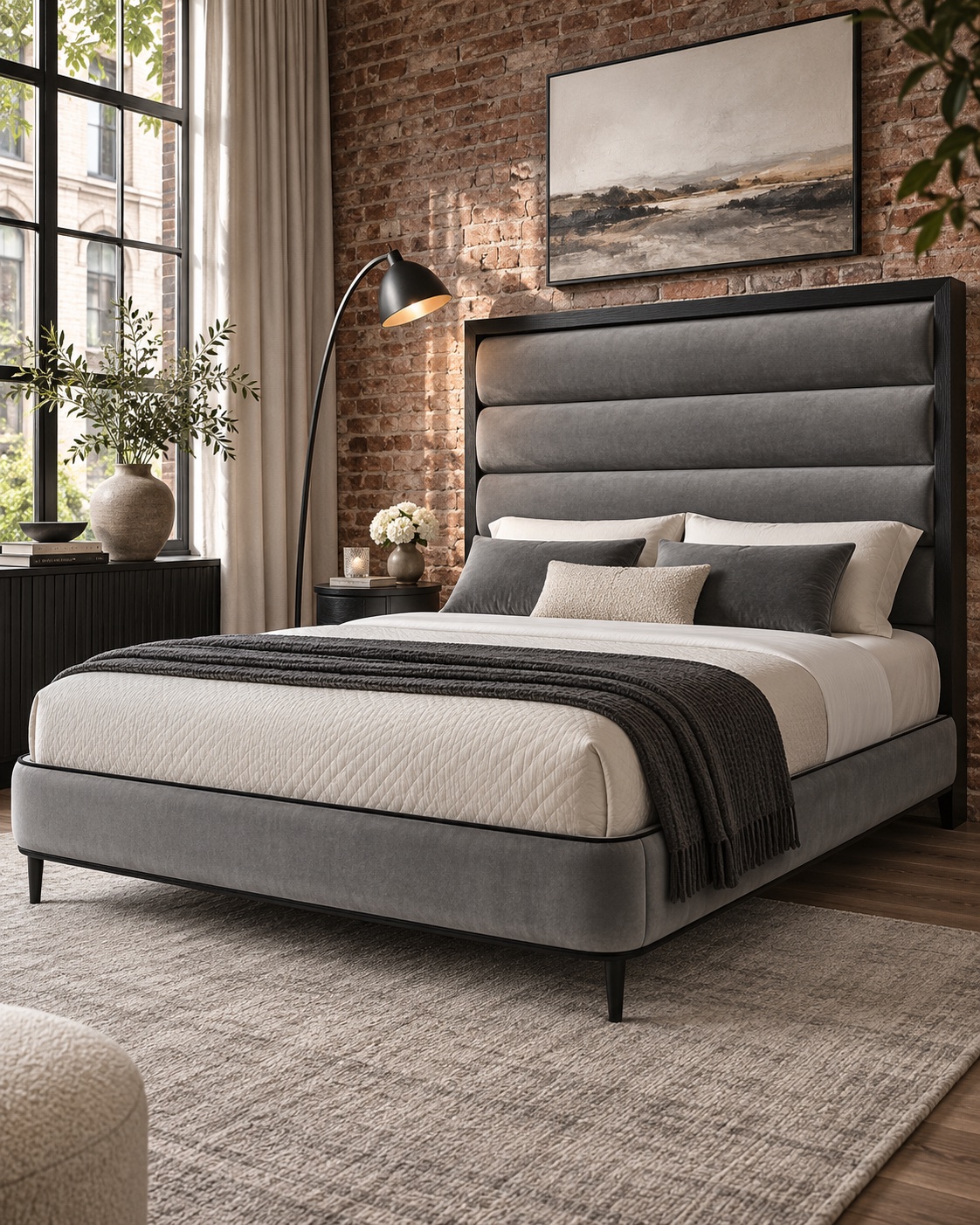
Horizontal padding emphasizes the width of the bed and creates a relaxed backdrop for pillows. A dark timber surround makes the soft panels look crisp, while raised feet reveal more of the floor. This combination suits an urban room with exposed brick or another textured surface. Leave enough visible wood around the pillows for the frame to read clearly.
11. A Velvet Fan on Slender Legs
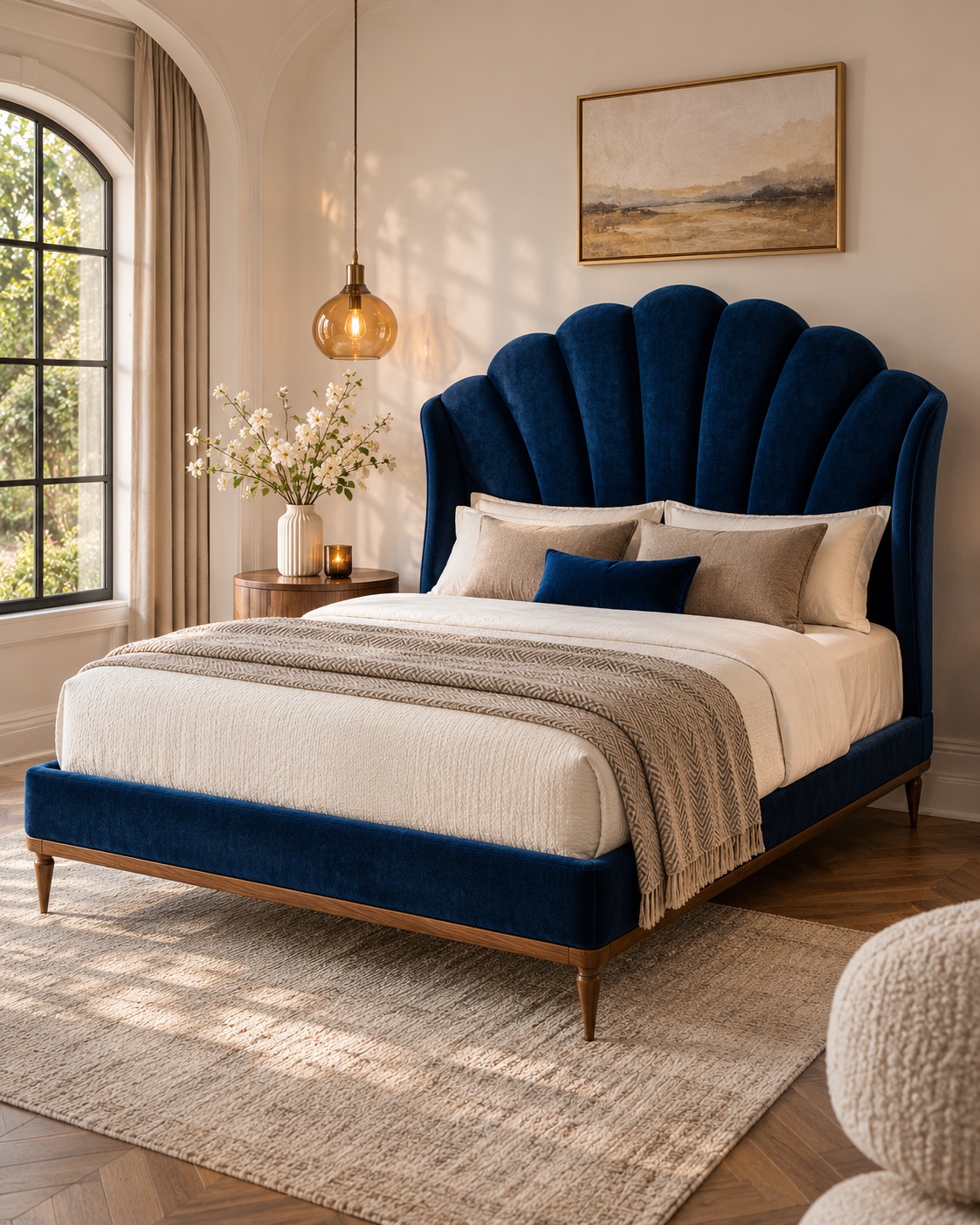
A curved fan of padded channels gives velvet upholstery a lighter, more animated shape. Narrow wings provide a gentle sense of enclosure without creating a large box around the mattress. Slender timber legs keep the base visually open. Let warm glass lighting and pale bedding soften the deep fabric color, and test upholstery samples in both daylight and evening light.
12. Three Generous Headboard Cushions
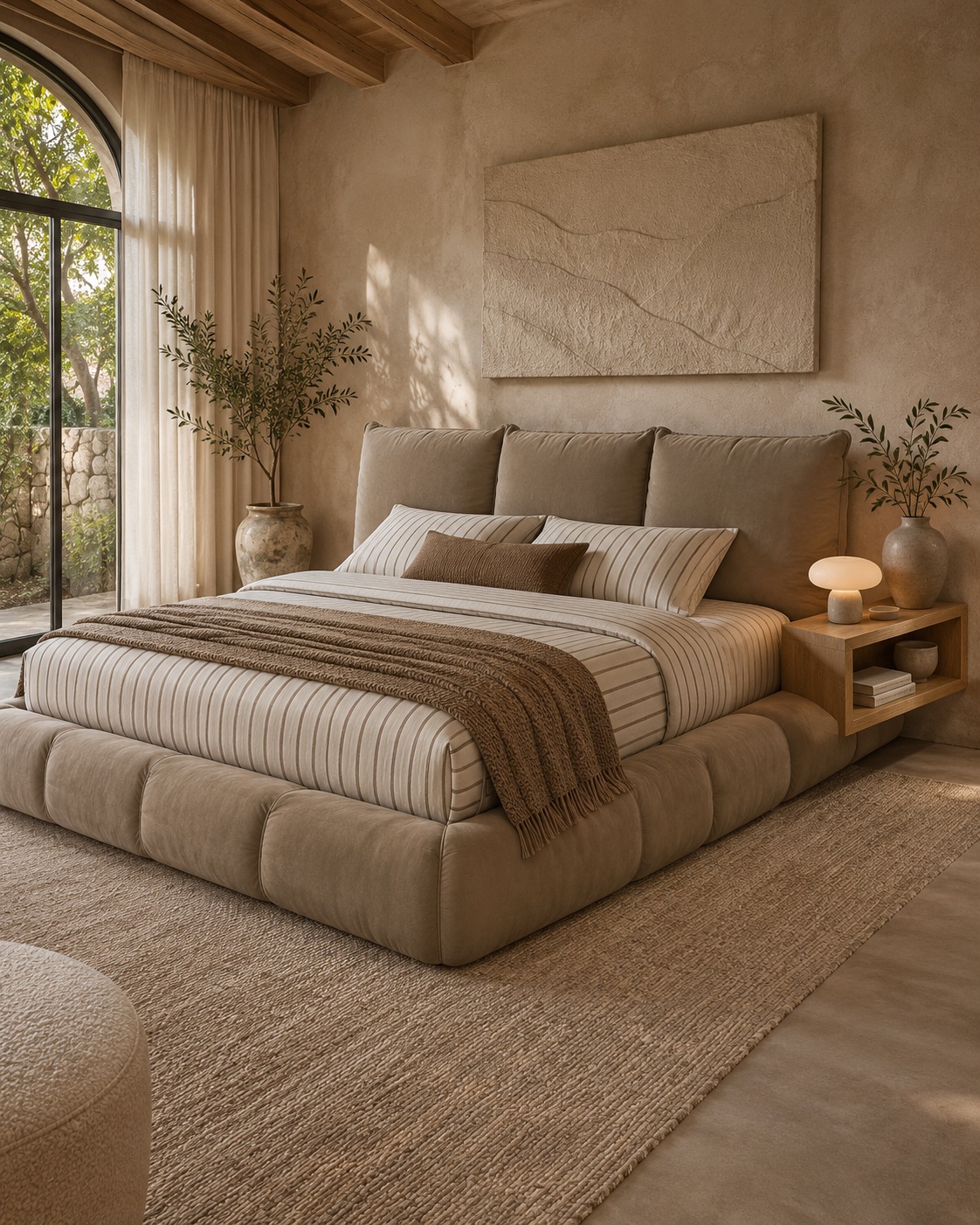
Oversized cushions can make a headboard feel comfortable and uncomplicated. A low padded perimeter continues that softness, while an open wooden shelf adds a useful hard surface beside the bed. Choose a shelf position that leaves room for pillows and bedding. Striped linens introduce a small amount of pattern without distracting from the broad upholstered forms.
13. Coordinated Twin Beds for Guests
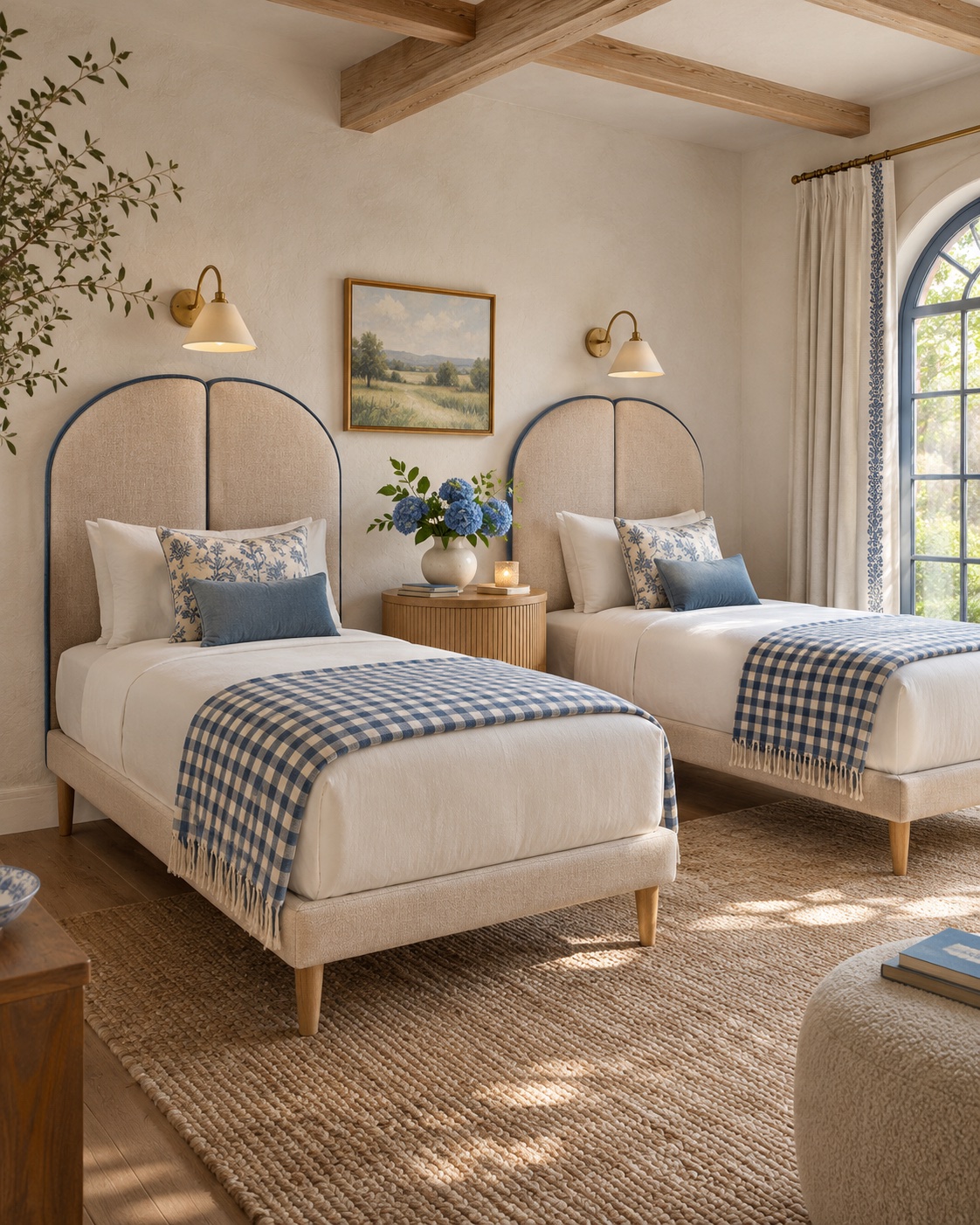
Twin beds feel thoughtfully planned when their frames share a shape and the lighting gives each sleeper an independent reading spot. Arched headboards and contrast piping add character without taking over the room. A shared central table saves furniture, but allow enough space to reach it from either bed. Matching throws can unify the arrangement while keeping the bedding simple.
14. A Low Frame Beneath a Tall Wall Panel
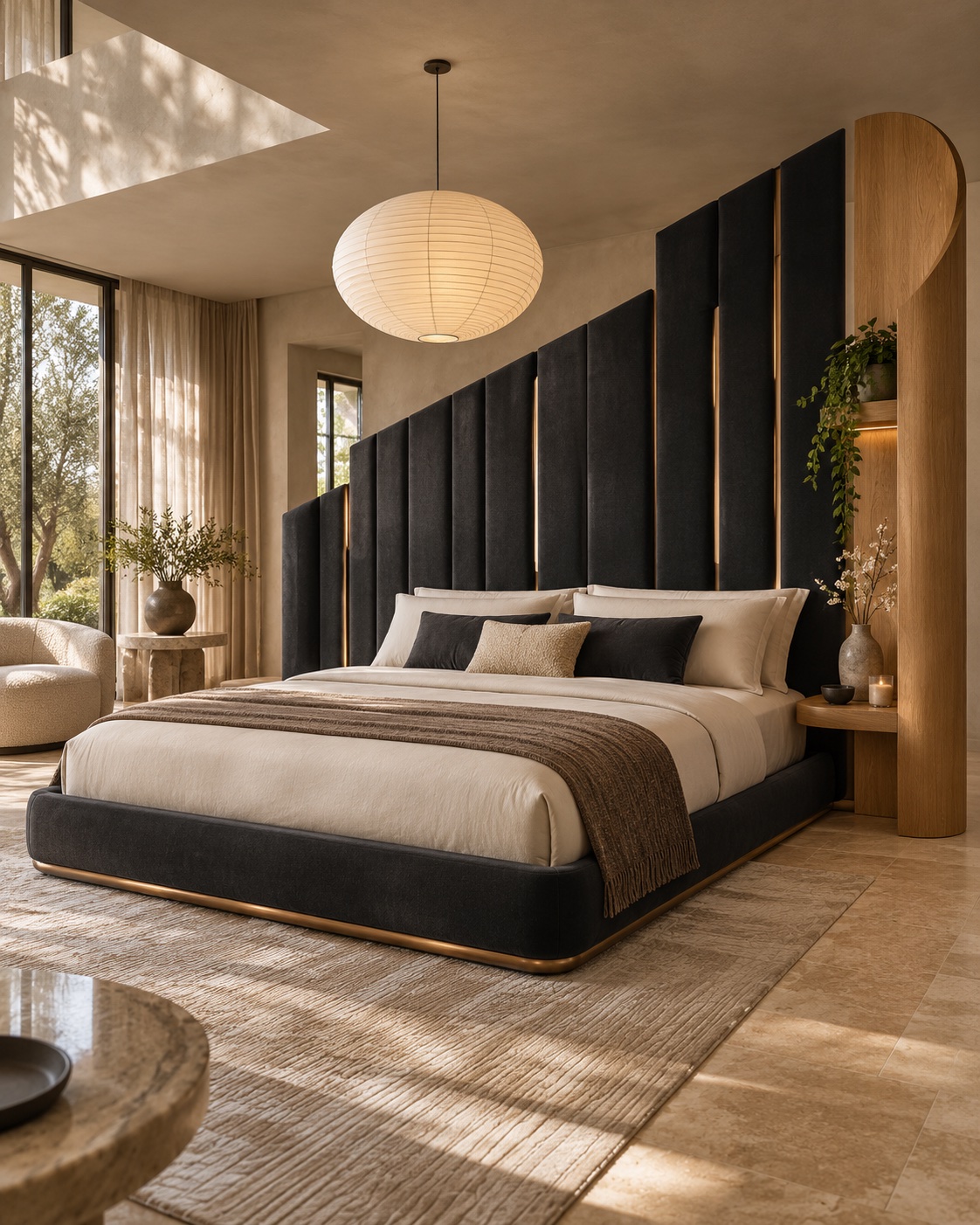
A low platform creates a strong contrast with a tall upholstered backdrop. An offset timber panel or integrated shelf breaks up the wall and gives the composition a clear focal point. This treatment works best when planned around sockets and lighting before installation. Keep the mattress height in mind: the finished bed should still feel comfortable to sit on and get into.
15. Wood Rails with Suspended Cushions
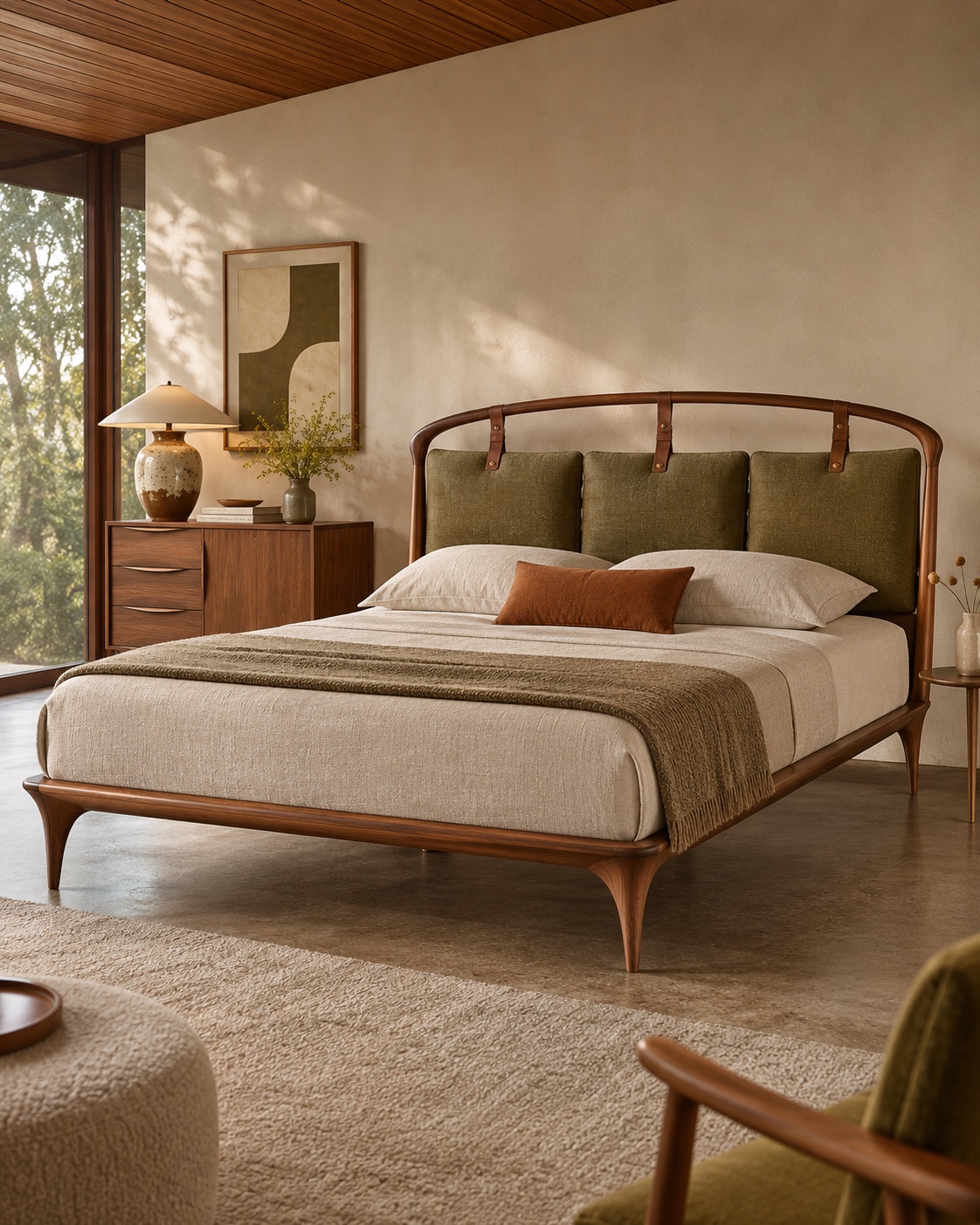
A timber frame can offer both visible craftsmanship and a softer place to lean. Cushions suspended from a curved top rail introduce a casual, adaptable quality. Leather loops add detail while leaving much of the wood exposed. Choose cushion covers that are easy to maintain, and confirm that the attachment system is secure enough for regular use as a backrest.
16. A Staggered Upholstered Grid
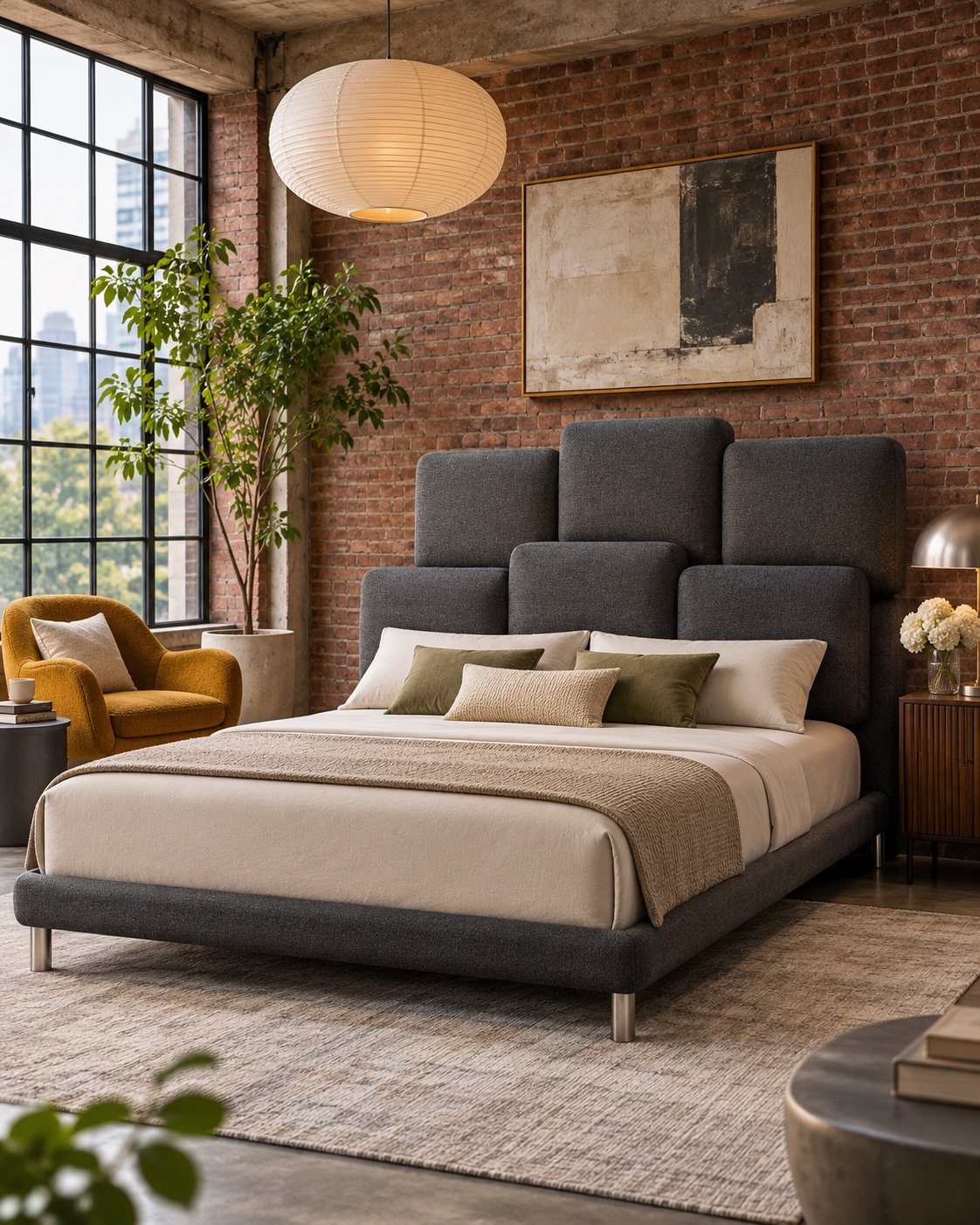
Large padded squares create a headboard with a strong graphic identity. Staggering the sections makes it feel less rigid than a perfectly regular grid. A slim base and exposed feet help keep the overall bed from looking bulky. In a loft-style room, balance the upholstery with one warm-toned chair or blanket instead of repeating the same dark fabric everywhere.
17. An Architectural Trio of Arches
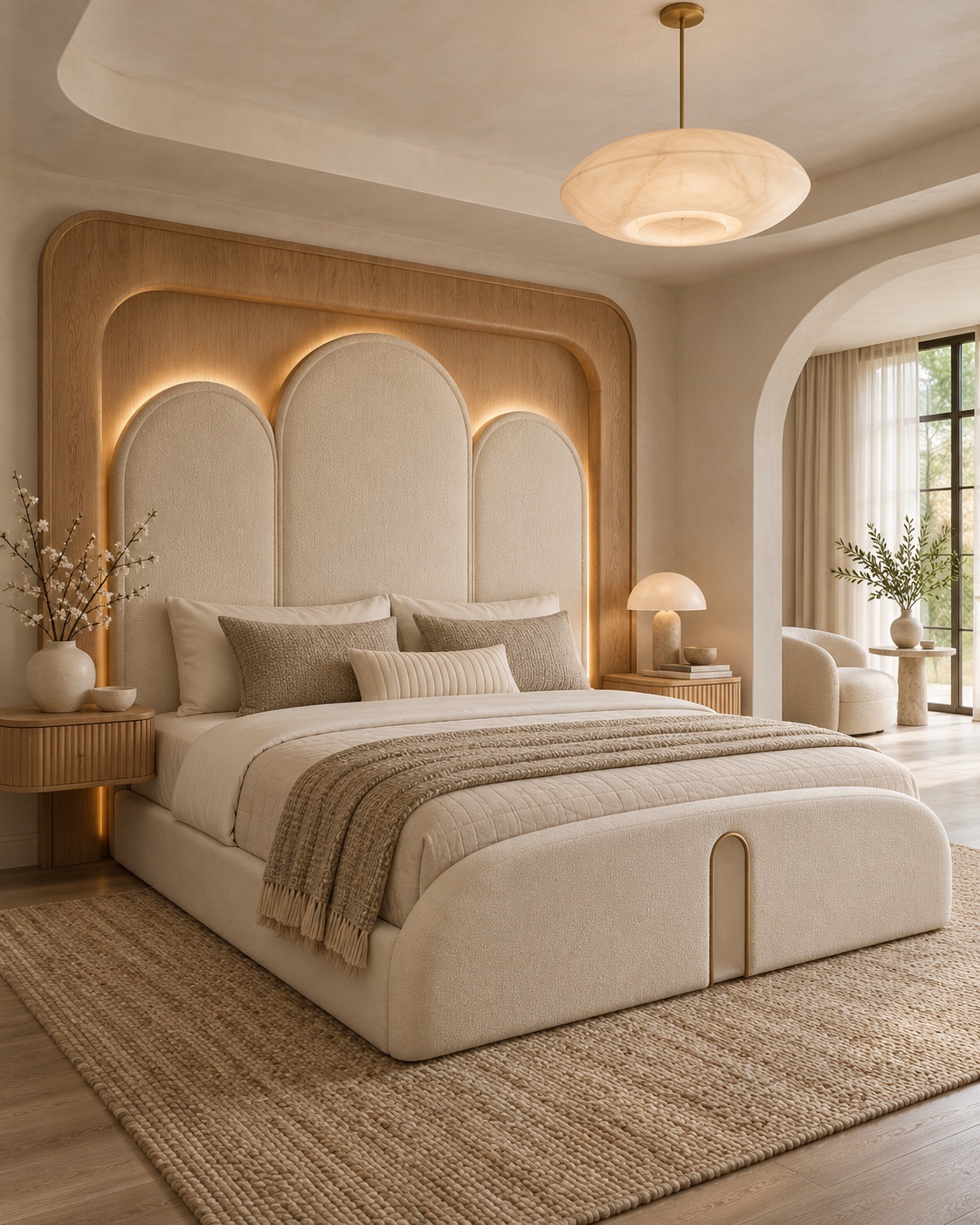
Three upholstered arches make the headboard feel like part of the room’s architecture. A timber outline and gentle indirect lighting can clarify their shape. Keep the surrounding walls fairly quiet and allow the arches to extend above the pillows. If the design is custom built, plan access to lighting components so maintenance does not require dismantling the whole bed wall.
18. A Petal-Shaped Headboard
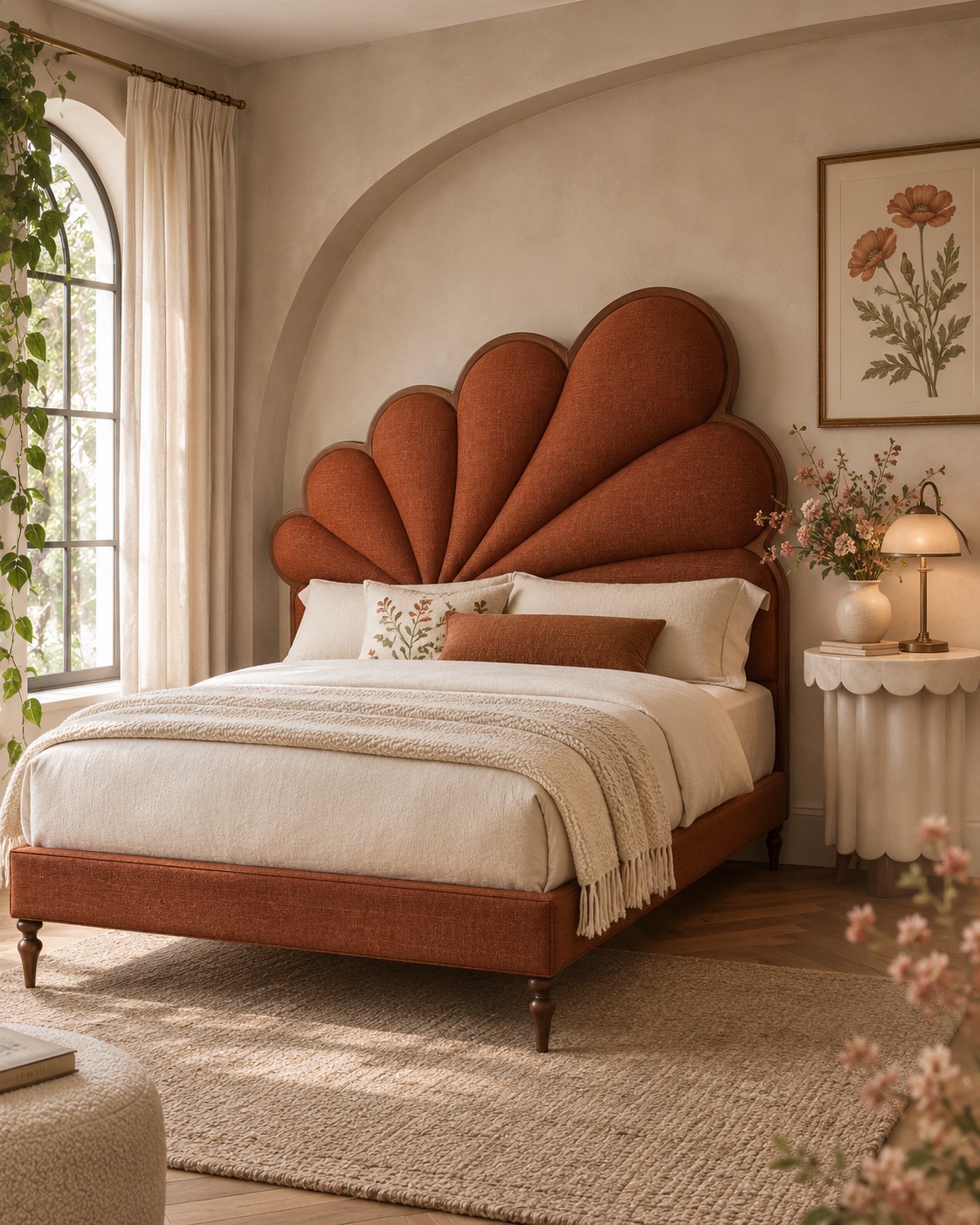
A fan of petal forms gives a small bedroom a clear decorative focus. An asymmetric arrangement feels more contemporary than a perfectly regular shell, especially when paired with a narrow wooden frame. The curved outline works with botanical art and simple bedding. Avoid stacking too many tall cushions in front of it; the distinctive shape should remain visible when the bed is made.
19. An Ivory Bed in a Winter Suite
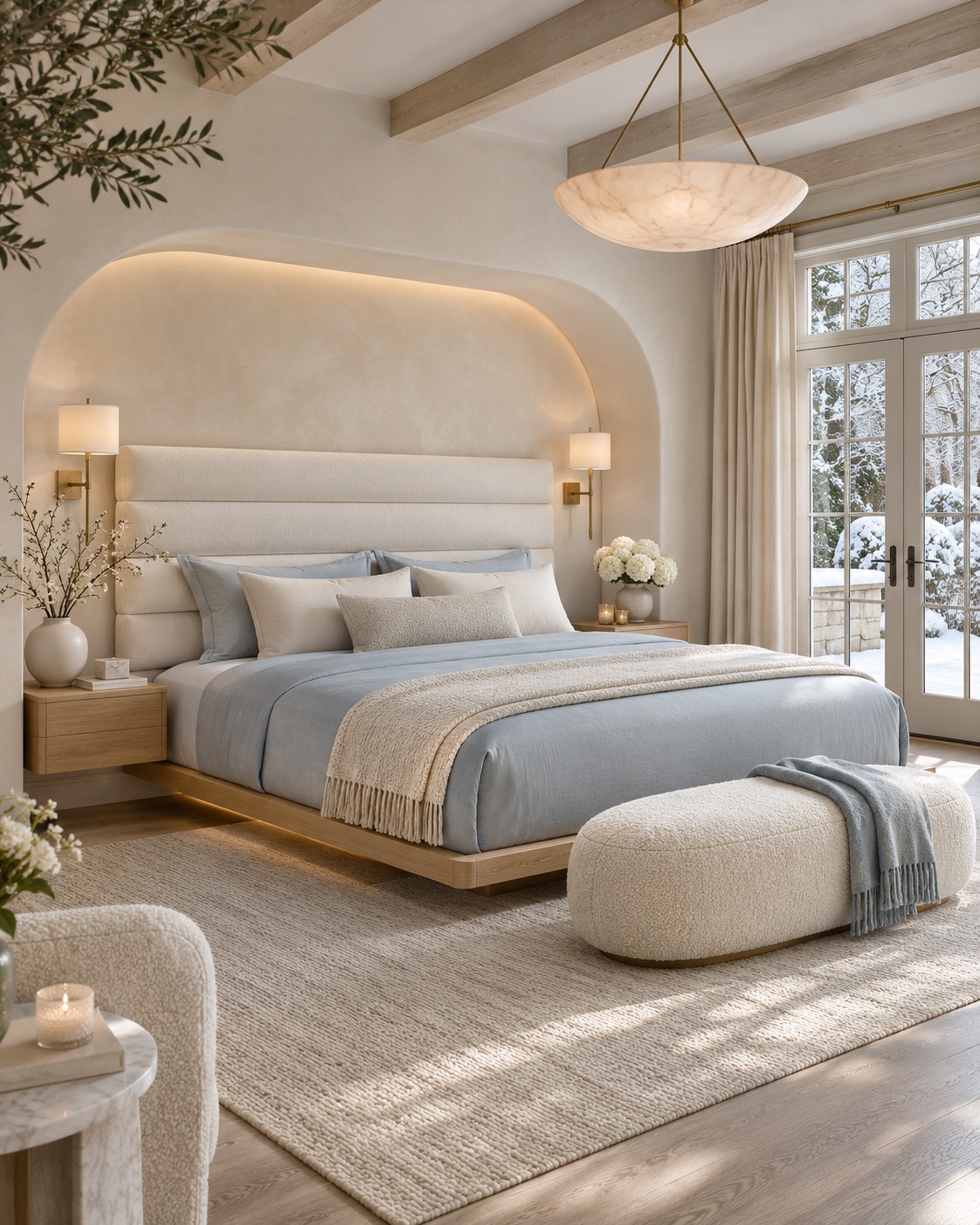
A broad horizontal headboard can look inviting beneath a curved wall niche. Pale upholstery and a slim wooden base keep the room airy, while a separate bench introduces an additional place to sit. The bench should leave an easy route around the foot of the bed. A subtle blue accent gives the pale palette definition without turning the room cold.
20. A Cane Headboard with Practical Storage
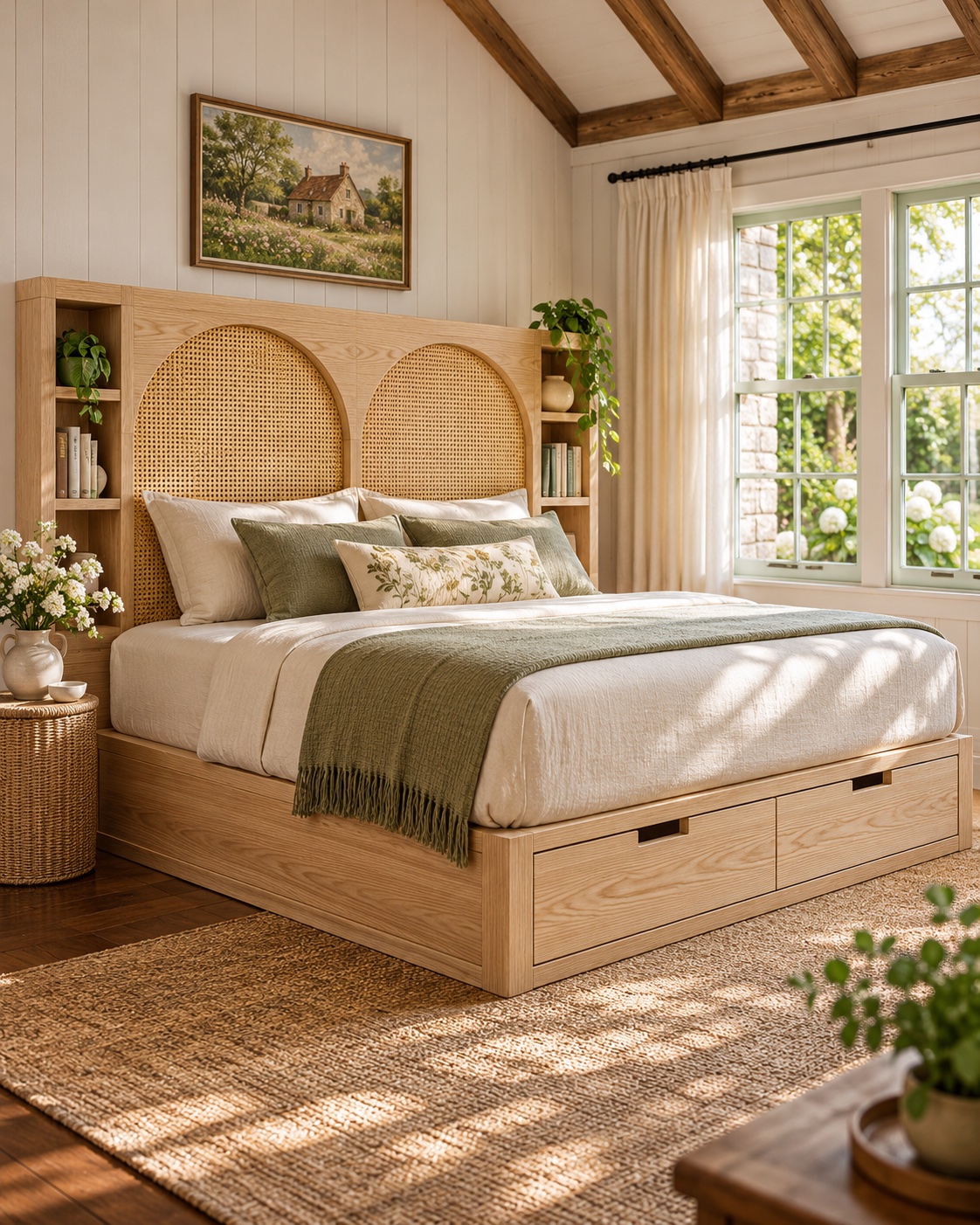
Woven cane lightens the appearance of a substantial wooden bed. Arched inserts soften the headboard, while shallow book niches and underbed drawers add useful storage. Measure the space needed to open drawers fully before ordering. Keep heavier items low and reserve headboard niches for a few small objects, allowing the woven panels and timber grain to remain the main visual features.
21. Oversized Rectangular Relief
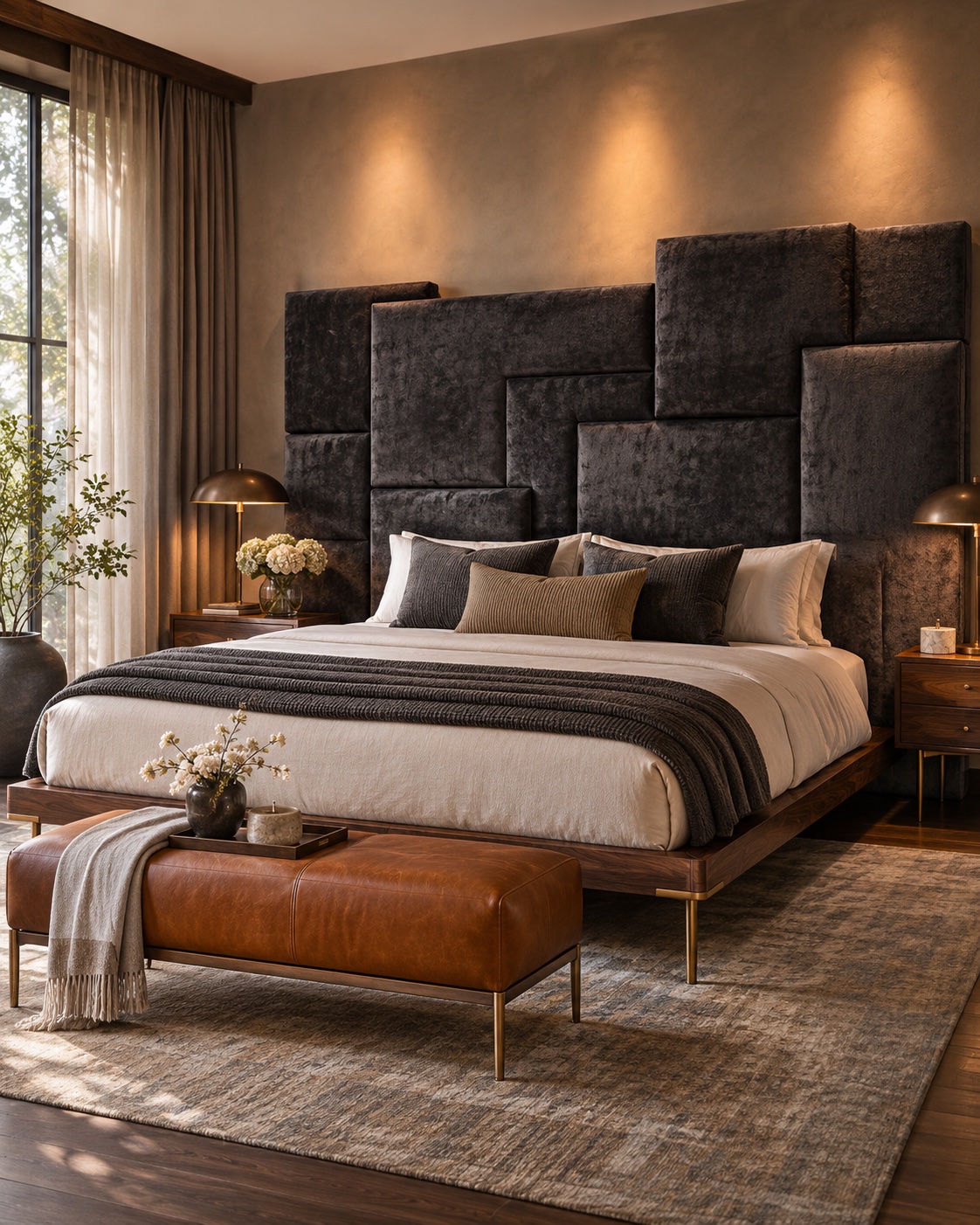
An arrangement of large padded rectangles brings depth to a charcoal headboard. A visible wooden platform offers a useful contrast to the soft surface. Rather than matching every piece, introduce a separate leather bench or timber table for a more varied room. Use warm, diffused lighting to reveal the upholstery texture without creating harsh shadows between the panels.
22. A Curved Caramel Tufted Bed
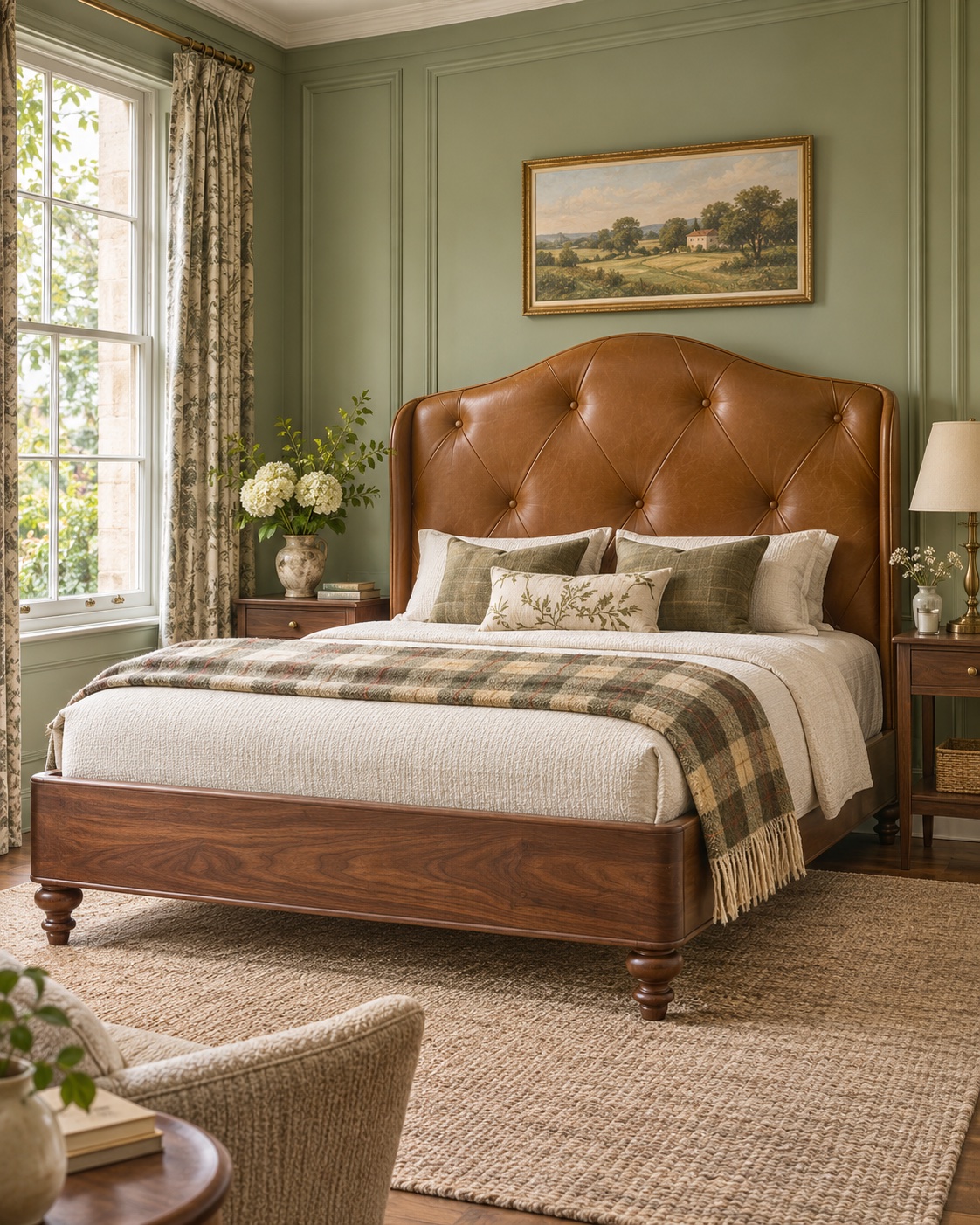
A gently curved tufted headboard adds a traditional note that can still feel relaxed. Larger diamonds and a smooth wooden footboard keep the design from becoming overly ornate. Caramel upholstery pairs comfortably with muted green walls and cream bedding. For everyday use, consider how easily the tufted recesses can be cleaned and whether the material suits your household.
23. A Shallow Concave Headboard
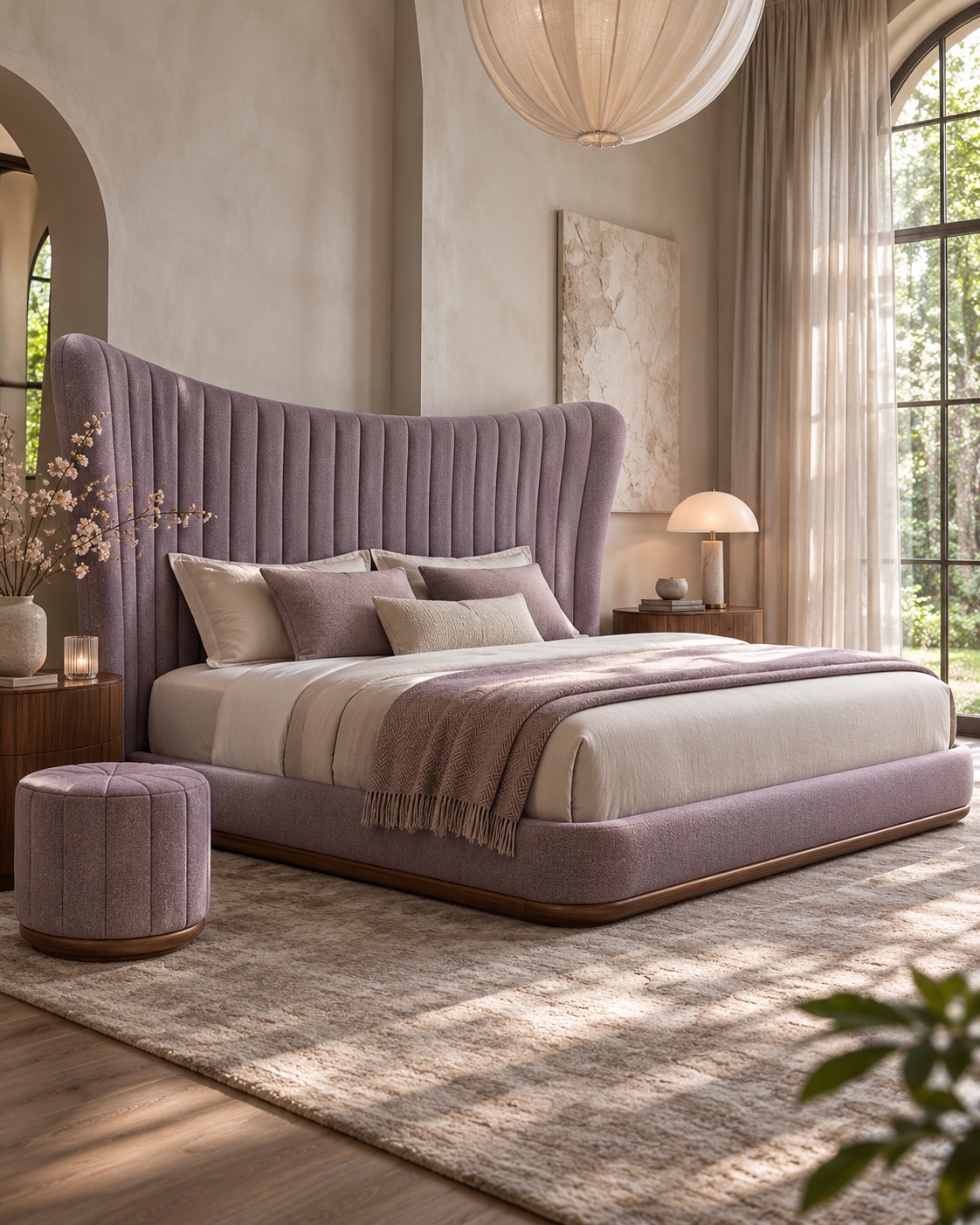
A slight inward curve makes a tall channel headboard feel more embracing. Narrow vertical sections accentuate height, while a low frame keeps the proportions balanced. A small stool can provide a flexible bedside surface without adding another large cabinet. This design needs careful measurement: the curved edges should leave enough space for pillows, lamps, and easy movement beside the mattress.
24. A Simple Oval in Bentwood
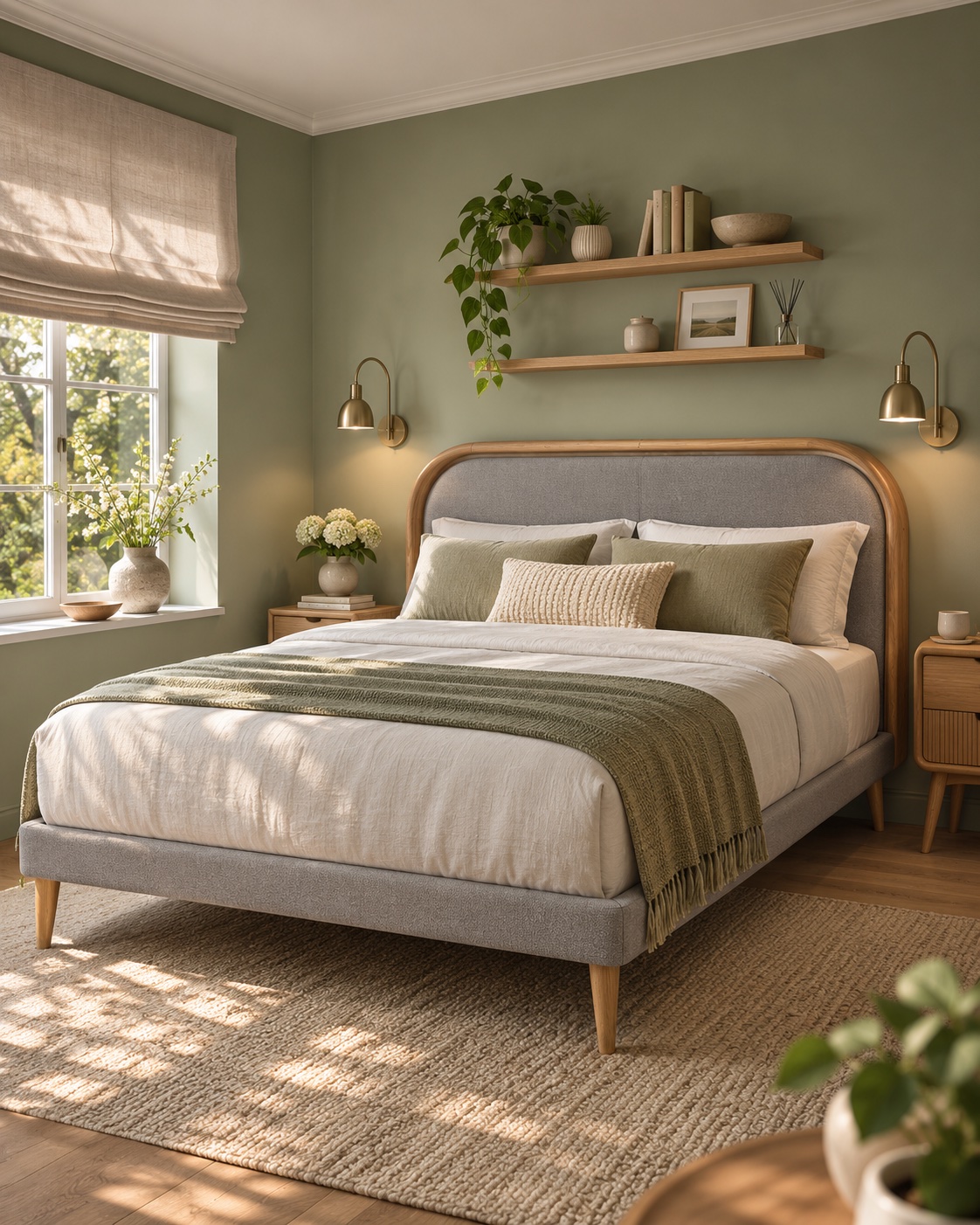
An oval upholstered insert framed in timber gives a compact bed a finished appearance with very little decoration. Raised legs and narrow rails help preserve a sense of floor space. Wall-mounted shelves can keep the bedside area practical without crowding it. Use restrained bedding and a single accent color so the rounded outline remains easy to appreciate.
25. An Extended Hotel-Style Headboard
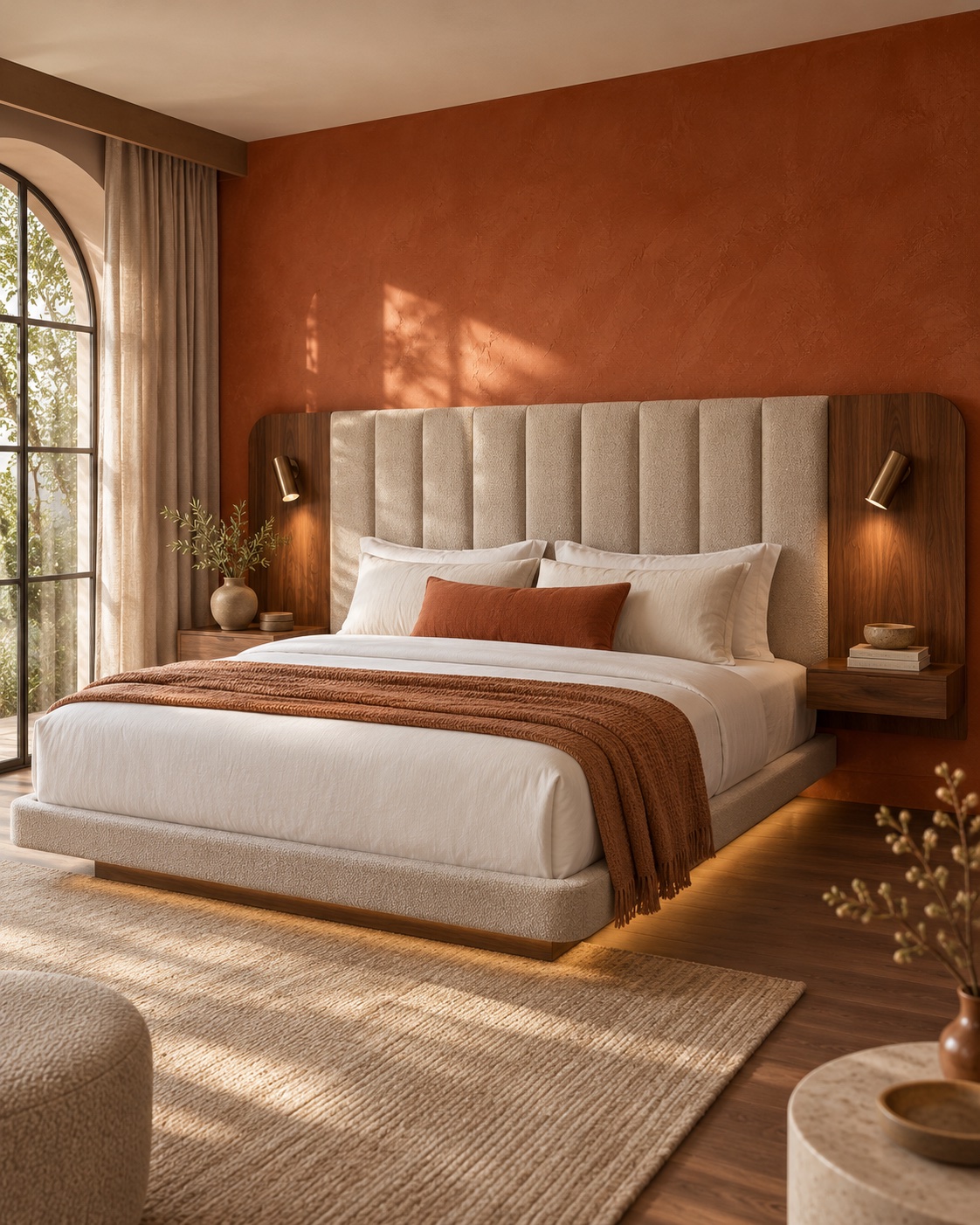
A headboard that includes timber side panels can make separate bedside elements feel coordinated. Built-in reading lights add purpose to the wider composition. The strongest versions leave clear space for a glass, book, and charging cable on each side. Warm wall texture and plain linens make the room feel personal while preserving the orderly character of a hotel bedroom.
26. A Bowed Walnut Headboard
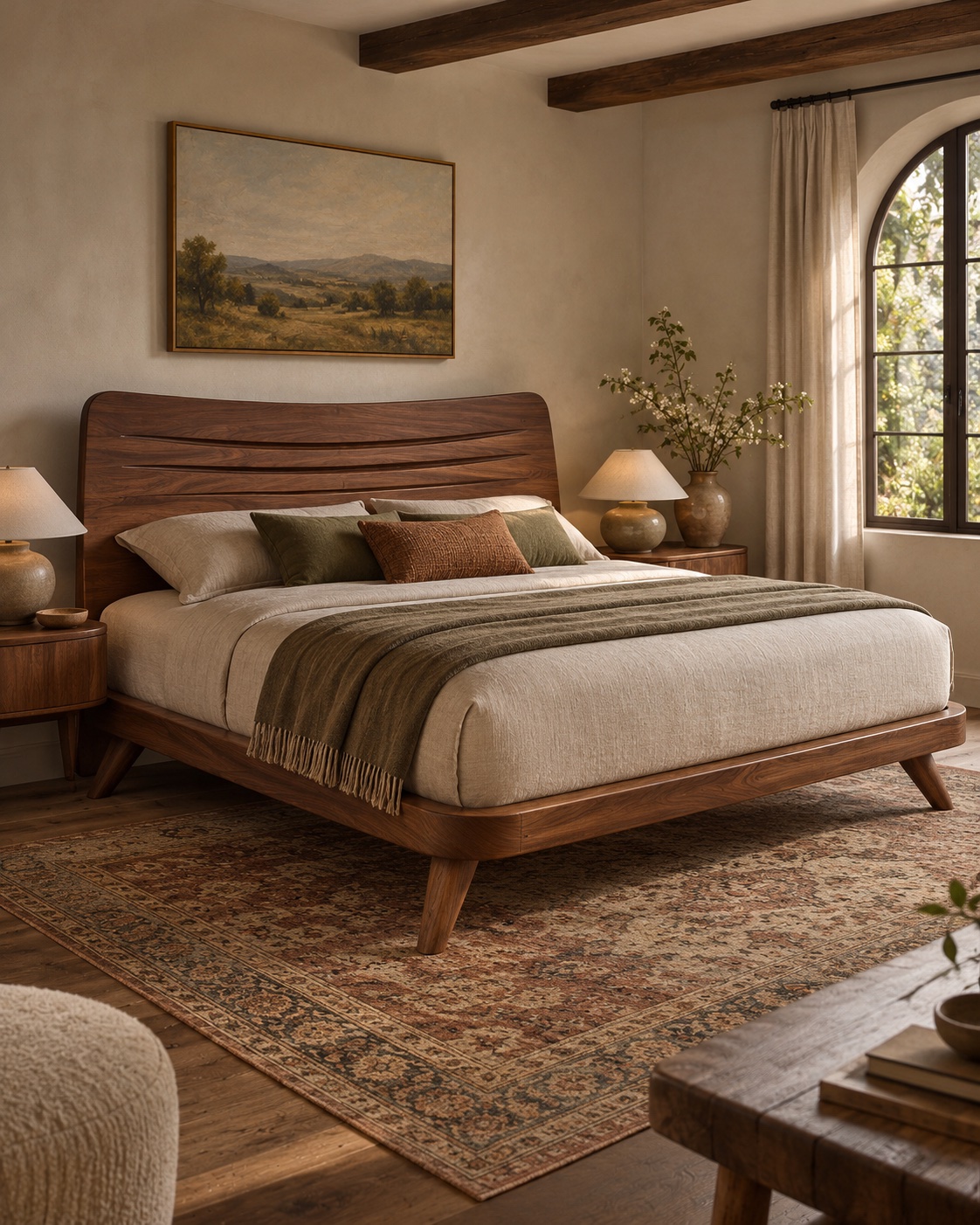
A gently bowed wooden headboard brings shape to an otherwise straightforward platform. Shallow carved lines emphasize the grain without requiring upholstery or elaborate trim. Rounded corners and splayed legs give the frame a lighter character. Let the wood finish guide the room’s other tones, but avoid matching every piece exactly; a stone lamp or woven rug provides useful contrast.
27. Pill-Shaped Upholstery as Sculpture
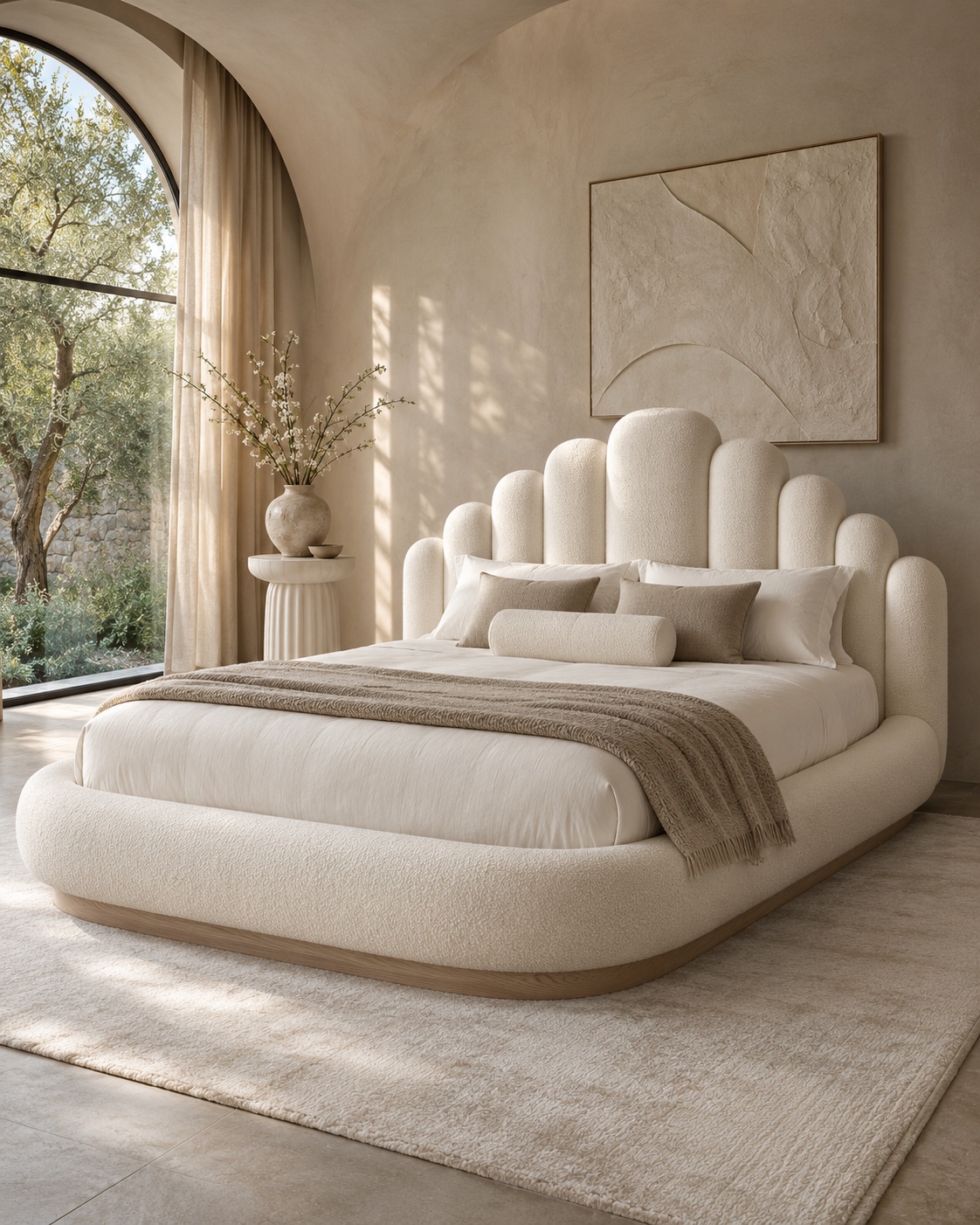
Chunky rounded sections turn an upholstered bed into a sculptural object. A recessed plinth helps the padded base feel less heavy, especially when the bedding is kept neat. This design benefits from open space around it and a limited number of accessories. Boucle adds texture, but compare maintenance requirements and sample feel before committing to a large upholstered surface.
28. Geometric Panels with Restrained Brass
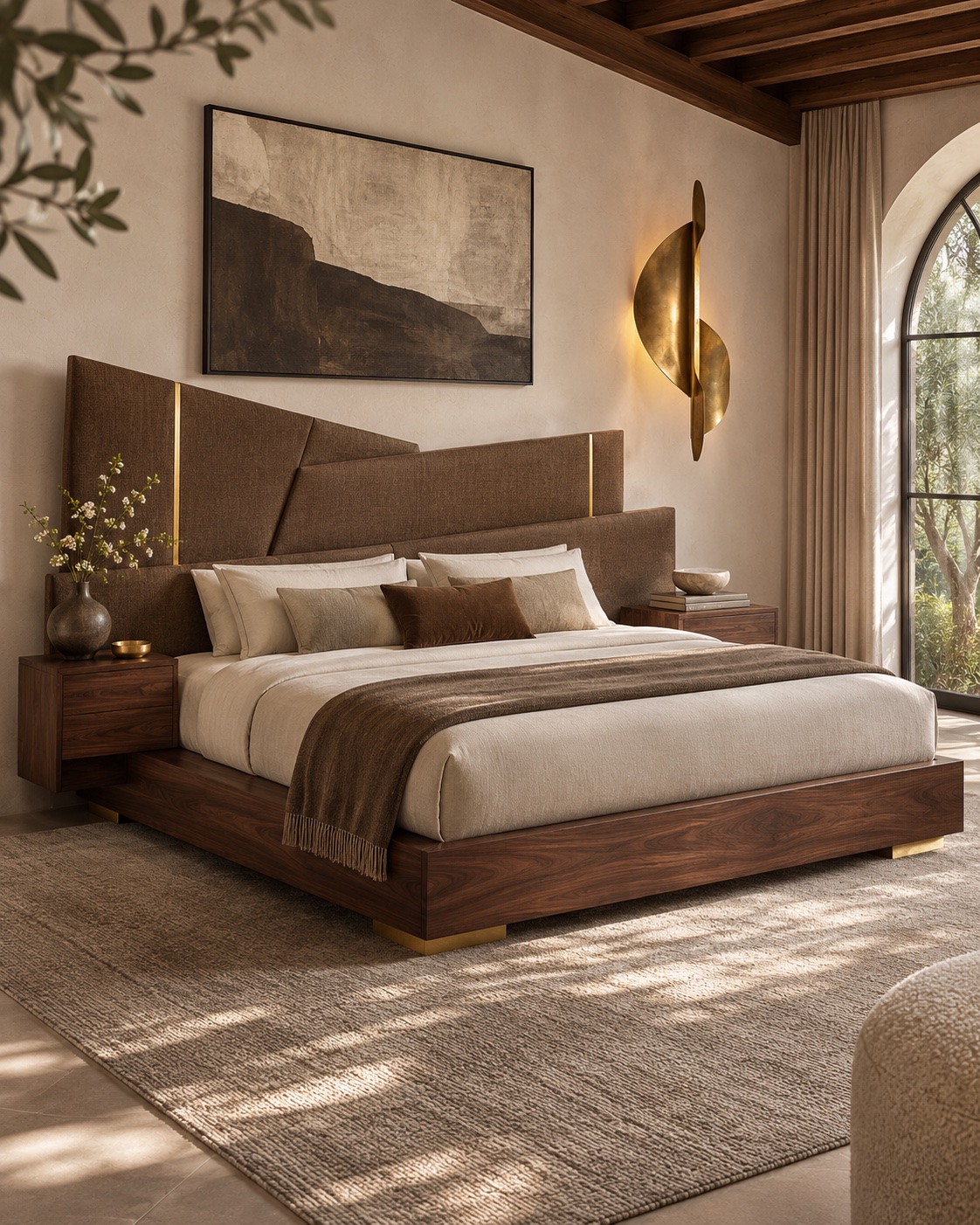
A few narrow brass inlays can define an upholstered headboard without overwhelming it. Asymmetric panels give the surface movement, while a wooden platform grounds the composition. Repeat the metal finish in just one nearby light or accessory. The result feels more considered when the bedding stays quiet and the room includes a contrasting matte material, such as plaster or linen.
29. An Open Rail Bed for a Woodland Room
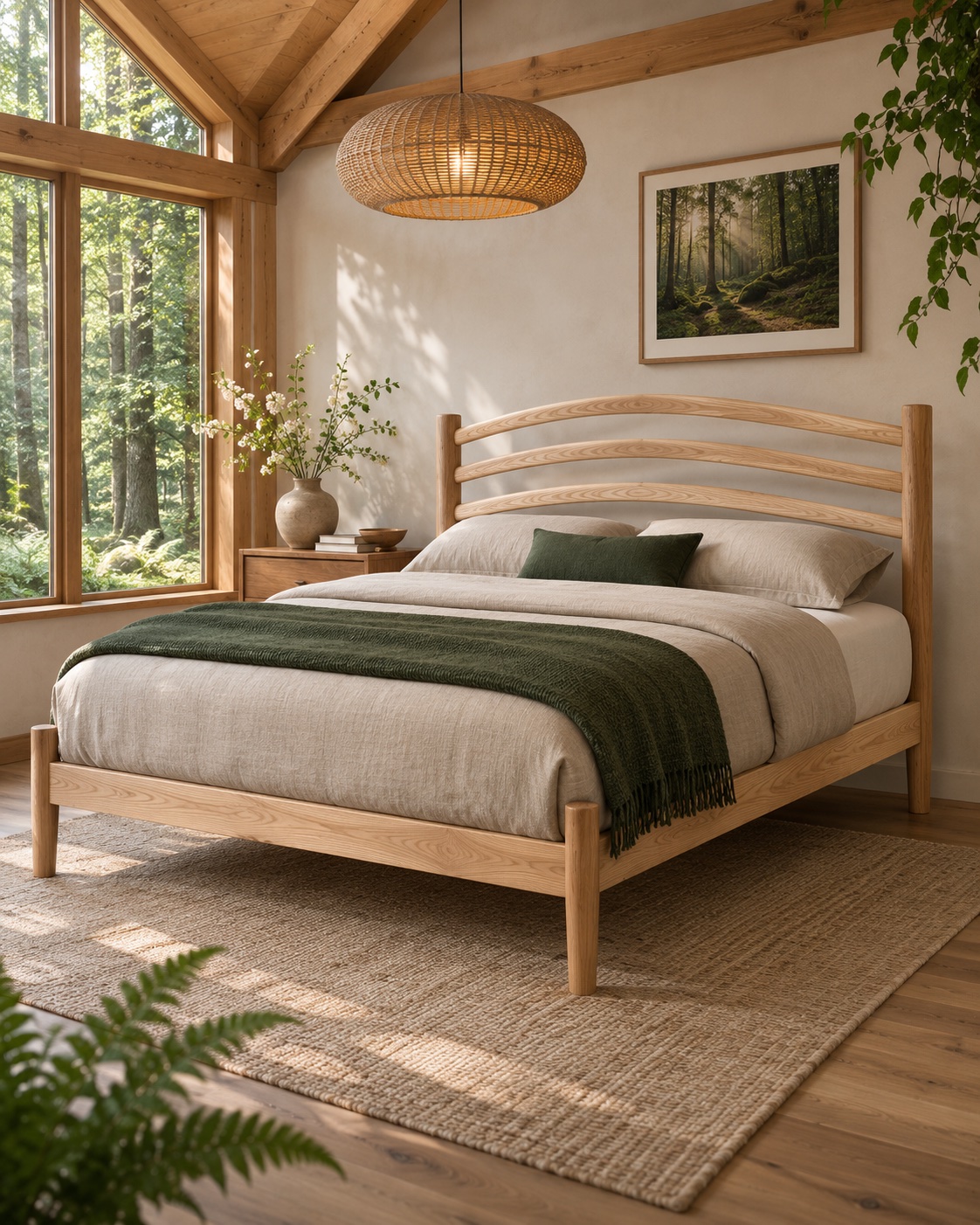
Curved wooden rails allow the wall to remain visible behind the bed, which can make a modest room feel more open. Cylindrical posts and slim legs add detail without much visual weight. Choose pillow sizes that work comfortably with the gaps in the headboard. Natural linen and one forest-colored blanket are enough to connect the bed with a leafy view.
30. A Pebble-Inspired Cloud Bed
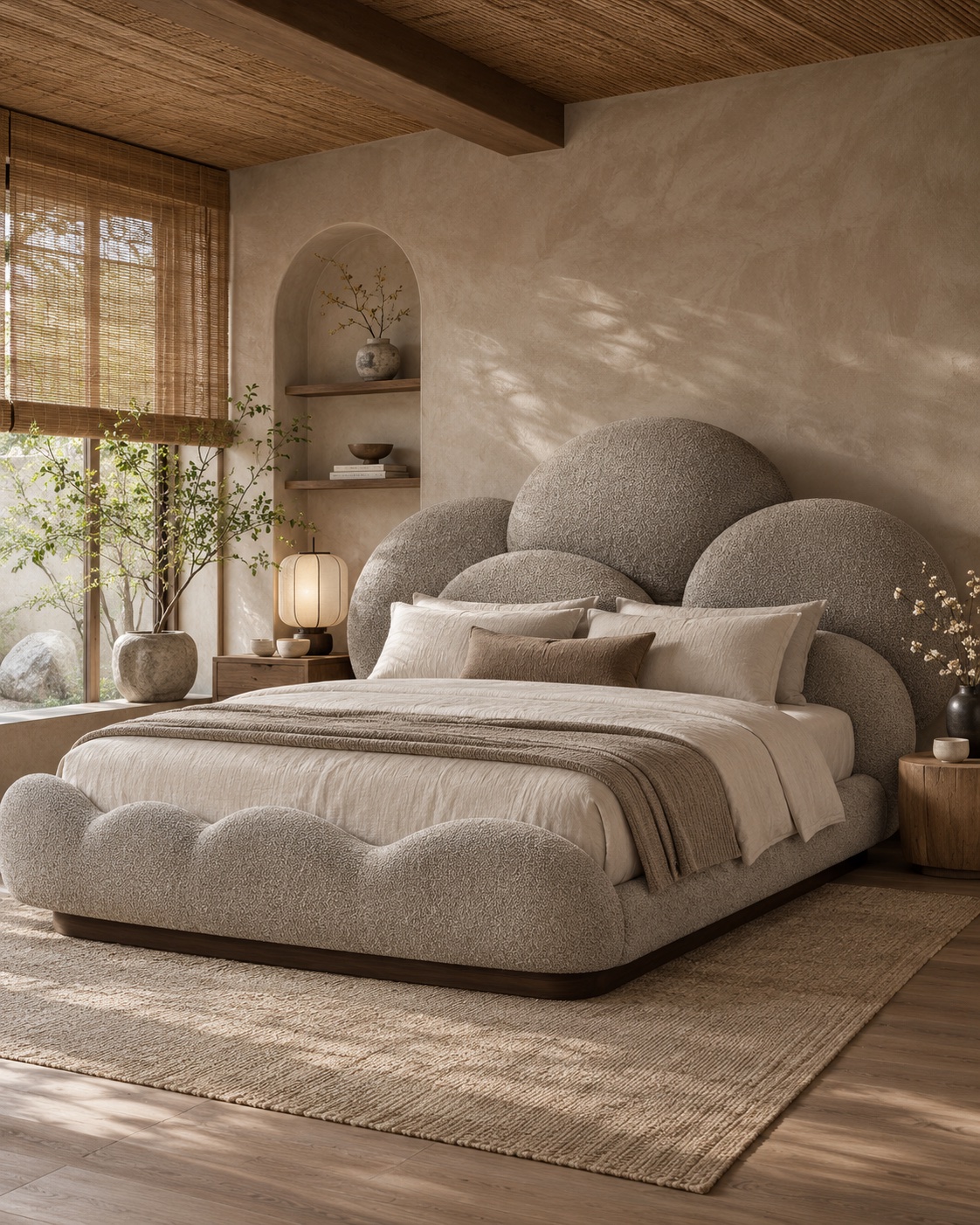
Rounded headboard modules and a softly scalloped perimeter give this frame its cloud-like character. A dark recessed base creates a shadow line that helps distinguish the upholstery from the floor. Keep nearby furniture simple and leave the outer corners clear. Because padded frames can extend well beyond the mattress, compare the total footprint with your available room space.
31. Two Bolsters in a Timber Frame
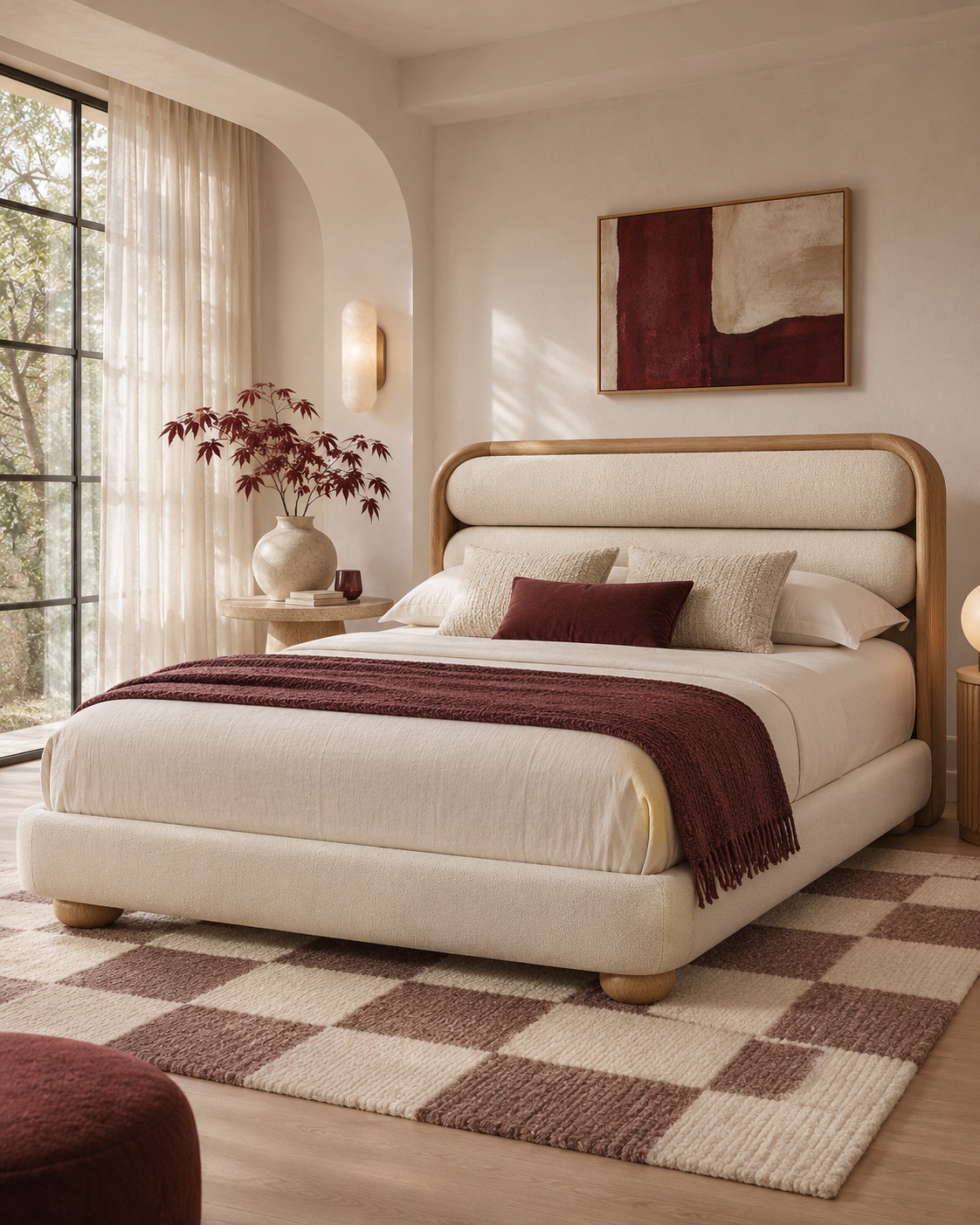
Long horizontal bolster cushions offer a softer alternative to a conventional flat headboard. A curved timber surround gives them structure and a distinct outline. Smooth side rails keep the base understated, allowing a patterned rug to add variety. Check the headboard’s usable height with your actual mattress; thick mattresses can hide more of the lower cushion than expected.
32. A Low Segmented Frame in a Concrete Loft
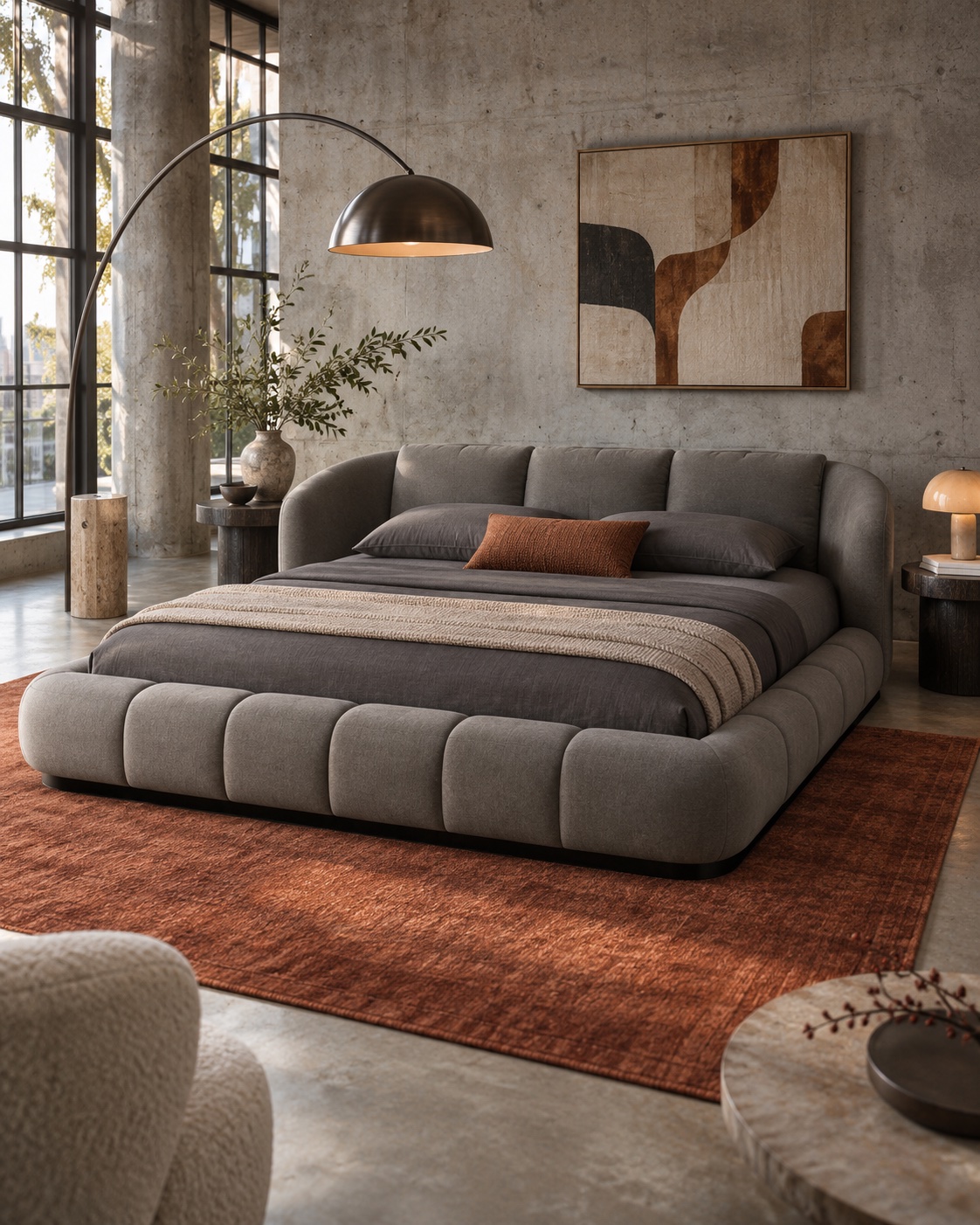
A segmented padded perimeter softens a room with concrete surfaces. A shallow wraparound headboard continues the low profile and helps the bed feel settled within the space. A warm rug separates the grey upholstery from the floor. Keep lighting accessible from the mattress and consider whether a very low sleeping height fits your daily routine before choosing this style.
33. A Plank Headboard with Rounded Edges
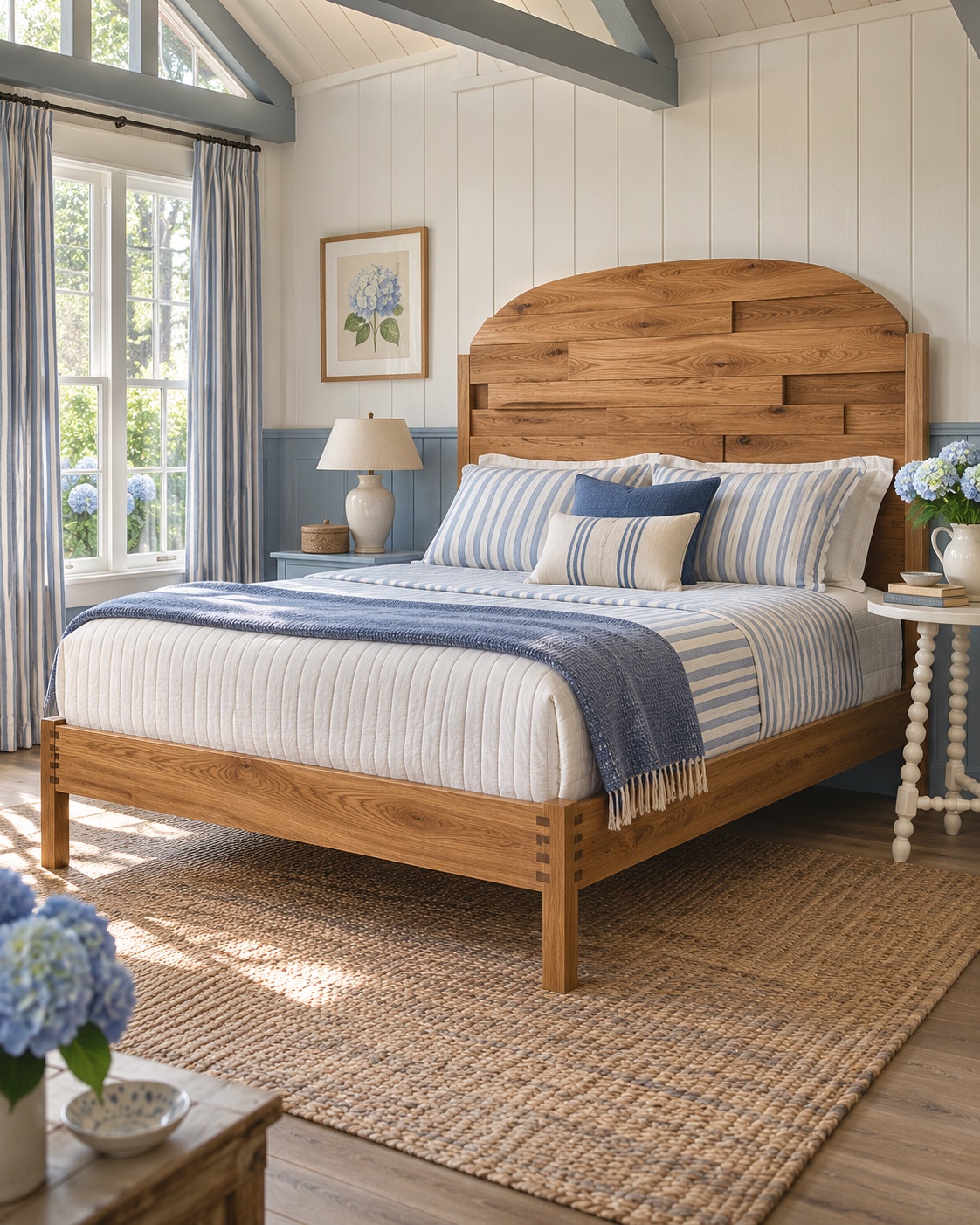
Horizontal timber boards make a simple bed feel tactile and grounded. A rounded top profile softens the rustic character, while slim posts prevent the frame from looking too heavy. This is a good setting for striped linens and a small painted table. When comparing wooden beds, look closely at the finish, joinery, and edges that you will touch regularly.
34. Upholstery Interrupted by Open Niches
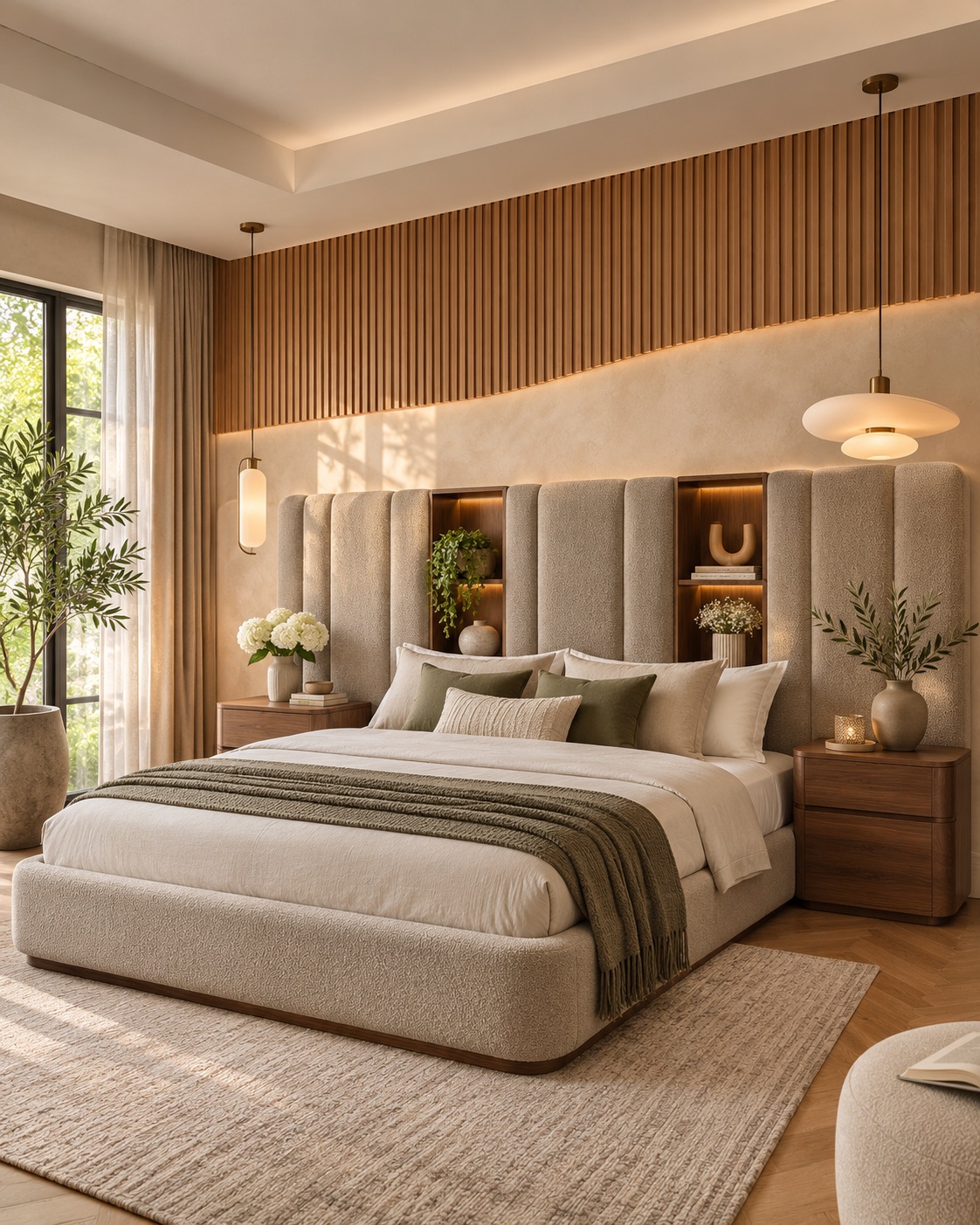
Breaking a wide padded headboard into groups of panels creates opportunities for small display niches. Timber recesses add contrast and can hold a few bedtime essentials. Keep them shallow enough to reach easily and avoid filling every opening. A matching rounded footboard ties the bed together, while asymmetrical pendant lights stop the larger wall composition from feeling too rigid.
35. A Walnut Headboard with a Gentle Glow
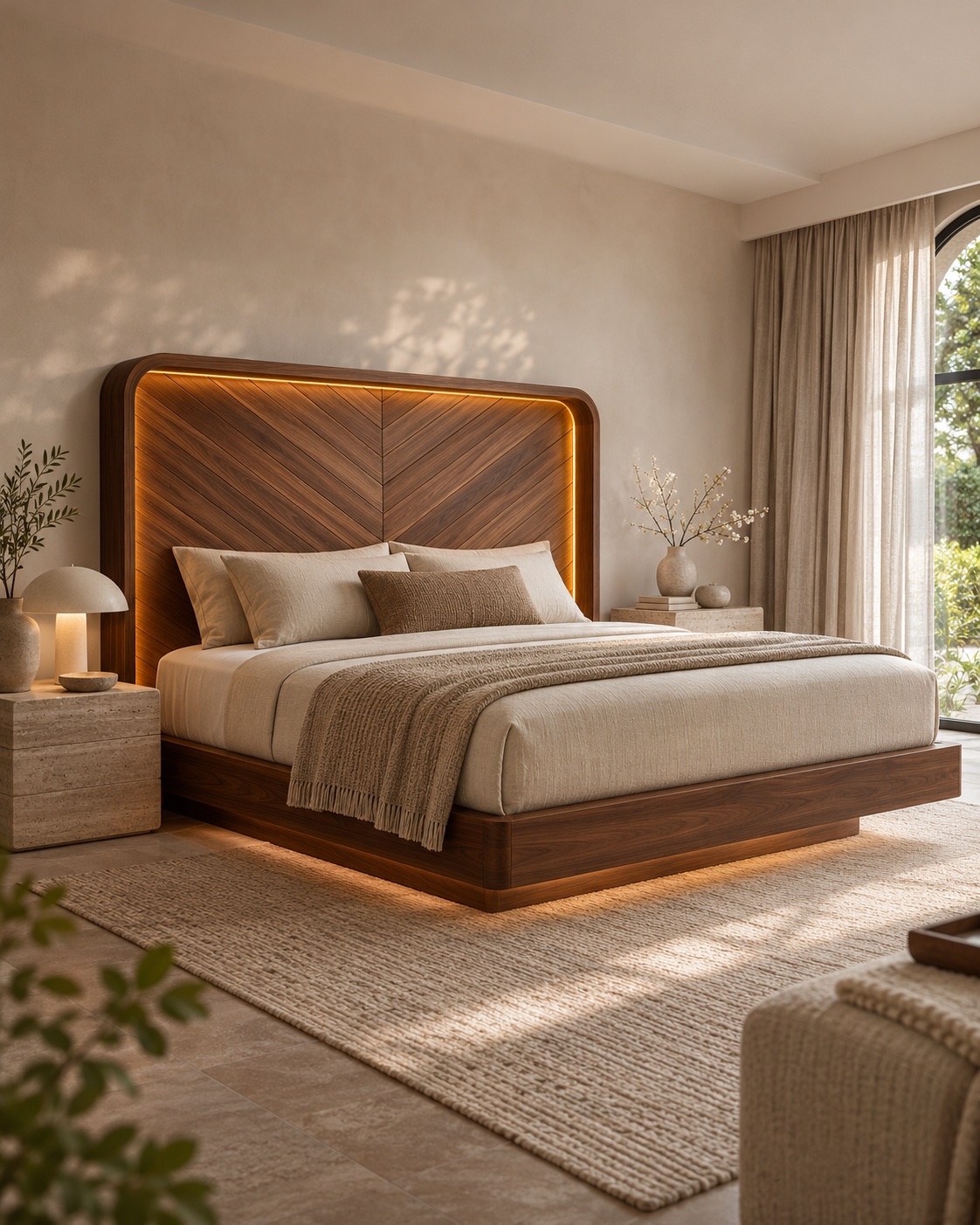
A chevron timber inset gives the headboard movement even when the room is minimally furnished. Recessed lighting along selected edges emphasizes the frame without turning the whole bed into a light fixture. A concealed plinth adds a floating effect while preserving support. Plan a reachable switch and choose lighting that can be dimmed for a calmer evening atmosphere.
Choose the Frame Around the Way You Use the Room
Start with the mattress dimensions, then compare the full frame footprint, including projecting headboards and padded rails. Check access around the sides, room for storage drawers, and the height of bedside surfaces. A beautiful frame should also suit your mattress manufacturer’s support requirements and leave space for everyday cleaning. For a custom design, have the maker confirm structural support, upholstery details, and any integrated lighting before production.
Design reference: TheCoolist bed frame collection. Text and redesigned concepts by DIY Ideas.