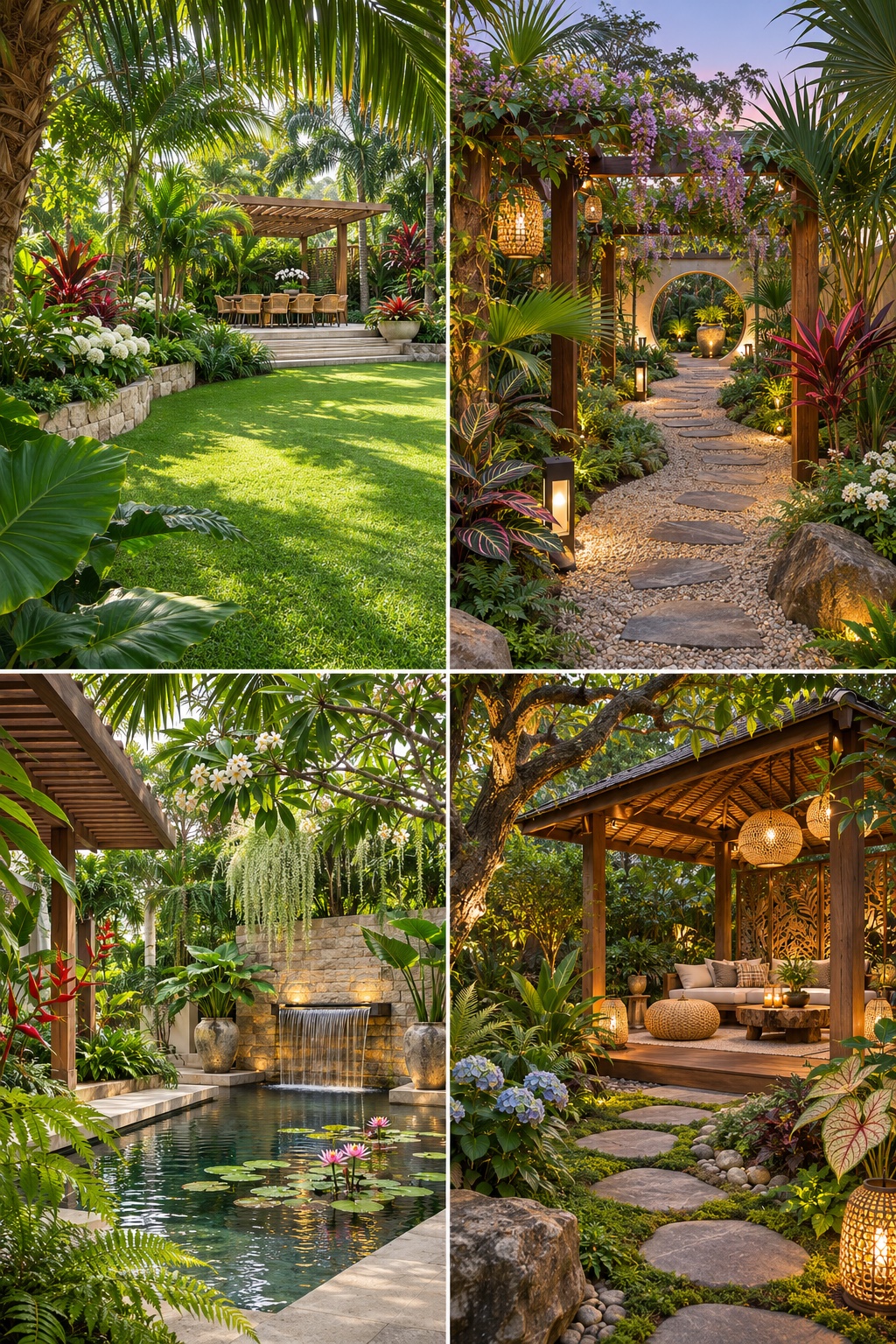
A tropical-inspired garden can be a shaded courtyard, a generous lawn framed by palms, or a collection of pots beside a favorite chair. Its character comes from the relationship between planting, open space, materials, and the way you use it.
These 27 ideas explore different settings and scales. Choose the features that fit your space, then adapt the planting to your climate, light, soil, and maintenance routine.
Image note: The illustrations are AI-generated garden concepts, individually redesigned from the reference images. They are not photographs of completed projects or planting plans.
1. An Open-Air Courtyard with a Garden Basin
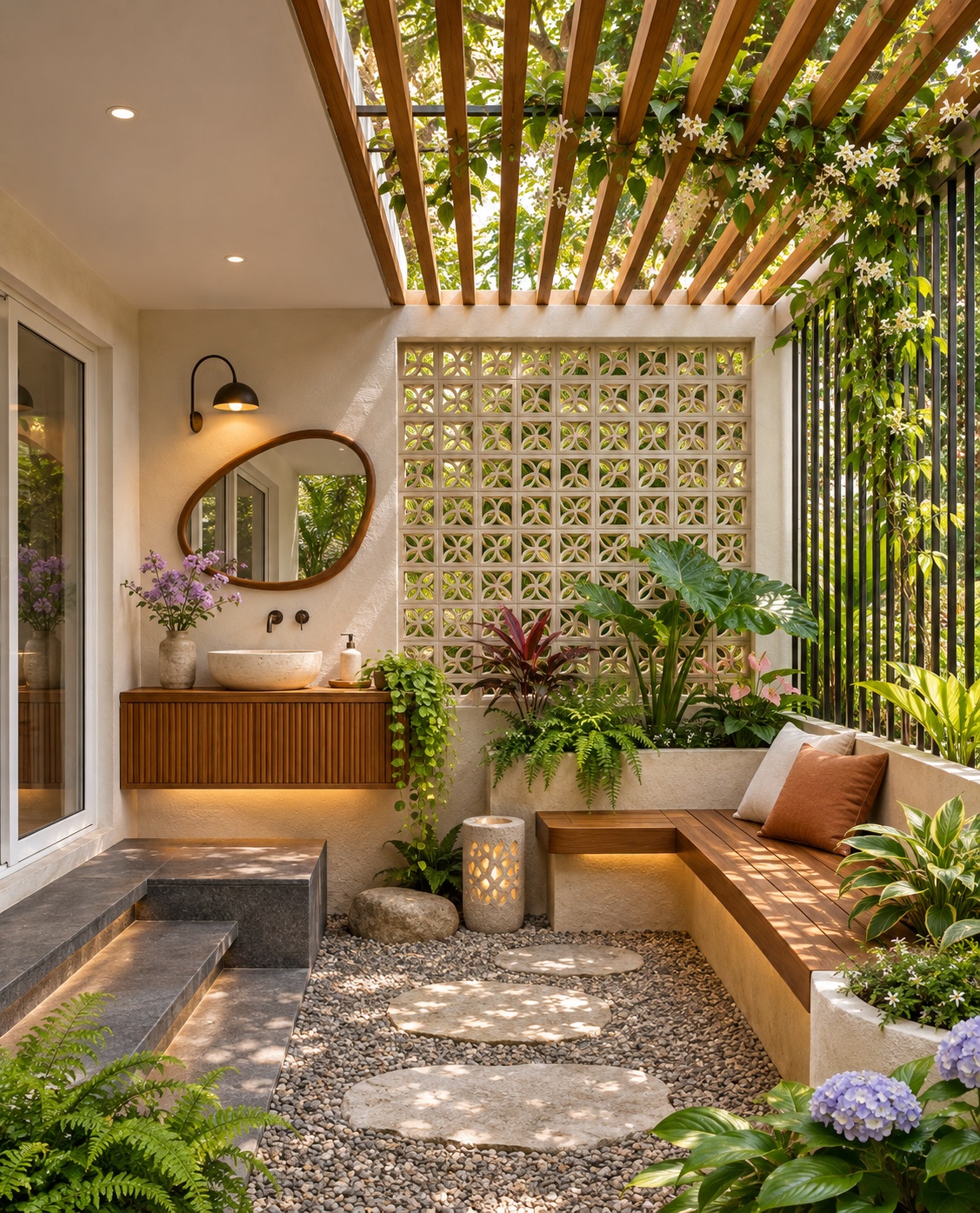
A wash area can become part of the garden when planting, paving, and furniture are planned together. Let a slatted canopy cast changing shadows across a simple basin and a comfortable bench. Keep the central floor open so the space feels like a small outdoor room. Coordinate plumbing and drainage before choosing the decorative finishes.
2. A Green Passage for a Narrow Patio
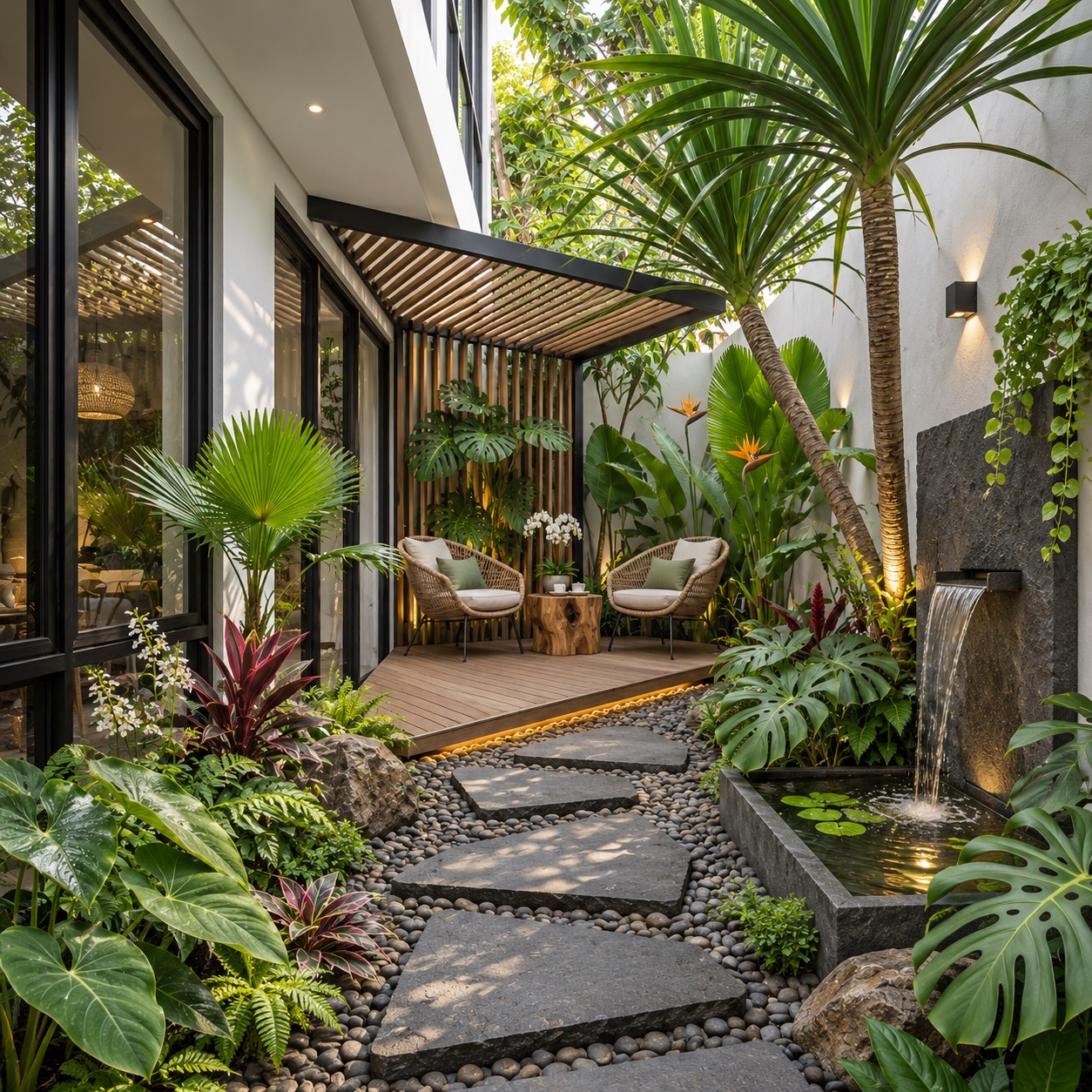
Give a narrow side yard a clear destination: a small chair, a bench, or a view through the planting. Broad paving slabs can establish the route while leaves soften the boundaries. Keep planting pockets deep enough for the selected species and leave space for their mature spread. A usable path matters more than filling every gap.
3. A Collected Corner of Tropical Pots
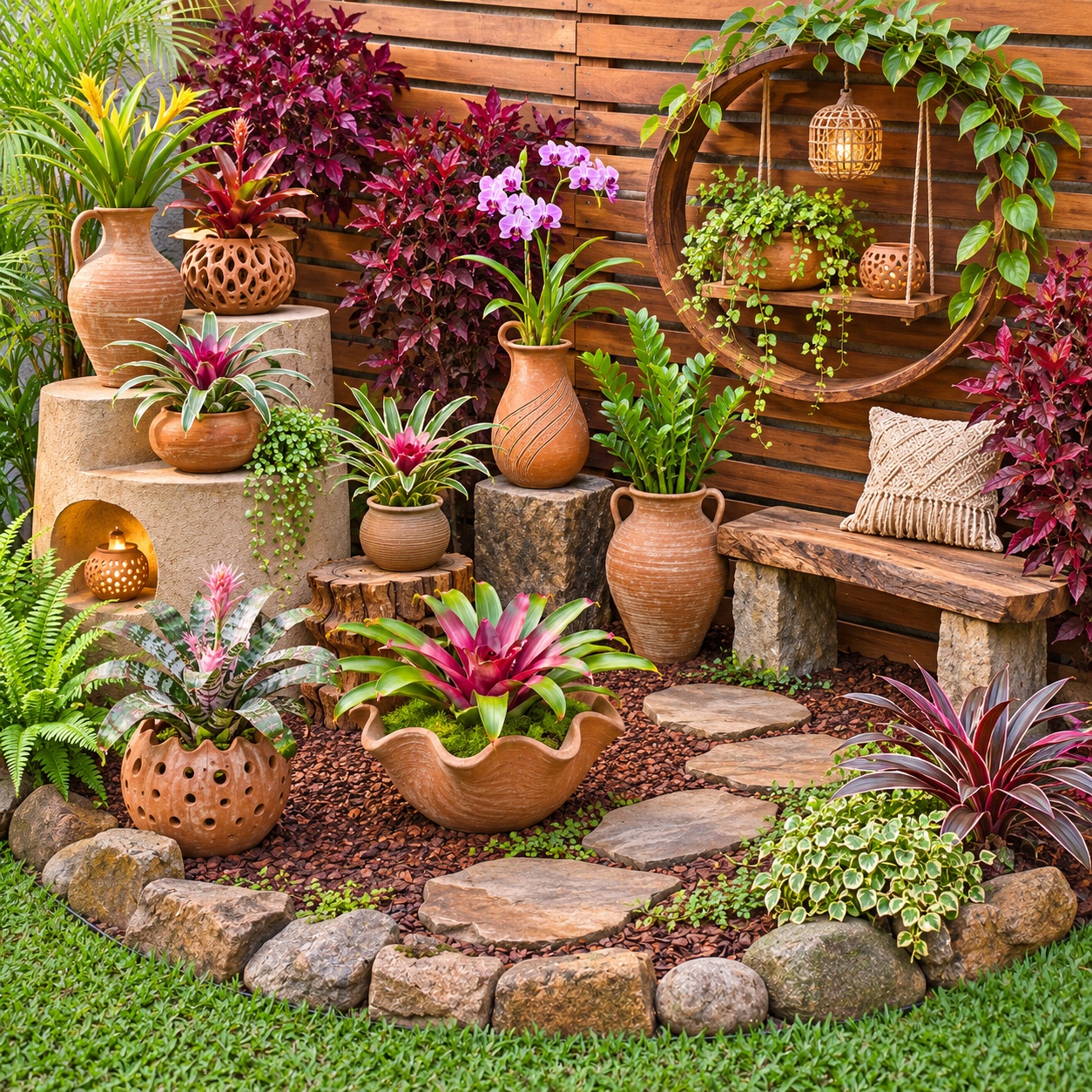
Containers make it possible to build a garden gradually. Arrange taller plants behind a few lower pots, then use contrasting leaf shapes to keep the display readable. A timber screen provides a calm backdrop for patterned foliage. Repeat a small family of pot materials and leave access for watering, moving containers, and cleaning underneath them.
4. A Pond Framed by Generous Leaves
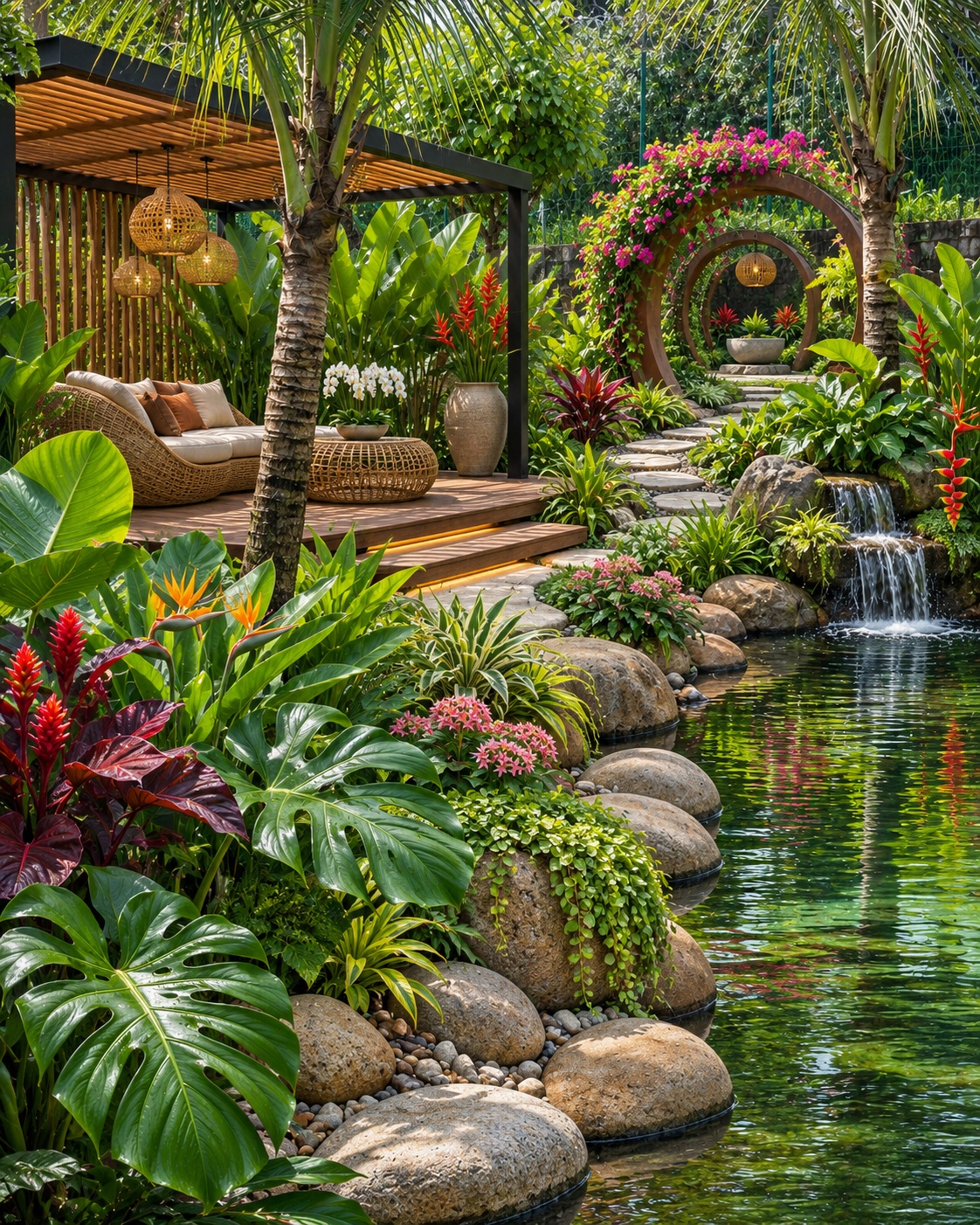
Water gives a dense planting scheme a place to pause. Keep one part of the pond visible from the main viewing point, then concentrate larger leaves along the far edge. Natural stone can connect the water to the surrounding beds. Plan maintenance access, water circulation, and appropriate protection around the pond as part of the design.
5. Palms in Layers Beside a Modern Terrace
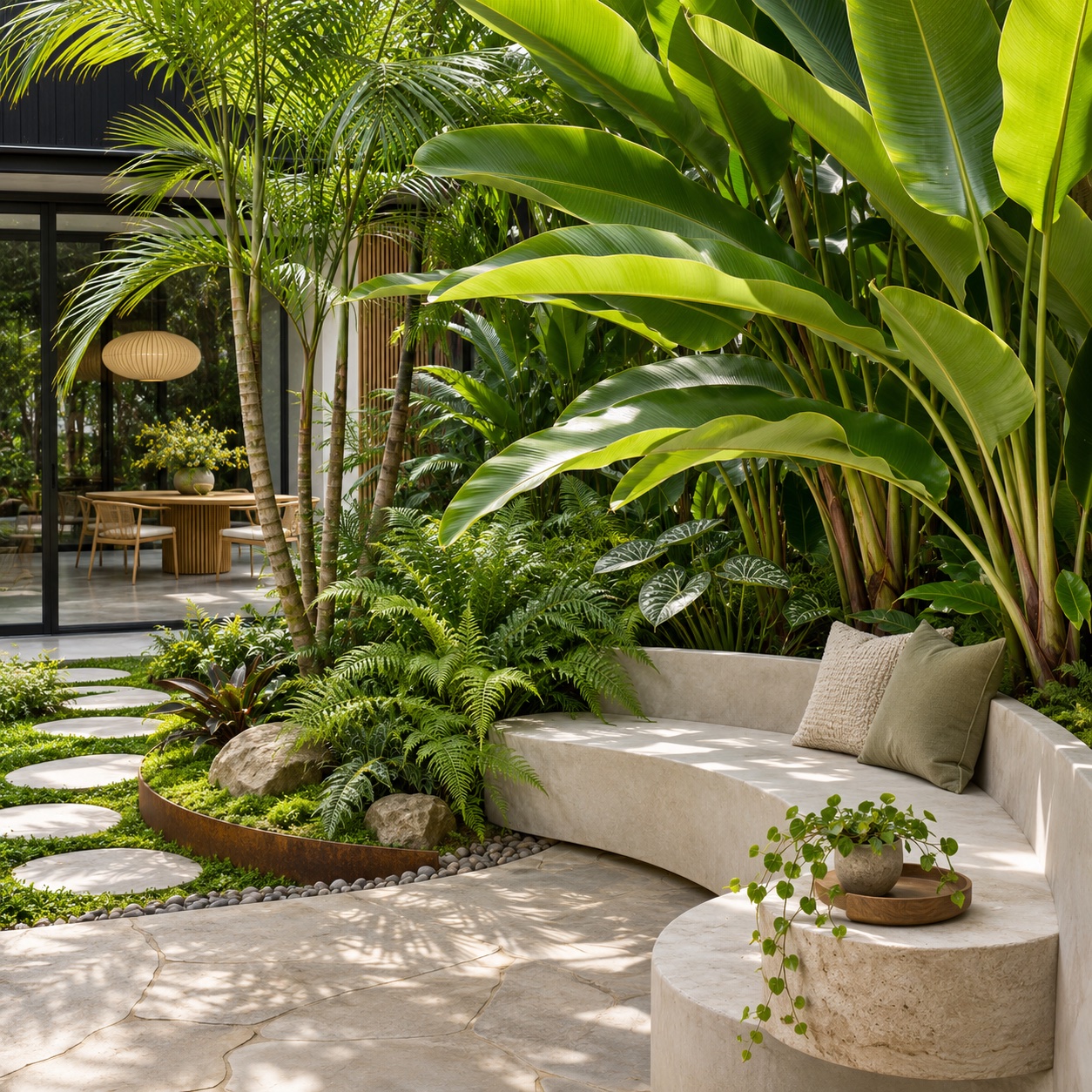
A terrace feels more sheltered when greenery rises at several heights. Use the canopy as a backdrop, a middle layer to soften walls, and lower planting to meet the paving. Leave some of the architecture visible so the composition has contrast. Select plants for the actual sun, wind, soil, and winter conditions rather than appearance alone.
6. A Curved Timber Bench Within a Leafy Border
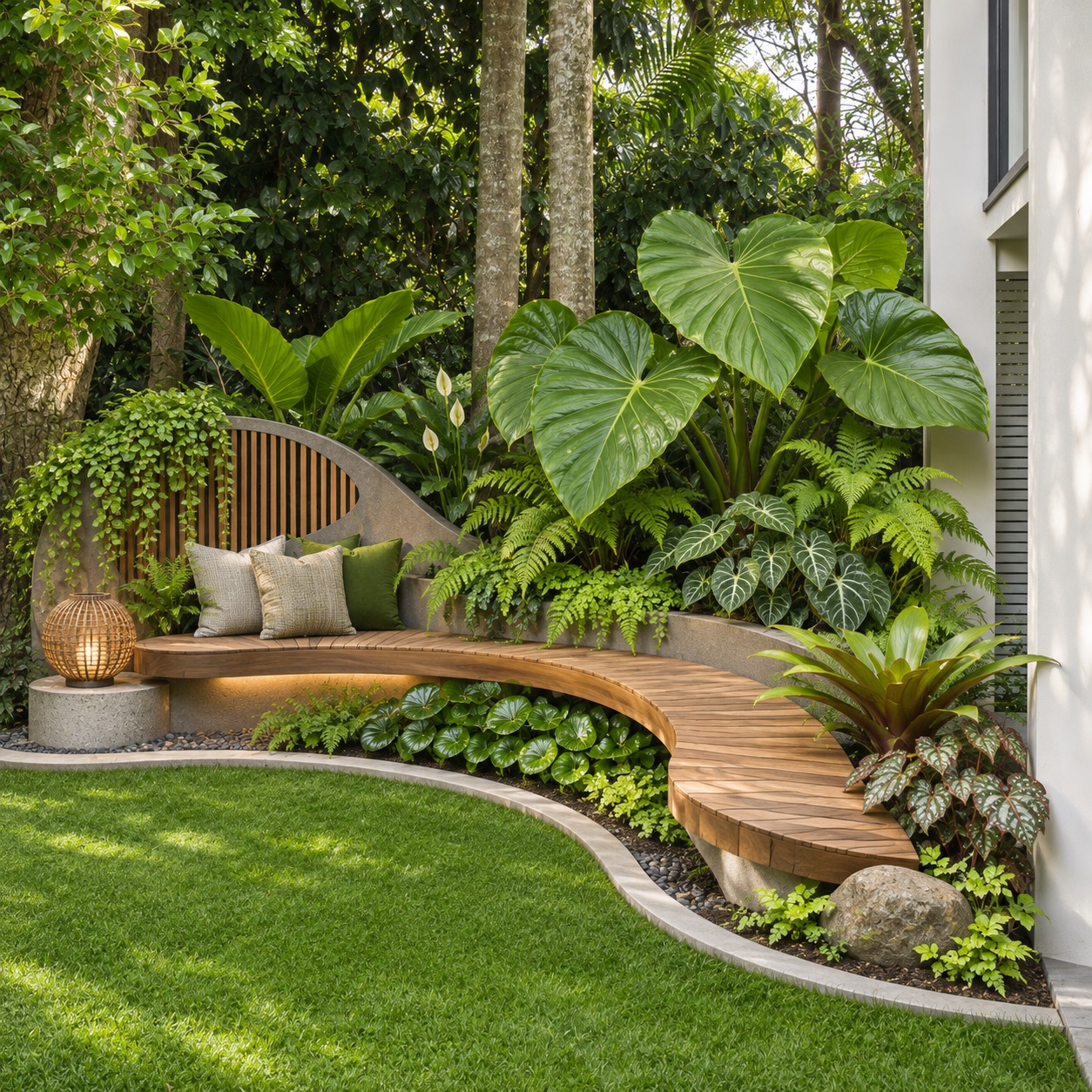
A curved bench can make the edge of a lawn feel like a place to stay. Let broad leaves rise behind the seating while lower foliage softens its ends. Repeat the curve in the planting bed to connect the furniture to the garden. Leave clearance around the seat and select timber and supports suited to outdoor use.
7. A Small Footbridge Through Dense Planting
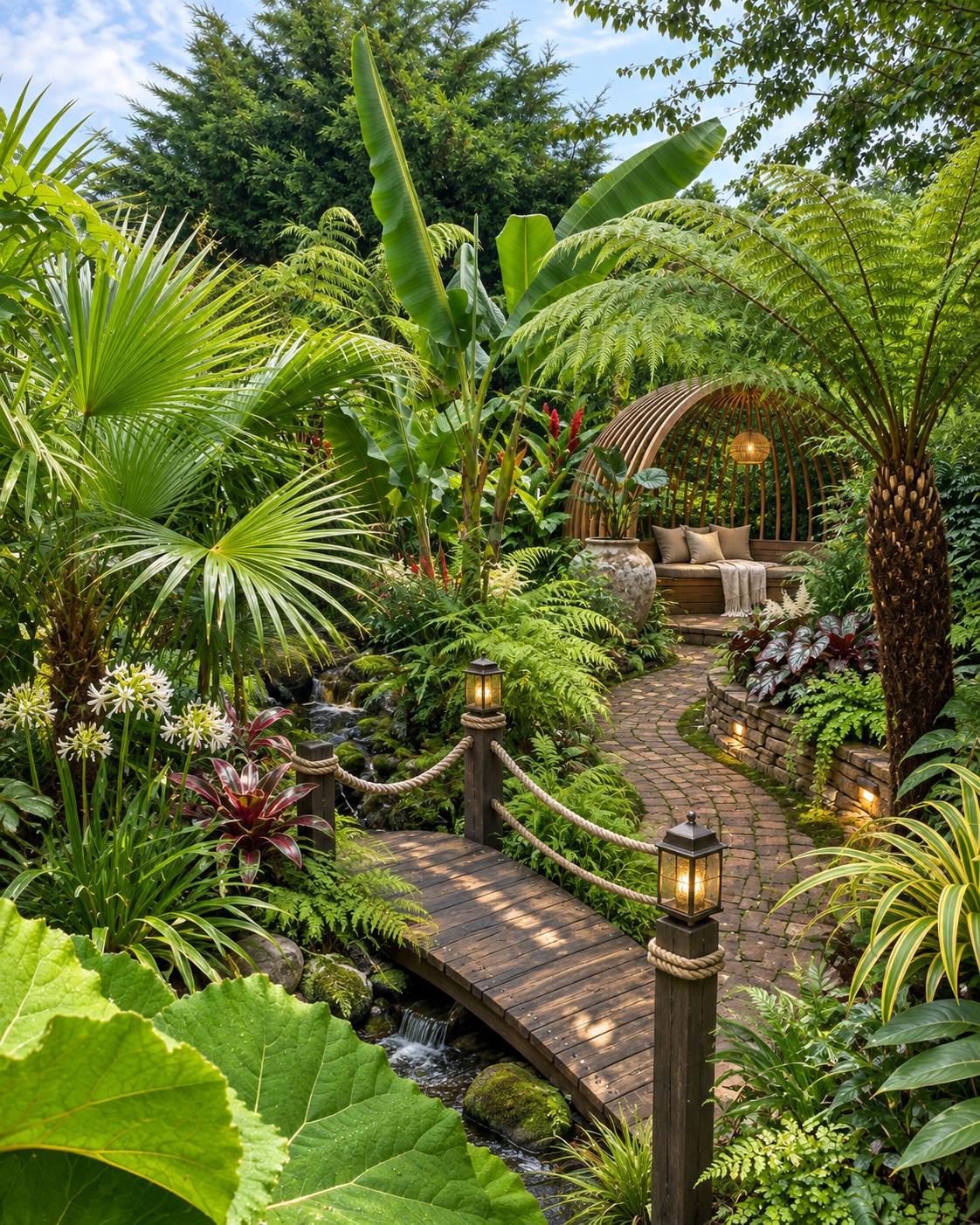
A short timber bridge adds a distinct moment to a garden walk. In this concept, fan-shaped leaves and fern fronds surround the route, while a larger leaf in the foreground emphasizes the depth of the planting. Keep the bridge stable and the approach clear. Simple rails or posts should be designed for the actual change in level and intended use.
8. A Brick Walk Beneath a Fern Canopy
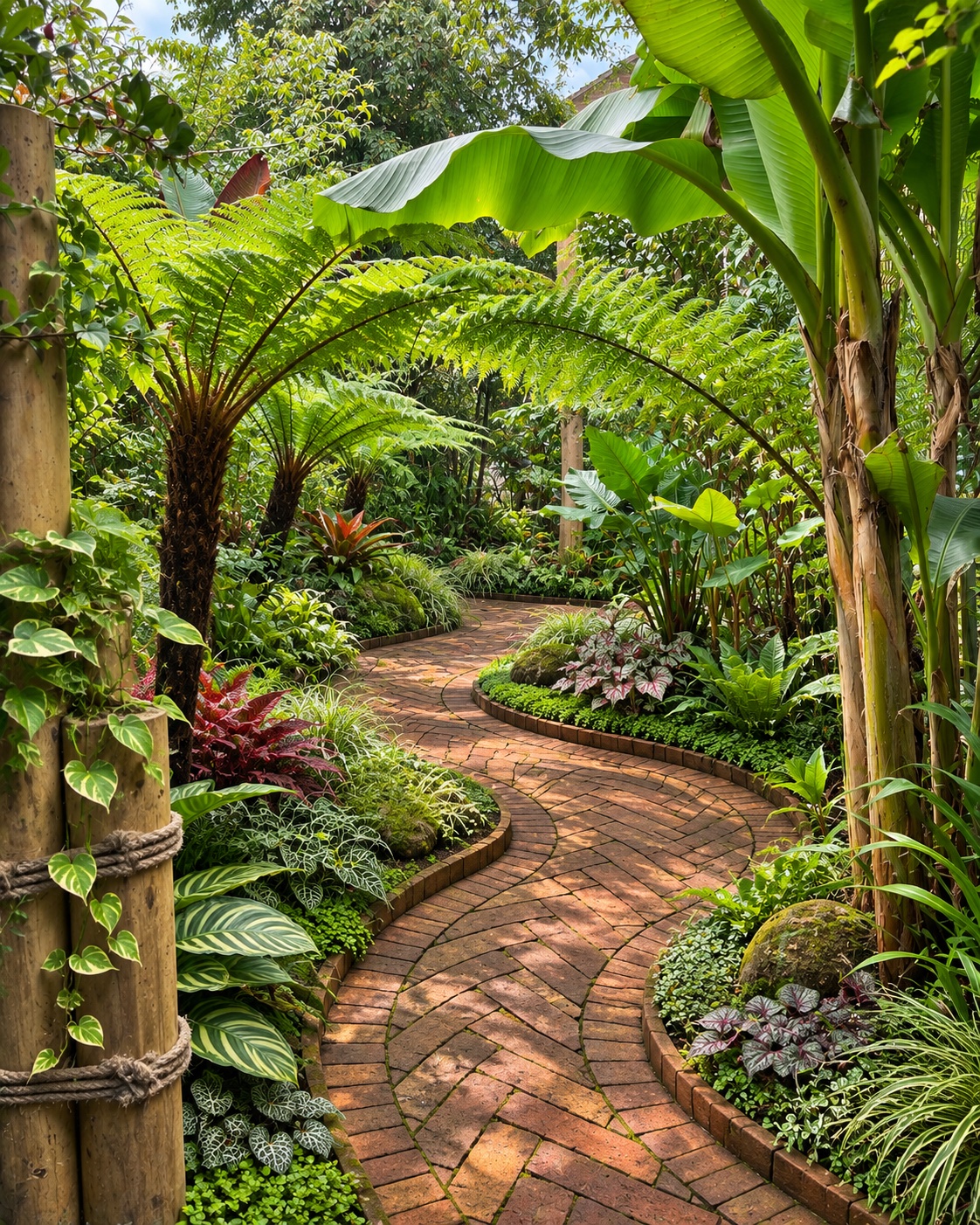
A gently bending path can reveal a garden a little at a time. Warm brick brings a human scale to tall trunks and finely textured fronds. Let planting overlap visually above the route while keeping the walking surface clear. Use stable paving with a suitable finish, and provide access to the beds for seasonal maintenance.
9. A Flowering Border Beside Pale Paving
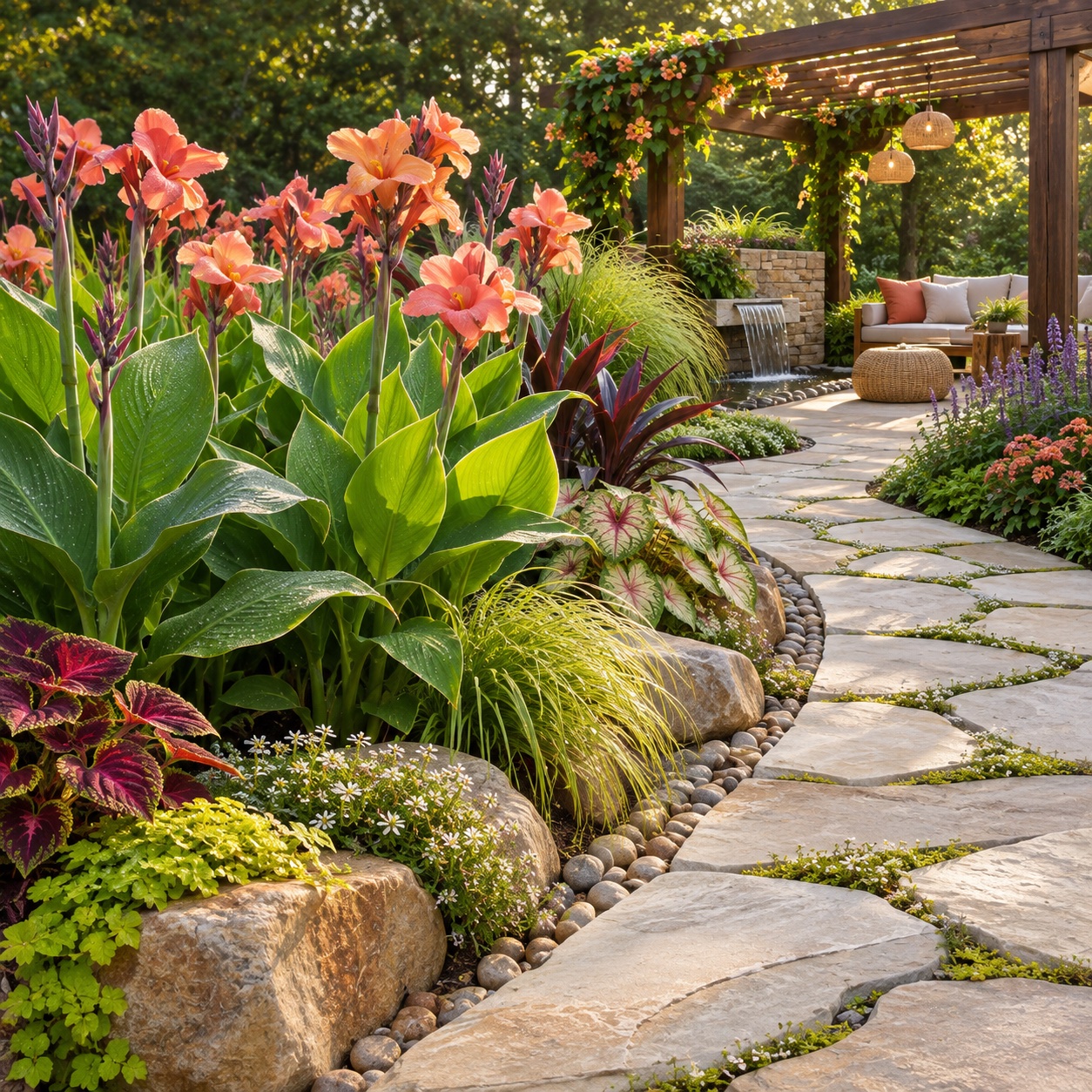
A repeated ribbon of flowers can lift a green planting scheme without turning it into a patchwork. Set the blooms where they can be seen from the path and use foliage behind them to give the color depth. Pale paving provides a quiet edge. Choose flowering plants suited to the site’s conditions and expected maintenance routine.
10. A Small Patio with the Feeling of an Outdoor Room
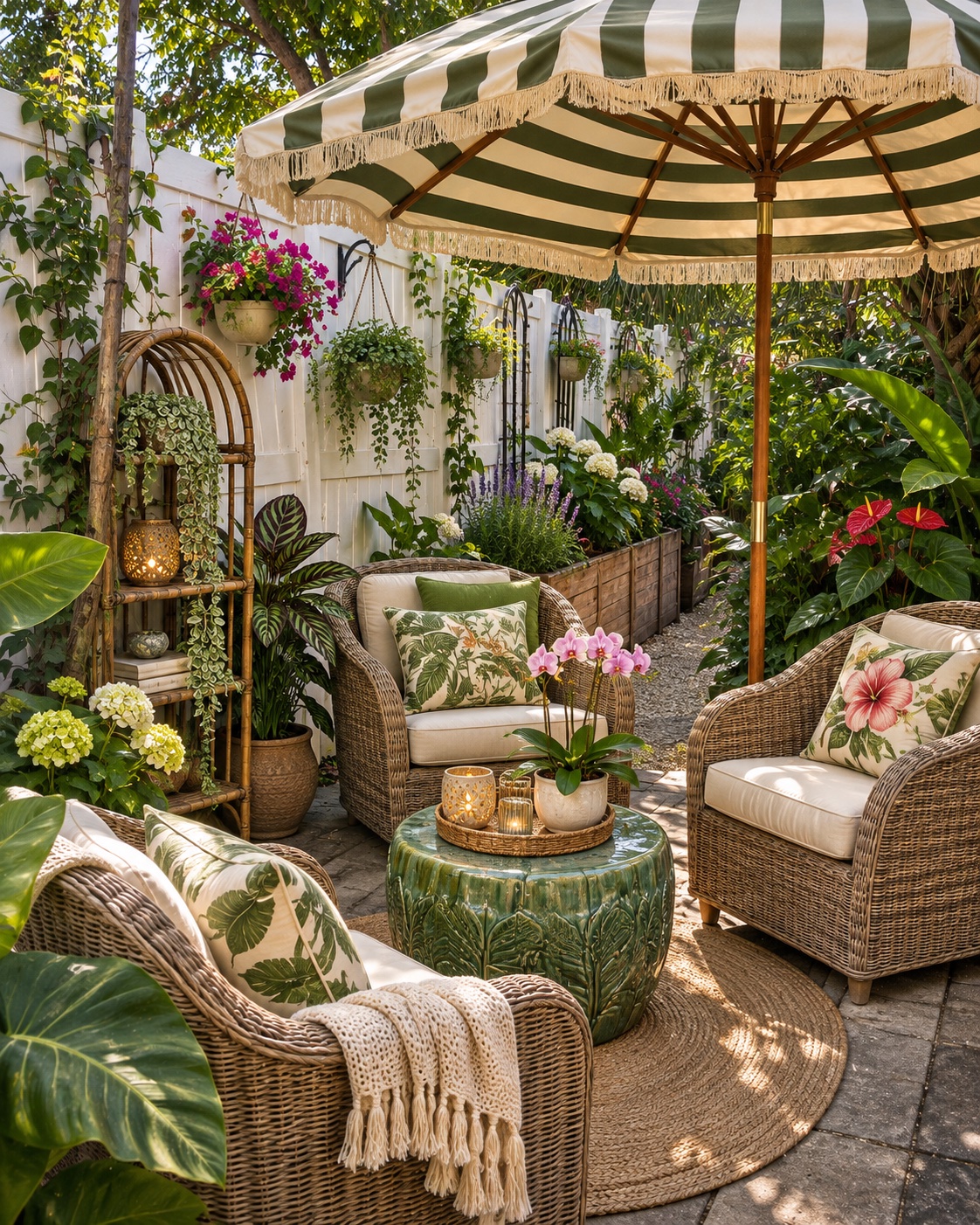
Comfort comes first in a patio garden. Place the seating and table before arranging pots around the edges, then add overhead planting where it will not drip onto cushions or obstruct movement. A restrained mix of textiles can make the area feel personal. Keep a practical route from the house and somewhere to store loose accessories.
11. An Open Lawn Within a Palm Border
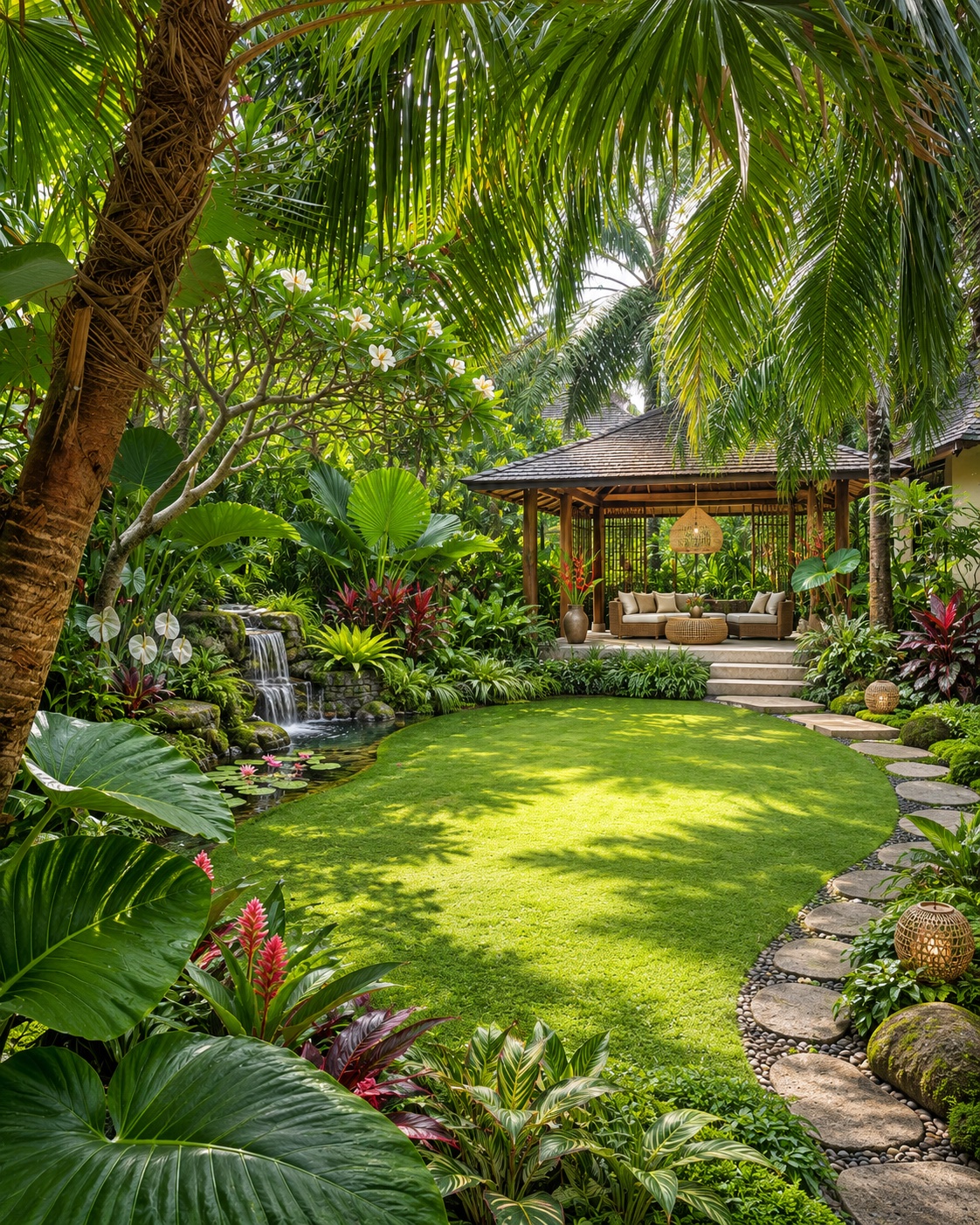
Dense planting can be more effective when it surrounds an open center. A lawn creates space for movement and gives the eye a break from detailed foliage. Shape the beds so the edges are easy to maintain. Consider whether turf suits the light and water available; another durable open surface may better serve some gardens.
12. A Garden Walk Designed for Dusk
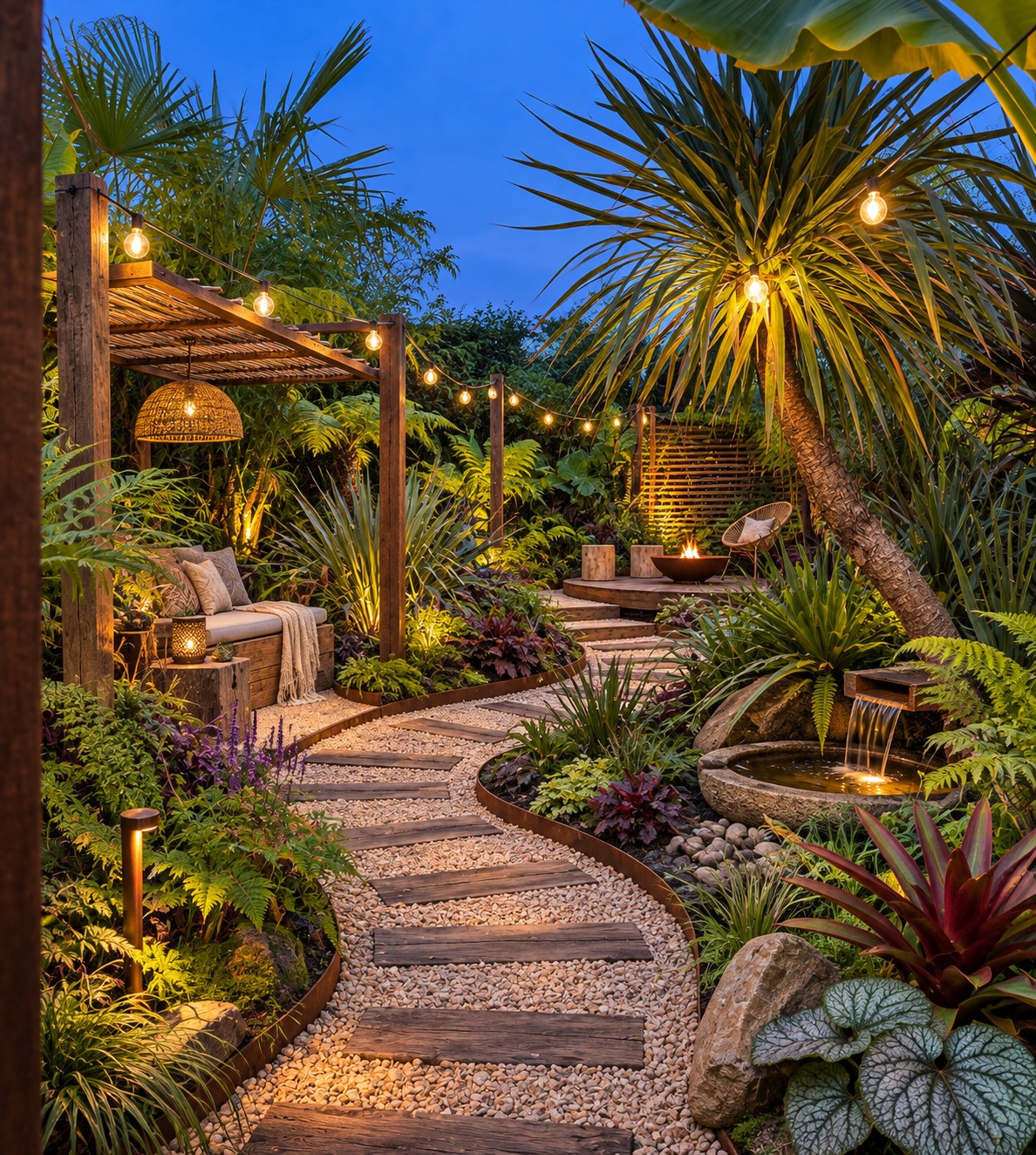
Evening lighting changes which details stand out. A few warm points above the path can establish atmosphere, while separate low-glare lighting makes changes in level easier to see. Keep cables and fittings out of the walking route. Specify equipment for the outdoor conditions and have the electrical arrangement planned appropriately for the site.
13. A Compact Island of Fan-Shaped Leaves
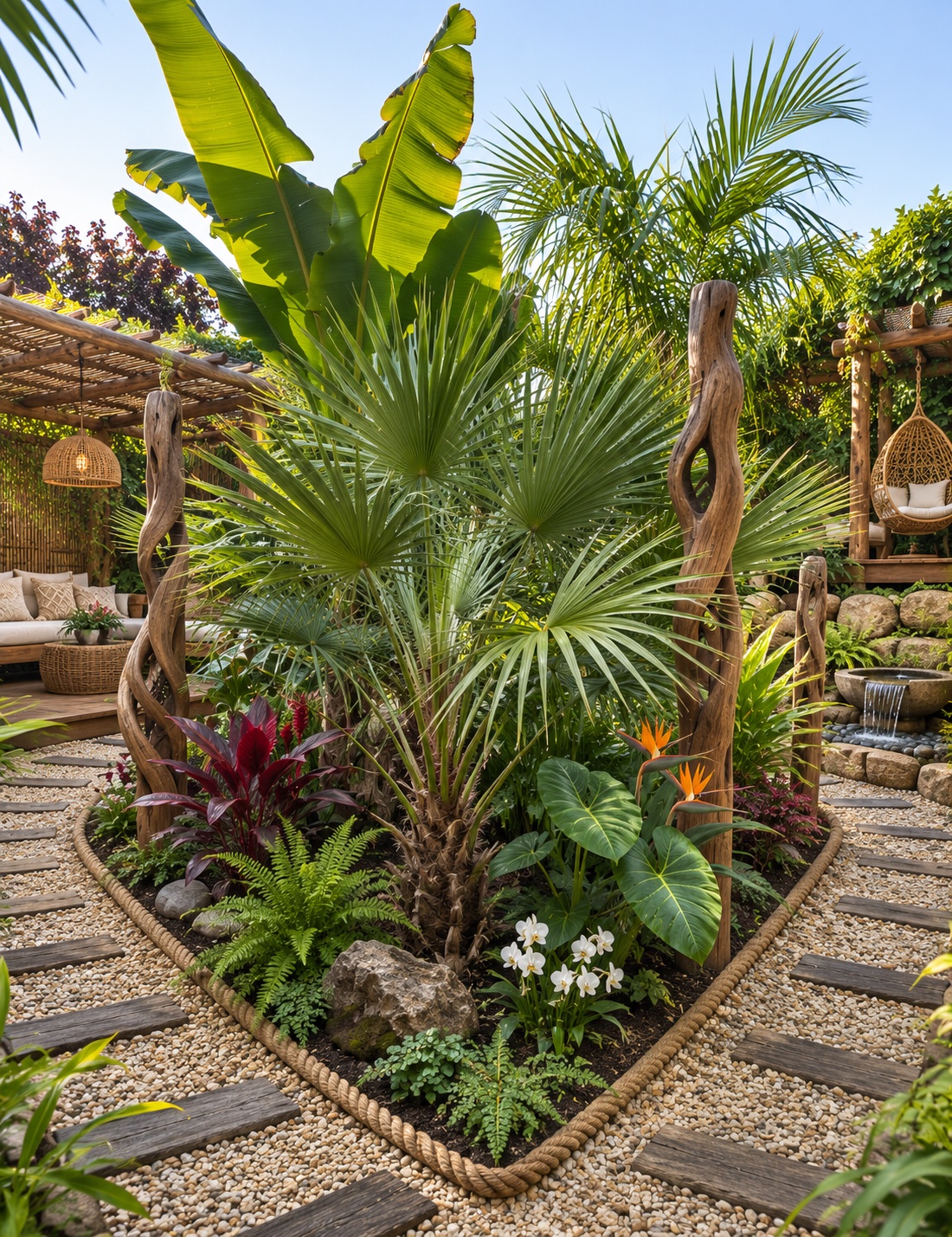
A small feature bed benefits from one clear focal point. Fan-shaped foliage supplies a strong silhouette, with lower planting supporting it rather than competing. A simple defined edge makes the arrangement feel intentional. Leave enough space for the plants to develop, and use ornament sparingly so the bed still reads clearly from a distance.
14. A Water Courtyard with a Place to Linger
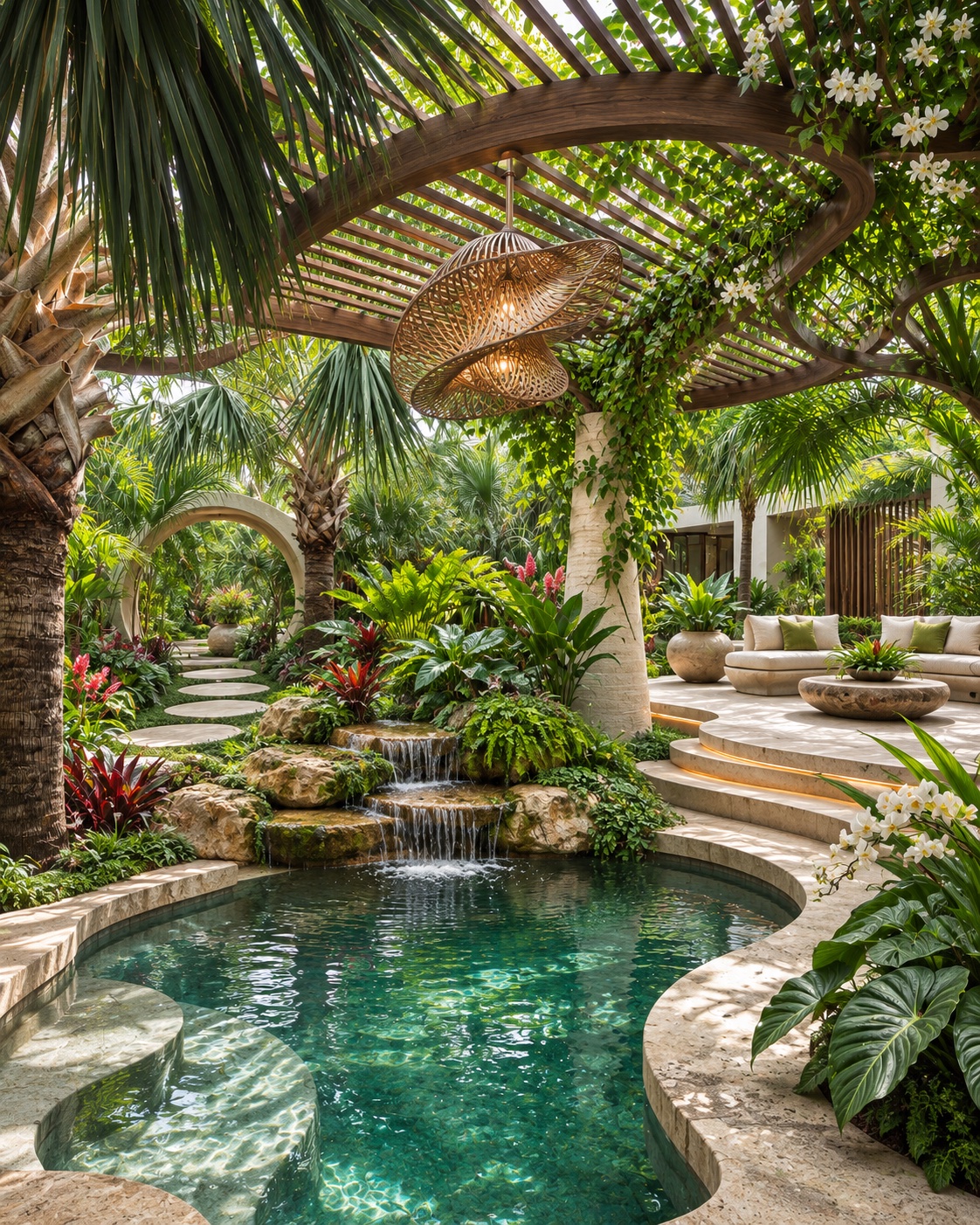
Pair a carefully shaped water feature with a generous sitting area rather than letting water occupy every usable corner. Stone paving, a sheltered seat, and overhead foliage can create a calm enclosure. An outdoor-rated pendant adds a different scale of detail. Resolve access, drainage, electrical work, and water-feature maintenance before finalizing the decorative elements.
15. A Softly Lit Garden Hideaway
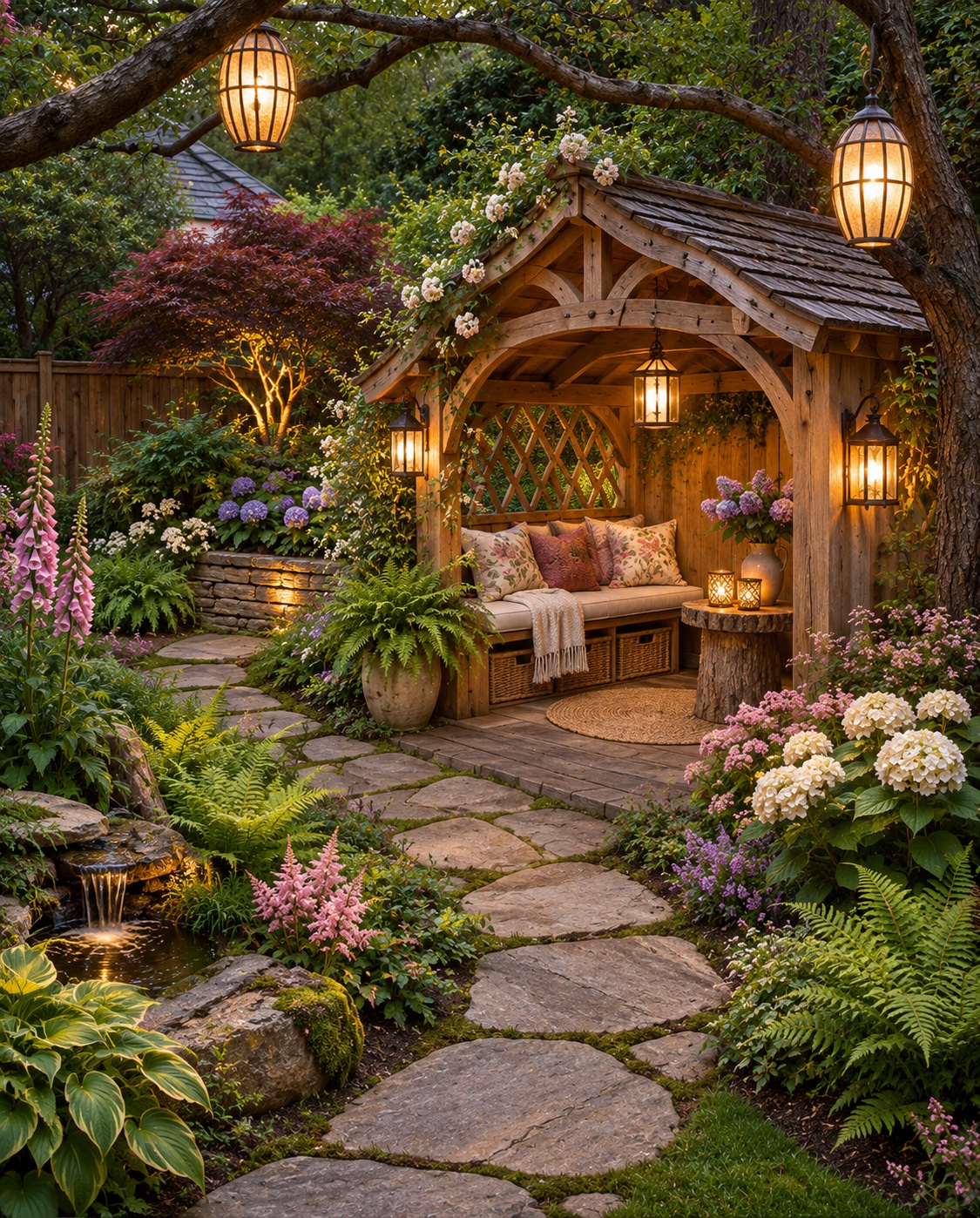
A curved path can lead to a seat that is partly screened from the main garden. Small pools of warm light help reveal the route and nearby foliage without illuminating everything equally. Use a limited flower palette to keep the nook restful. Position lantern-style lights beyond the path and choose enclosed electric lighting for easy everyday use.
16. Sculptural Timber as the Main Garden Seat
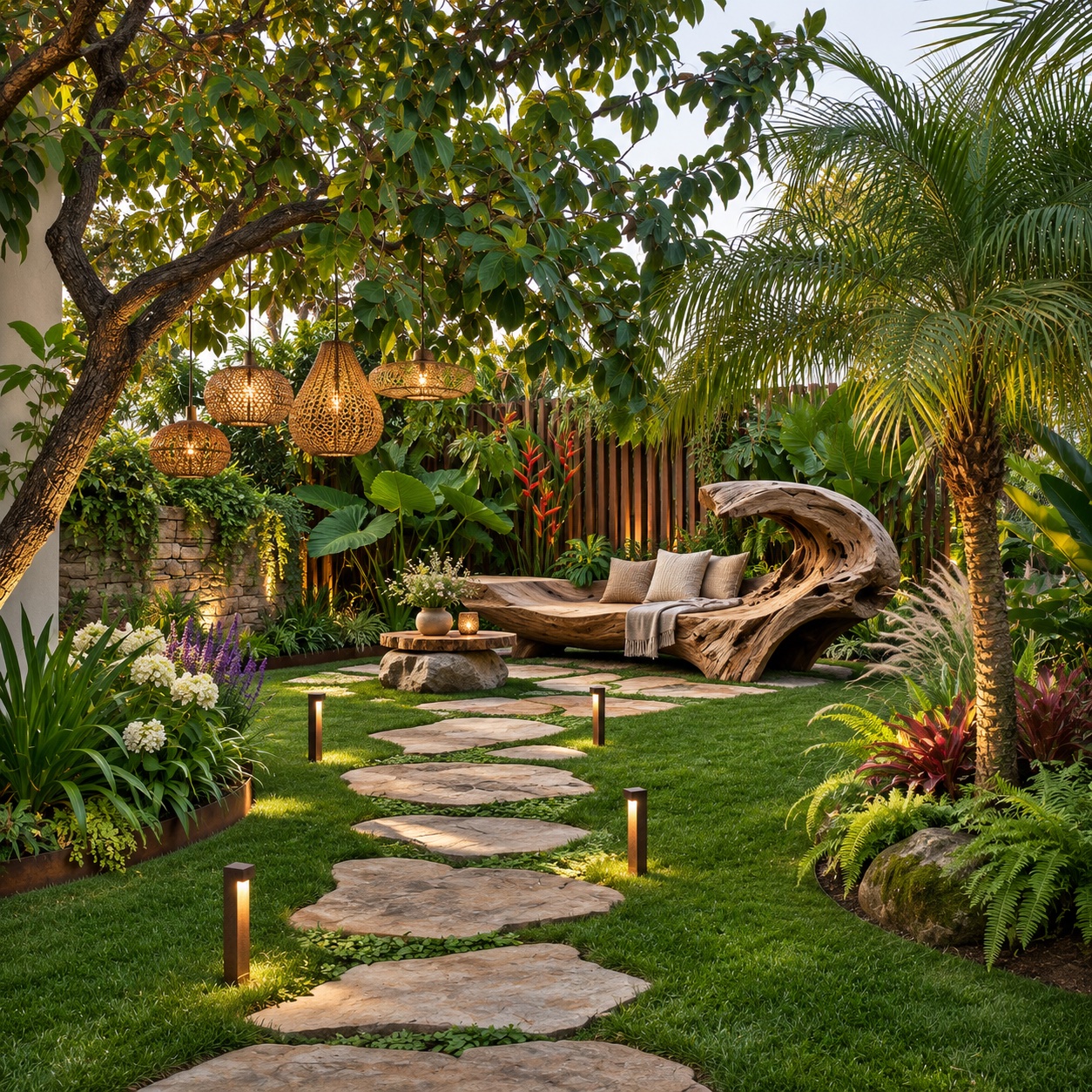
A substantial piece of timber can provide the character that a small garden needs. Give it enough open space to be appreciated from different angles, then use planting to frame the ends. A simple stepping-stone approach keeps the focus on the seat. Ensure the finished piece is stable, comfortable, and suitable for outdoor exposure.
17. Pale Stepping Stones in a Carpet of Green
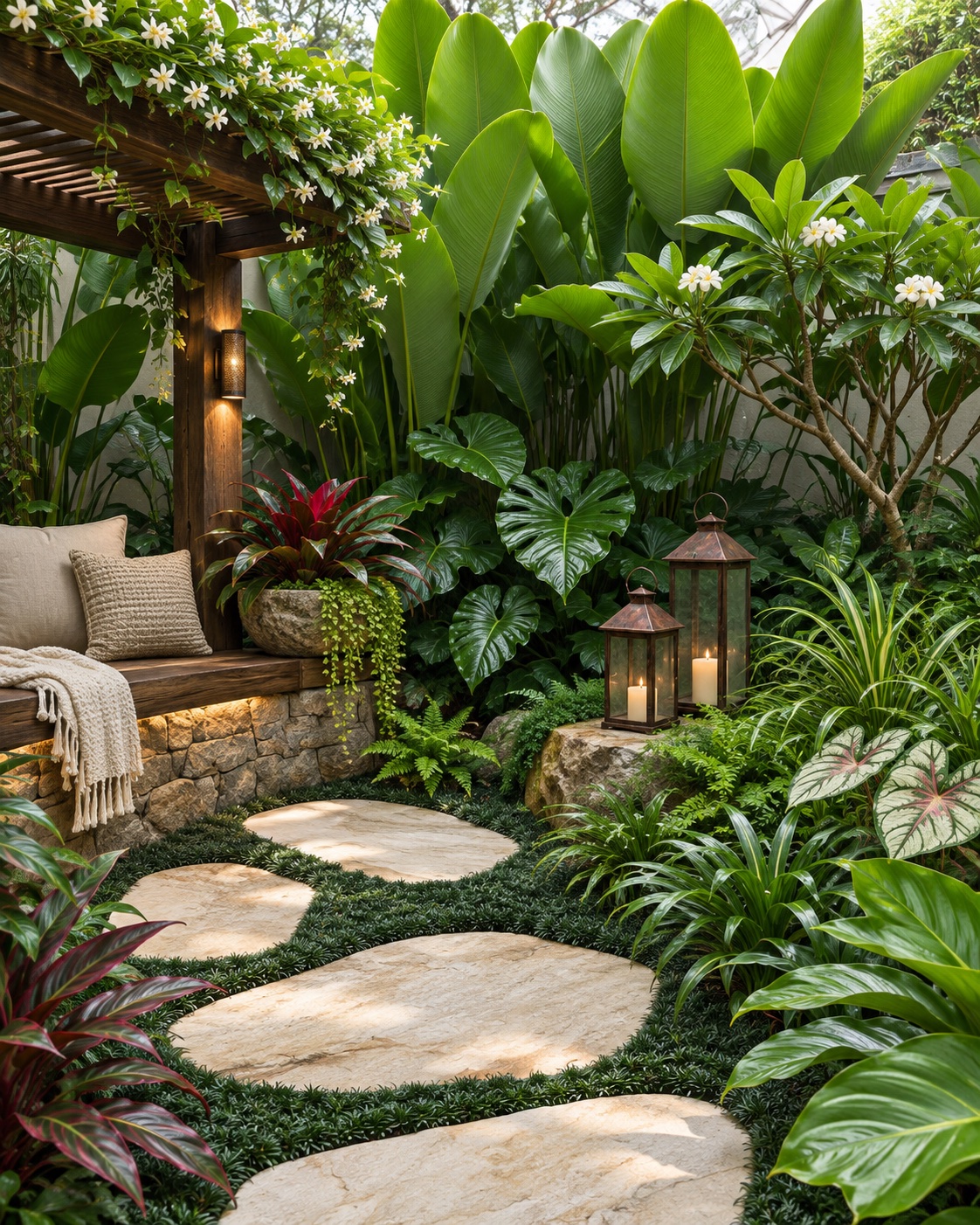
Broad irregular slabs can create a quiet pattern against fine groundcover. A close view emphasizes the contrast between smooth stone and a dense border of larger leaves. Keep lanterns beyond the walking route and test the spacing of the slabs before installation. Select groundcover for the local conditions and the amount of foot traffic expected.
18. A Jungle Garden Seen from Above
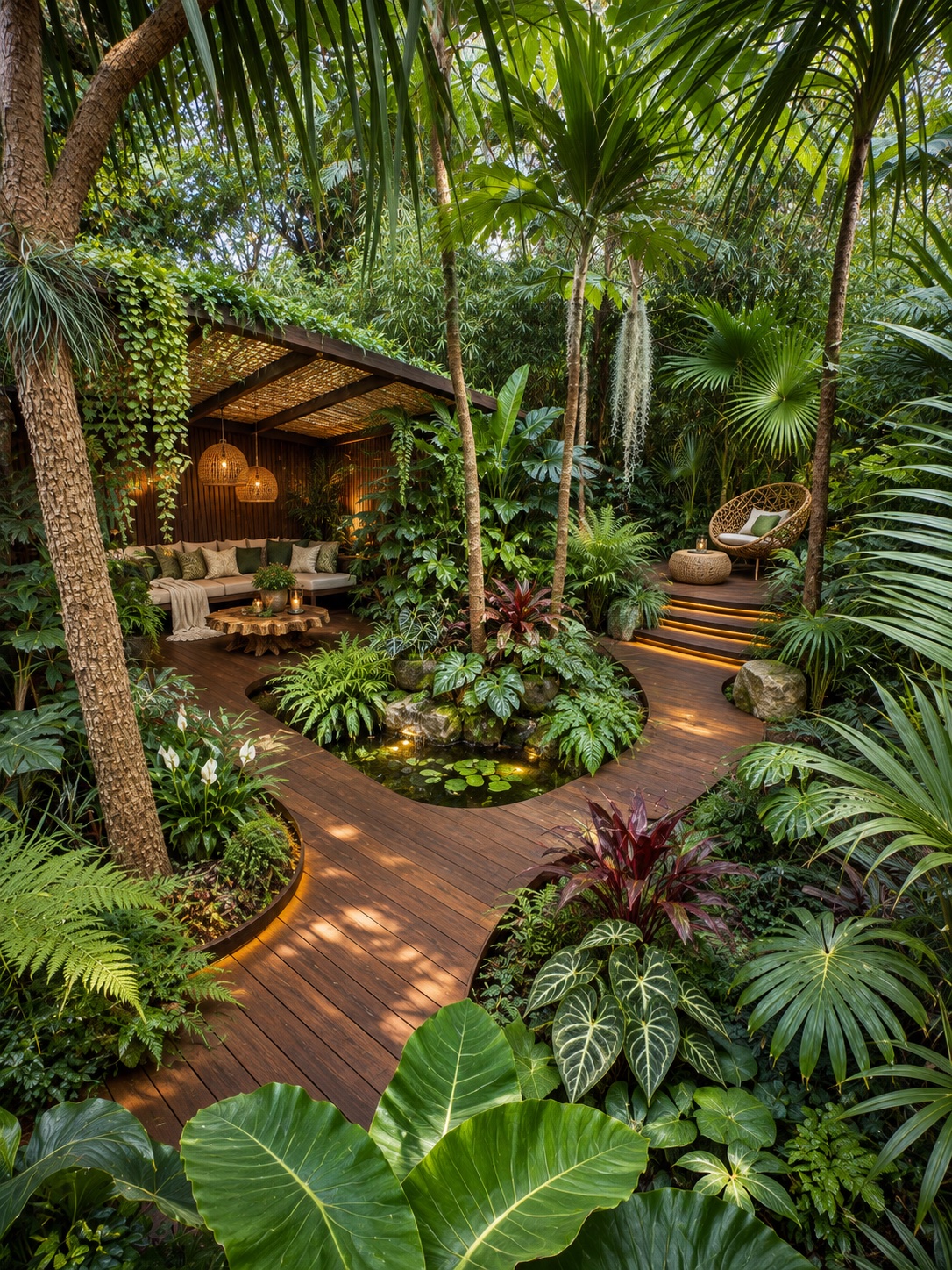
An elevated view reveals how a small timber deck can weave between planting pockets. The layout creates several layers of greenery while retaining a defined route to a sheltered seat. Plan the deck and planting together so mature stems have room. Keep boards accessible for cleaning and inspection, and arrange suitable drainage beneath the structure.
19. A Pergola Passage Leading to a Garden Sofa
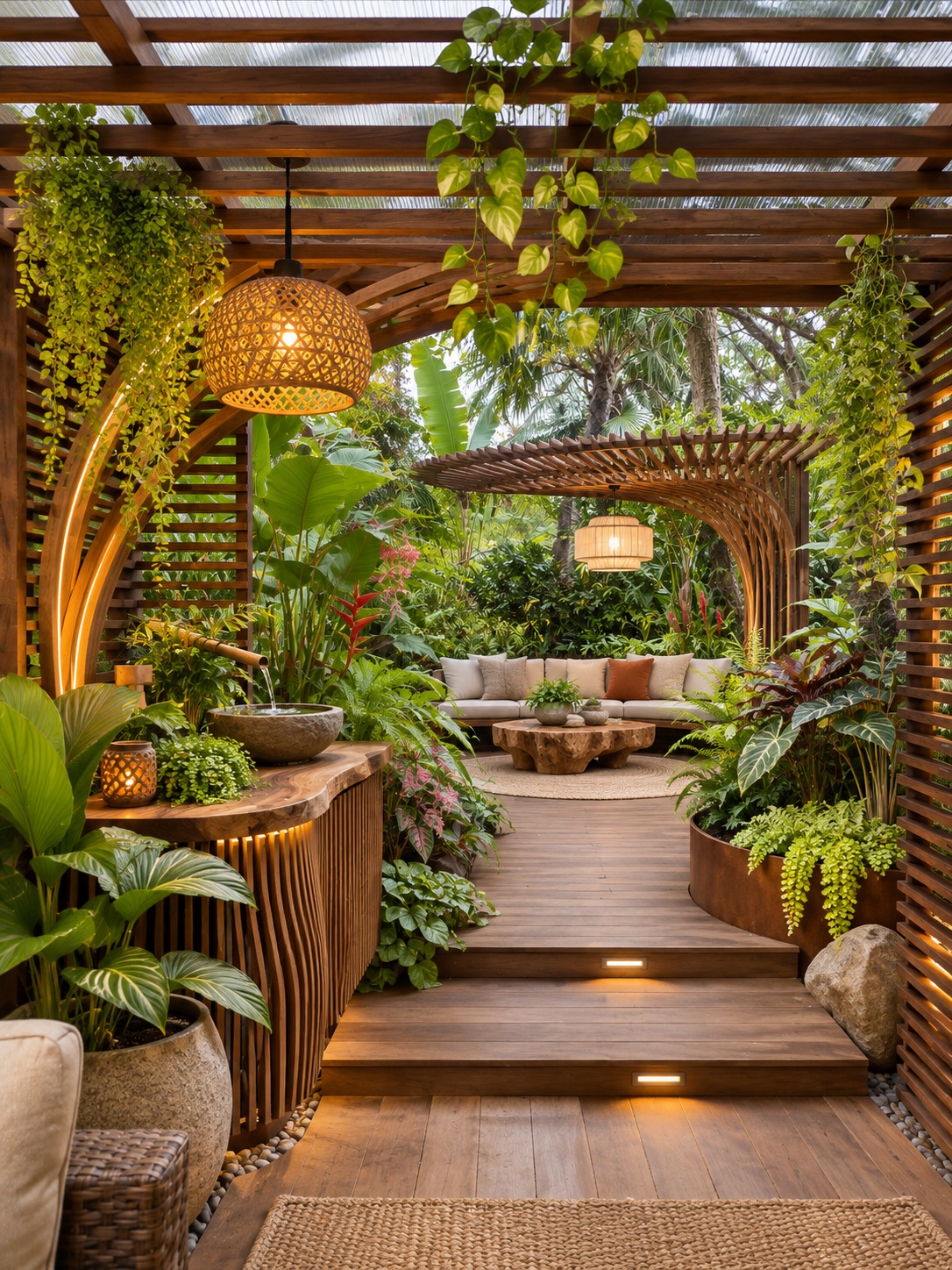
A timber-framed passage can connect a covered sitting area with a second seat in the garden. Slatted screens, large containers, and suspended foliage make the transition feel gradual. Keep the center clear and use discreet lighting to reveal any changes in level. Plan the support structure, drainage, and electrical work before the decorative details.
20. A Garden Swing with a Separate Seating Area
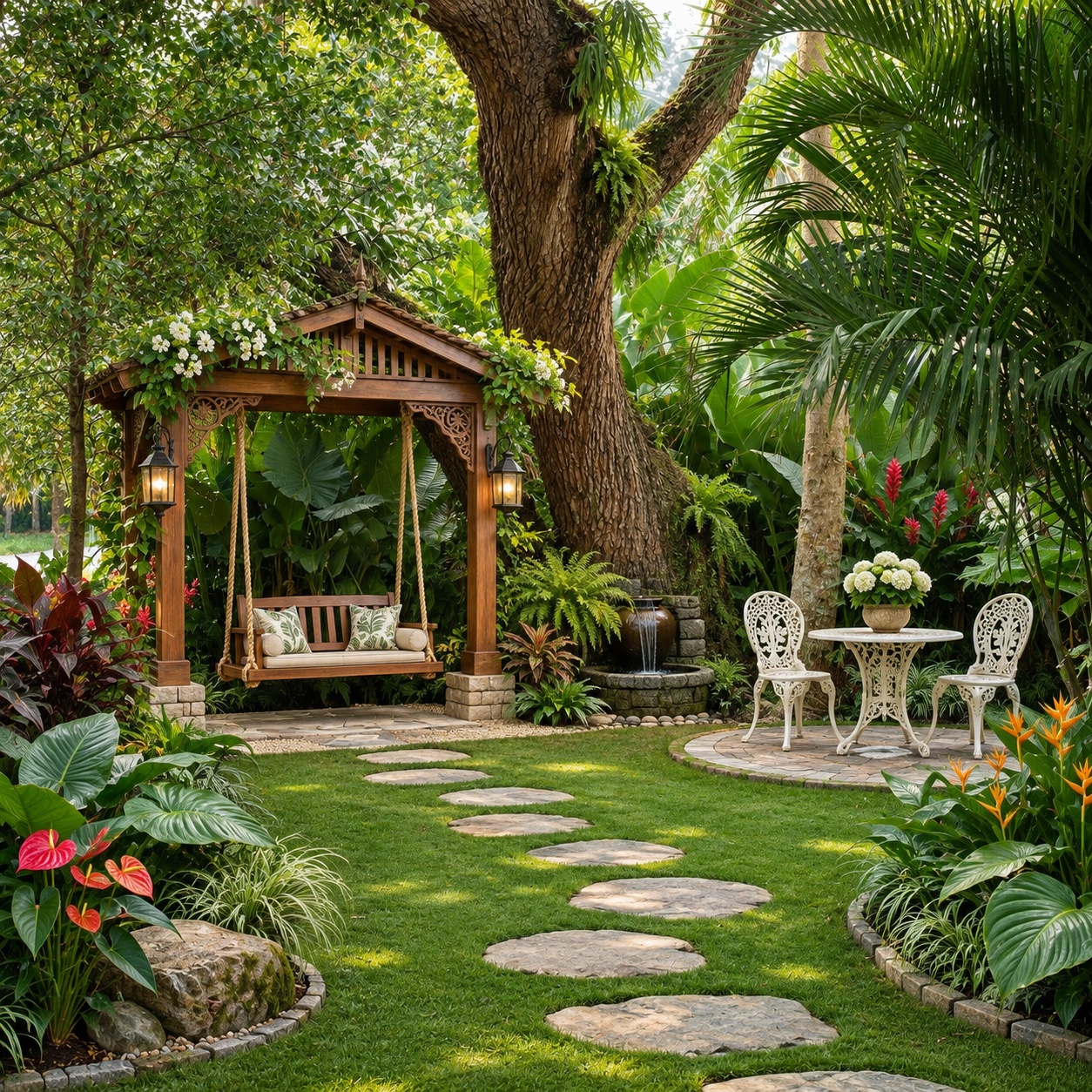
A swing introduces movement and a playful focal point, while nearby chairs provide a more settled place to gather. Give both activities their own clear space. Layer planting around the perimeter and keep branches and furniture outside the swing’s travel. Have the support, fixings, and clearances assessed rather than assuming an existing tree is suitable.
21. A Textured Entry Wall Beside a Curving Walk
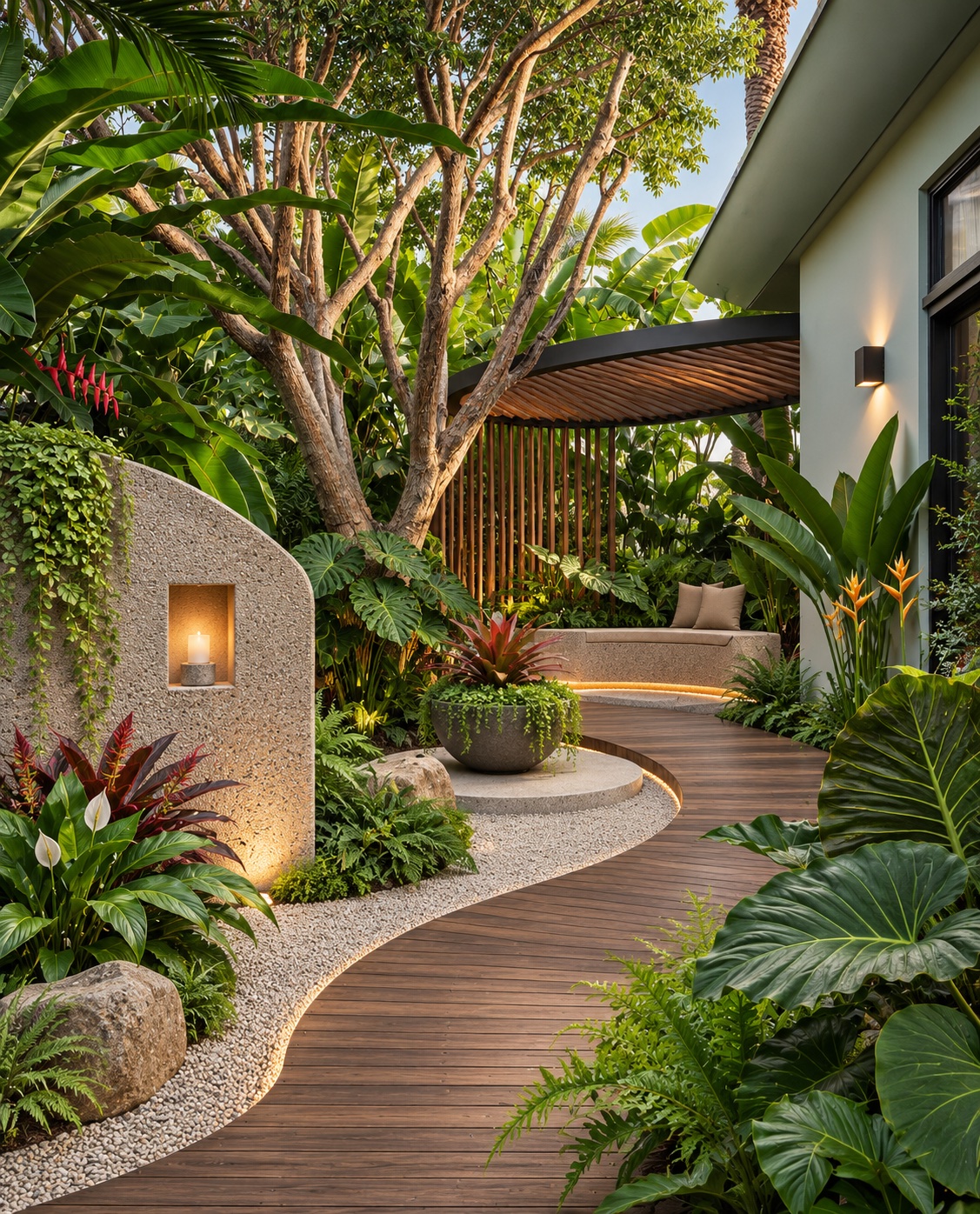
An entrance garden needs to guide people as well as look inviting. A curved boardwalk softens a firm architectural boundary, while a textured wall gives large leaves a contrasting background. A small illuminated recess can mark the arrival point. Keep the route legible and choose surfaces that suit rain, shade, and regular foot traffic.
22. A Flowering Canopy Above the Garden Gate
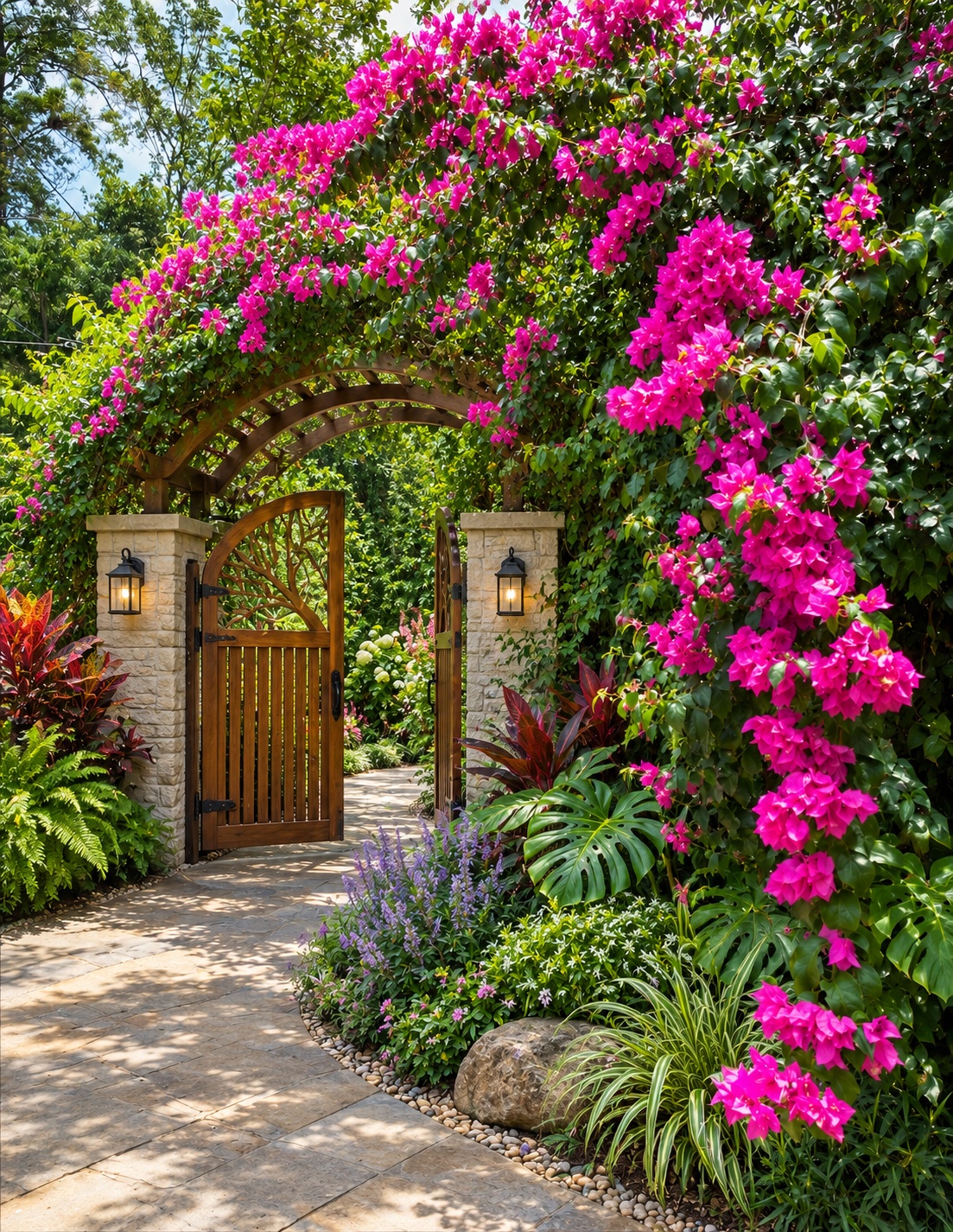
A flowering climber can make an ordinary entrance feel like a destination. Give it a strong supporting structure and enough room above and beside the opening for regular pruning. Keep the gate itself simple so the planting remains the focus. Choose a climber suitable for the climate and keep thorny growth well away from passing visitors.
23. A Mixed-Foliage Walk with New Views Around Each Bend
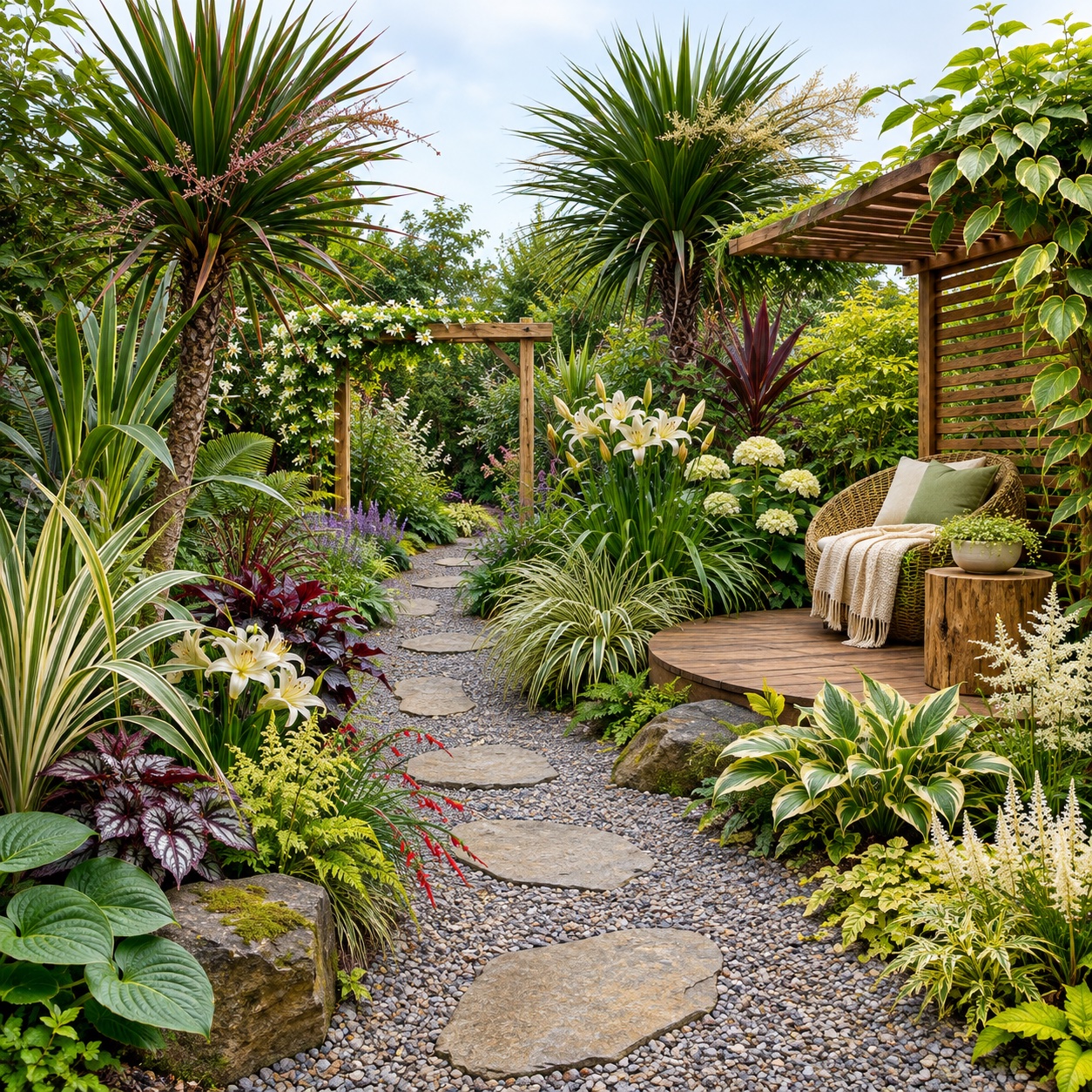
Use a winding route to vary the view through a collection of plants. Place contrasting leaf shapes near one another, but repeat selected forms farther along the path to connect the scene. An understated edge helps contain gravel. Keep the route wide enough for its intended use and avoid planting that will quickly swallow the usable space.
24. A Planted Corner Beneath Hanging Lights
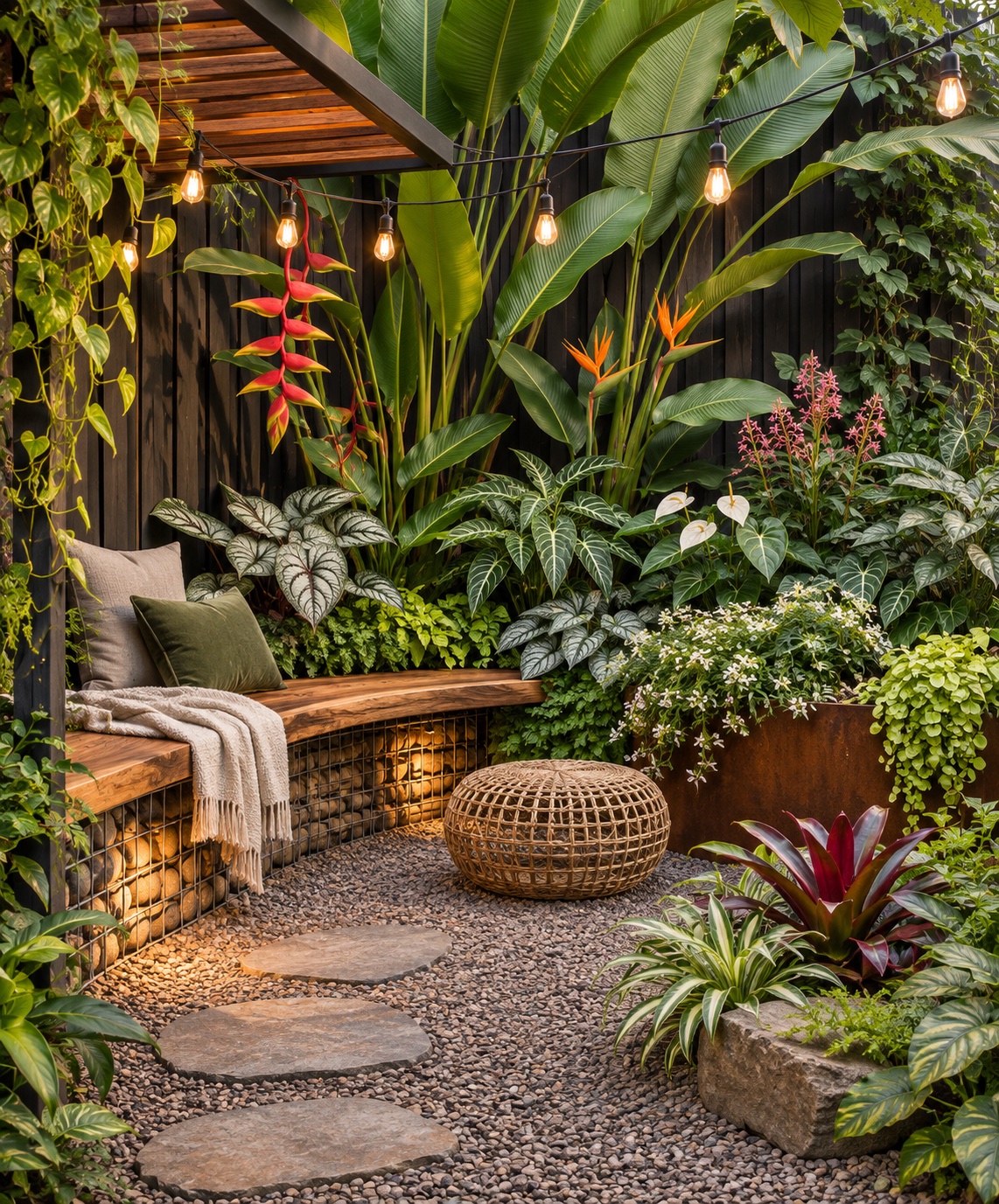
A corner can become an evening feature without adding a large seating structure. Use taller foliage at the back, then arrange smaller plants where their shapes remain visible. A dark boundary gives the leaves a clear backdrop. Hang outdoor-rated lights from suitable supports and retain access behind the display for pruning and maintenance.
25. A Tiny Timber Platform Within a Living Green Backdrop
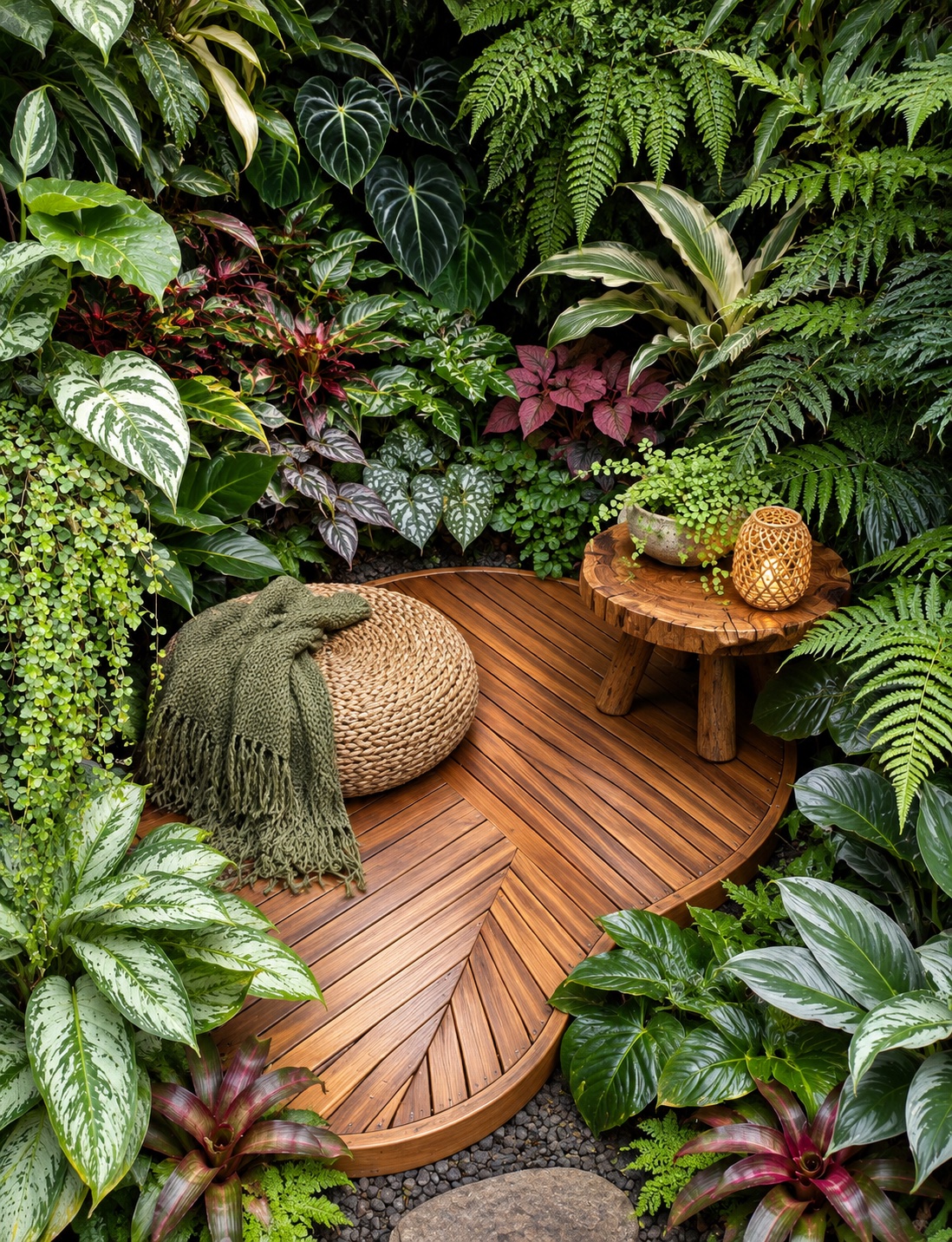
A small slatted platform can make a collection of foliage feel like an intentional garden room. The close framing highlights fine fern fronds, patterned leaves, and a few restrained colorful accents. Retain enough open surface to use and maintain the space comfortably. Choose plants with compatible site requirements and provide access for removing old growth.
26. A Crisp Lawn Edge Against Bold Foliage
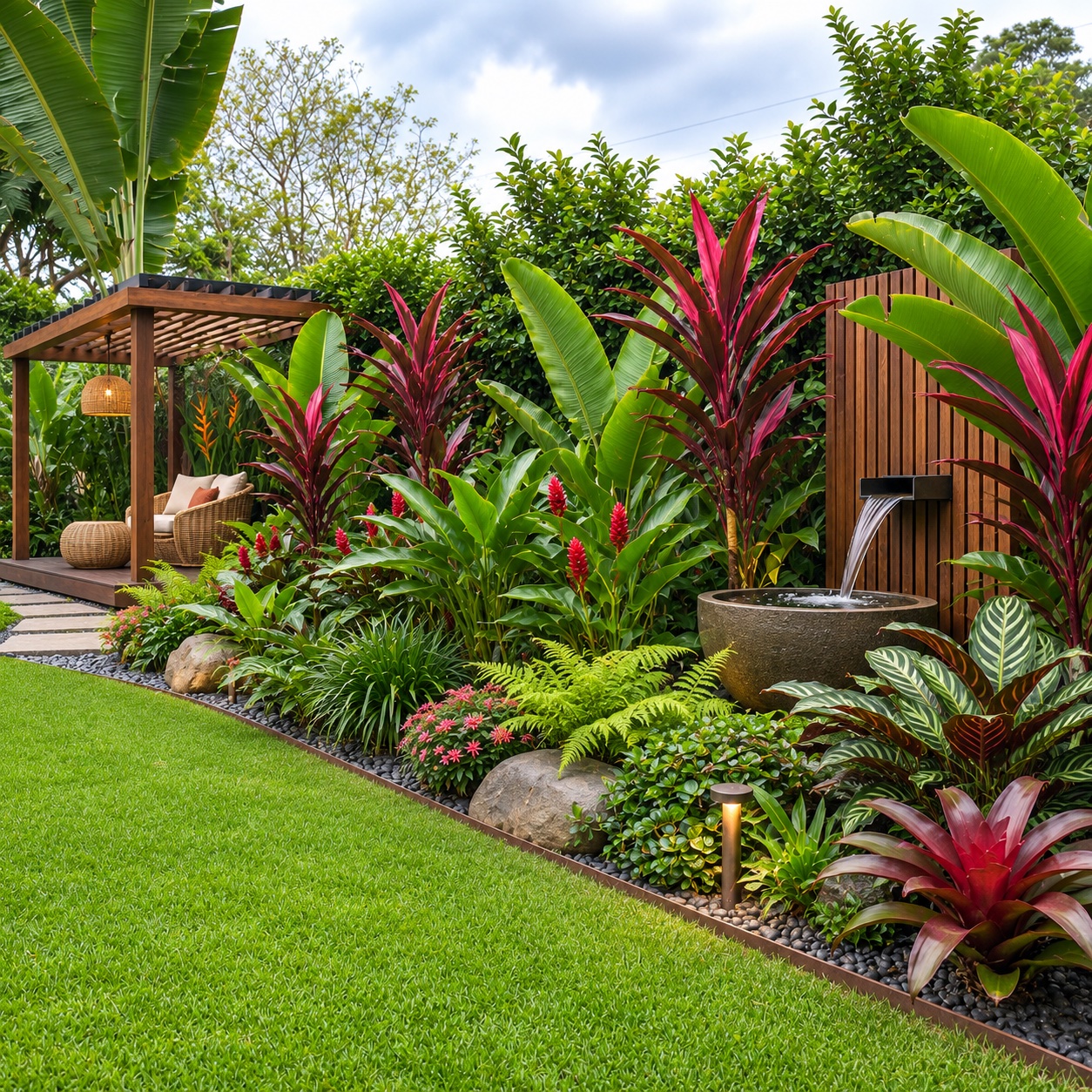
A clean boundary between lawn and planting gives a busy mix of leaves a calm outline. Group plants so that color and height create a sequence along the bed. The open foreground makes that sequence easy to appreciate. Leave working room at the edge and plan how the bed will look once the plants reach their mature size.
27. A Low Garden Display of Rosettes and Stone
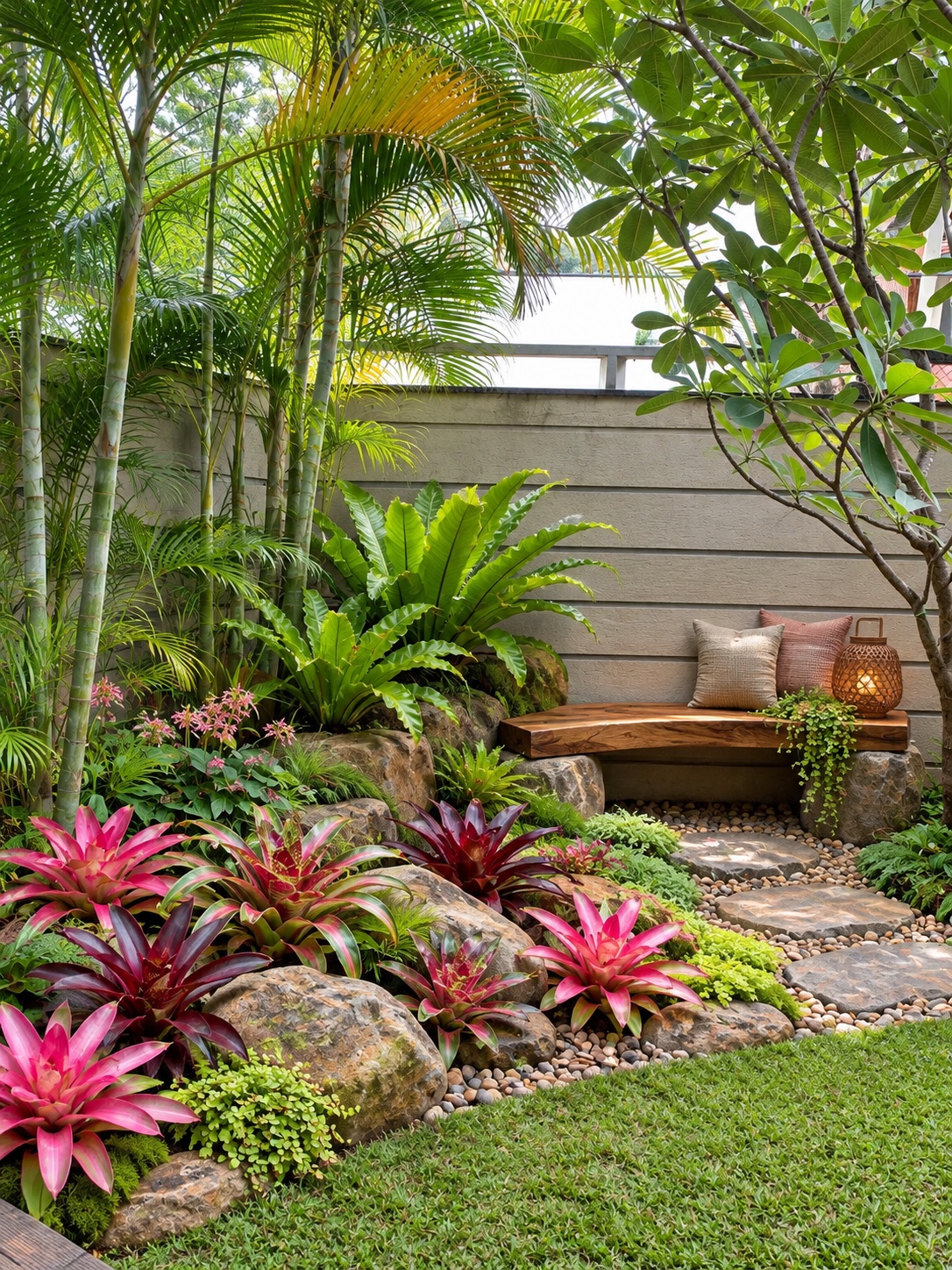
Rosette-shaped plants bring a sculptural quality to a compact bed. Arrange them in uneven groups around a few carefully placed stones, with softer foliage behind to contrast their outlines. A low viewing angle makes the layered forms especially effective. Confirm the light, drainage, and temperature needs of the exact varieties before combining them in one bed.
Bring the ideas together
Begin with the route through the garden and one place to sit. Add the larger planting forms next, then smaller foliage, containers, and lighting. Check exact plant varieties with a local nursery and allow room for mature growth. A manageable garden that supports everyday life will remain enjoyable long after its first photograph.
Design reference: TheCoolist tropical garden collection. Text independently written for DIY Ideas, with each source visual reinterpreted as a new design concept.